Cheers Filled the Beach as an Endangered Sea Turtle Named Pancake Finally Returned to the Atlantic After a Fight for Survival
- NgoPhong
- July 29, 2026
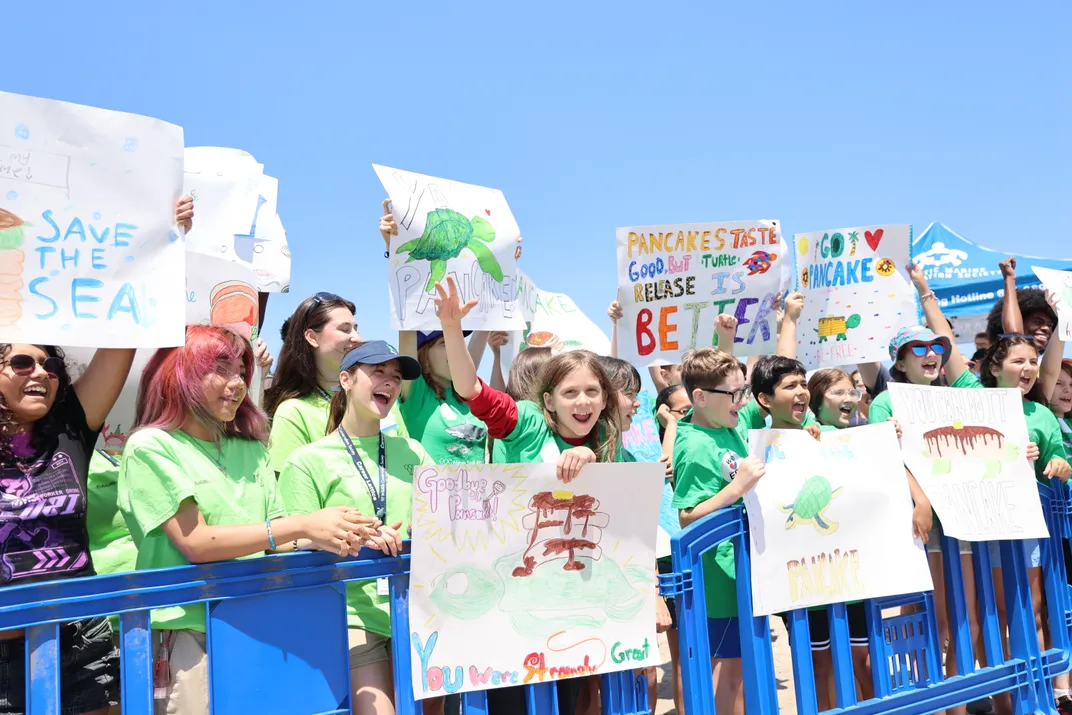
The crowd counted every step.
Children waved handmade signs, families lined the shoreline, and voices rose together in encouragement as a small sea turtle slowly crossed the sand toward the Atlantic Ocean. Every pause seemed to make the moment more emotional. Every movement brought the young reptile one step closer to freedom after months spent fighting to recover from an ordeal that nearly ended its life.
The turtle’s name was Pancake, and its return to the ocean marked the final chapter in an extraordinary rescue effort involving multiple wildlife organizations determined to give one endangered animal another chance.
Pancake, a juvenile Kemp’s ridley sea turtle, entered the water off Coney Island in New York on July 23 after completing months of rehabilitation. For conservationists, it was more than a successful release—it was another victory for one of the world’s most endangered sea turtle species.
Only months earlier, Pancake had been found in a very different condition.
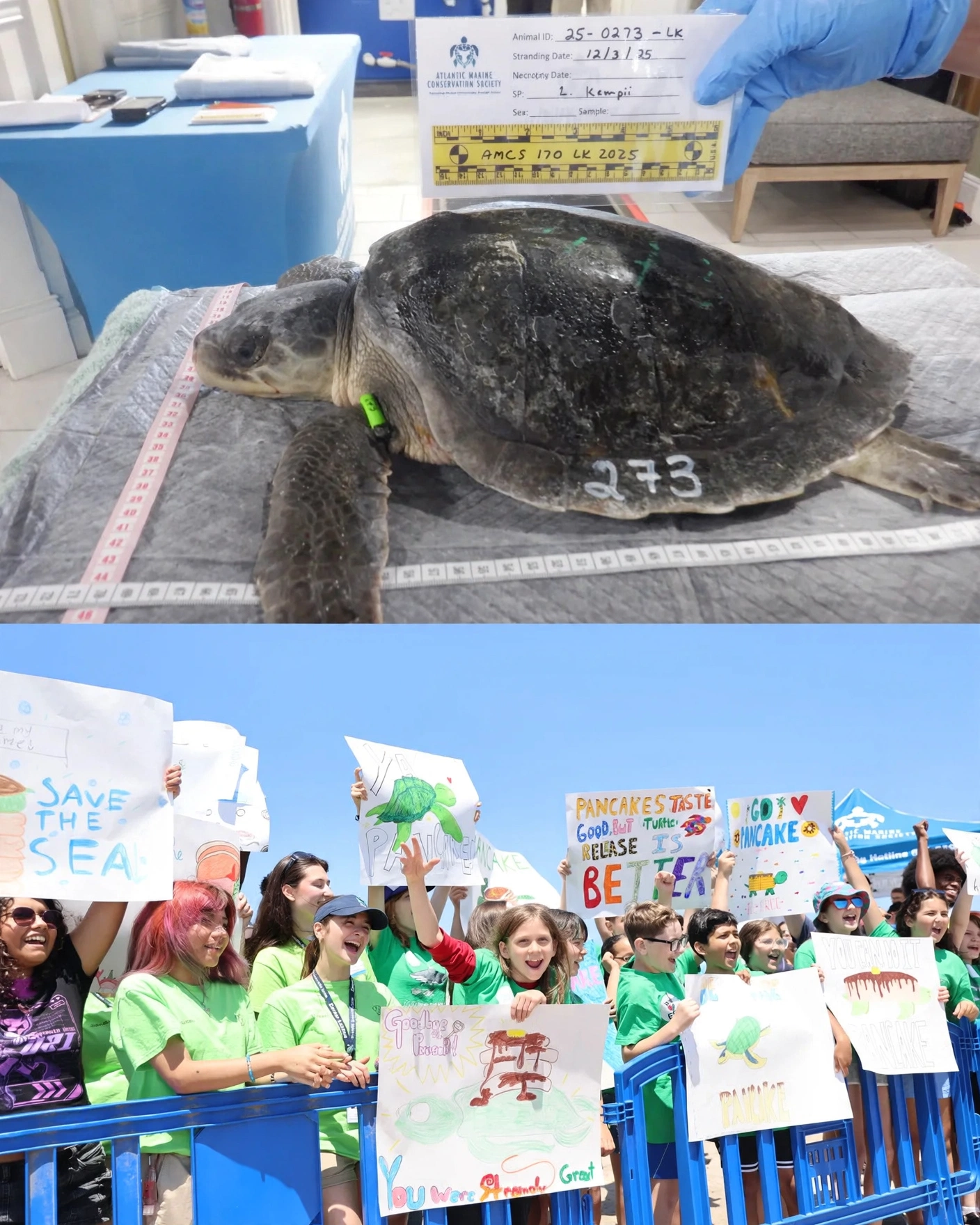
On November 22, 2025, the turtle washed ashore at Duck Harbor Beach in Wellfleet, on Cape Cod, Massachusetts. Weak, motionless, and suffering from severe cold-stunning, Pancake had become trapped in dangerously cold waters during its seasonal migration.
Cold-stunning is a life-threatening condition that affects sea turtles when water temperatures fall too quickly. Because sea turtles rely on external heat to regulate their body temperature, exposure to frigid water causes their bodies to slow dramatically. Eventually they become lethargic, lose the ability to swim, and often drift helplessly until they wash onto shore.
Without rescue, many never survive.
Fortunately for Pancake, the turtle was discovered in time.
Rescuers transported the young reptile to the New England Aquarium, where veterinarians provided emergency treatment to stabilize its condition. After receiving initial care, Pancake was transferred to the Atlantic Marine Conservation Society’s Sea Turtle Care Facility in Westhampton Beach, New York, where the long process of rehabilitation truly began.
The road back to health required patience.
Caretakers carefully monitored Pancake’s progress, making sure the turtle regained strength gradually. The rehabilitation team focused not only on recovery from hypothermia but also on restoring the animal’s ability to feed independently and behave naturally before considering any release.
Marine biologist Rob DiGiovanni explained that turtles must reach what caregivers consider “operating speed” before returning to the wild. They need to eat on their own, actively pursue prey, and demonstrate strong swimming ability capable of supporting life in the open ocean.
Over time, Pancake met every milestone.
The turtle recovered by feeding on shrimp and clams, steadily rebuilding lost energy. By the end of rehabilitation, Pancake was actively hunting food, swimming confidently, and weighed approximately 11 pounds.
Experts estimated the young turtle to be between two and five years old.
Its sex remains unknown because determining that would require a blood test that was unnecessary for its treatment.
When veterinarians finally decided Pancake was ready, preparations began for the long-awaited release.
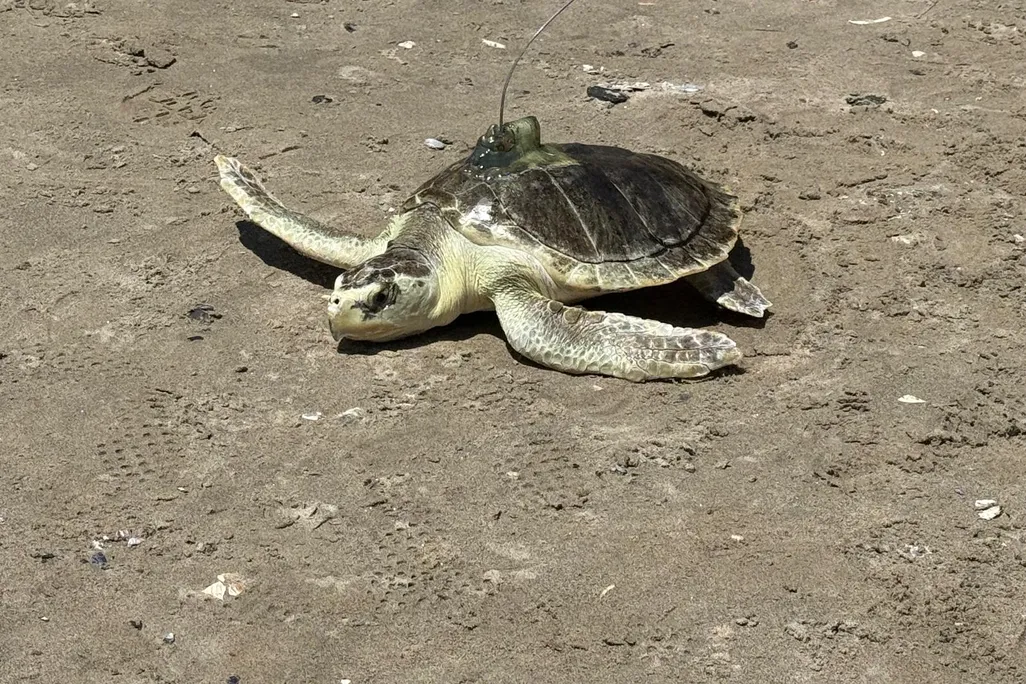
Before returning the turtle to the Atlantic, specialists attached a satellite transmitter to the top of its shell. The tracking device is expected to operate for as long as 90 days, allowing researchers to follow Pancake’s movements in real time and gather valuable information about the turtle’s journey after release.
The technology offers scientists a rare opportunity to observe how rehabilitated turtles reintegrate into the wild.
Then came the moment everyone had been waiting for.
As Pancake slowly crawled across the beach outside the Wildlife Conservation Society’s New York Aquarium, children called out the turtle’s name while adults watched quietly from behind. Some held colorful signs celebrating the endangered traveler whose survival had become an inspiring symbol of successful wildlife conservation.
Each step across the sand represented months of dedicated work by veterinarians, marine biologists, rescuers, and volunteers.
For those who had cared for Pancake since the rescue, watching the turtle disappear beneath the waves brought both relief and satisfaction.
Aaron Gouveia of the Massachusetts Audubon Society, whose organization rescued Pancake on Cape Cod, described the release as exactly why rescue teams devote themselves to searching beaches each autumn.
Seeing an animal return home, he explained, makes every rescue worthwhile.
Pancake’s story also highlights a recurring challenge faced by sea turtles along the northeastern coast of the United States.
During spring and summer, several sea turtle species travel north to feed in the rich coastal waters around New England and New York. As temperatures begin to fall, they instinctively migrate south toward warmer seas. But some become trapped inside Cape Cod Bay, where the peninsula’s distinctive curved shape blocks their route to open water.
Once cold weather arrives, the consequences can be devastating.
Unable to tolerate rapidly dropping water temperatures, many turtles become cold-stunned before reaching safety. Some wash ashore and are rescued. Others are never found.
For the Kemp’s ridley sea turtle, every successful rescue carries added significance.
The species is the smallest sea turtle in the world, with adults typically weighing between 85 and 100 pounds and measuring roughly two to two-and-a-half feet in shell length.
Its conservation history has been marked by dramatic highs and lows.
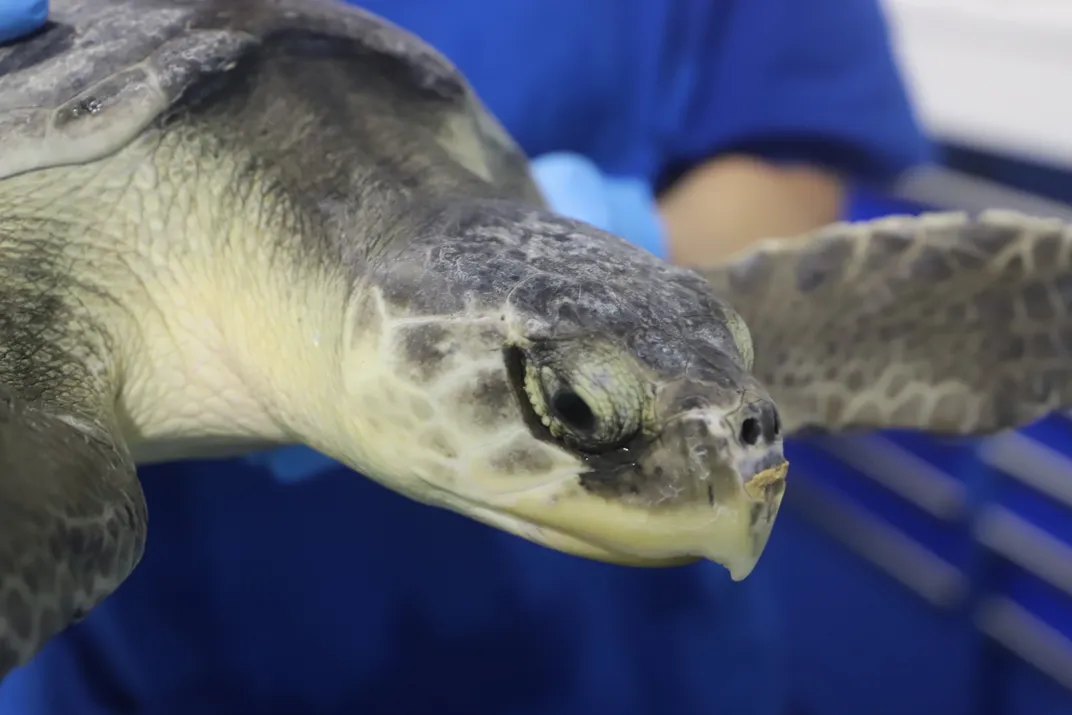
Decades ago, tens of thousands of Kemp’s ridley turtles nested along the Gulf of Mexico. But intensive egg harvesting, hunting, and accidental capture in fishing gear caused the population to collapse. By 1985, fewer than 250 nesting females remained.
International conservation efforts have slowly helped the species recover.
Today, scientists estimate there are between 7,000 and 9,000 nesting females in the Gulf of Mexico. Even with that progress, the turtle remains endangered in the United States and is still listed as critically endangered by the International Union for Conservation of Nature.
Marine biologist Maia Austin said every rescued turtle matters because each individual contributes to the recovery of a species that once came dangerously close to disappearing.
Pancake was not the only success story celebrated this summer.
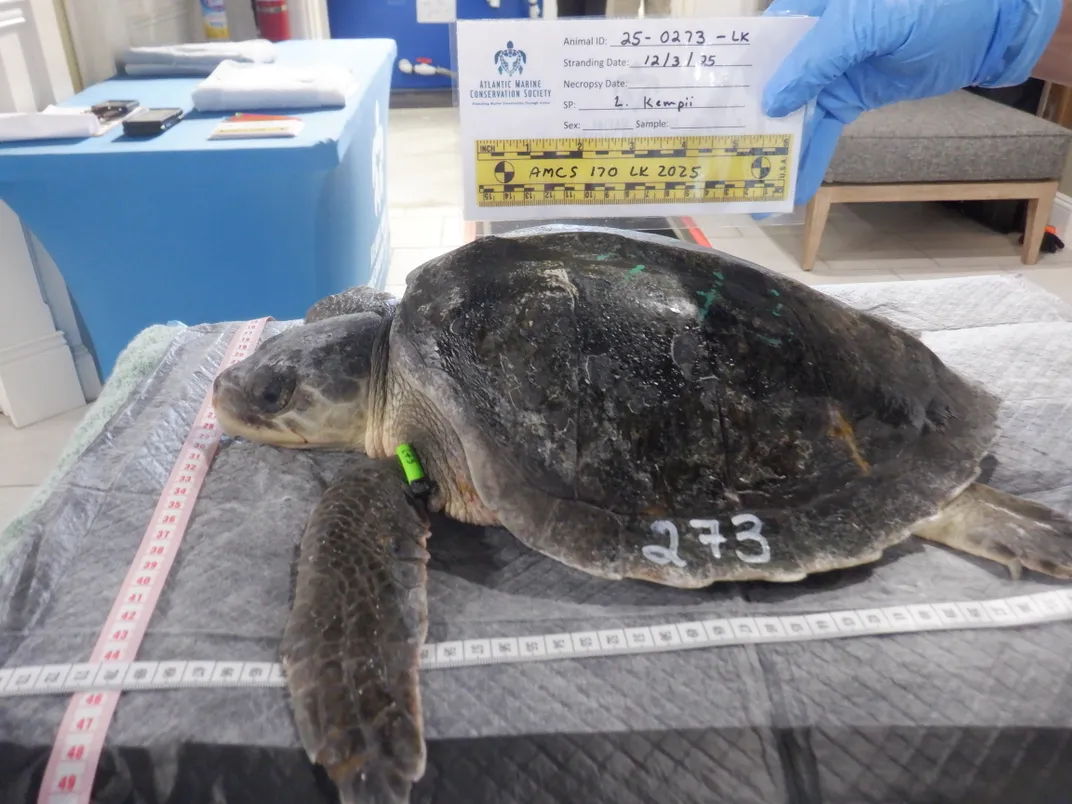
During the same week, five additional Kemp’s ridley sea turtles—named Times New Roman, Papyrus, Gigi, Walter Turncoat, and Punk Kid—were also released after completing seven months of rehabilitation at the New England Aquarium’s Sea Turtle Hospital.
Together, those releases represent far more than isolated victories.
They demonstrate what can happen when rescue organizations, aquariums, veterinarians, and conservation groups work together to protect vulnerable wildlife.
As Pancake disappeared into the Atlantic, the cheers from the beach slowly faded.
But somewhere beneath the waves, a turtle that once lay helpless on a cold Massachusetts shoreline had resumed the journey nature intended. Its satellite transmitter will continue telling scientists where it travels next, while its remarkable recovery serves as another reminder that even a single rescued animal can become a powerful symbol of hope for an entire endangered species