Jeff Goldblum Arrived to Discuss Jurassic Park — Then Steven Spielberg Told Him Ian Malcolm Might Not Exist
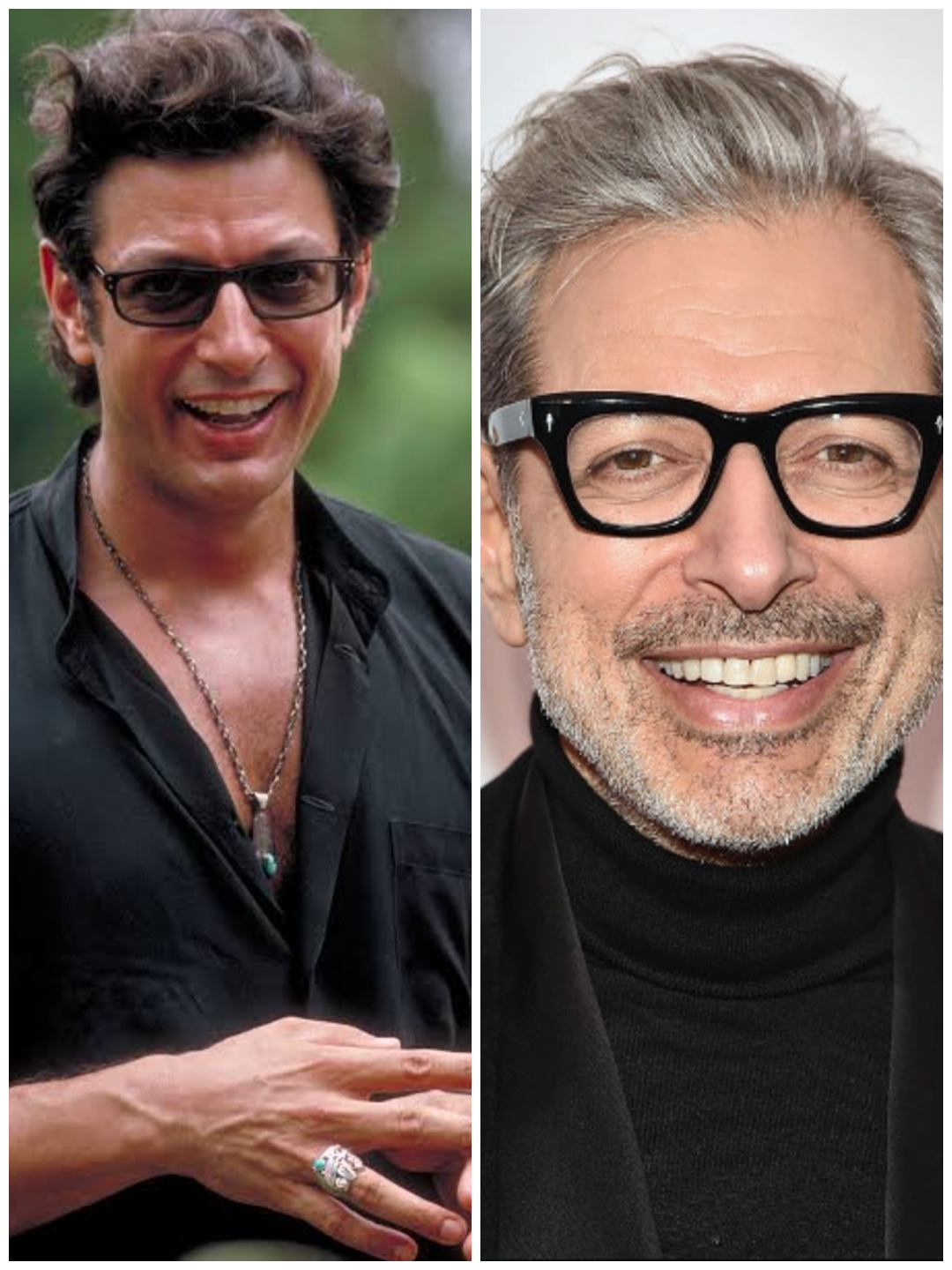
When Jeff Goldblum appears in Jurassic Park dressed almost entirely in black, leaning back in a Jeep and questioning whether scientists should be bringing dinosaurs back to life, Ian Malcolm immediately feels different from everyone around him.
Alan Grant understands dinosaurs. John Hammond believes in his park. Ellie Sattler studies the natural world.
Malcolm doubts the entire idea.
His warnings about chaos, unpredictability and humanity’s inability to control nature became some of the most recognizable dialogue in Steven Spielberg’s 1993 blockbuster. Goldblum’s eccentric pauses, amused skepticism and unmistakable delivery helped turn the mathematician into one of the movie’s defining characters.
Yet when Goldblum first went to meet Spielberg about Jurassic Park, there was a possibility that none of that would happen.
Malcolm, Spielberg told him, might disappear from the movie completely.
And instead of simply accepting the news, Goldblum made an argument for why the character should survive.
Goldblum Went to Amblin Ready to Talk About Ian Malcolm
By the early 1990s, Goldblum was already a familiar face.
He had appeared in movies including The Big Chill and The Fly, and his unusual screen presence made him especially suited to characters who were intelligent, nervous, funny and difficult to predict.
Ian Malcolm seemed like a natural fit.
In Michael Crichton’s Jurassic Park novel, Malcolm is a mathematician specializing in chaos theory. He is not simply another scientist invited to inspect the park. He represents a philosophical challenge to John Hammond’s entire experiment.
Before the dinosaurs even begin escaping, Malcolm believes the system cannot behave the way Hammond expects it to.
Goldblum had been reading the material and preparing to discuss the role when he went to Amblin to meet Spielberg.
He expected a conversation about playing Malcolm.
Instead, Spielberg gave him unexpected news.
Spielberg Said a Rewrite Could Eliminate Malcolm
Goldblum later recalled that Spielberg explained there was discussion about changing the screenplay.
One possibility was especially important to him: Ian Malcolm might be removed.
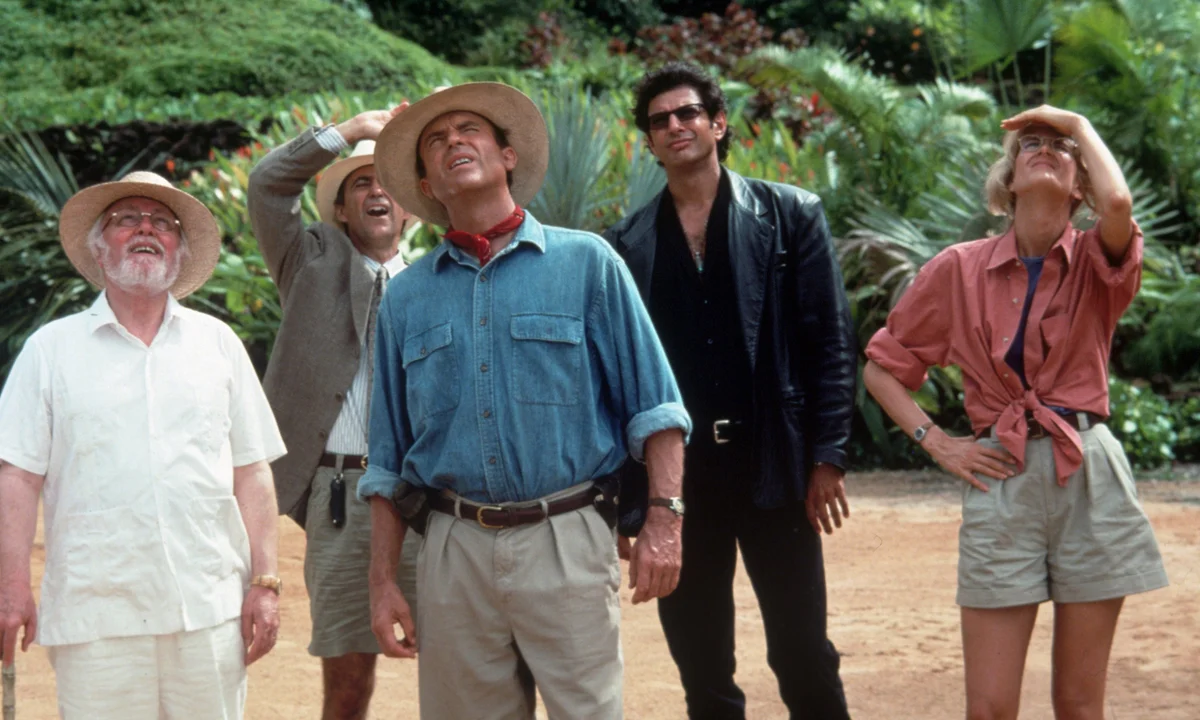
Rather than keeping Malcolm as a separate character, some of his dialogue, ideas and characteristics could be folded into Alan Grant, the paleontologist eventually played by Sam Neill.
From a screenplay perspective, the idea had a certain logic.
Jurassic Park had a large group of characters to introduce while also establishing the island, the science behind the dinosaurs, Hammond’s family, the park’s security problems and the creatures themselves.
Combining characters is a common way to simplify a movie adaptation.
But for Goldblum, Malcolm did not feel interchangeable with Grant.
He had already spent enough time thinking about the character to see something worth preserving.
So he spoke up.
Goldblum Made the Case That Malcolm Brought Something Different
Goldblum did not respond by demanding the role or acting as though Spielberg owed him the character.
Instead, he began explaining why he thought Malcolm added a distinct flavor to the story.
Malcolm’s perspective was different from Grant’s.
Grant approaches the dinosaurs as a paleontologist who has devoted his career to understanding animals that vanished millions of years ago. His amazement at seeing them alive is one of the movie’s emotional foundations.
Malcolm arrives from another direction.
He is interested in systems, uncertainty and what happens when human beings convince themselves they can control something fundamentally uncontrollable.
Goldblum argued for keeping that separate voice in the movie.
He had read the book, found Malcolm interesting and believed the character contributed something specific that might be lost if his material were simply transferred to Grant.
Goldblum has never claimed that his little pitch alone caused Spielberg to save the character.
But Malcolm remained.
And once filming began, it became difficult to imagine Jurassic Park without him.
Malcolm Became the Man Warning Everyone Before the Disaster
In the finished movie, Malcolm performs a crucial function.
He is the person saying what audiences will soon watch the dinosaurs prove.
Hammond looks at Jurassic Park and sees achievement. He has taken genetic material, money, technology and ambition and created something the world has never seen.
Malcolm sees instability.
He questions the assumption that because scientists managed to accomplish something, they therefore had the wisdom to do it.
He also challenges the belief that Jurassic Park can be kept safely inside fences, computer systems and carefully designed breeding controls.
The character could easily have become little more than a vehicle for exposition.
Goldblum made him something far stranger and more entertaining.
Malcolm flirts with Ellie. He irritates Hammond. He toys with water droplets while explaining chaos theory. He comments on the park with an amused expression that suggests he already knows the experiment is going to fail spectacularly.
Then it does.
Goldblum Turned Malcolm Into More Than the Movie’s Skeptic
Part of what made the character memorable was the contrast between Malcolm’s intellectual warnings and Goldblum’s physical performance.
He did not play the mathematician like a conventional academic.
Malcolm wore black, moved with an unusual looseness and seemed almost delighted by the uncomfortable implications of his own arguments.
Even when he was criticizing Hammond’s greatest achievement, he rarely sounded like someone delivering a lecture.
He sounded like Ian Malcolm.
That distinction became especially important once the park collapsed into chaos.
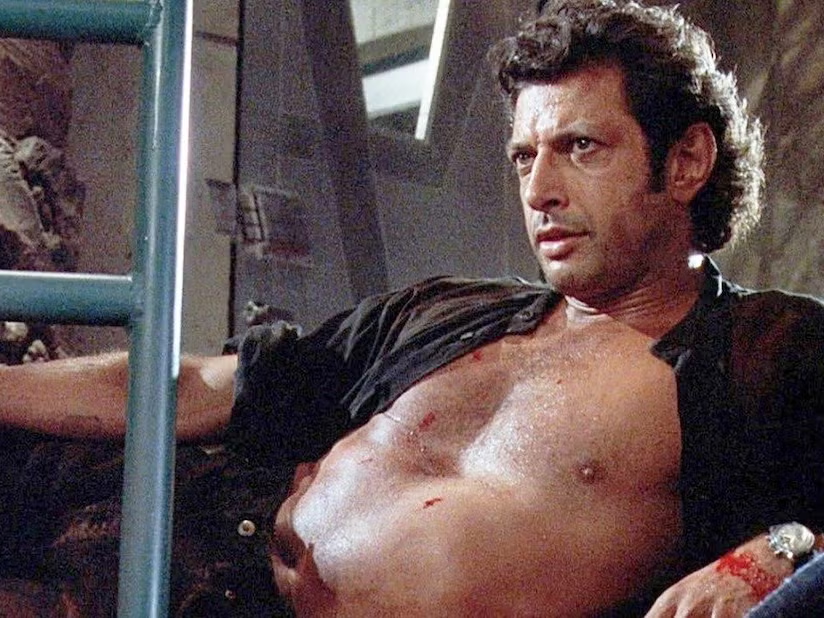
Malcolm is injured during the Tyrannosaurus rex attack but survives, leading to one of the movie’s most enduring visual images: Goldblum reclining injured with his black shirt open.
The moment became so associated with the character that decades later it would exist far beyond the movie itself — endlessly referenced, recreated and turned into memes.
It is a remarkable legacy for a character who had once been discussed as expendable.
Spielberg Eventually Gave Malcolm an Even Bigger Role
The first movie’s success made Jurassic Park a global phenomenon, and Malcolm did not disappear after the credits.
When Spielberg returned to direct The Lost World: Jurassic Park in 1997, Goldblum came back.
This time, Malcolm was not simply one member of an ensemble visiting a dinosaur park.
He was at the center of the story.
The sequel followed him to Isla Sorna after he had already learned firsthand what genetically resurrected dinosaurs could do. That history gave the character a different kind of authority: he was no longer merely predicting chaos.
He had survived it.
Goldblum would eventually return to Malcolm again decades later, reinforcing how strongly the role had become connected to him.
What began as a character who might have been absorbed into Alan Grant instead became one of the franchise’s most recognizable human faces.
Jurassic Park Nearly Lost the Voice That Told Everyone It Would Go Wrong
Looking back at the original film, Malcolm’s possible disappearance feels especially strange because his skepticism is woven so deeply into what Jurassic Park is about.
The movie certainly delivers dinosaurs, chases and spectacle.
But underneath all of that is a warning about control.
Hammond builds something extraordinary and believes the difficult part is over because the dinosaurs are alive and the fences are standing.
Malcolm keeps insisting that life will not obey the plan.
Jeff Goldblum saw that distinction before he had the role.
When Spielberg told him the character might be removed, Goldblum did not know whether his argument would change anything. He simply explained why he believed Malcolm offered the movie something Alan Grant could not entirely replace.
Spielberg ultimately kept him.
And nearly every disaster that follows makes Ian Malcolm’s case for him.