Lindsay Clancy Verdict Watch: Jury Sent Home After Judge Issues Stern Warning on Reasonable Doubt

PLYMOUTH, Mass. — The jury deliberating in the highly scrutinized Lindsay Clancy case has been sent home for the day after a tense session in court that raised fresh questions about whether the panel can reach a unanimous verdict.
After roughly 36 hours of deliberations spread across six days, jurors were instructed once again by Judge William Sullivan on the legal standard of reasonable doubt before being dismissed Thursday. The 12-member panel is expected to return to court Friday morning to begin its seventh day of deliberations.

The latest development came after an extraordinary request from Clancy’s defense team, which argued that one juror was allegedly refusing to follow the judge’s instructions regarding reasonable doubt.
The dispute added another dramatic turn to a case that has already attracted widespread attention and has left the jury deliberating far longer than many observers expected.
Defense asks judge to remove juror
Defense attorney Kevin Reddington made an aggressive request during Thursday’s proceedings after the jury foreperson reportedly sent a note to the court expressing concerns about one member of the panel.
According to Reddington, the note stated that there was “one juror who refuses to listen to the law” concerning the concept of reasonable doubt.
The defense argued that such a situation could interfere with the jury’s ability to properly apply the law when evaluating the evidence presented during the trial.
Reddington therefore asked Judge Sullivan to remove the juror from the 12-person panel.
The jury consists of nine women and three men. Removing a juror at this stage of deliberations would have been an extraordinary step, particularly after the panel had already spent approximately six days reviewing the evidence and discussing the case.
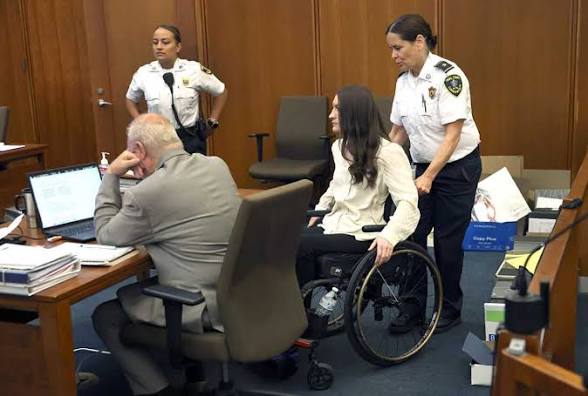
Judge Sullivan ultimately rejected the request and decided to keep the jury intact.
Judge gives jury stern reminder on reasonable doubt
Rather than removing a juror, the judge addressed the panel and provided further guidance regarding the legal meaning of reasonable doubt.
The instruction is particularly significant because jurors are required to base their verdict on the law as explained by the court, rather than on personal beliefs, assumptions or standards outside the courtroom.
The judge’s intervention came at a critical point in the deliberations.
The jury has now spent dozens of hours attempting to reach a decision in a case involving the deaths of Clancy’s three children. The length of the deliberations has intensified speculation about whether the panel is struggling to reach consensus.
Despite the apparent disagreement described by the defense, the judge allowed the deliberations to continue.
Sixth day ends without a verdict
By the end of Thursday’s proceedings, there was still no verdict.
Jurors were sent home for the evening and instructed to return Friday morning.
That means the panel will enter a seventh day of deliberations when proceedings resume.
The extended deliberations have become one of the most closely watched aspects of the case. While lengthy jury deliberations do not necessarily indicate which way a jury is leaning, they can reflect the complexity of the evidence, disagreements among jurors or the difficulty of reaching a unanimous decision.
For now, the outcome remains uncertain.
Why reasonable doubt matters so much
At the heart of any criminal trial is the prosecution’s burden of proof. Jurors must determine whether the evidence presented satisfies the legal standard required for a conviction.
Reasonable doubt does not mean that jurors must be absolutely certain about every detail of a case. Instead, it is a legal standard that requires the prosecution to establish the defendant’s guilt to the level required by criminal law.
That distinction has become especially important in the Clancy deliberations following the reported disagreement among jurors.
The defense’s claim that one panel member was allegedly unwilling to follow the court’s instructions prompted an immediate courtroom dispute. However, Judge Sullivan’s decision means the existing 12-member jury will continue considering the case.
Jury’s next move could determine the case’s direction
When jurors return Friday, they will resume deliberations with the judge’s latest instructions fresh in mind.
The central question will be whether the panel can overcome its reported disagreement and reach a unanimous decision.
If jurors reach a verdict, the court will proceed with the next stage of the case. If they remain deadlocked, however, the prolonged deliberations could create a new set of legal questions for the court.
For now, there is no indication that the judge has declared a mistrial, and the jury remains seated.
The courtroom drama is therefore far from over.
After six days of deliberations, a reported dispute over reasonable doubt and a defense request to remove a juror have added another unexpected chapter to the Lindsay Clancy case.
The jury is scheduled to return Friday morning for its seventh day of deliberations.
Course: NY Post