Lone Holdout Juror in Lindsay Clancy Trial Says He Had ‘No Doubts’ as Questions Grow Over What Happened Inside Jury Room
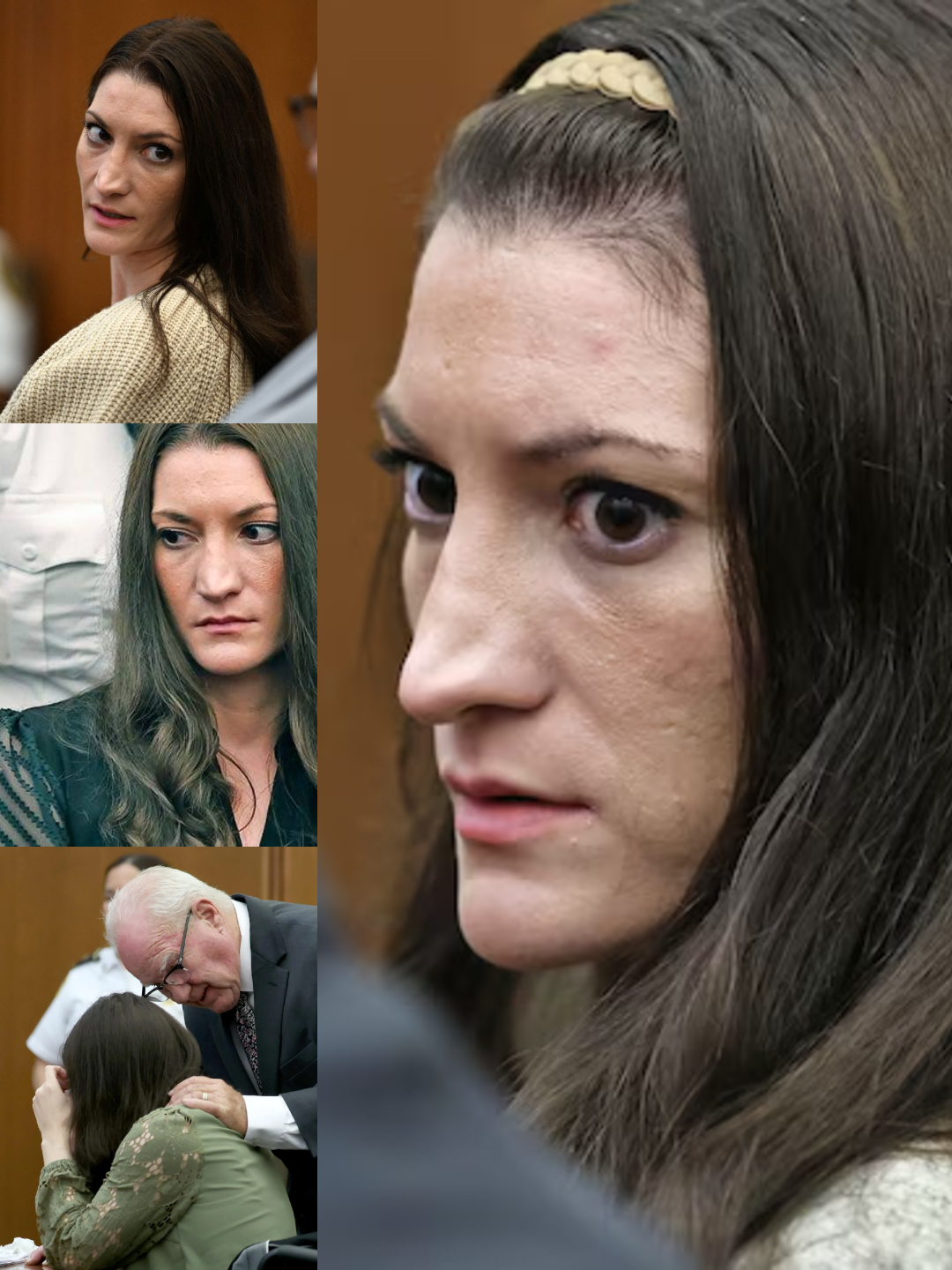
The lone juror who prevented a unanimous verdict in Lindsay Clancy’s closely watched murder trial is speaking publicly for the first time, rejecting claims from fellow jurors that he struggled with reasonable doubt during seven days of tense deliberations.
Michael Péguy Desronvil, the only member of the 12-person jury who ultimately refused to find Clancy not criminally responsible for the deaths of her three children, said he remained convinced that the evidence showed she understood and planned what she was doing.
“I didn’t have any doubts,” Desronvil said in a statement released Sept. 18.
He said attempts to discuss alternative theories during deliberations were interpreted by other jurors as uncertainty, but maintained that the physical evidence, witness testimony and prosecution’s case convinced him that Clancy was criminally responsible.
His account directly conflicts with statements made by several other jurors after the trial ended in a mistrial on Sept. 4.
Their competing descriptions of what happened inside the jury room have now become a second controversy surrounding a case already at the center of a national debate about postpartum mental illness, criminal responsibility and the limits of the insanity defense.
Eleven Jurors Reached One Conclusion
Clancy, 36, was charged with three counts of murder in the deaths of her children — 5-year-old Cora, 3-year-old Dawson and 8-month-old Callan — at the family’s Duxbury, Massachusetts, home on Jan. 24, 2023.
She did not dispute that she strangled the children.
Instead, her defense argued that she should be found not guilty by reason of lack of criminal responsibility because she was suffering from severe postpartum psychosis at the time.
Prosecutors took the opposite position, arguing that evidence surrounding the killings showed planning, awareness and an understanding of her actions.
After a trial lasting approximately five weeks, the jury deliberated for seven days but was unable to reach the unanimous verdict required under Massachusetts law.
By the end, 11 jurors supported a finding that Clancy was not criminally responsible.
Desronvil did not.
Judge William Sullivan ultimately declared a mistrial.
Fellow Jurors Describe a Very Different Deliberation
In interviews following the mistrial, several jurors described growing frustration with the holdout.
Foreperson Roni Carlson said Desronvil at one point acknowledged having reasonable doubt but still would not agree to a verdict finding Clancy not criminally responsible.
Carlson and two other jurors said they believed his position became increasingly difficult to reconcile with the judge’s instructions regarding reasonable doubt.
Another juror, Nick Dargie, said Desronvil did not identify a specific piece of evidence that persuaded him to maintain his vote.
Dargie also described one tense moment in which the holdout allegedly used an exercise band and a water bottle in what appeared to be an attempt to recreate the strangulations during deliberations.
That account came from Dargie and has not been independently established outside the jurors’ descriptions of their private discussions.
Desronvil now says those accounts do not accurately represent his thinking.
His statement makes clear that he believed the prosecution had presented sufficient evidence that Clancy knew what she was doing.
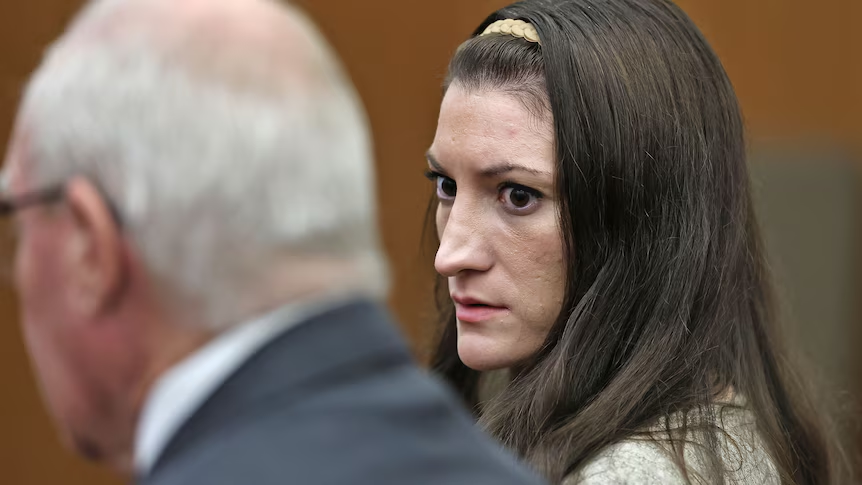
The Central Question Was Never Who Killed the Children
The unusual structure of the trial is important to understanding why the jury became deadlocked.
Clancy’s defense was not arguing that someone else killed Cora, Dawson and Callan.
The core question was whether she was legally criminally responsible at the time.
Her attorneys presented evidence and expert testimony supporting the claim that she was experiencing postpartum psychosis, a rare but severe psychiatric condition that can involve delusions, hallucinations, paranoia and a break from reality.
The prosecution argued that Clancy’s actions before and after the killings showed a level of planning inconsistent with the defense’s theory.
The jury therefore had to evaluate not merely what happened, but Clancy’s mental state at the precise time of the acts.
Eleven jurors eventually concluded that the defense had raised sufficient grounds to find her not criminally responsible.
Desronvil reached the opposite conclusion.
Patrick Clancy’s Testimony Was Important to Some Jurors
Another juror, Paula Devlin, later said testimony from Clancy’s former husband, Patrick Clancy, played an important role in her own evaluation of the case.
Devlin said the jury was more divided when deliberations began.
According to her account, eight jurors initially leaned toward finding Clancy not responsible, two were undecided and two favored guilt.
Over time, all but one moved toward the insanity verdict.
Patrick Clancy testified about his wife’s condition in the period leading up to the killings and about the family’s efforts to obtain mental-health treatment for her.
The defense used testimony about her psychiatric treatment, medications and behavior to argue that the killings emerged from a severe mental-health crisis rather than rational criminal intent.
Prosecutors, however, repeatedly pointed jurors back to evidence they argued demonstrated deliberateness.
Desronvil says it was that evidence that ultimately mattered most to him.
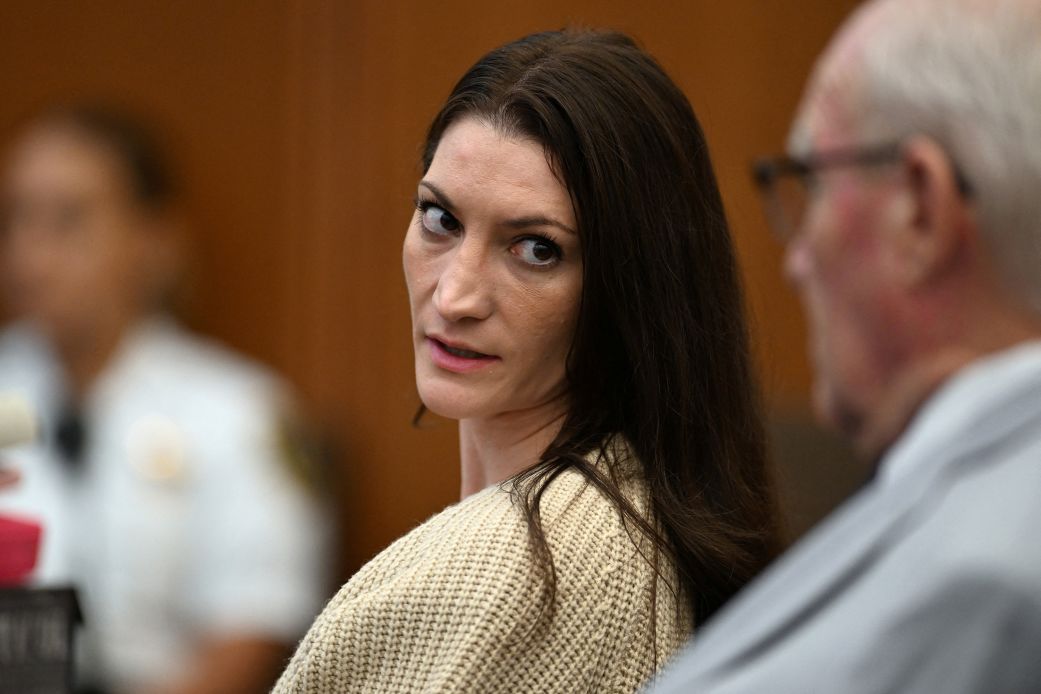
Judge Questioned Jurors During Deliberations
The deadlock became apparent before the mistrial was formally declared.
On Sept. 3, after concerns arose regarding whether one juror was following the court’s instructions on reasonable doubt, Judge Sullivan questioned members of the panel individually under oath.
Clancy’s attorney, Kevin Reddington, argued in court that the holdout juror was refusing to follow the law and asked that he be removed.
The judge did not dismiss him.
Jurors were instead given additional instructions regarding the legal meaning of reasonable doubt and sent back to continue deliberating.
The following day, it became clear that no unanimous verdict could be reached.
The mistrial left the case legally unresolved.
Public Scrutiny Shifted Toward the Holdout
In the days after the trial, Desronvil unexpectedly became a public figure.
Information about his personal history circulated widely, including reports of a previously dismissed domestic violence charge and a restraining order.
His attorney has criticized the attention as an invasion of his privacy and defended his right to reach an independent judgment based on the evidence presented at trial.
A fundraiser created for Desronvil has also attracted substantial donations.
The level of attention has led his attorney to say that he is now staying in a secure, undisclosed location.
The scrutiny illustrates an unusual aftermath for a criminal trial in which the jurors themselves — rather than only the defendant, attorneys and evidence — have become central to the public discussion.
Prosecutors Have Not Yet Announced Whether They Will Retry Clancy
The most important legal question now has nothing to do with juror disagreements.
It is whether prosecutors will put Lindsay Clancy on trial again.
As of Sept. 19, the Plymouth County District Attorney’s Office has not publicly confirmed whether it intends to retry the case.
A court hearing is scheduled for Sept. 29, when the next stage of the proceedings may become clearer.
Clancy remains in custody at a state psychiatric hospital.
If she were eventually found not guilty by reason of lack of criminal responsibility, that would not necessarily mean she would simply be released. She could instead remain committed to a secure mental-health facility, subject to continuing judicial review.
A first-degree murder conviction, by contrast, could result in life imprisonment without parole.
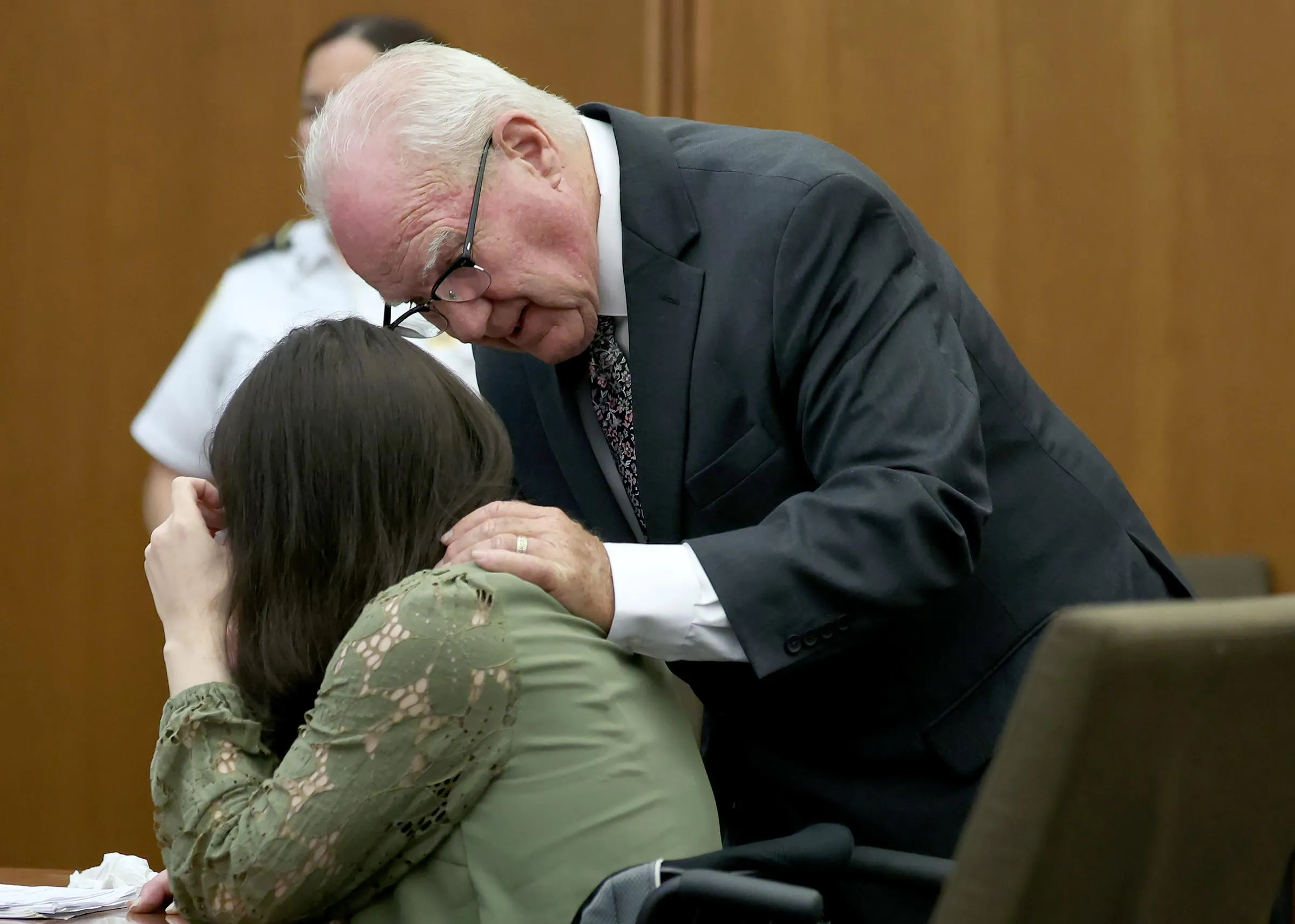
Two Versions of the Same Jury Room
The trial ended without an answer to the question the jury had been asked to decide.
But its aftermath has created another unresolved dispute.
Eleven jurors say they ultimately became convinced Clancy should not be held criminally responsible because of her mental state.
Several of them say the remaining juror expressed reasonable doubt yet refused to move from his position.
Desronvil says that account is wrong.
He maintains that he had no doubts and believed the prosecution had proved Clancy knew what she was doing.
Because jury deliberations are private, the public is unlikely ever to have a complete independent account of every exchange that occurred during those seven days.
For now, both sides of that dispute remain part of the story.
And while the debate over what happened inside the jury room continues, the larger legal question remains unanswered: whether Lindsay Clancy will face a second trial for the deaths of Cora, Dawson and Callan.