Multiple Sclerosis Took Away Their Daily Walks — So a Husband Built a Rickshaw to Bring His Wife Back Beside Him
For years, walking had been one of Rick and Jan Dorothy’s favorite ways to stay connected.
They walked to talk through problems. They walked to plan the future. They walked when life felt uncertain and when it felt good.
Then multiple sclerosis slowly began taking that ritual away from them.
Jan’s legs could no longer carry her as far as they once had. Eventually, their long walks together became impossible.
Rick could have continued walking alone.
Instead, after spotting an old-fashioned Chinese rickshaw on television, he decided to build one himself.
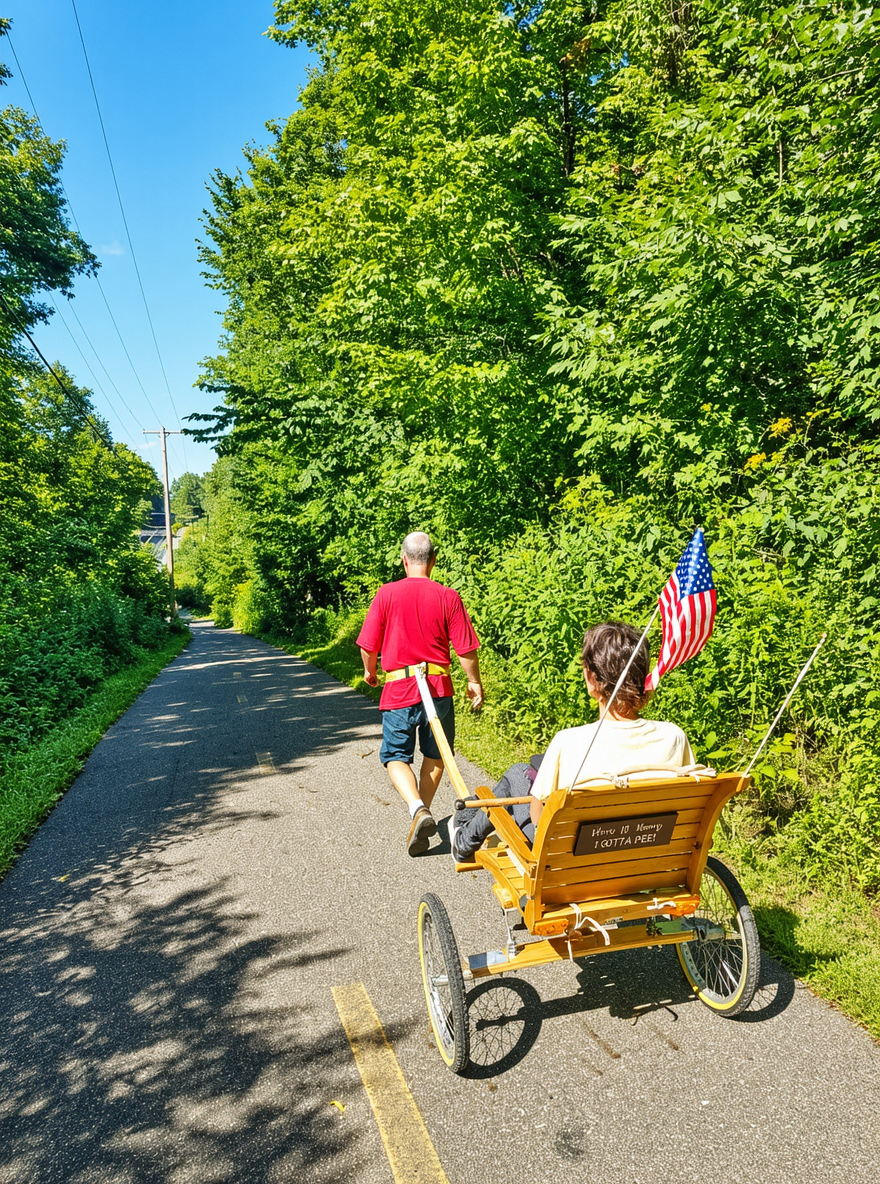
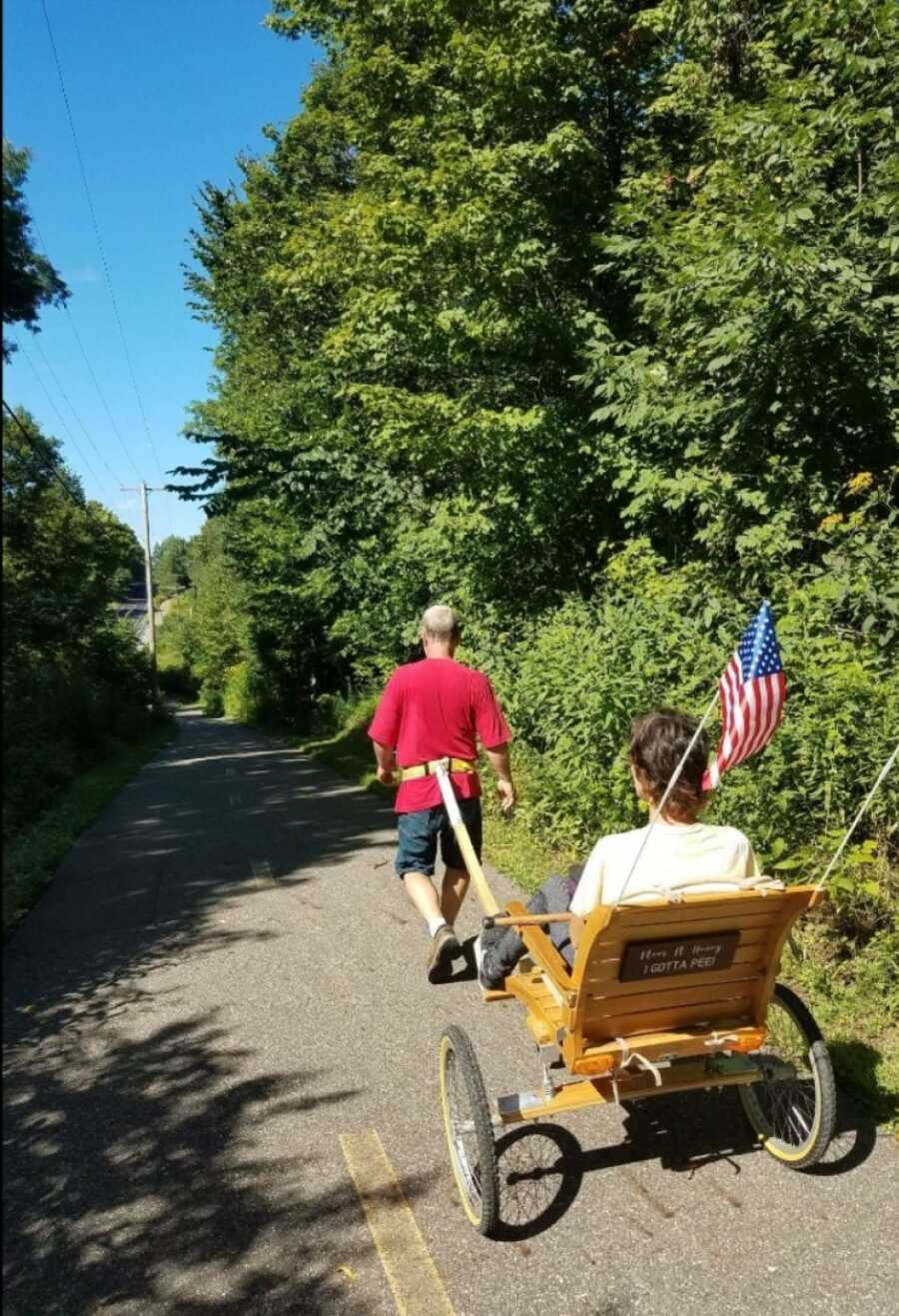
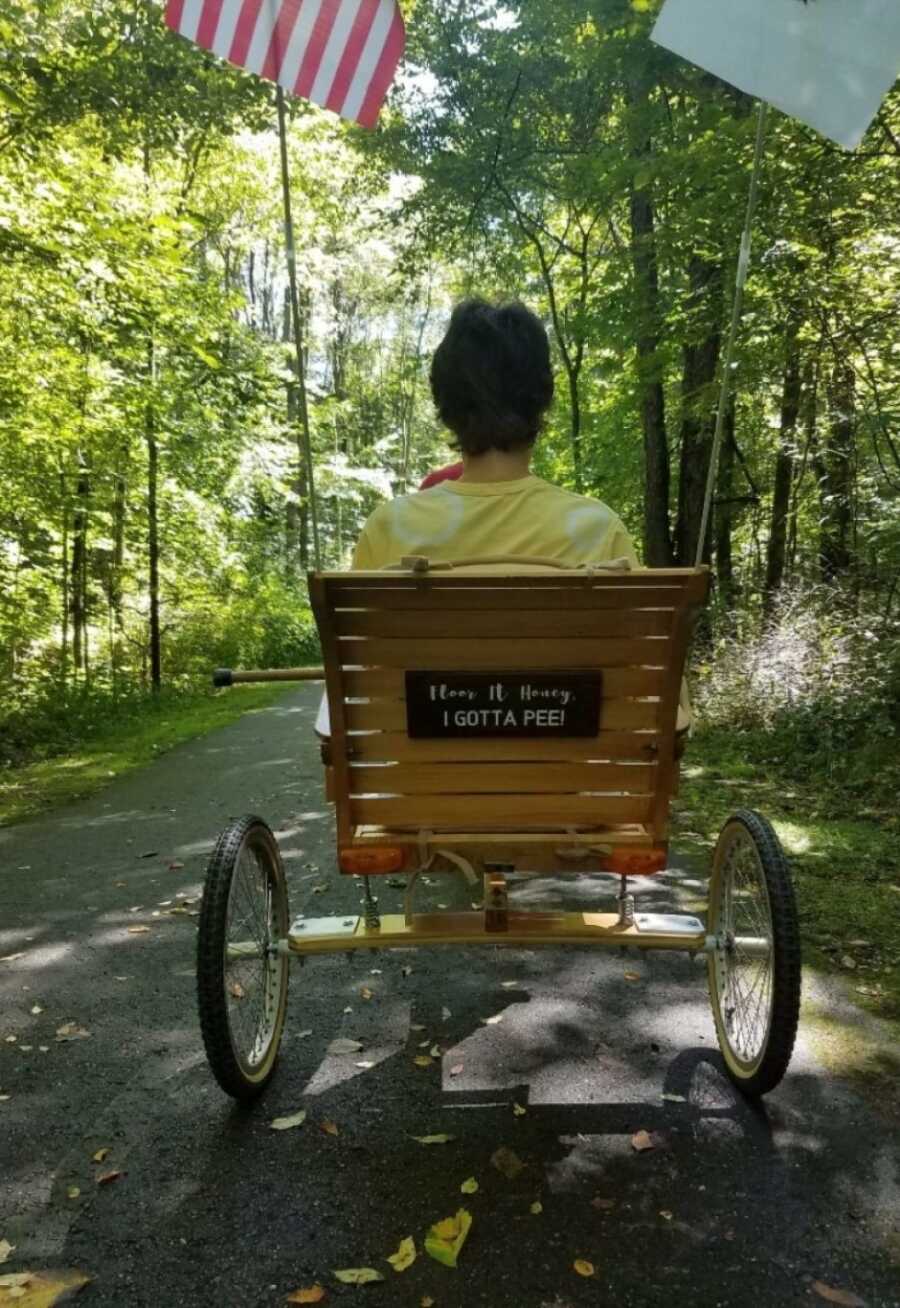
The finished chair weighed about 25 pounds, had large wheels, suspension and a frame designed specifically for Jan’s body. It also broke down so the couple could place it in the back of their car.
The first time Rick pulled Jan down their driveway and onto the road, they recovered something the disease had gradually stolen from them.
They could go walking together again.
Their Relationship Began at Work
Rick first met Jan while they were both working.
He remembered her as shy and easy to talk to, but the connection felt stronger than an ordinary workplace friendship.
There was a complication: both were married to other people.
Rick tried to dismiss his feelings.
Over time, however, both marriages ended after their respective spouses were unfaithful.
Once they were both single, the connection that had originally seemed impossible was allowed to become something more.
A year later, Rick and Jan married.
They soon welcomed their first child, followed by another pregnancy.
For a while, their new family life appeared to be falling into place.
Then Rick lost the job he had held for 18 years.
The timing was frightening.
Jan had recently stopped working to become a full-time mother and was eight months pregnant.
Suddenly, the couple needed an entirely new plan.
Long Walks Helped Them Rebuild Their Life
Rick and Jan spent many late nights talking about what they should do next.
They also walked.
Those conversations eventually led to a major decision: they would sell their home, build another and start a wood business together.
The plan worked.
Rick described Jan as his “left hand” during those years.
They built things together, cut wood together and created an income together.
When Rick’s mother became seriously ill, the couple also decided to bring her into their home rather than place her in a nursing facility.
It was not always easy.
Some days were better than others, but Rick remembered Jan continuing to care for his mother through the difficult periods.
Meanwhile, the couple’s long walks became an everyday ritual.
They used the time to think, talk and prepare for whatever came next.
Then Rick began noticing something unusual.
A Slight Foot Drag Became the First Warning
Near the end of one walk, Rick noticed Jan dragging her right foot just enough for it to brush the ground.
At first, neither of them was particularly alarmed.
Jan had always been somewhat clumsy, and Rick had even teased her about it before.
They assumed she was tired or needed to get into better physical condition.
Their solution was simple: walk farther and strengthen her legs.
Instead, the problem worsened.
One day, a neighboring couple joined them on a walk. Rick noticed that despite the neighbors being less physically active, they had no difficulty keeping their feet moving normally.
That comparison made Rick and Jan realize something more serious might be happening.
They scheduled a doctor’s appointment.
Not long afterward, Jan was diagnosed with multiple sclerosis.
The Diagnosis Changed Their Expectations
As the couple learned more about MS, Rick became increasingly frightened about what the disease could mean for Jan’s future.
Jan reacted differently.
Rick said she did not cry, complain or spend time feeling sorry for herself.
He admitted that he struggled more emotionally.
Eventually, he made himself a promise: he would do whatever he could to make Jan’s life feel as normal as possible.
The couple refused to let the diagnosis immediately erase the things they loved doing together.
They started a daily exercise routine intended to strengthen Jan’s legs.
Rick also administered a weekly injection that left her feeling as though she had the flu.
He hated being the person who had to push the needle into her leg.
But their options felt limited, and they kept going.
MS kept progressing anyway.
Little Pieces of Independence Began Disappearing
The decline did not happen all at once.
That made it especially difficult.
Jan gradually lost the ability to walk long distances.
Rick eventually made her a cane.
Stairs became harder.
Then helping with the couple’s physical wood business became impossible.
Rick took over more of the manual work while Jan became the bookkeeper and continued focusing on their children.
Their walking routine suffered most.
For a couple who had spent years processing life side by side on the road, losing those walks felt like losing something much larger than exercise.
Rick began going out alone.
He would return and tell Jan what he had seen.
But that was not the same.
He wanted her there when he saw it.
An Old Television Show Gave Rick an Idea
The solution appeared unexpectedly.
Rick was watching television when he saw a traditional Chinese rickshaw on an old program.
Immediately, he began imagining a version for Jan.
His family was accustomed to Rick’s inventions and ambitious ideas, so his announcement did not initially create much excitement.
Even Jan was skeptical.
Rick was no longer young, and the idea of him manually pulling her around in a homemade wooden vehicle did not immediately sound practical.
Still, he began building.
At one stage, Rick asked Jan to sit on a simple piece of plywood while he experimented with the correct balance point.
Jan had questions.
Would she fall?
Would there be brakes?
Rick was more focused on proving the basic idea could work.
He asked her to trust him.
Eventually, the rough concept became a finished vehicle.
The First Ride Changed Everything
When the rickshaw was finally ready, Rick felt as though he were asking Jan to test a homemade airplane.
She climbed in.
To her surprise, the seat was comfortable.
Then Rick lifted the front handles, tilting her backward slightly.
Jan immediately wondered whether the entire thing might flip over.
It did not.
Rick began pulling.
They traveled down their long driveway and continued onto the road.
Soon, Jan was smiling.
The experiment worked.
Rick discovered that pulling the rickshaw was easier than expected.
At roughly 25 pounds, the vehicle itself was lightweight. Large wheels reduced resistance, while a suspension system helped keep the ride comfortable.
He had built the seat and frame specifically around Jan’s weight and shape.
When necessary, the rickshaw could be taken apart and loaded into their vehicle.
Rick had not found a cure for MS.
But he had solved one problem that mattered enormously to them.
Their Walks Became Family Walks
The homemade rickshaw allowed Jan to return to the outings she had lost.
Instead of Rick walking alone and describing everything afterward, husband and wife could experience the journey together again.
Eventually, their children and other relatives began taking turns pulling the chair.
The device became a family project in motion, carrying Jan alongside the people who loved her.
Rick never pretended that the chair fixed every challenge created by MS.
It could not restore the nerve function Jan had lost.
It could not remove the injections, the physical limitations or the uncertainty surrounding the disease.
But it preserved one piece of their old life.
And sometimes preserving one meaningful thing was enough to make the effort worthwhile.
Their Solution Was Really About Refusing to Stop
Rick came away from the experience with a philosophy he wanted to share with people facing their own difficult circumstances.
Life sometimes places what feels like an impossible wall directly in front of you.
His answer was not to pretend the wall was not there.
It was to find another way over it.
For Rick and Jan, the wall was multiple sclerosis.
They could not simply decide that Jan would keep walking normally through determination alone.
So Rick changed what “taking a walk” meant.
He built wheels.
He built suspension.
He built a seat shaped for the woman he had spent years walking beside.
Then he picked up the handles and started moving.
As long as Rick’s own legs remain strong enough, he intends to keep taking Jan along.
Their walks no longer look the way they once did.
But they are still together on the road.
And that, for Rick, was the part worth saving.