Nolan Wells’ Family Still Searching for Answers After Independent Autopsy Leaves Cause of Death Undetermined
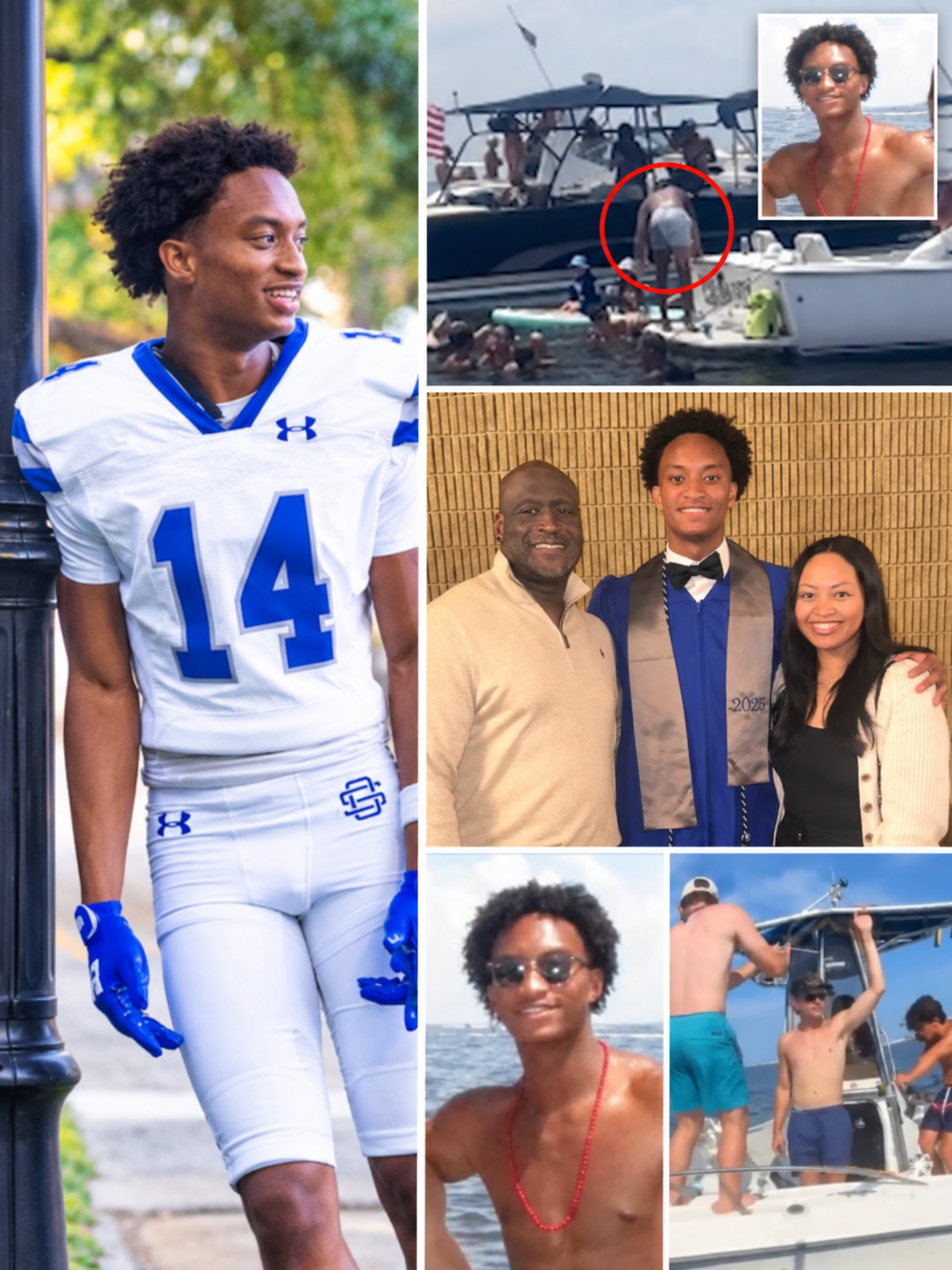
More than two months after 18-year-old Nolan Xavier Wells disappeared during a Fourth of July outing on Mississippi’s Horn Island, his family is still waiting for a definitive explanation of how he died.
What initially appeared to authorities to be a possible drowning has developed into a much more complicated investigation involving conflicting accounts, disputed video footage, cellphone records, two autopsies and questions about what happened in the hours before Wells was last seen alive.
Wells, a recent high school graduate and college football player, went to Horn Island on July 4 with friends from his hometown of Ocean Springs. He did not return with them.
His body was recovered two days later.
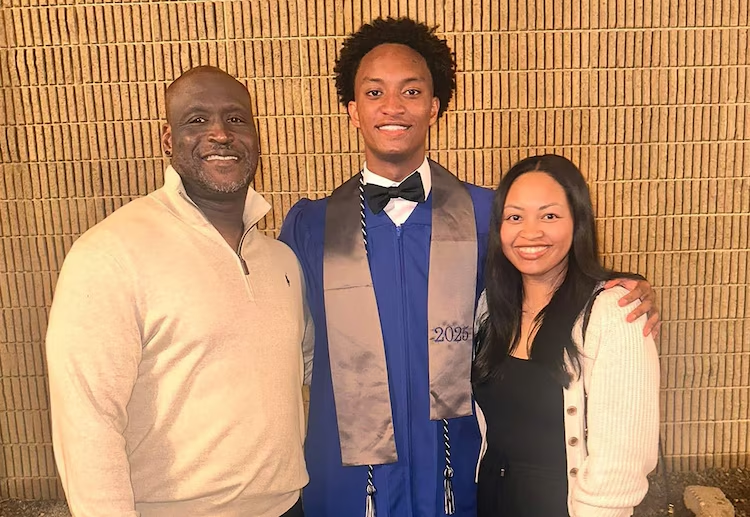
Authorities initially said they did not see evidence of foul play and believed drowning was the most likely explanation. Wells’ parents, Christine and Elmore Wonsley, were not satisfied with that conclusion and hired civil rights attorney Ben Crump as they began pursuing their own answers.
Their concerns intensified after learning about reports of an argument involving Wells and after questions emerged over his cellphone and the circumstances in which his friends left the island without him.
Family Says an Altercation Took Place Before Wells Disappeared
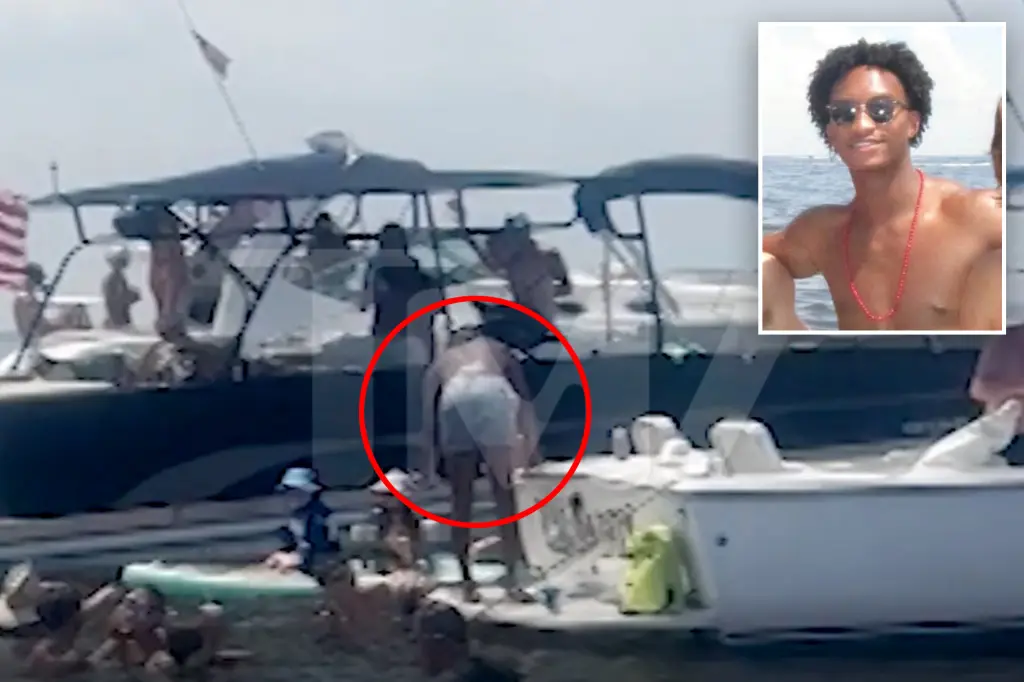
In the days immediately after Wells’ body was found, Crump said the family had been told there was video showing an altercation during the July 4 outing.
He initially described it as Wells and another person yelling at one another while on or near the boats.
The sheriff’s office subsequently asked anyone who had been near the northwest tip of Horn Island that day to provide photographs or video, particularly material showing Wells, an argument or anything unusual.
Investigators also asked witnesses who may have heard a disturbance to come forward.
However, the meaning of some of the widely circulated footage later became disputed.
One of Wells’ friends publicly said that a viral clip described online as showing an argument did not depict a confrontation involving Wells in the way many viewers assumed. He acknowledged that his own voice could be heard in the recording and disputed some of the claims circulating about what happened.
That disagreement has become one of several reasons the family and investigators have continued trying to reconstruct the day from multiple sources rather than relying on social-media interpretations.
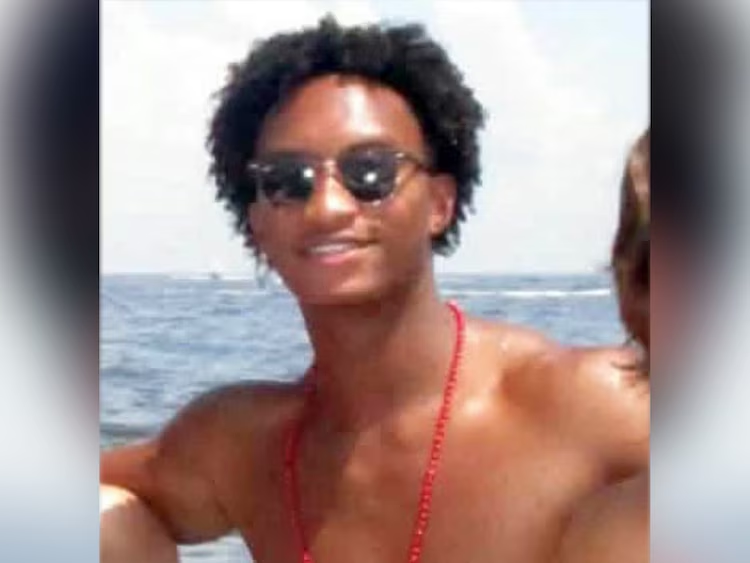
Why Wells Stayed Behind Remains a Key Question
Authorities have said Wells appeared to have remained on Horn Island voluntarily when the group left.
A police report later indicated that several friends told investigators Wells stayed behind with an unidentified woman.
Friends have also said their boat was taking on water and that they needed to return to shore.
GPS data from the vessel showed the group arrived at Horn Island around 11:14 a.m. and remained there until approximately 4:30 p.m. The boat then moved slowly for nearly three miles before returning to normal speed and reaching shore shortly afterward.
One of Wells’ friends contacted the Coast Guard around 11 p.m. that night to report him missing.
Separately, Wells’ mother contacted the sheriff’s office around midnight.
Search crews began looking for the teenager, but his body was not found until July 6.
For his family, the fact that Wells was an athlete and a capable swimmer has made an accidental drowning difficult to accept without more evidence.
Independent Autopsy Did Not Establish a Cause of Death
The Wells family arranged for a second, independent autopsy in Washington, D.C.
When preliminary findings were released on July 22, the private pathologist listed both the cause and manner of death as “undetermined pending investigation.”
The report also emphasized significant limitations.
By the time the second examination was performed, Wells’ body had undergone substantial decomposition. The pathologist also noted that some tissue had already been removed during the first autopsy in Mississippi, including part of the throat.
Medical experts have noted that removal of organs or tissue during an autopsy can be a standard part of forensic examination and does not by itself indicate anything improper.
The private examination found no fractures or deep-tissue injuries during additional dissections.
It also noted areas of discoloration, including tissue near the back of the head, but the report did not determine what caused those findings.
In other words, the independent autopsy did not establish that Wells was killed — but it also did not provide the definitive drowning explanation his family had hoped either to confirm or rule out.
Official Autopsy Has Been Completed but Not Released
Mississippi’s official state autopsy has since been completed.
As of the latest publicly available update, however, the results have not been released.
That means the official cause and manner of Wells’ death remain unknown to the public.
Authorities have continued to say that there was no initial indication of foul play, but they have also repeatedly stressed that the investigation remains open.
Once investigators complete their work, the case file — including the autopsy findings — is expected to be presented to a grand jury.
That panel will determine whether there is evidence that a crime occurred and whether any criminal charges should be considered.
Alcohol Intake Has Also Become Part of the Investigation
Another detail emerged from preliminary information collected during the search.
Witnesses told authorities that Wells had consumed a significant amount of alcohol while on Horn Island.
A marine patrol document prepared during the search described reports of “heavy” alcohol intake.
That information may ultimately be relevant to investigators trying to determine whether Wells entered the water voluntarily, became disoriented, suffered an accident or encountered some other danger.
But alcohol consumption alone does not establish a cause of death.
Without the completed official autopsy findings and a full reconstruction of the timeline, investigators still have to determine how — or whether — that detail fits into what happened.

Family Is Seeking Digital Records
Wells’ family has also turned to technology companies in an effort to reconstruct his final hours.
Lawyers representing his mother issued subpoenas seeking records from several major social-media and location-tracking platforms, including Facebook, Instagram, WhatsApp, Snapchat, TikTok and Life360.
The requests are aimed at obtaining account activity, communications and location information that could help determine who Wells spoke with, where his phone was located and what happened before and after he disappeared.
The cellphone itself has been another source of controversy.
Crump initially said Wells’ friends had possession of the device after leaving the island and that messages appeared to have been deleted before it was returned to the family. Some friends have strongly disputed allegations that they improperly withheld or altered the phone.
Those competing claims remain part of the broader dispute surrounding the case and have not been fully resolved in public.
Public Accusations Have Created a Second Legal Battle
As speculation around Wells’ death has intensified online, some people who were on or near Horn Island that day have pushed back against public accusations.
At least one student sent cease-and-desist letters to social-media personalities, arguing that he had been falsely linked to Wells’ death and targeted with harassment.
More recently, attorneys representing several of Wells’ friends demanded retractions over claims they say falsely suggested the group withheld Wells’ phone, deleted material and failed to cooperate with police.
Those disputes underscore one of the challenges surrounding the case: investigators are still working toward an official conclusion while social media has often moved much faster.
The Family’s Central Question Has Not Changed
Despite the conflicting accounts, videos, legal threats and public speculation, Wells’ parents have continued to focus on one question.
What happened to their son?
They know he traveled to Horn Island on July 4.
They know he remained behind when others left.
They know he was reported missing that night.
And they know his body was found two days later.
What they still do not know is exactly what happened between those points.
The private autopsy could not answer that question.
The official autopsy has not yet been made public.
And the sheriff’s investigation has not yet produced a final determination.
Until those pieces come together, Nolan Wells’ death remains unresolved — not necessarily because investigators have found evidence of a crime, but because the available evidence has not yet provided his family with a definitive explanation.
The next major development could come when the state’s autopsy findings are released or when investigators complete the case and present it to a grand jury.
For Wells’ parents, that process is about more than determining whether a crime occurred.
It is about finally understanding how an 18-year-old college athlete went to Horn Island for a Fourth of July outing — and never came home.