Rob Lowe Was Losing Control of His Life—Then He Realized Love Would Not Wait Forever

The phone rang in the middle of the night, carrying news that should have cut through everything else in Rob Lowe’s life.
His mother was calling to tell him that his grandfather had suffered a heart attack. But Lowe, still consumed by alcohol and the chaos surrounding his celebrity lifestyle, could not bring himself to answer.
He listened to the message and returned to drinking.
That moment forced him to confront what his life had become. Years of fame, parties and self-destructive behavior had placed a wall between him and the people he loved. His career had already been damaged by a humiliating public scandal. Now he could see that addiction was threatening something even more important: his ability to become the husband and father he wanted to be.
In 1990, Lowe entered treatment and began the recovery that would reshape his life.
The following year, he married makeup artist Sheryl Berkoff. By July 2026, they had been married for 35 years, raised two sons and built a family that Lowe once seemed in danger of never having.
Berkoff gave him a powerful reason to imagine a different future. But Lowe has always been clear about the most important part of the story: she could not make the decision for him.
He had to become willing to save himself.
Fame Arrived Before He Was Ready
Lowe began acting professionally as a teenager and became one of Hollywood’s most recognizable young stars during the 1980s.
Roles in The Outsiders, Class, Oxford Blues, About Last Night… and St. Elmo’s Fire turned him into a leading member of the group later labeled the Brat Pack. His face appeared on magazine covers, and the attention surrounding him extended far beyond his performances.
He was young, famous and surrounded by opportunities to indulge nearly every impulse.
Lowe has said he began drinking as a teenager and quickly became accustomed to an entertainment culture in which excessive behavior was treated as normal. Alcohol and drugs became inseparable from the parties, relationships and constant movement of his early career.
Success allowed him to hide the seriousness of the problem. He could still work, earn money and attract enormous attention, creating the illusion that his behavior had no lasting cost.
That illusion began collapsing in 1988.
A videotape recorded during a night in Atlanta showed Lowe with two young women, one of whom was 16. Lowe said he had not known her age. He was not criminally charged, but the resulting scandal severely damaged his public image and led to a civil case that was resolved outside court.
The episode became one of the earliest widely circulated celebrity sex-tape scandals. For Lowe, it brought intense humiliation and threatened to reduce a promising career to a single night of reckless behavior.
Years later, he would describe the scandal as a painful turning point. It did not instantly make him sober, but it stripped away part of the protection that fame had provided. He could no longer pretend that his private choices would remain private—or that he was still in control.
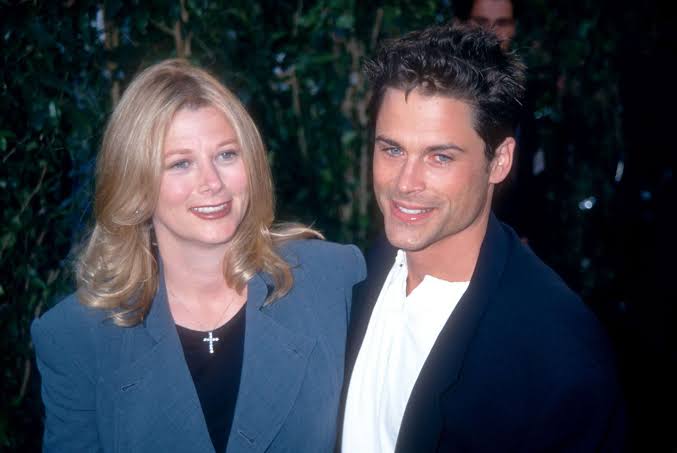
Meeting Sheryl Before He Could Keep Her
Lowe and Berkoff first met on a blind date in 1983.
At the time, no lasting romance developed. Their lives moved in different directions, and Berkoff established herself as a Hollywood makeup artist, working with actors and musicians on films and photo shoots.
They crossed paths again years later when she worked on Lowe’s 1990 thriller Bad Influence. By then, Lowe’s public standing had been shaken, and his personal life was becoming increasingly unstable.
Their connection deepened, but so did the contrast between the life Lowe was living and the one he wanted.
Berkoff represented more than romance. Through their relationship, Lowe began to imagine a home, children and a future not organized around the next party. He recognized that the habits he had normalized were incompatible with the kind of partnership he hoped to build.
Still, love alone did not remove his addiction.
Lowe has repeatedly rejected the idea that another person can force someone into lasting recovery. A spouse, parent, employer or child may provide motivation, but the person struggling must eventually choose sobriety for himself.
His choice came after a series of warnings rather than one isolated revelation.
The scandal had exposed the consequences of his behavior. His relationship with Berkoff showed him what he might lose. Then came the late-night call from his mother and the realization that alcohol had become more important to him than responding to a family emergency.
On May 10, 1990, Lowe began his sober life.
Recovery Was Not a Romantic Gesture
Entering rehabilitation was frightening, but Lowe also felt relief.
Treatment gave him language for what had been happening and practical tools for changing it. More importantly, it required the self-honesty that fame had allowed him to avoid.
He could not recover merely to protect his career or persuade Berkoff to remain with him. Those reasons mattered, but they could not sustain the work. He had to accept that sobriety was necessary regardless of what happened professionally or romantically.
That distinction prevents their story from becoming a familiar tale in which a devoted woman rescues a troubled man.
Berkoff supported Lowe and showed him what a stable future might contain. She did not perform the recovery for him. Lowe entered treatment, accepted responsibility and continued making the daily decisions required to remain sober.
Only after beginning that work was he prepared to build a marriage.
Lowe and Berkoff married on July 22, 1991, at a friend’s home. The ceremony was intimate and deliberately uncomplicated. Lowe was newly sober, his career was still recovering, and the couple’s attention was centered less on spectacle than on the commitment itself.
They welcomed their first son, Matthew, in 1993. Their second son, John Owen, followed in 1995.
Fatherhood gave Lowe the family life he had feared his addiction might make impossible.
A Marriage Built Away From the Fantasy
Lowe’s career eventually recovered. He reinvented himself through comedy and television, earning acclaim for roles in The West Wing, Parks and Recreation, Brothers & Sisters and 9-1-1: Lone Star.
Berkoff developed her own creative identity beyond makeup artistry, later becoming a jewelry designer and entrepreneur.
Their marriage endured through Lowe’s professional reinventions, the demands of raising two children and the pressures that accompany a household connected to Hollywood.
Neither has claimed that longevity came effortlessly.
Lowe has described successful marriage as a matter of choosing the right person—what he jokingly calls good “casting.” Beneath the phrase is a serious belief that partners must share fundamental values and expectations about family, money, faith and the way they want to live.
He and Berkoff have also used couples therapy, including during periods when their marriage was not in obvious crisis. Lowe has compared that preventive approach to maintaining physical health rather than waiting for a medical emergency.
The couple preserved distinct interests as well. They did not expect marriage to erase their individuality or require them to enjoy every activity together. What mattered was the deeper alignment beneath those differences.
Lowe has credited Berkoff with being confident, independent and willing to tell him the truth—qualities especially valuable to someone who became famous while still young enough to be surrounded by flattery.
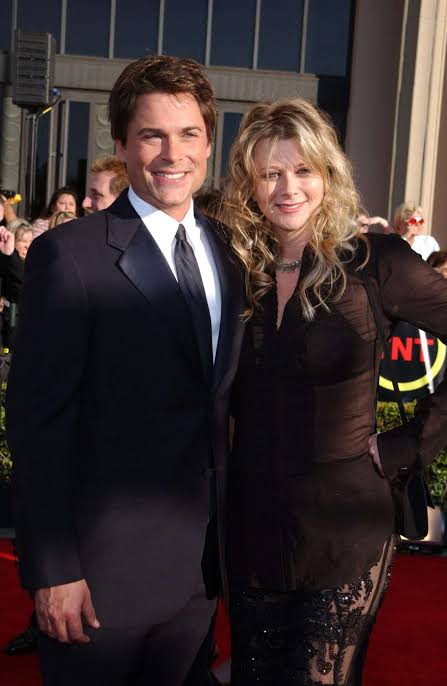
Their Sons Inherited a More Honest Story
Matthew and John Owen grew up knowing that their father’s recovery was part of the family’s history.
John Owen later faced addiction struggles of his own and entered recovery. In 2023, Lowe presented him with a five-year sobriety chip during a television appearance, turning a private source of pride into an emotional public moment.
Father and son also transformed their complicated dynamic into comedy by co-creating and starring in the Netflix series Unstable. John Owen has frequently teased his father’s confidence and celebrity persona, while Lowe has embraced the humor.
The relationship reveals another consequence of the decision Lowe made in 1990.
Sobriety did not guarantee that his children would avoid every struggle. It allowed him to be present when one of them needed understanding from someone who had survived a similar battle.
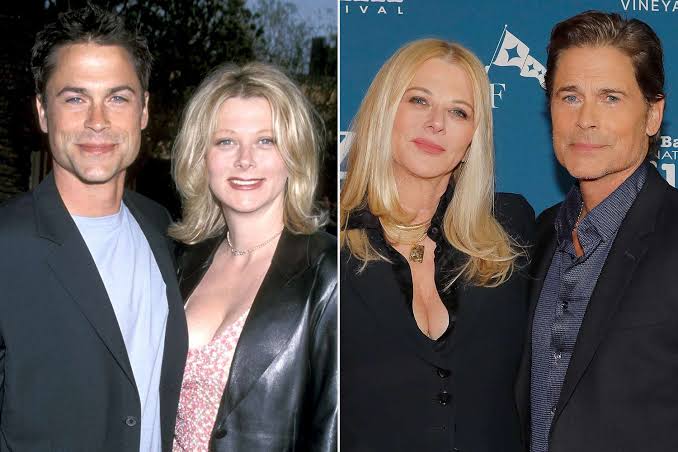
The Life That Nearly Disappeared
In May 2026, Lowe marked 36 years of sobriety. Two months later, he and Berkoff celebrated their 35th wedding anniversary.
Those numbers are closely connected.
Without recovery, Lowe has acknowledged, the marriage and family he treasures might never have existed. Yet his transformation cannot be credited to one scandal, one frightening phone call or even one relationship.
Each became part of a gradual awakening.
Berkoff helped him see that love offered a future radically different from the life he was destroying. Treatment taught him how to pursue it. The decades afterward proved that the decision had to be renewed long after the original crisis passed.
Sheryl did not arrive and rescue Rob Lowe from himself.
She showed him a life worth becoming ready for—and he finally understood that it would not wait forever.