She Let Her 5-Year-Old Walk Half a Mile Alone — Four Days Later, There Was a Warrant for Her Arrest
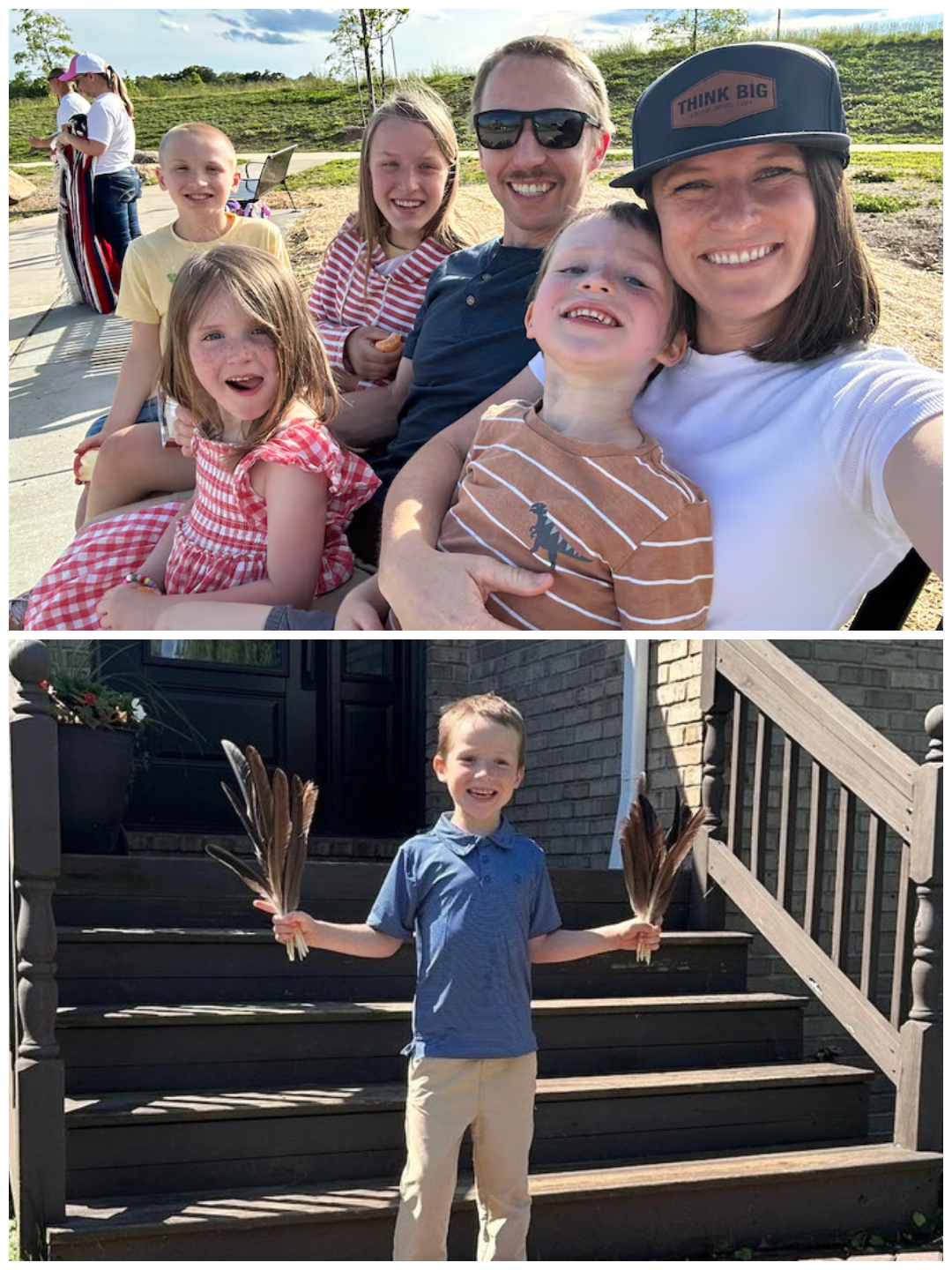
Karyann Parkinson thought she was giving her 5-year-old son a small taste of independence.
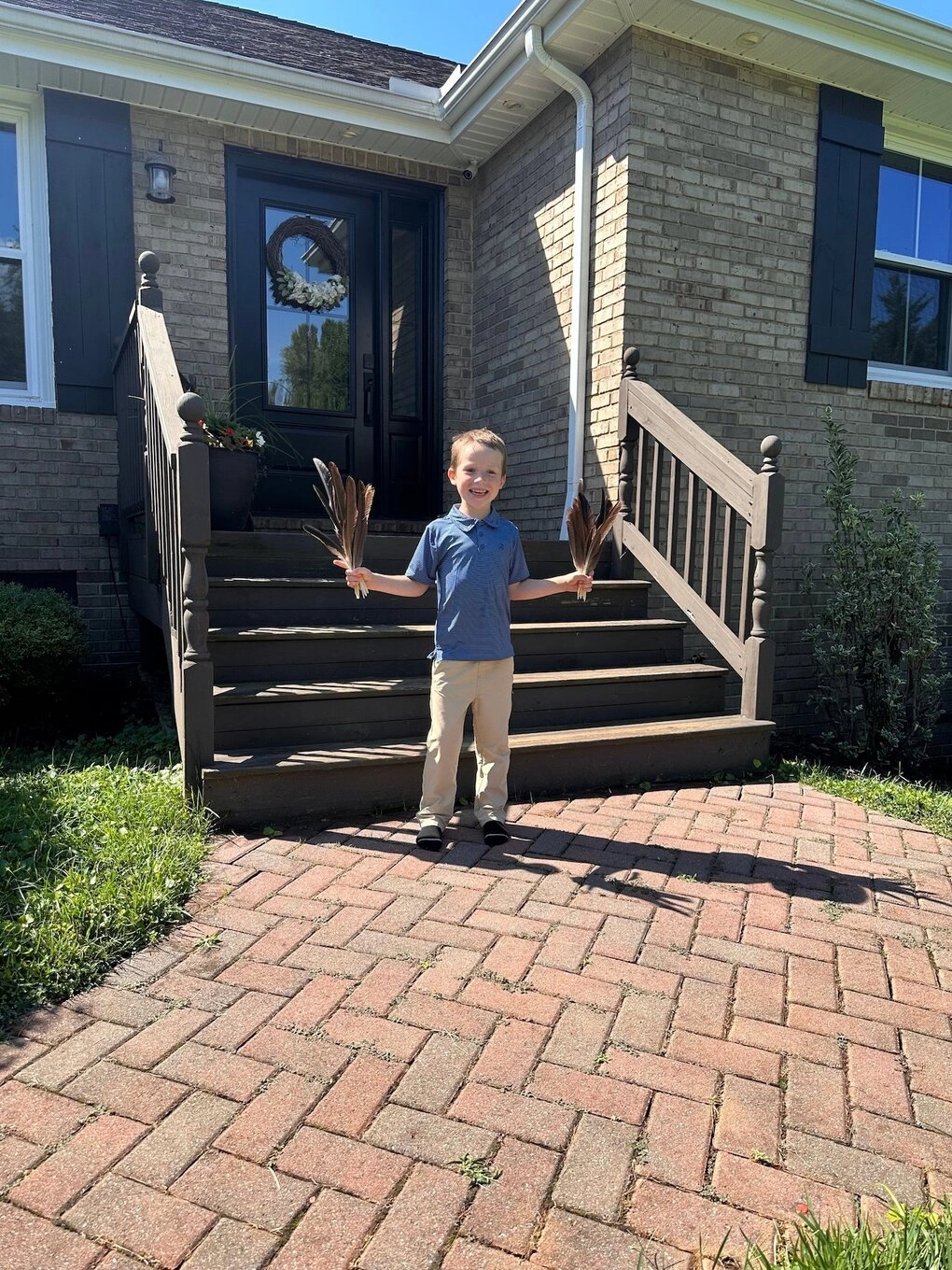
Samuel wanted to collect more goose feathers.
Earlier that day, mother and son had already traveled the same familiar route through their gated Williamsburg, Virginia, community. Samuel knew where he was going, Parkinson says, and she believed he was capable of making the roughly half-mile trip by himself.
So she gave him permission.
“Go there. Come right back,” she recalled telling him.
Samuel never completed the trip as planned.
A resident noticed the boy walking alone and alerted neighborhood security. A security guard intercepted him and brought him back toward home.
Within minutes, police were at Parkinson’s door.
Child Protective Services followed.
And according to Parkinson, four days later there was a warrant for her arrest.
What followed turned an ordinary parenting decision into a criminal case that has now triggered a national argument over a question generations of parents have answered very differently:
How young is too young for a child to walk outside alone?
Samuel Had Walked the Route Many Times — Just Not Alone
Parkinson, 36, has described Ford’s Colony as a close-knit gated community with sidewalks, 24-hour security and a 25-mph speed limit.
Samuel was familiar with the route.
She told Business Insider that he had traveled it hundreds of times with family members. On the June day that eventually led to her conviction, they had already been out walking and biking through the neighborhood before returning home.
Samuel wanted to go back out and collect more feathers near one of the neighborhood ponds.
Parkinson allowed him to make the trip alone.
She has also emphasized that Samuel knew how to respond to strangers.
When the security guard offered him a ride home, Parkinson later told media outlets, Samuel reportedly refused to get into the vehicle because he did not know the man and instead walked back.
To Parkinson, those details demonstrated that her son was behaving responsibly.
To the security guard, a 5-year-old walking through the neighborhood without an adult was a safety problem.
That disagreement quickly became something much bigger.
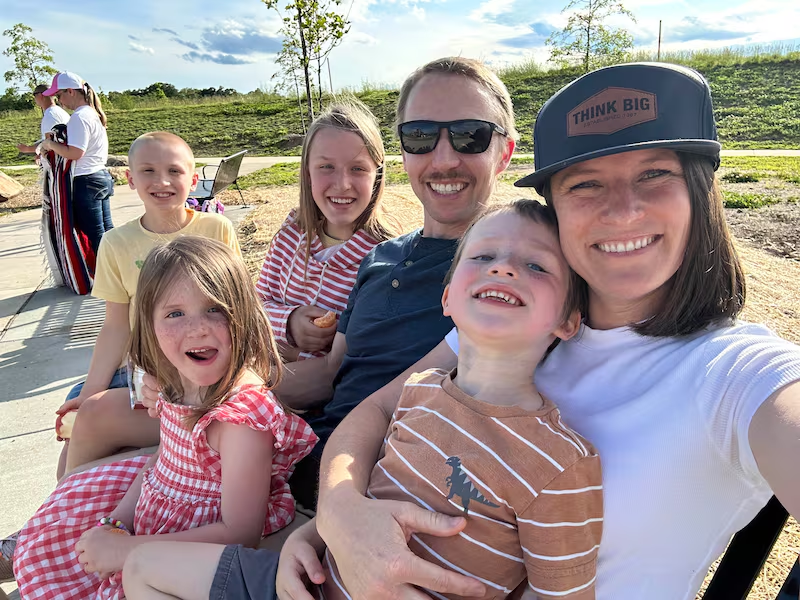
Police and CPS Arrived at the House
Parkinson says the security guard told her children were not permitted to wander the community alone.
She challenged him, asking whether such a rule actually appeared in the homeowners association bylaws.
According to her account, he responded that if it was not against neighborhood rules, it was against the law — and said he would contact police.
About 10 minutes later, an officer arrived.
Parkinson explained that Samuel had permission to be outside.
The encounter escalated when police called Child Protective Services. More officers and CPS workers subsequently came to the home. Parkinson says officials asked her to sign a safety plan requiring Samuel to remain supervised and also wanted to inspect the house.
She refused the safety plan.
Four days later, Parkinson says authorities issued a warrant for her arrest. She later signed it after speaking with an attorney.
Other reporting describes the formal criminal charge as arriving approximately two weeks after the original incident.
The charge was contributing to the delinquency of a minor, a Class 1 misdemeanor under Virginia law. The statute can apply when an adult willfully creates a condition that renders a child abused, neglected or in need of supervision.
Virginia Has a Law Specifically Addressing Childhood Independence
That charge is particularly controversial because Virginia lawmakers had already addressed the growing debate over children doing things independently.
In 2023, Virginia enacted legislation stating that a child should not be considered abused or neglected solely because a parent allows independent activities without adult supervision, as long as those activities are appropriate considering the child’s age, maturity, physical abilities and mental abilities — and the lack of supervision is not so grossly negligent that it endangers the child.
The law specifically lists activities such as walking or biking to nearby locations, playing outside and remaining home alone for a reasonable amount of time.
Importantly, the law does not establish a specific minimum age.
It does not say, for example, that a child must be 8, 10 or 12 before walking independently.
Instead, it creates a fact-specific test involving maturity, ability and risk.
That is central to Parkinson’s position.
She argues that she knew Samuel’s abilities, knew the neighborhood and made a reasonable parental judgment protected by the state’s childhood-independence law.
Authorities reached a different conclusion.
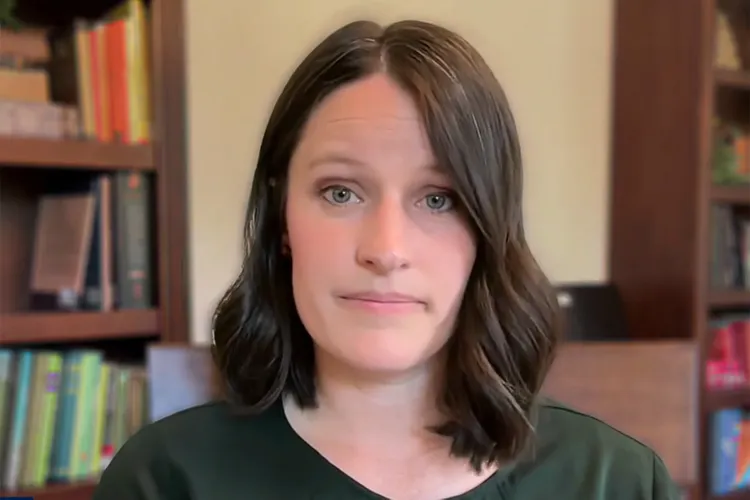
CPS Put Her on the Registry for Seven Years
The case developed on two different tracks: child protection and criminal court.
Parkinson says CPS eventually conducted a home visit.
Then, in mid-July, she received a letter saying the allegations against her had been substantiated.
The consequence was severe.
She was placed on Virginia’s Child Abuse and Neglect Central Registry for seven years.
Parkinson says that status prevents her from doing something she had previously done regularly: volunteering at her children’s school.
She told CBS News that she will remain unable to participate in activities such as volunteering in Samuel’s classroom until he is in sixth grade.
That punishment has helped drive the national reaction to the case.
Samuel was not injured.
He was not lost.
He had his mother’s permission to be outside.
Yet the decision ultimately resulted in a child-abuse registry listing that will remain for years unless successfully challenged.
Then Came the Criminal Conviction
In late August, Parkinson appeared in James City County Juvenile and Domestic Relations District Court.
She pleaded not guilty.
A judge nevertheless convicted her of contributing to the delinquency of a minor.
Parkinson received a six-month jail sentence, entirely suspended.
A suspended sentence means she did not have to serve those six months immediately.
But the conviction remained.
Parkinson and her attorney responded by appealing.
She says she now wants the case decided by a jury. A court proceeding was scheduled for Sept. 16 to begin setting the next stage of the appeal.
Because that appeal remains pending, the case is not necessarily over.
Is Five Simply Too Young?
Much of the public debate has focused on Samuel’s age.
Five feels extremely young to many parents.
Others remember childhoods in which elementary-school-age children routinely walked to friends’ homes, parks or stores without adults tracking every movement.
Virginia attorney Sonny Stallings told WTVR that circumstances matter enormously.
A 5-year-old walking half a mile on a rural farm might be viewed completely differently from a 5-year-old doing the same thing in another environment, he noted. That illustrates the difficulty of establishing one universal standard for independence.
Parkinson does not argue that every 5-year-old should be allowed to make such a trip.
Her position is that parents should be permitted to evaluate their own child’s maturity and surroundings, precisely the sort of individualized judgment Virginia’s independence law appears designed to recognize.
Critics can reasonably reach the opposite conclusion and believe that a pond, road crossings and a child of Samuel’s age created too much risk.
That is what makes the case so divisive.
The question is not whether parents should protect young children.
It is how much risk must exist before a parenting decision becomes neglect — or even a crime.
A Half-Mile Walk Became a Seven-Year Consequence
Parkinson was eight-and-a-half months pregnant when the incident occurred and gave birth later that month.
She has described the investigation, arrest process and court case as humiliating and stressful for her entire family.
She also says the experience has not changed her underlying philosophy.
She believes children need opportunities to become independent and that parents increasingly make decisions based on fear of what could theoretically happen rather than what their individual children are capable of doing.
For now, Virginia’s courts will get another opportunity to examine that argument.
The state’s law says unsupervised childhood activity alone should not automatically constitute abuse or neglect.
A lower court nevertheless convicted Parkinson after she allowed her 5-year-old to make a half-mile walk by himself.
Her appeal will now test whether those two things can legally coexist in this case.
And behind all the legal language is an extraordinarily simple parenting decision:
A little boy wanted to go outside and collect goose feathers.
His mother said yes.
Within days, she was facing an arrest warrant.
Within weeks, she was on a child-abuse registry.
And seven years of consequences may now depend on where Virginia courts decide ordinary childhood independence ends — and criminal neglect begins.