The DeLorean Collapsed as a Business—Then Hollywood Made It Immortal
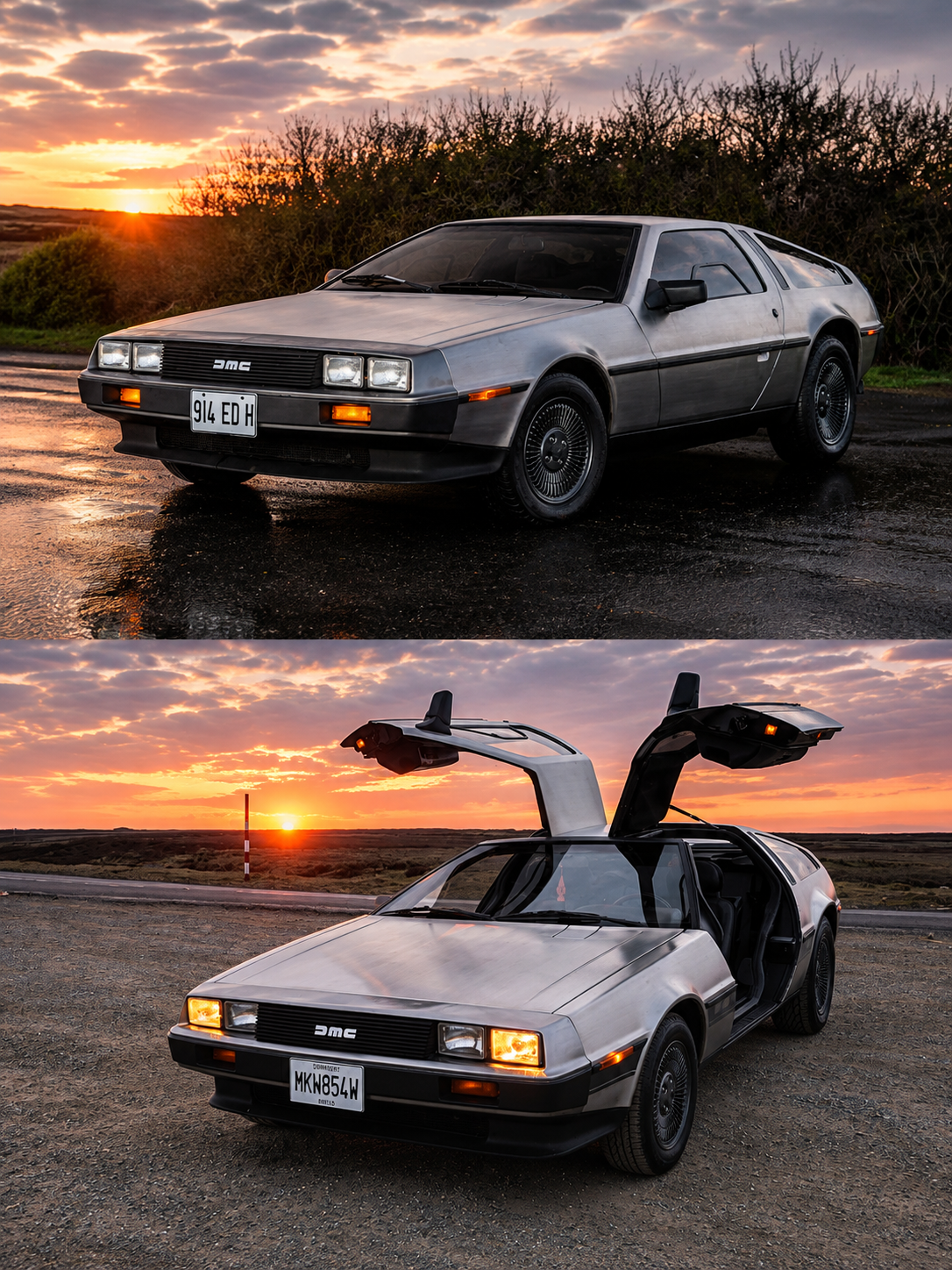
By the time a silver DeLorean rolled out of a truck in the opening minutes of Back to the Future, the company that created it was already gone.
The factory had closed. Thousands of workers had lost their jobs. John DeLorean’s attempt to challenge the world’s largest automakers had ended in bankruptcy, financial controversy and a criminal case that overwhelmed the car’s troubled reputation.
Then the gull-wing doors lifted, Doc Brown introduced his time machine, and failure became legend.
The DeLorean—often called the DMC-12 after its development designation—had struggled to justify its price as a sports car. Onscreen, none of that mattered. Its unpainted stainless-steel body looked as though it had arrived from another era, while its unusual doors gave every entrance a theatrical quality that conventional cars could not match.
Hollywood did not save the company.
It did something even more remarkable: It gave the company’s only car a second life that has lasted far longer than the business itself.
John DeLorean Walks Away From Detroit
John Zachary DeLorean was not an inexperienced dreamer entering the automobile industry from the outside. He had risen through General Motors and helped develop some of its most memorable vehicles, including the Pontiac GTO.
Tall, charismatic and comfortable around celebrities, DeLorean did not resemble the traditional image of a restrained corporate executive. He became one of the most visible figures in Detroit and appeared positioned for even greater authority within GM.
Instead, he left the company in 1973.
DeLorean wanted to build a car under his own name—one that would be stylish, safe, durable and unlike the products created through Detroit’s vast corporate system. He established the DeLorean Motor Company in 1975 and began gathering investors, engineers and government support.
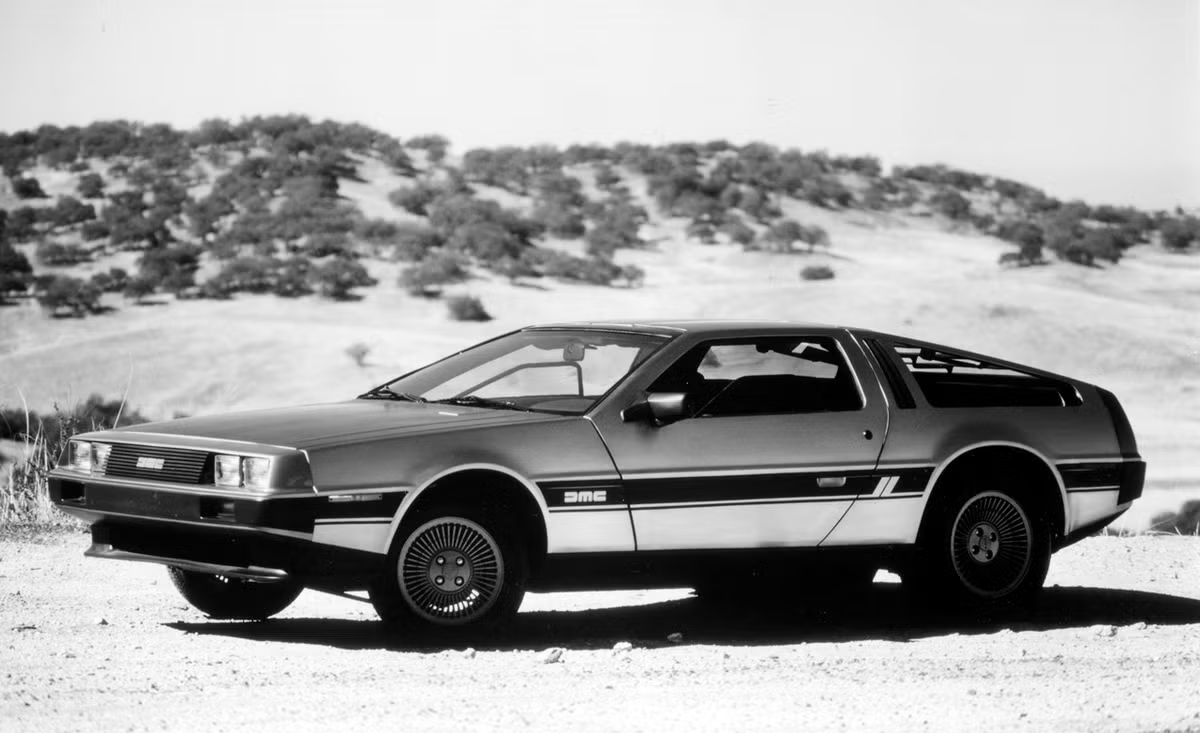
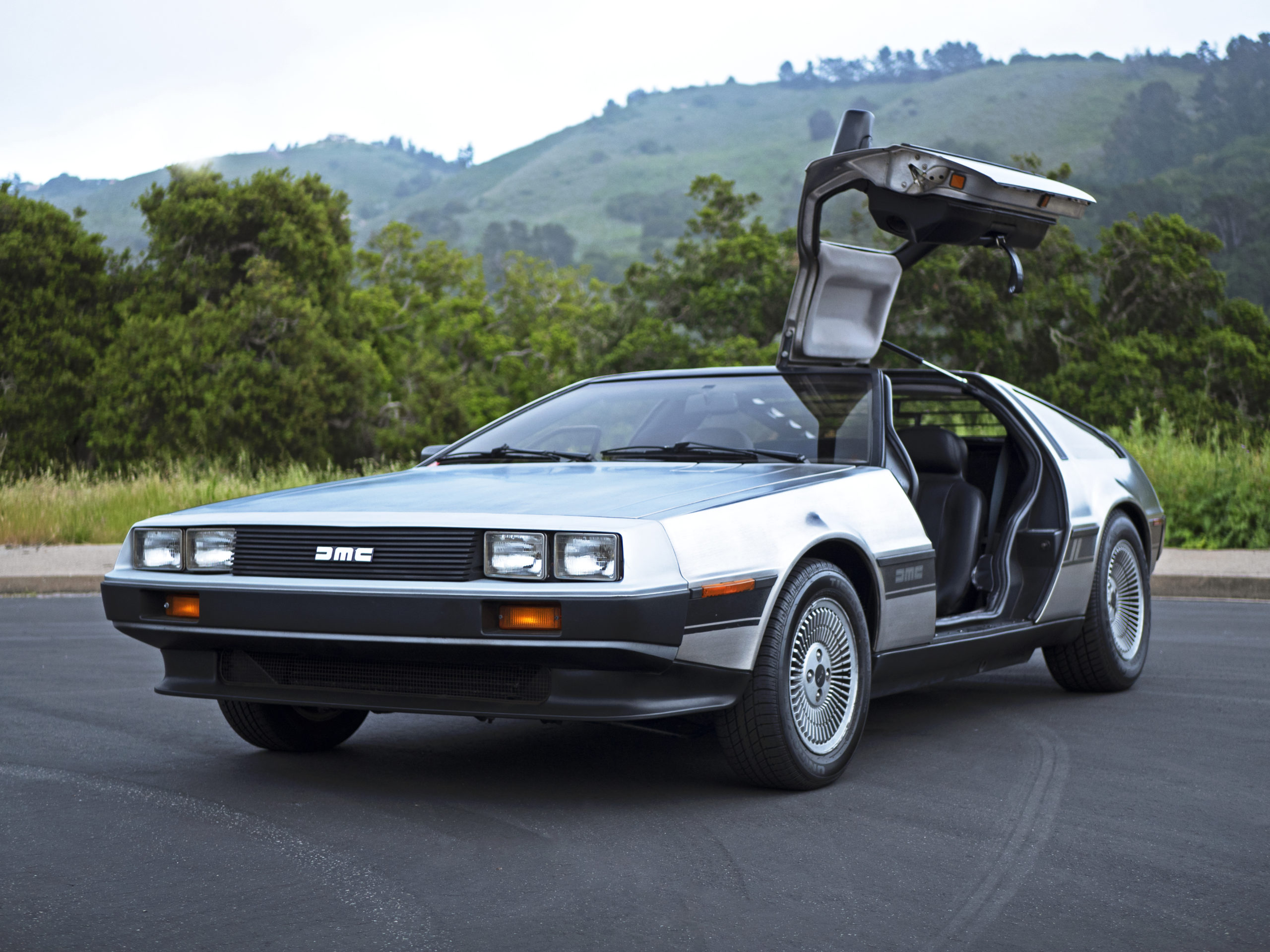
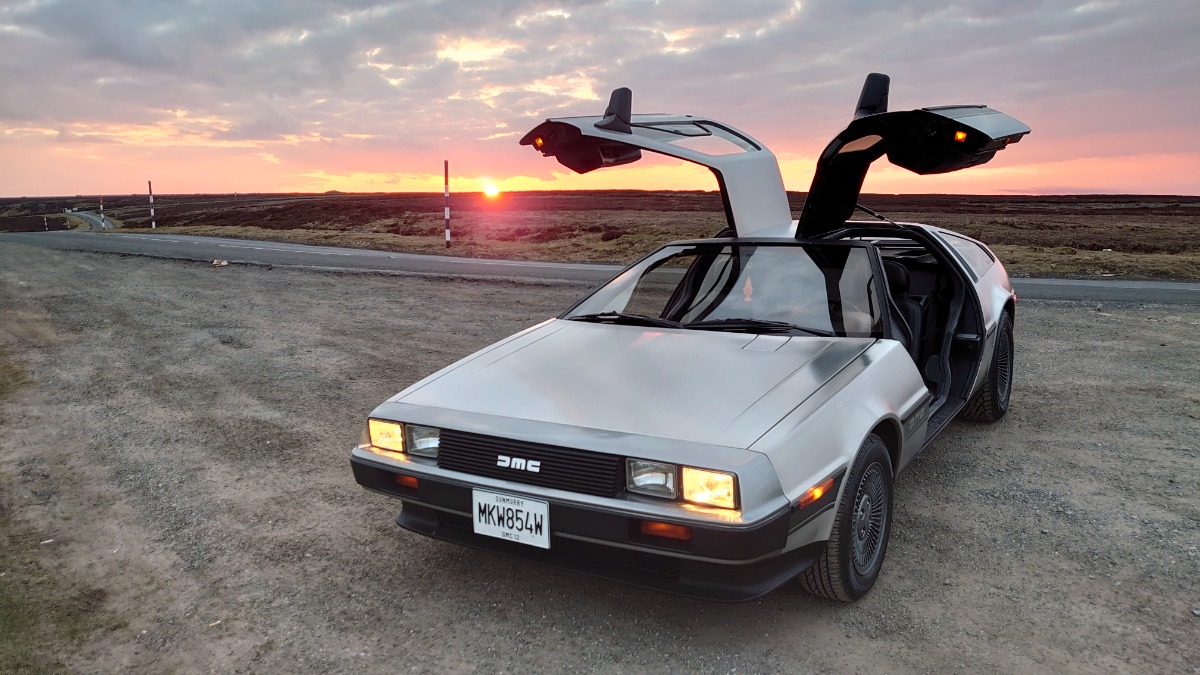
The proposed sports car promised a combination of visual drama and advanced construction. Italian designer Giorgetto Giugiaro created the sharp, wedge-shaped exterior. Its bare stainless-steel panels would resist corrosion and eliminate the need for conventional paint.
The doors opened upward rather than outward.
Those gull-wing doors immediately distinguished the vehicle from nearly everything else on American roads. They were difficult engineering features, but visually they captured the ambition behind DeLorean’s project: This was supposed to be more than transportation. It was meant to look like the future.
A Factory Built During the Troubles
Finding a place to manufacture the car became both an economic and political decision.
The British government offered substantial financial assistance for a factory in Dunmurry, near Belfast, Northern Ireland. The region was suffering from high unemployment while enduring the violence and division of the Troubles.
The DeLorean plant promised industrial investment and badly needed jobs. Government commitments included millions of pounds for construction, machinery, loans and employment support.
At its height, the operation employed roughly 2,500 people. Many workers had little previous experience building automobiles, requiring the company to create a workforce and a production system at the same time.
The project carried enormous expectations. For DeLorean, the factory would turn his unconventional sports car into reality. For local workers, it offered income and opportunity in an area where both could be difficult to find.
Production began around the end of 1980, with the first completed car announced in January 1981.
But the dream was already under pressure.
A Futuristic Car With Earthbound Problems
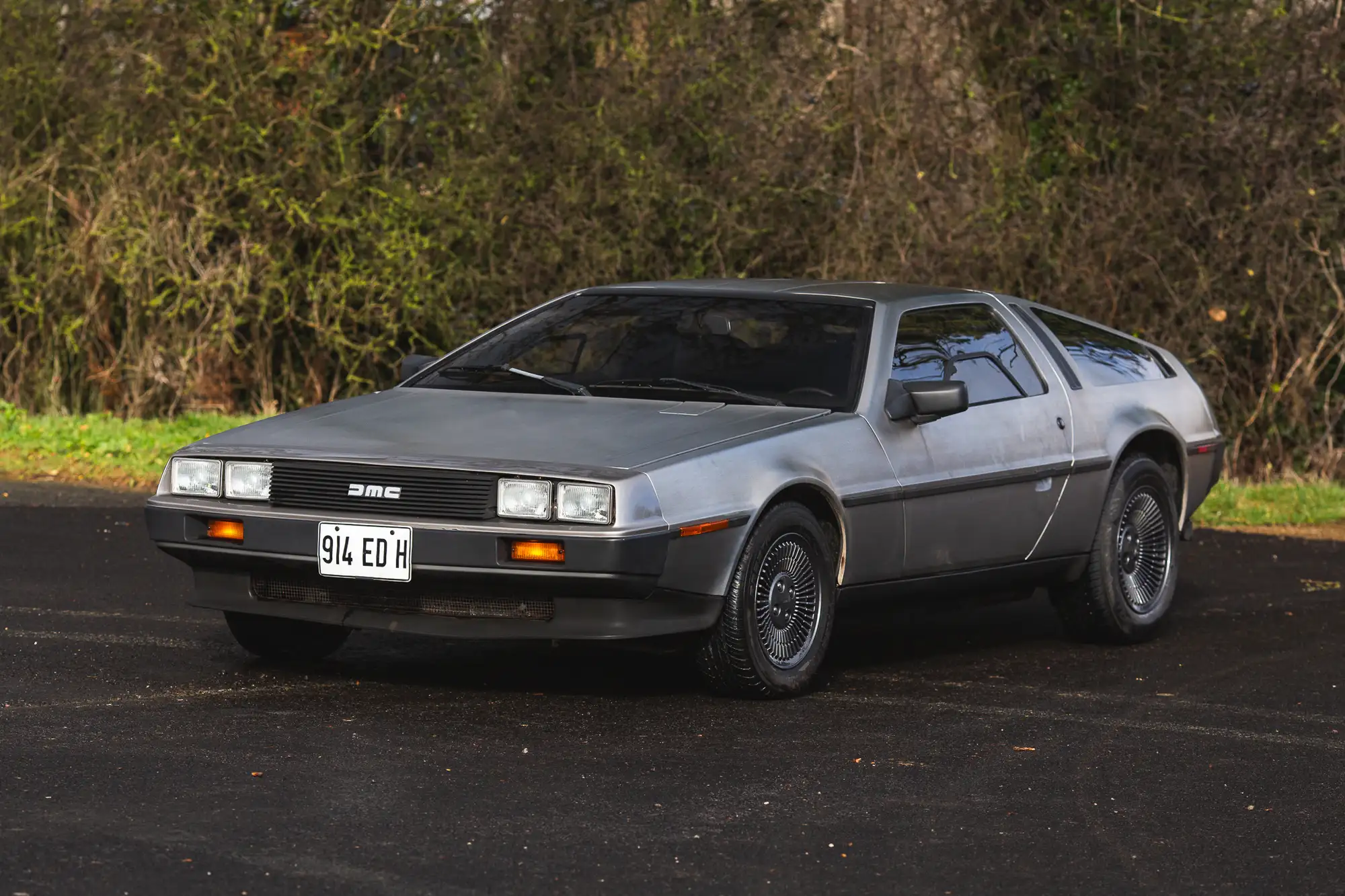
The production DeLorean preserved its most dramatic features: the stainless-steel exterior, gull-wing doors and rear-mounted engine. Underneath, however, it differed substantially from some of the more radical early concepts.
Lotus helped reengineer the car for production, using a backbone chassis and construction methods related to those found in its own vehicles. Power came from a V6 jointly developed by Peugeot, Renault and Volvo.
The result looked much faster than it was.
American versions produced roughly 130 horsepower, modest output for a heavy sports car whose styling suggested exceptional performance. Acceleration was adequate for ordinary driving but disappointing to buyers expecting the experience promised by the bodywork.
Price created another problem.
The “12” in DMC-12 had been associated with an early target price of approximately $12,000. By the time customers could buy the car, its sticker price was about $25,000—more than twice that original goal and expensive enough to invite comparisons with faster, more established competitors.
Early examples also suffered from inconsistent build quality. Workers and engineers were trying to solve problems while production accelerated, and some cars required additional correction after leaving the assembly line.
The automobile attracted attention, but attention was not enough.
An economic downturn and a weak market for expensive cars made conditions worse. Unsold DeLoreans accumulated as the company burned through cash. The factory needed higher sales to survive, yet concerns about price, performance and quality made those sales increasingly difficult to secure.
The Company Runs Out of Road
DeLorean Motor Company entered receivership in February 1982.
Attempts to obtain more financing continued, but the situation deteriorated. Production in Northern Ireland stopped after a run of roughly 9,000 cars, with estimates varying slightly depending on how partially completed vehicles are counted.
The collapse devastated the Dunmurry workforce and left the British government facing questions about the large amount of public money committed to the project. Parliamentary investigations later examined how assistance had been approved, monitored and spent.
The company’s financial crisis was soon overshadowed by an even more dramatic event.
In October 1982, John DeLorean was arrested in an undercover operation involving a proposed cocaine transaction. Prosecutors alleged that he had agreed to participate in the deal while desperately seeking money to rescue his company.
A jury acquitted him in 1984 after his defense argued that government agents had entrapped him.
The verdict cleared DeLorean of the criminal charges, but it could not revive the factory or repair the company’s finances. His name had become inseparable from scandal, and his automobile appeared destined to survive mainly as a warning about the dangers of launching a new car company.
Three years after production ended, that judgment changed.
Hollywood Finds the Perfect Time Machine
While developing Back to the Future, filmmakers Robert Zemeckis and Bob Gale initially considered a time machine housed in a refrigerator. The idea was eventually abandoned, and they turned toward something mobile.
The DeLorean offered an advantage no ordinary car could match.
Its stainless-steel skin looked mechanical and otherworldly even before production designer Lawrence Paull, illustrator Andrew Probert and the film’s effects teams added cables, vents, gauges and the glowing “flux capacitor.” Its gull-wing doors made it possible for someone in 1955 to mistake the vehicle for a spacecraft.
There was also an irresistible absurdity in converting a notorious commercial failure into history’s most important machine.
In the 1985 film, inventor Emmett “Doc” Brown explains that a time machine built into a car ought to have style. With Michael J. Fox’s Marty McFly behind the wheel, the modified DeLorean had to reach 88 miles per hour before disappearing in a trail of fire.
Several cars were adapted for production. Different examples served different purposes, including driving scenes, special-effects work and interior shots.
The first movie became the highest-grossing domestic release of 1985 and inspired two sequels. The DeLorean returned in both, gaining futuristic modifications in Back to the Future Part II and railroad wheels in Part III.
A car that had been manufactured for only about two years was now permanently attached to one of Hollywood’s most beloved franchises.
Failure Becomes Collectible
The transformation did not happen instantly.
For years, used DeLoreans could be purchased relatively cheaply. Their limited performance and complicated history remained part of the ownership experience. Stainless steel was durable but difficult to repair perfectly, and maintaining a car from a defunct manufacturer required patience.
Yet the vehicle had advantages that ordinary failed cars did not.
It was rare but not unobtainable. Its mechanical components could still be serviced, while specialist companies developed parts supplies and restoration expertise. Most importantly, people recognized it immediately.
Collector interest gradually strengthened as the generation raised on Back to the Future reached the age when buying a childhood dream became possible. Hagerty has highlighted the DeLorean’s movement into serious collector status, noting the unusual combination of scandal, distinctive design and movie fame behind its appeal.
Surviving cars now appear at auctions, museums, conventions and charity events. Some owners preserve them in original factory condition. Others carefully recreate the time machine, complete with fictional equipment and glowing components.
One of the hero cars used in the trilogy was painstakingly restored and placed on public display at the Petersen Automotive Museum in Los Angeles. The Ulster Transport Museum, meanwhile, preserves the DeLorean as part of Northern Ireland’s industrial history.
These two identities now exist together.
One is the real car: ambitious, expensive, underpowered and produced by a company that collapsed almost immediately.
The other is the cinematic machine: capable of carrying its passengers into the past, the future and popular culture forever.
The Car That Outlived Its Creator’s Dream
John DeLorean died in 2005 without seeing his company return as the major automaker he once imagined. His effort consumed enormous resources and ended painfully for investors, taxpayers and workers.
Judged strictly as a business, the DeLorean was a failure.
Judged as an automobile, it was a mixture of daring ideas and frustrating compromises. It looked revolutionary but could not deliver enough performance, refinement or value to secure the sales its manufacturer needed.
Yet cars are not remembered through balance sheets alone.
The DeLorean possessed one quality that could not be manufactured later: It looked unlike anything else. Hollywood recognized that difference and created a role perfectly suited to it.
The doors that once promised an automotive future opened instead onto a fictional one. From that moment, the DeLorean no longer depended on horsepower, sales figures or the survival of its factory.
John DeLorean tried to build a car that would change the industry.
He failed.
But when Doc Brown drove his invention out of a truck on a dark California parking lot, the automobile finally became what its creator had always wanted it to be—unforgettable.