The Night Bob Dylan Refused to Play Along: A Quiet Walkout That Exposed the Clash Between Art and Television
- NgoPhong
- July 29, 2026
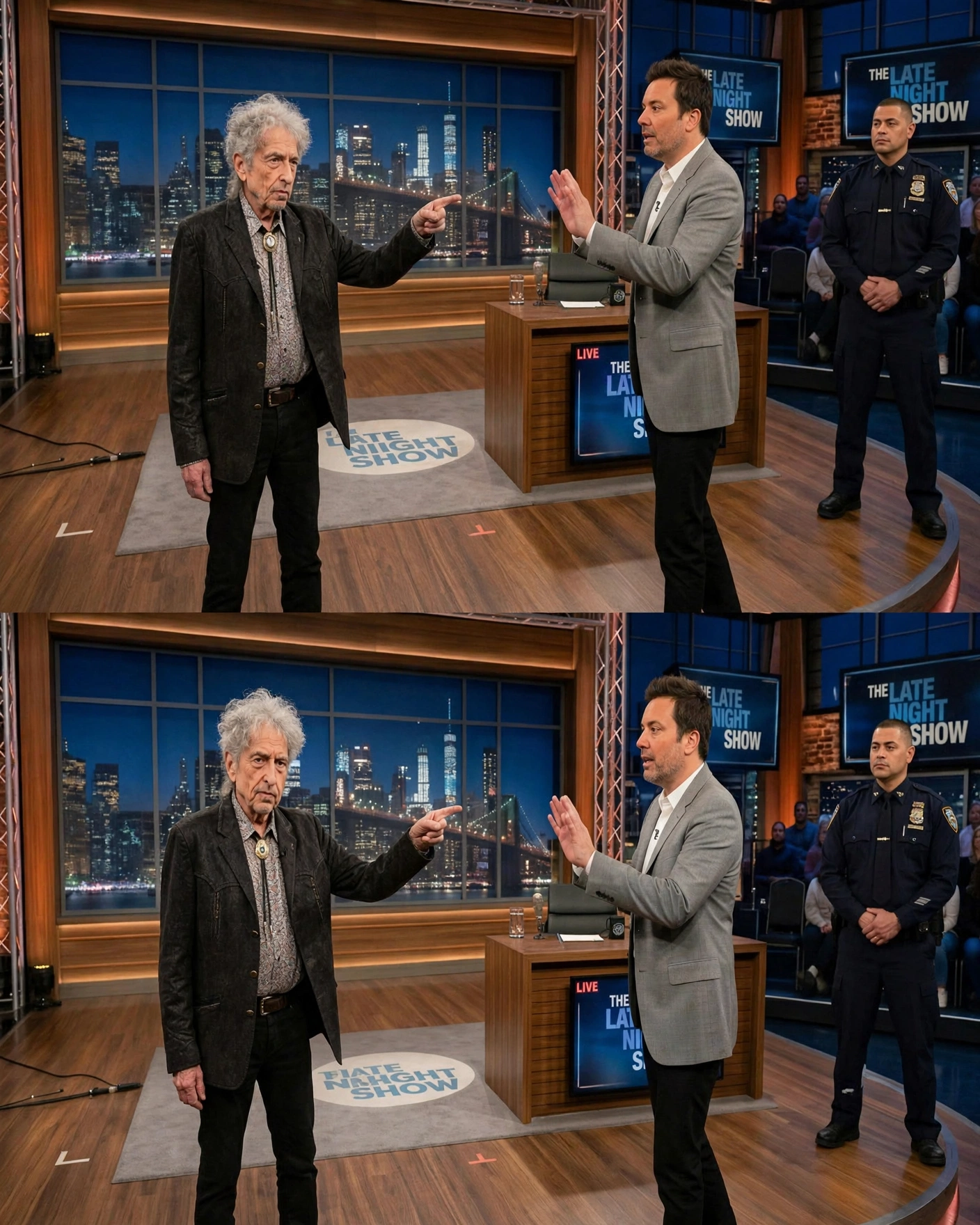
The cameras were ready. The stage was set. Everything was moving according to plan—until it suddenly wasn’t.
In a moment that few expected and even fewer understood at the time, Bob Dylan made a decision that would leave a room full of television professionals stunned. It wasn’t loud. It wasn’t dramatic. He simply chose not to go along with what had been arranged—and then he walked away.
What happened that night would later be remembered not as a disruption, but as a quiet statement about something much larger: the tension between artistic truth and the demands of television.
By the time this incident took place, Dylan was no stranger to challenging expectations.
From the beginning of his career, he had resisted being placed into a single category. His music evolved constantly, often surprising both audiences and critics. Whether shifting from acoustic folk to electric sound or redefining the themes in his lyrics, he had built a reputation for following his own path—even when it meant facing backlash.
That independence was central to who he was.
And it would define what happened that night.
The setting was a late-night television environment, where timing, structure, and presentation are everything. Shows are built around tight schedules, clear segments, and carefully planned moments. Every performance, every line, every movement is expected to fit within a larger production.
For most performers, that system is simply part of the process.
But for Dylan, something about the situation didn’t feel right.
As the moment approached, there was a growing sense of unease. The expectations placed on him—to perform in a specific way, to align with the format, to deliver something that fit neatly into the show—began to clash with his own instincts as an artist.
It wasn’t about refusal for the sake of defiance.
It was about authenticity.
Dylan had built his career on expressing something real, something unfiltered. The idea of adjusting that expression to meet the needs of a television format created a conflict that he could not ignore.
So when the time came, he made a choice.
He stepped away.
There were no raised voices, no dramatic confrontation. Just a quiet departure that left producers, crew members, and others in the room trying to understand what had just happened.
For them, it was a disruption.
For Dylan, it was something else entirely.
It was a line he would not cross.
Moments like this are rarely seen by the public. Television audiences typically see only the finished product—the polished performance, the seamless transition from one segment to another. What happens behind the scenes, especially when things don’t go according to plan, often remains hidden.
But this moment carried a significance that extended beyond that room.
It revealed the pressure artists can face when their work enters structured environments. The balance between creative freedom and production demands is not always easy to maintain. For some, it becomes a negotiation. For others, it becomes a choice.
Dylan made his choice.
In doing so, he reinforced something that had been true throughout his career: he would not allow his work to be shaped by expectations that didn’t align with his vision.
The incident also highlighted a broader question.
What happens when art is placed inside systems designed for consistency?
Television, by nature, seeks predictability. It relies on schedules, formats, and clear outcomes. Art, on the other hand, often resists those boundaries. It thrives on unpredictability, emotion, and moments that cannot be fully controlled.
When those two worlds meet, tension is inevitable.
That night became a quiet example of that tension.
For the people working on the show, the moment may have felt like a setback—a break in the flow of a carefully planned production. But over time, it came to be seen differently.
It became a story about integrity.
Dylan’s decision was not about rejecting television itself. It was about refusing to compromise something essential to his identity as an artist. He was not willing to adjust his expression simply to fit a format, even if it meant walking away from a major platform.
That kind of decision is not easy.
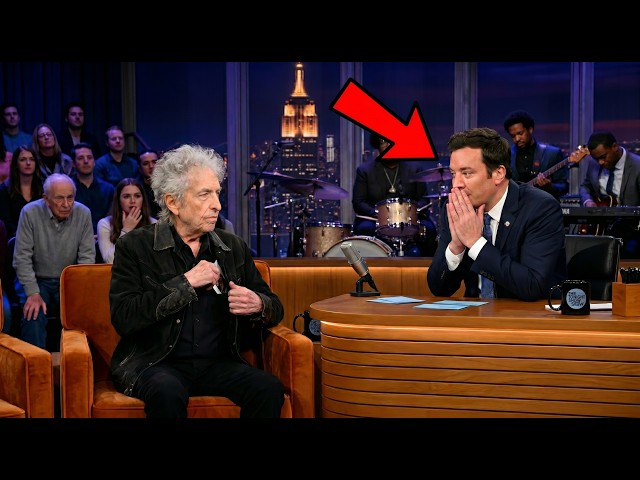
It carries risk. It can affect relationships, opportunities, and public perception. But it also defines boundaries—clear statements about what matters and what does not.
For Dylan, those boundaries had always been part of his work.
His music often explored themes of truth, change, and individuality. The choices he made offstage reflected those same ideas. He did not separate his art from his actions; they were connected.
That night was one of those moments where the connection became visible.
There was no performance, no applause, no broadcast highlight.
Just silence—and a decision.
In the years that followed, stories like this would continue to shape how people understood Bob Dylan. Not just as a musician, but as someone who consistently chose authenticity over expectation.
The late-night walkout did not define his career.
But it revealed something essential about it.
It showed that for Dylan, art was not something to be adjusted for convenience. It was something to be protected.
And sometimes, protecting it means stepping away—even when the cameras are ready, the lights are on, and the world is watching.
In that quiet exit, there was no spectacle.
Only a clear, unspoken message:
Some things are more important than the show.