Robert Kiyosaki’s Billion-Dollar Debt Revelation Comes With a Major Catch
Robert Kiyosaki’s Billion-Dollar Debt Revelation Comes With a Major Catch
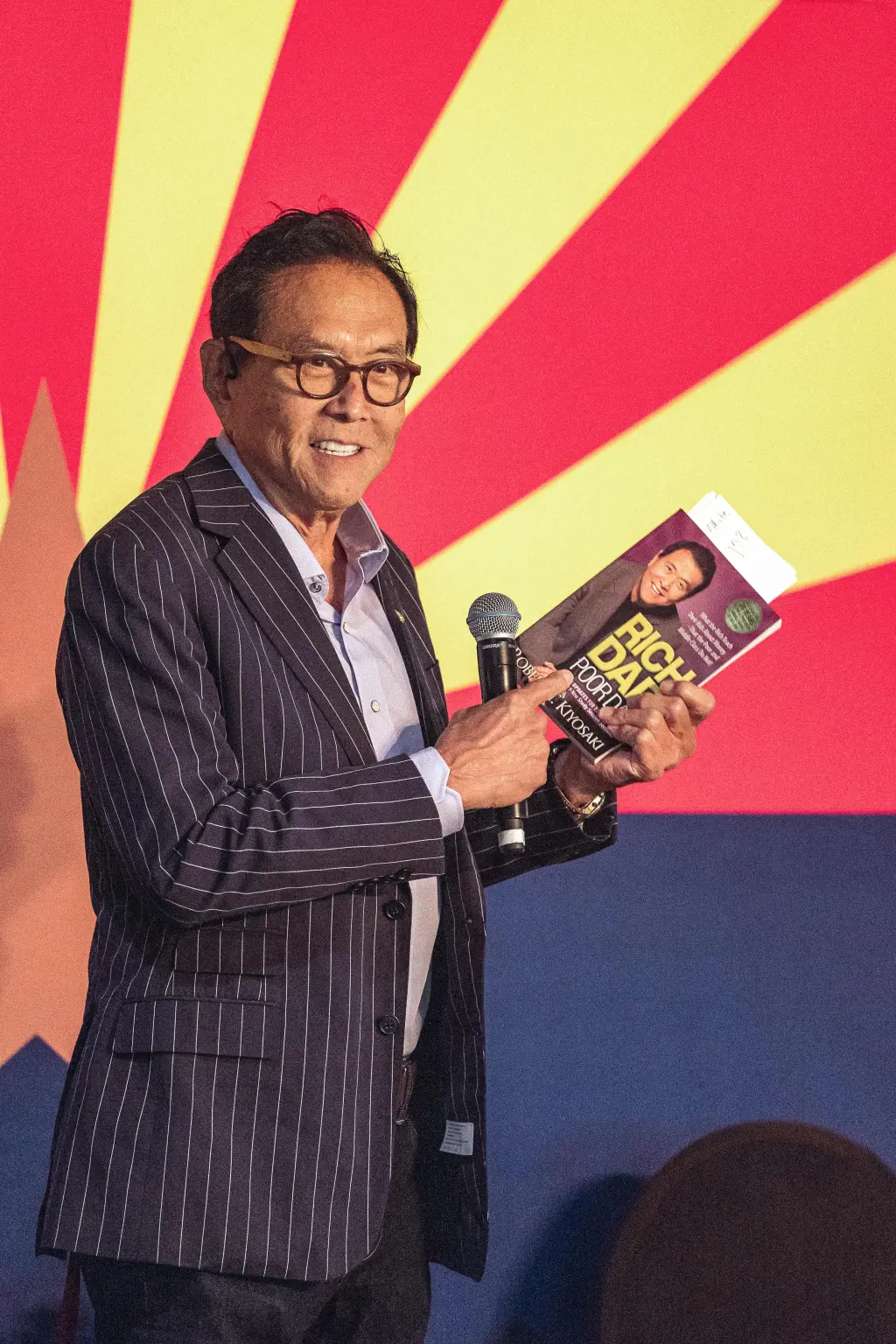
PHOENIX, Ariz. — Robert Kiyosaki, the author of the bestselling personal-finance book Rich Dad Poor Dad, has revealed that his real-estate investments are tied to roughly $1.2 billion in debt — a staggering figure that might sound like a financial disaster at first glance.
But there is an important distinction behind the headline.
Kiyosaki says the debt is largely connected to a portfolio of apartment properties owned with business partners. His former wife and longtime business partner, Kim Kiyosaki, said the $1.2 billion figure should not be interpreted as money Robert personally owes.
“I’m a Billion Two in Debt”
Kiyosaki recently discussed his financial position on the Get Rich Education podcast, explaining that he deliberately uses borrowed money to acquire assets that generate income.
His philosophy is based on a distinction he has promoted for decades: “good debt” is borrowing used to acquire income-producing assets, while “bad debt” is associated with consumption and expenses that don’t generate returns.
Kiyosaki has warned listeners not to simply copy his strategy without understanding how leverage works.
The 79-year-old financial educator says he has been studying the use of debt as an investment tool since the 1970s.
The $1.2 Billion Isn’t Simply His Personal Debt
This is the part that can easily be lost in the headline.
According to Kim Kiyosaki, the real-estate holdings involved include approximately 1,500 apartment units owned with business partners.
The borrowing is attached to those properties and investment entities rather than simply appearing as a $1.2 billion personal credit-card or bank balance belonging to Robert Kiyosaki.
Vanity Fair reported that if Kiyosaki’s own income estimates are accurate, his portion of the debt could be somewhere in the neighborhood of $30 million to $60 million, although his exact personal liability has not been publicly established.
That distinction matters enormously.
Someone can be associated with a billion-dollar investment portfolio carrying substantial loans without personally being responsible for every dollar of those loans.
Why Borrow So Much?
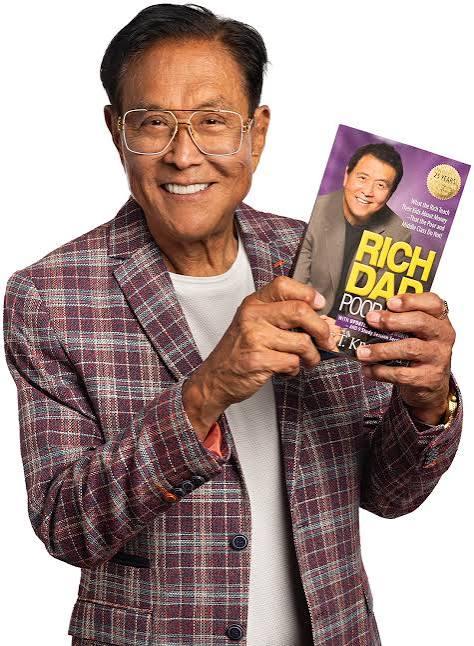
Kiyosaki’s strategy revolves around leverage.
An investor borrows money to purchase a property, collects rental income and hopes that the property’s value increases over time. If the investment performs well, the borrowed money can help generate a much larger return than would have been possible using only the investor’s own cash.
Real-estate investors can also potentially borrow against increased equity without selling the property.
But leverage works both ways.
If property values fall, rents decline, vacancies increase or borrowing costs rise, a heavily leveraged investor can face significant financial pressure.
That’s why Kiyosaki himself has cautioned that people shouldn’t imitate his strategy without understanding the risks.
The Man Behind “Rich Dad Poor Dad”
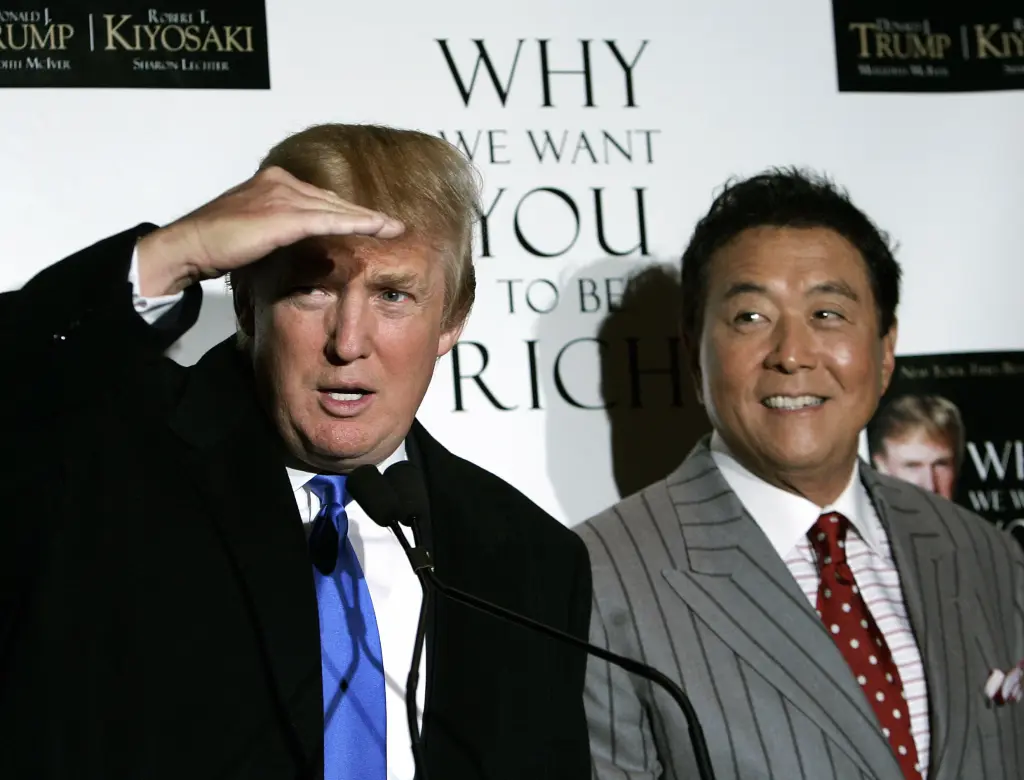
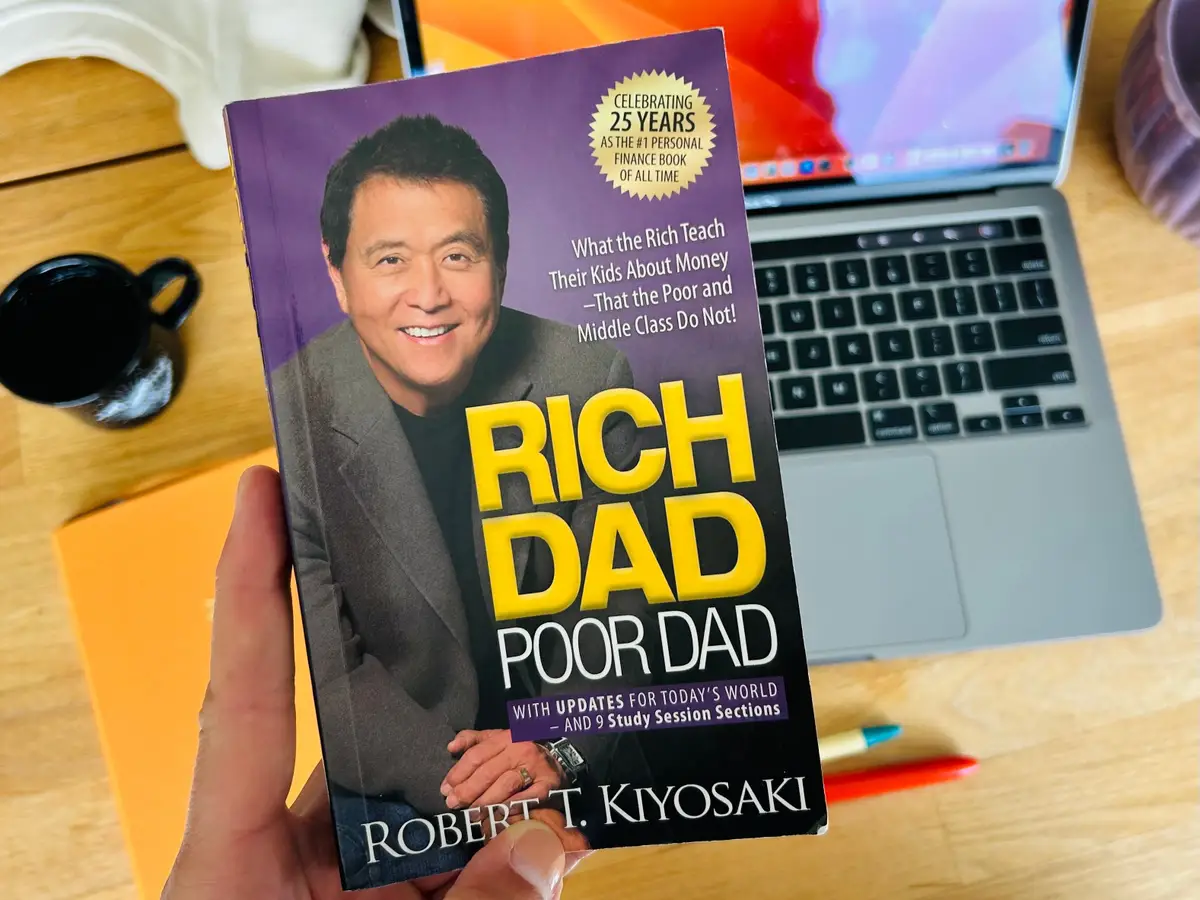
Kiyosaki became a household name after publishing Rich Dad Poor Dad in 1997.
The book, which contrasts lessons supposedly learned from Kiyosaki’s biological father and the businessman he called his “rich dad,” became one of the most commercially successful personal-finance books ever published.
It has sold more than 44 million copies and been translated into dozens of languages.
Its central message challenged conventional ideas about money, encouraging readers to focus on acquiring assets that generate cash flow rather than simply working for a salary.
Real estate became one of the most important examples of that philosophy.

A Strategy That Has Also Drawn Scrutiny
Kiyosaki’s financial career has not been without controversy.
One of his companies, Rich Global LLC, filed for bankruptcy in 2012 after a legal dispute that resulted in a multimillion-dollar judgment.
That episode, along with Kiyosaki’s outspoken investment predictions and aggressive use of leverage, has periodically prompted questions about the gap between his financial philosophy and the risks involved in putting it into practice.
Still, Kiyosaki continues to argue that debt itself isn’t necessarily the enemy.
His argument is that what the debt is used to buy matters more than the size of the debt alone.
Billion-Dollar Headline, Billion-Dollar Lesson
The $1.2 billion figure is undeniably eye-catching.
But the reality is more complicated than “Rich Dad Poor Dad author is personally $1.2 billion underwater.”
Most of the figure represents borrowing connected to a large real-estate portfolio involving partners, while Kiyosaki’s personal exposure appears to be substantially smaller.
At the same time, the story illustrates one of the central principles Kiyosaki has spent decades teaching: wealth can be built with borrowed money, but leverage also magnifies risk.
For an investor with thousands of units generating rental income, billions in property-backed debt may be part of an intentional strategy.
For an ordinary investor, however, the lesson may be simpler:
Debt can be a powerful financial tool — but only when you understand exactly who owes it, what secures it and what happens if the investment goes wrong.