30-Hour Charlotte Standoff Ends With Armed Man Taken Into Custody After SWAT, Drones and a Sniper Shot
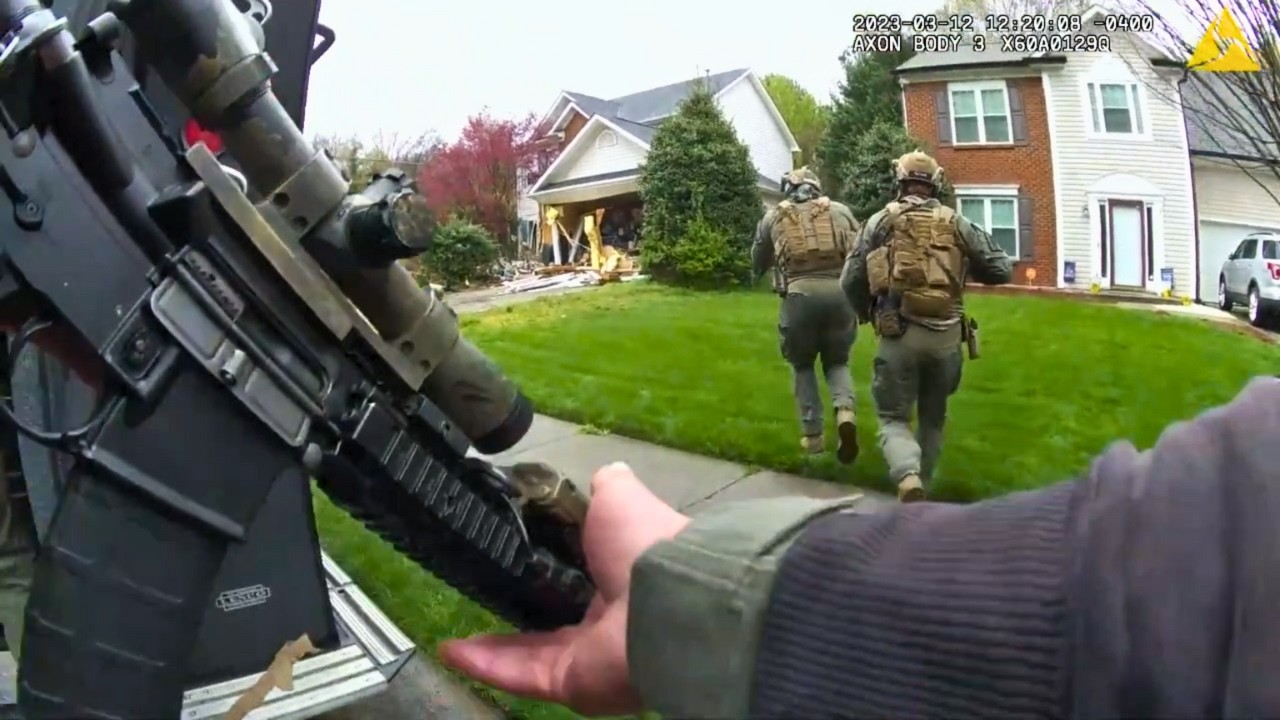
A police response to a familiar home in Charlotte, North Carolina, escalated into a standoff lasting more than 30 hours after officers confronted an armed man who had a lengthy history of crisis calls and refused repeated requests to leave his house peacefully.
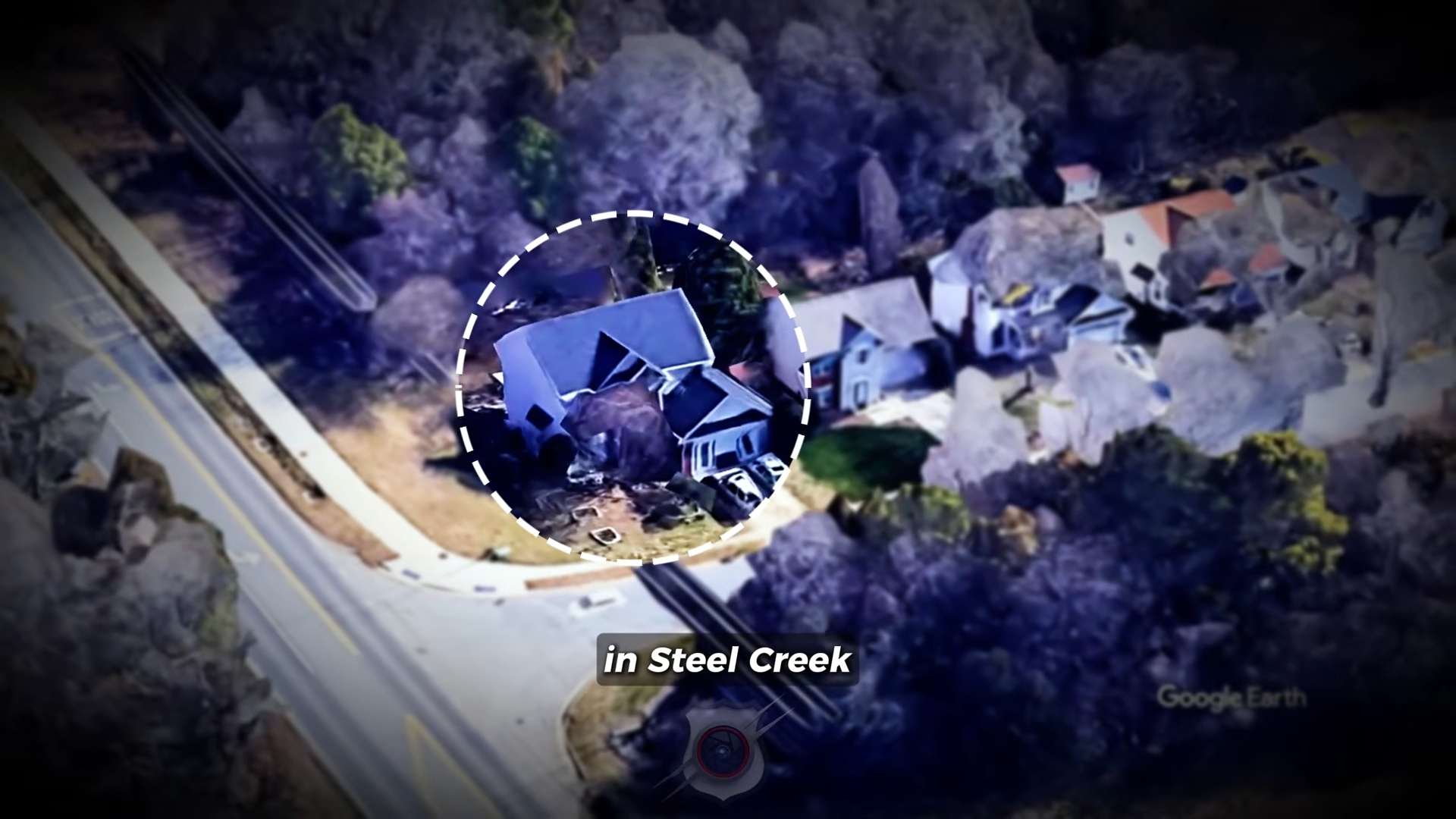
The March 11, 2023, incident unfolded on Greers Fork Drive in the Steel Creek area, where Charlotte-Mecklenburg police had reportedly been called dozens of times before.
According to the footage, officers had responded to the residence 46 times and crisis-intervention teams had been involved on 13 previous occasions. But on this day, neighbors were reporting something more dangerous: the man was outside with a weapon and allegedly threatening both residents and police.
What followed involved negotiators, SWAT officers, armored vehicles, drones, robots, less-lethal tactics and ultimately a sniper shot.
Despite the extraordinary escalation, the encounter ended with the man alive and in custody.
Neighbors Call 911 Over Threats
The incident began when neighbors contacted 911 and reported that the man was outside his home using a megaphone and making threatening statements.
One caller said the threats had been captured on video and told dispatchers that residents were frightened.
Another caller said the family had already been working with a police crisis-response team and had been instructed to report new threats as they occurred.
When officers arrived, they attempted to make contact at the residence.
The man did not simply come to the door.
Instead, he responded through a megaphone, shouting from inside and making a series of confused statements.
At one point he claimed to be the president of the United States.
Officers continued trying to persuade him to step outside.
Then they encountered his mother.
Family Warns Police He Has a Gun
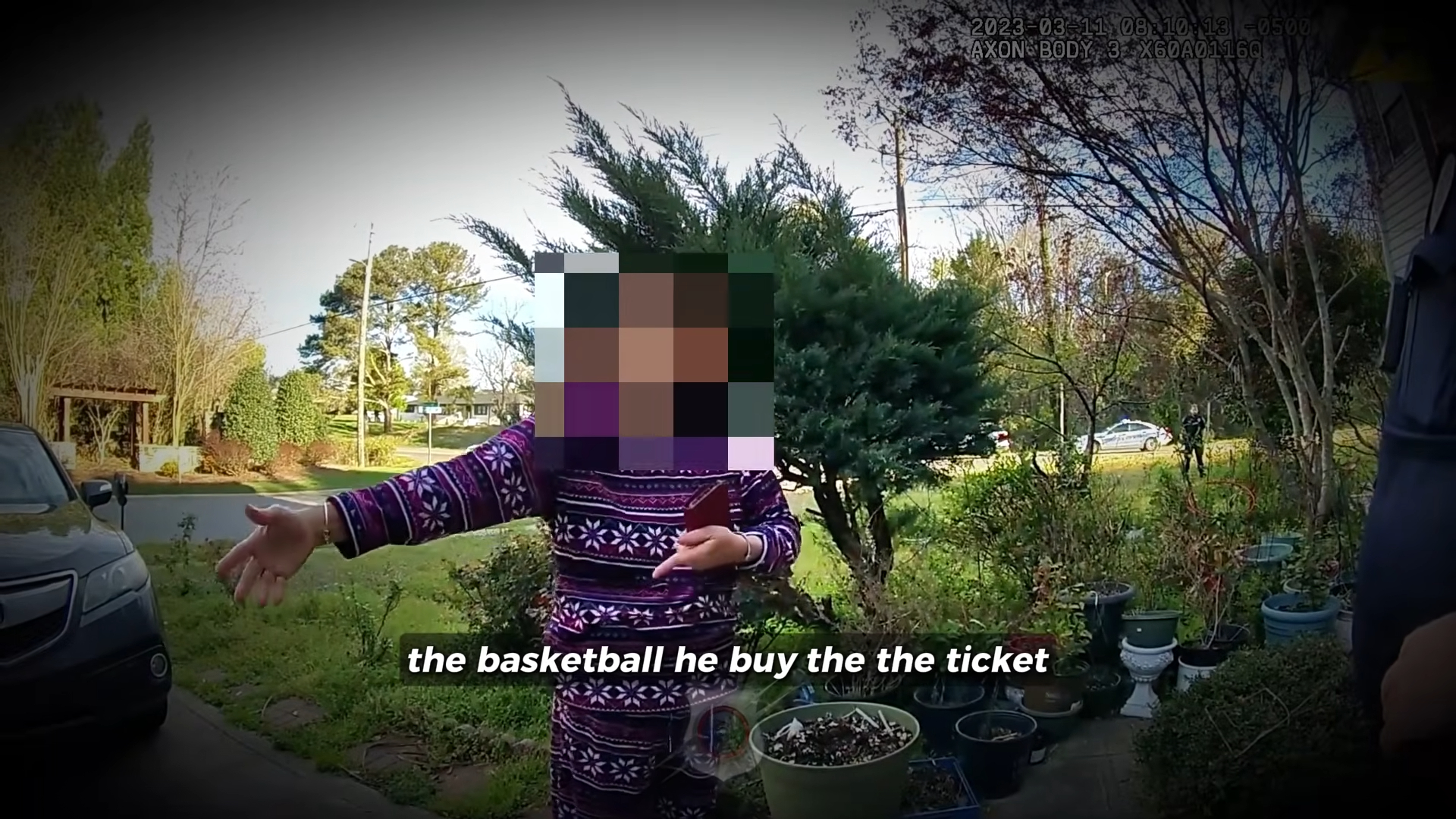
The suspect’s mother told officers that her son was unstable and had access to a firearm.
Because communication was difficult, officers later asked another family member to help translate.
The family indicated that a revolver was somewhere inside his room and that he may also have access to another potential weapon.
Police also learned that two dogs were inside the house.
The man soon appeared at the doorway but refused to surrender, yelling for officers to leave him alone and accusing them of harassment.
With a firearm reportedly inside and the man refusing to comply, officers began treating the situation as a barricade.
SWAT and negotiators were called.
Meanwhile, the suspect himself contacted 911 and claimed that police had kidnapped his mother and intended to kill him.
The confrontation was now moving into a prolonged crisis.
Negotiators Try to Keep Him Talking
Police repeatedly called the man and used loudspeakers to encourage him to come outside with empty hands.
He resisted.
During conversations with officers, he made statements suggesting he believed he worked for the government and expressed a series of grandiose or delusional ideas.
Negotiators continued engaging him anyway.
Their goal remained the same: maintain communication and avoid a violent confrontation.
By this point, SWAT officers had surrounded the home with armored vehicles, rifles and shields.
The neighborhood had become a tactical staging area.
Hours passed with little progress.
Eventually, officers decided to increase pressure.
SWAT Breaches the Door and Sends in Drones
After extended negotiations failed to produce a surrender, officers breached the front door.
The move did not end the standoff.
Instead, the suspect became more agitated and threatened to shoot after the door was damaged.
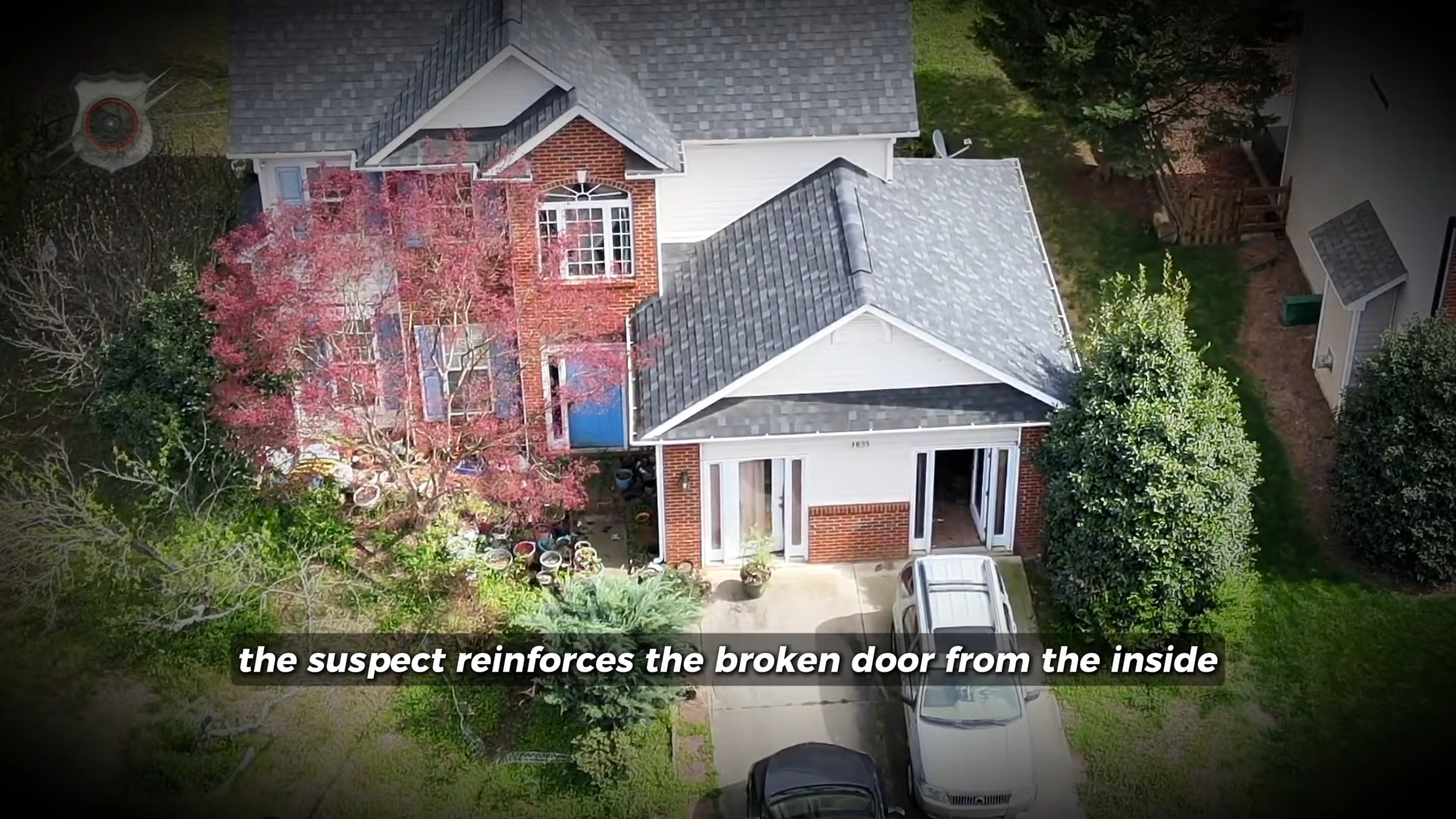
He then attempted to reinforce the entrance from inside.
SWAT responded by using an armored vehicle to open the entry again.
Rather than immediately sending officers into the house, police deployed a drone.
The idea was to locate the suspect without exposing officers to unnecessary danger.
But the man soon emerged from a room armed with a baseball bat and destroyed the drone.
Negotiators kept talking.
During one conversation, the man acknowledged that voices were influencing him.
He also shifted between different identities and repeatedly returned to the idea that he would not leave the home alive.
Police therefore faced an increasingly difficult balance: the man was armed and threatening, but he also appeared to be experiencing a severe behavioral-health crisis.
A Gun Appears — and a Sniper Fires
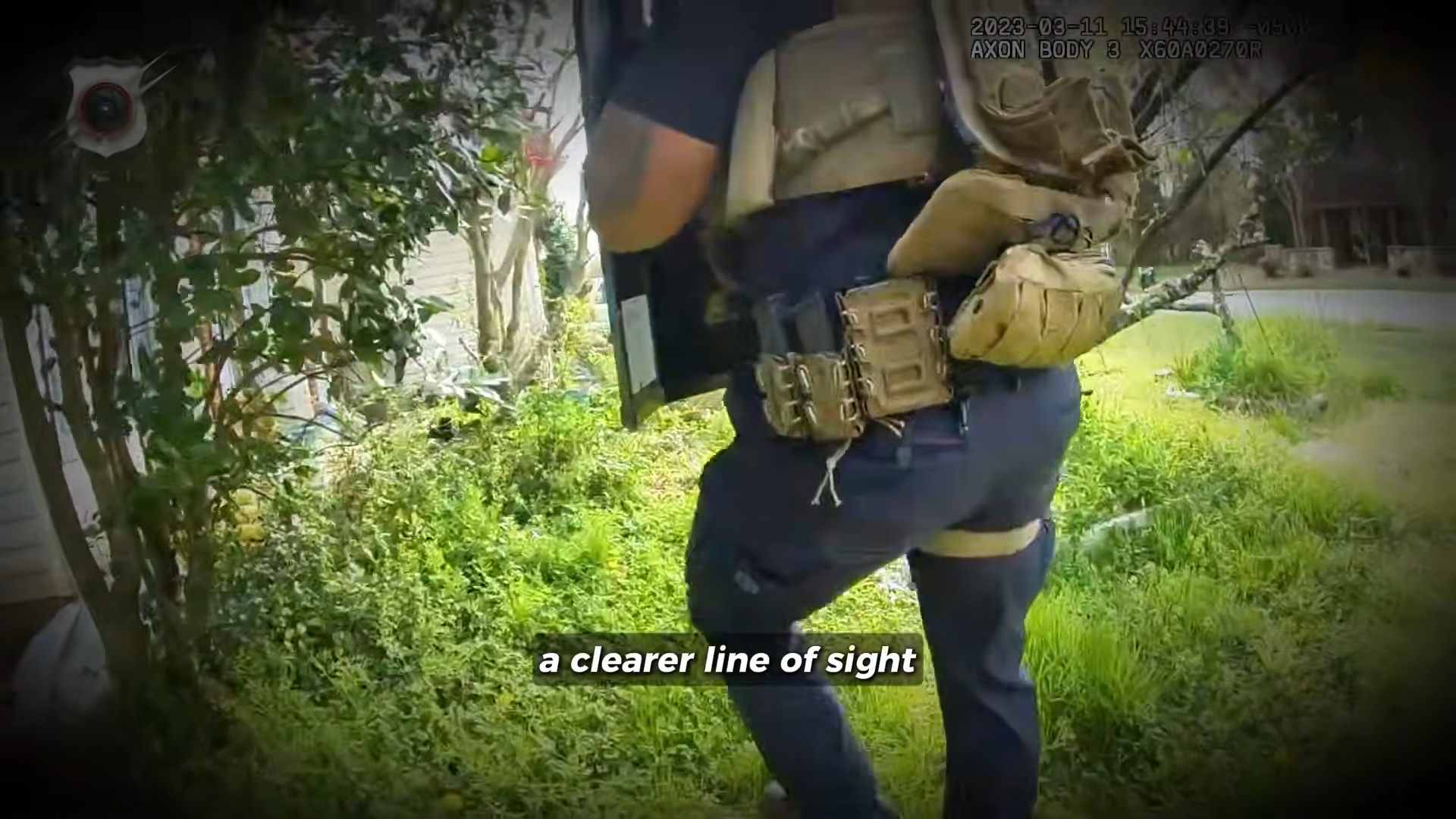
As the operation continued, officers used more drones, an armored robot and controlled breaches to create lines of sight inside the house.
Then a sniper spotted the suspect near a doorway.
This time, officers reported seeing a firearm in his hand.
“Gun in his left hand,” someone calls out in the footage.
A sniper fires.
The suspect retreats upstairs.
For several minutes, officers do not know whether he has been seriously injured.
Negotiators repeatedly call for him to respond.
Robots and drones are sent deeper into the residence to locate him.
Then an unexpected call comes into 911.
The suspect is still alive.
During the call, he describes himself as “Lucifer” and speaks as though he is reporting that police shot another person, rather than acknowledging that he himself was the subject involved.
For officers, the call confirms that the standoff is not over.
The Standoff Continues Through the Night
Police continue dismantling the physical barriers around the home.
Vehicles are moved away from the garage.
Additional windows are breached.
The garage door is torn open.
Negotiators keep calling and using loudspeakers.
As darkness falls and the operation stretches past midnight, the man remains inside, still making rambling statements and refusing to surrender.
By morning, police attempt another strategy.
They deploy smoke near an entrance and cut power to the house in an effort to reduce the suspect’s ability to remain comfortably barricaded.
At the same time, he begins using social media to claim that police are trying to murder him.
The standoff has now lasted more than a day.
Then, finally, the suspect appears.
After More Than 30 Hours, He Walks Toward Police
For the first time in more than 30 hours, the man emerges into the doorway.
Snipers are watching.
Officers immediately begin talking him forward.
They repeatedly assure him that they are not going to shoot him if he continues toward them.
For a moment, it appears the standoff may end without another confrontation.
Then he hesitates and begins moving backward.
Police decide they cannot allow him to disappear into the house again.
A tactical team moves.
The suspect then resumes coming forward, asking officers not to harm his dog.
Within seconds, officers take him to the ground and place him in handcuffs.
A weapon is recovered.
The standoff is over.
Taken for Mental-Health Treatment
According to the conclusion of the footage, the man was transported to a mental-health facility after being taken into custody.
No one was killed.
That outcome is especially notable given the length and intensity of the confrontation: an armed barricaded subject, repeated threats, multiple destroyed drones, forced entry, armored vehicles and a sniper firing during the operation.
The case demonstrates the complexity of responding to someone who may pose a genuine armed threat while simultaneously experiencing a profound mental-health crisis.
Police had already been called to the home dozens of times.
Crisis teams had intervened repeatedly.
Yet on this occasion, the situation grew into a tactical operation lasting more than 30 hours.
In the end, the decisive moment was not the sniper shot, the destroyed drones or the armored vehicles breaking through the house.
It was the moment the man finally walked out far enough for officers to reach him — and after more than a day of uncertainty, take him into custody alive.