7 Movie Villains So Unforgettable They Became Bigger Than the Heroes
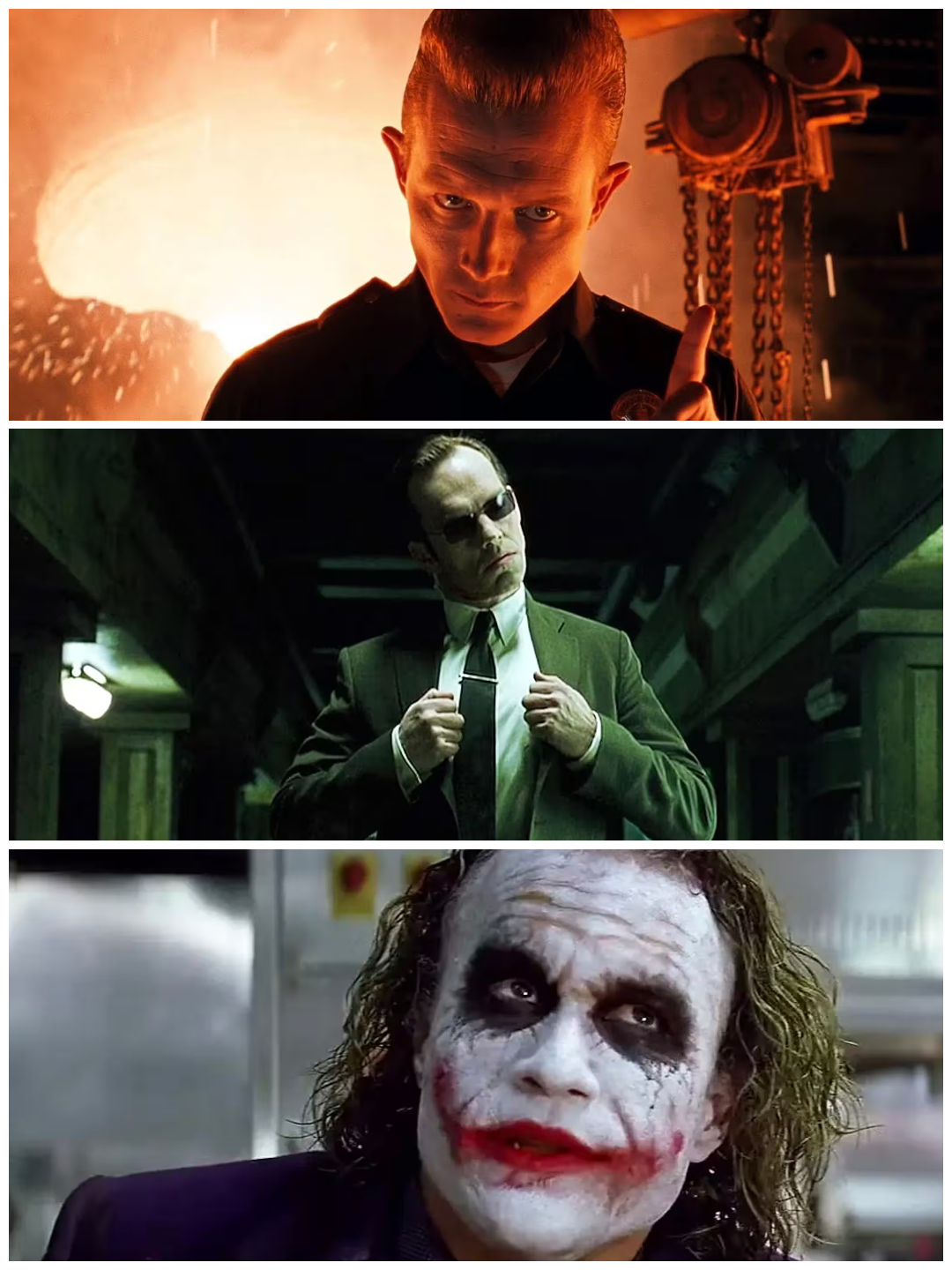
A great hero can carry a movie.
A great villain can haunt it long after the credits end.
Cinema’s most memorable antagonists are rarely frightening because they are simply stronger than everyone else. The best of them represent something deeper: chaos, obsession, technological control, moral corruption or the terrifying possibility that evil can appear perfectly calm.
Some arrive with supernatural power. Others barely need to raise their voices. One flips a coin before deciding whether someone lives. Another smiles while psychologically dismantling the people around him.
From Gotham City to a simulated reality, these seven villains became unforgettable not merely because audiences wanted them defeated, but because every scene grew more dangerous the moment they appeared.
7. Agent Smith — The Matrix
Played by Hugo Weaving
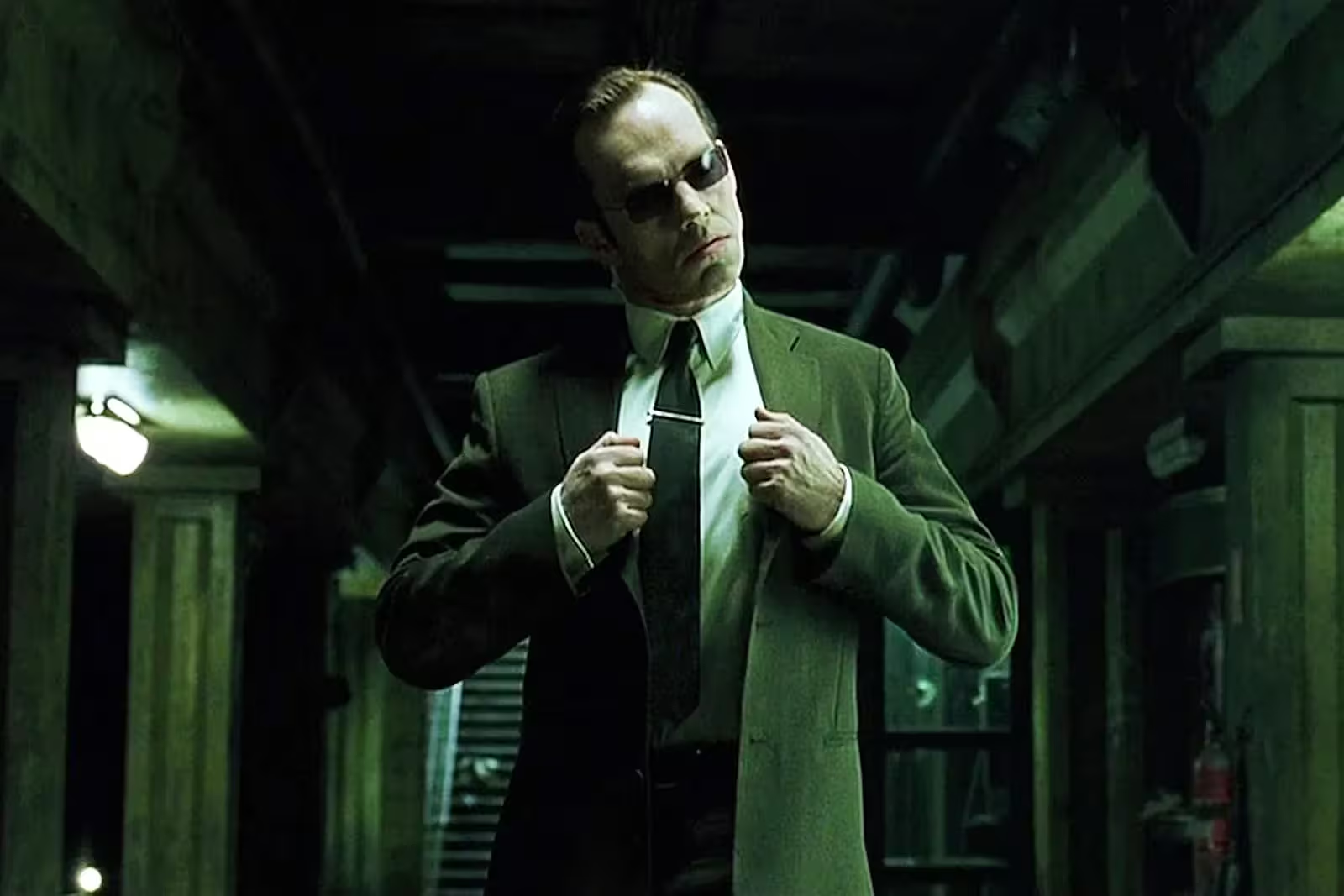
The Matrix transformed the way a generation thought about reality, artificial intelligence and technological control. At the center of that nightmare was Agent Smith.
Smith is not originally human at all. He is a program operating inside the Matrix, tasked with eliminating threats to the artificial system imprisoning humanity.
Hugo Weaving makes him frightening through restraint.
There is almost no wasted movement. Smith speaks with mechanical precision, wears an expression of barely concealed disgust and approaches most opponents as if their destruction is an administrative task.
But his hatred of humans gradually makes him more than a simple security program.
He becomes obsessed with escaping his purpose and destroying Neo.
That obsession eventually grows so powerful that Smith himself becomes a threat to the system he once protected.
Neo may be the chosen hero of The Matrix, but without Weaving’s icy performance opposite him, the conflict would never have carried the same weight.
6. T-1000 — Terminator 2: Judgment Day
Played by Robert Patrick
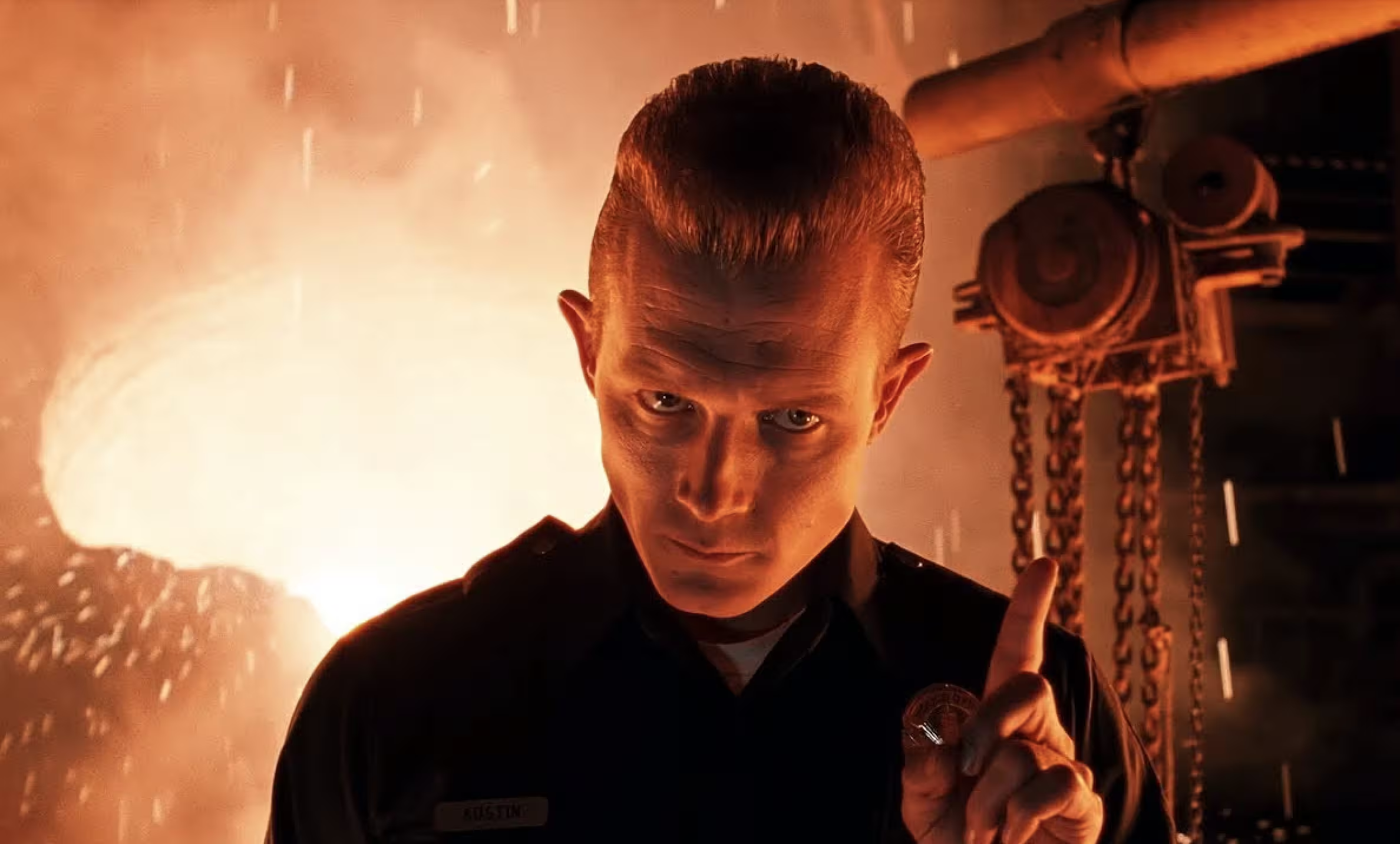
James Cameron pulled off one of cinema’s greatest reversals in Terminator 2: Judgment Day.
Arnold Schwarzenegger’s T-800, the terrifying killing machine from the original Terminator, was now protecting young John Connor.
That meant the sequel needed something even more frightening.
Enter the T-1000.
Robert Patrick’s futuristic assassin is made from liquid metal, allowing him to change appearance, imitate people and recover from damage that would destroy almost anything else.
What makes the T-1000 terrifying, however, is not merely the visual effects.
It is Patrick.
He barely seems human even when wearing a human face. His movements are controlled, his expression remains cold and his pursuit of John never appears to require anger.
The T-1000 simply keeps coming.
Bullets do not stop him. Crashes do not stop him. Even the T-800 repeatedly struggles to slow him down.
The result is one of action cinema’s purest representations of relentless danger.
5. Thanos — The Marvel Cinematic Universe
Played by Josh Brolin
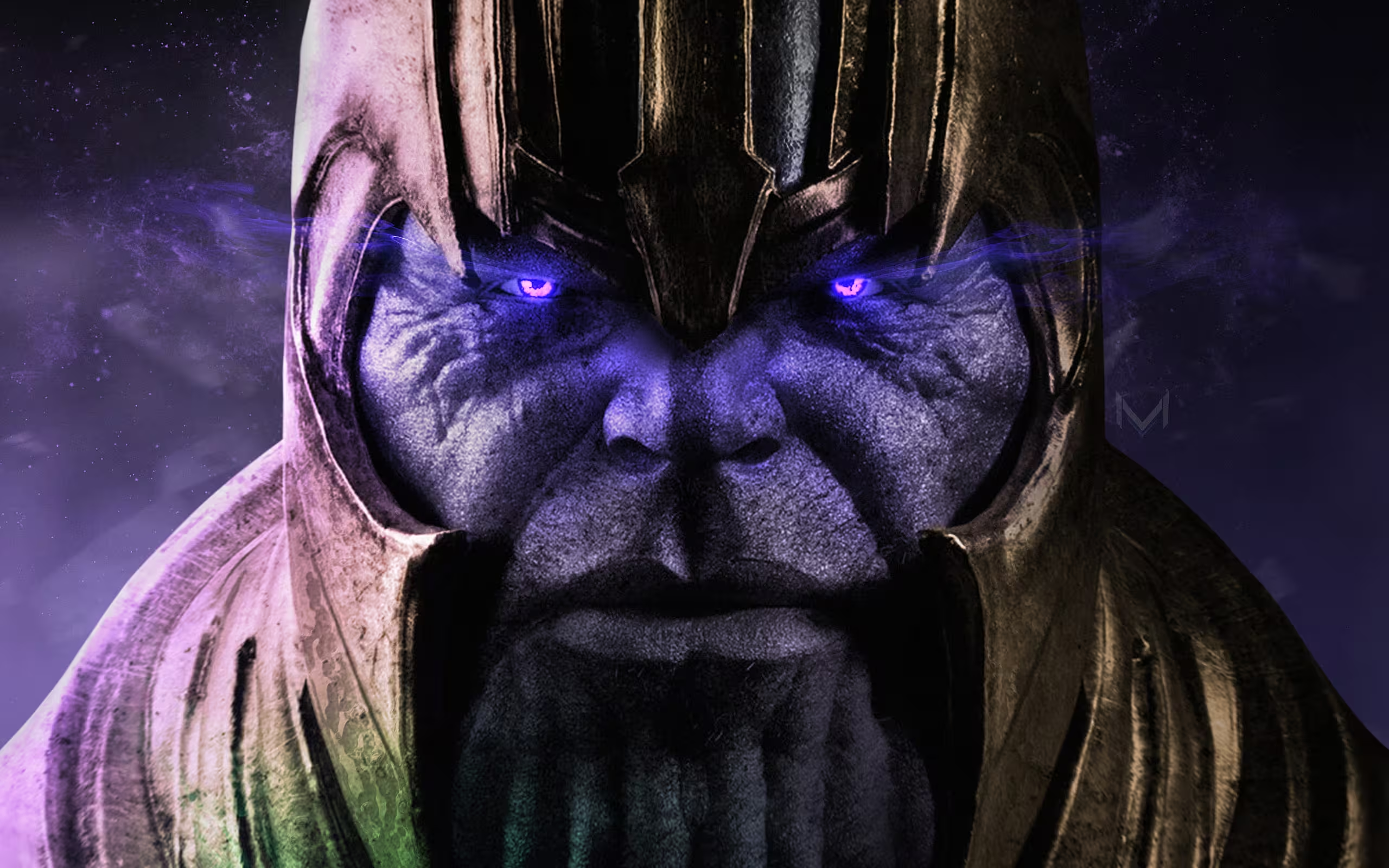
Marvel spent years preparing audiences for Thanos before finally allowing the Mad Titan to take center stage.
When he did, the heroes lost.
That alone separates him from most blockbuster villains.
Thanos’ plan is horrifying: obtain all six Infinity Stones and erase half of all life in the universe.
But he does not consider himself evil.
That belief makes him far more interesting.
Thanos sees his actions as a brutal solution to a problem of limited resources and overpopulation. In his mind, he is making the sacrifice others are too weak to make.
His reasoning is twisted, but his absolute belief in it gives Josh Brolin something much richer than a conventional world-conquering villain.
Then Avengers: Infinity War does something almost shocking for a superhero movie.
Thanos succeeds.
He defeats the Avengers, completes the Infinity Gauntlet and snaps his fingers.
Heroes disappear.
For an entire year, audiences were left with a Marvel universe in which the villain had won.
4. Darth Vader — Star Wars
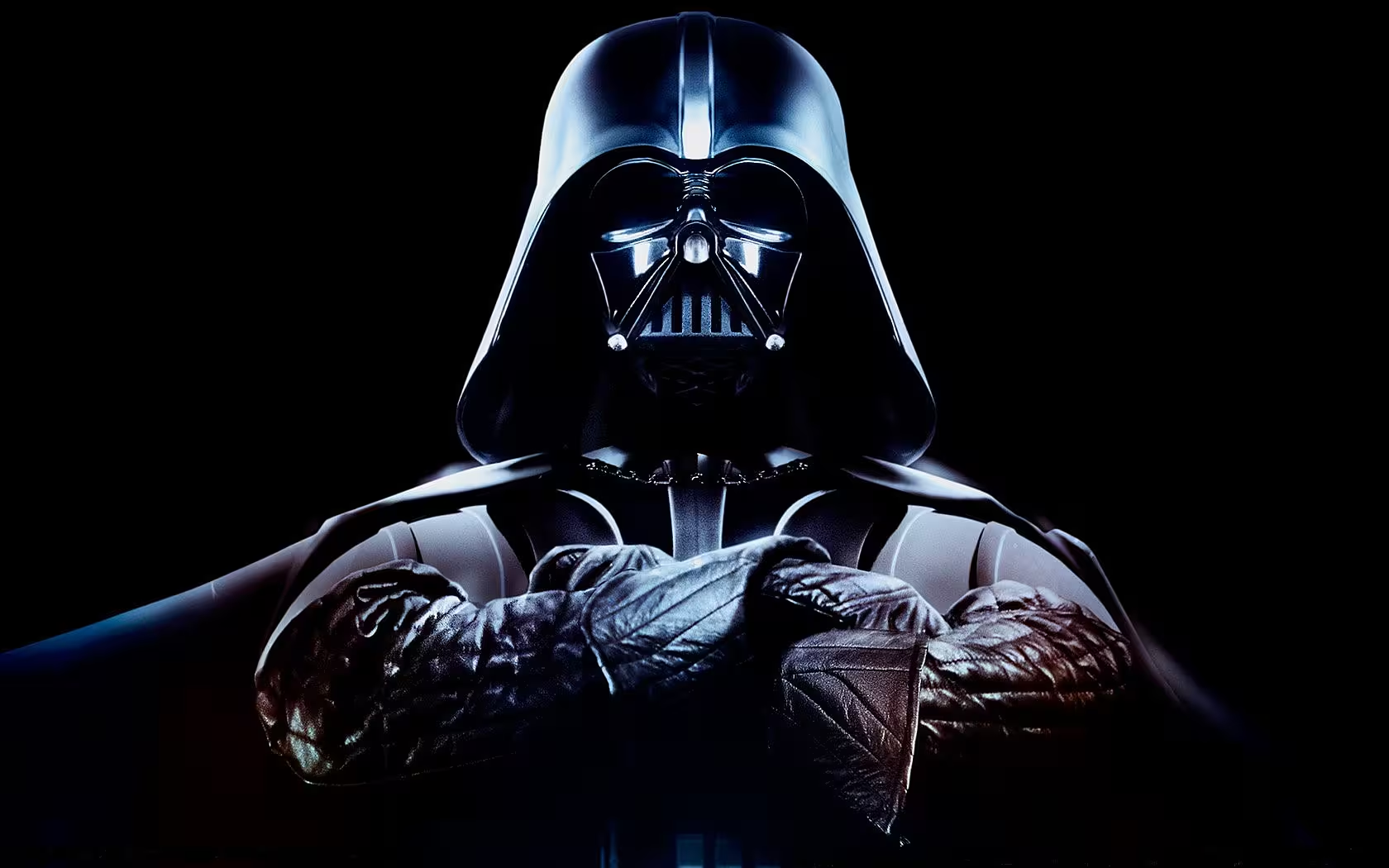
Few villains can be recognized from a silhouette alone.
Darth Vader can be recognized from his breathing.
The black armor, mechanical respirator, red lightsaber and voice created one of cinema’s most instantly identifiable characters.
Yet Vader became truly enduring because beneath that terrifying exterior was once Anakin Skywalker.
His story turned the villain into a tragedy.
Anakin begins as a talented young Jedi with enormous potential. Fear, anger and manipulation gradually pull him toward the dark side until he becomes the very kind of monster he once fought.
By the time audiences encounter Vader in the original Star Wars films, much of Anakin seems to have disappeared.
He is ruthless, powerful and capable of terrifying almost everyone around him without needing to move quickly or shout.
But his connection to Luke Skywalker eventually exposes what remains beneath the mask.
That combination — unstoppable villain and fallen hero — gave Vader a depth few cinematic antagonists ever achieve.
3. The Joker — The Dark Knight
Played by Heath Ledger
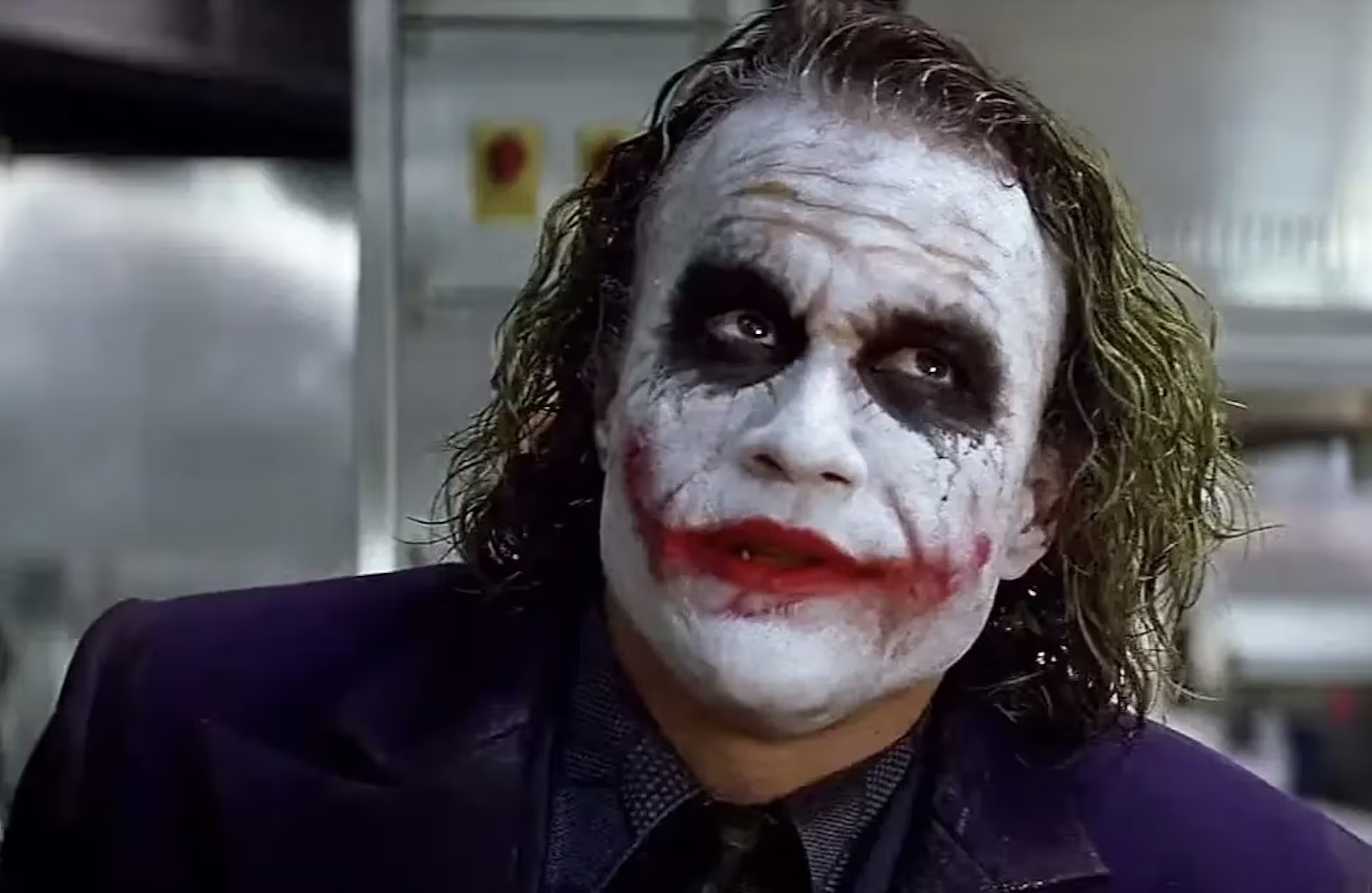
Heath Ledger’s Joker does not want money.
He does not seem interested in ruling Gotham.
He wants to prove something.
That is what makes him so dangerous.
Christopher Nolan’s The Dark Knight presents the Joker as an agent of chaos determined to expose what he believes lies underneath civilization: fear, selfishness and moral weakness.
Batman believes people can choose good.
The Joker wants to demonstrate that, with enough pressure, they will choose something else.
Ledger turns every scene into a psychological confrontation.
His Joker constantly changes stories about his scars, laughs at inappropriate moments and appears genuinely amused when events become more dangerous.
He also understands Batman better than most of Batman’s enemies.
Instead of simply trying to kill him, he attacks the principles that make Batman a hero.
Harvey Dent is corrupted.
Gotham is pushed toward panic.
Batman is forced into choices that damage his own reputation.
Ledger’s performance became one of the defining portrayals of a comic-book villain and set a standard that later versions of the character inevitably had to confront.
2. Hannibal Lecter — The Silence of the Lambs
Played by Anthony Hopkins
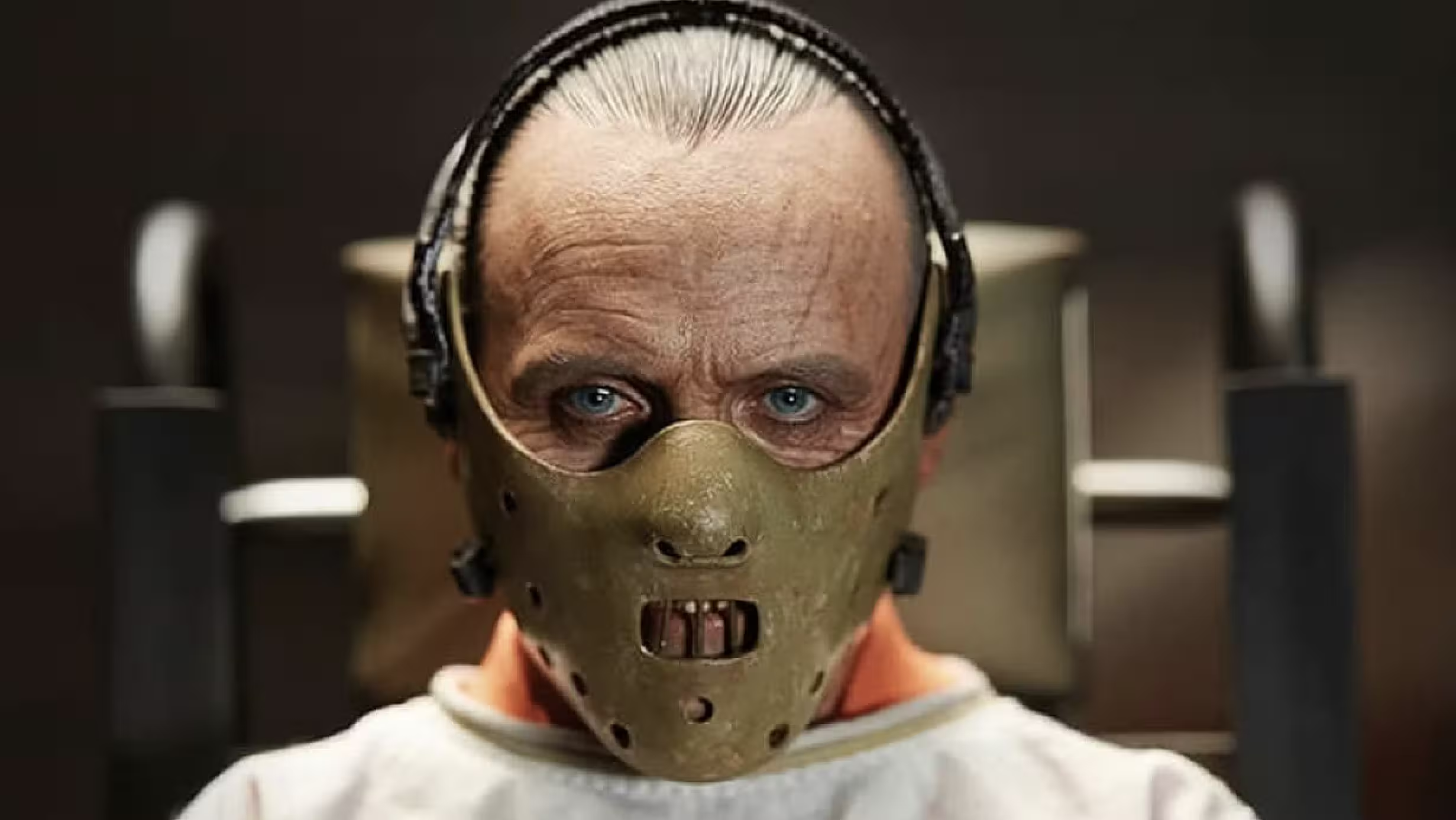
Hannibal Lecter spends much of The Silence of the Lambs behind glass and bars.
He still feels like the most dangerous person in the room.
Anthony Hopkins’ performance works because Lecter rarely needs physical force to intimidate anyone.
His weapon is attention.
He watches people closely, recognizes their insecurities and then uses those weaknesses against them.
When FBI trainee Clarice Starling comes to him seeking insight into another killer, Lecter turns their conversations into psychological negotiations.
He will help.
But he wants something in return.
Information about her.
Her fears.
Her memories.
Her emotional wounds.
That makes every conversation between them feel like a duel.
Lecter is intelligent enough to understand people almost instantly and cruel enough to enjoy what that knowledge allows him to do.
The performance transformed a confined character into one of cinema’s most famous monsters.
1. Anton Chigurh — No Country for Old Men
Played by Javier Bardem
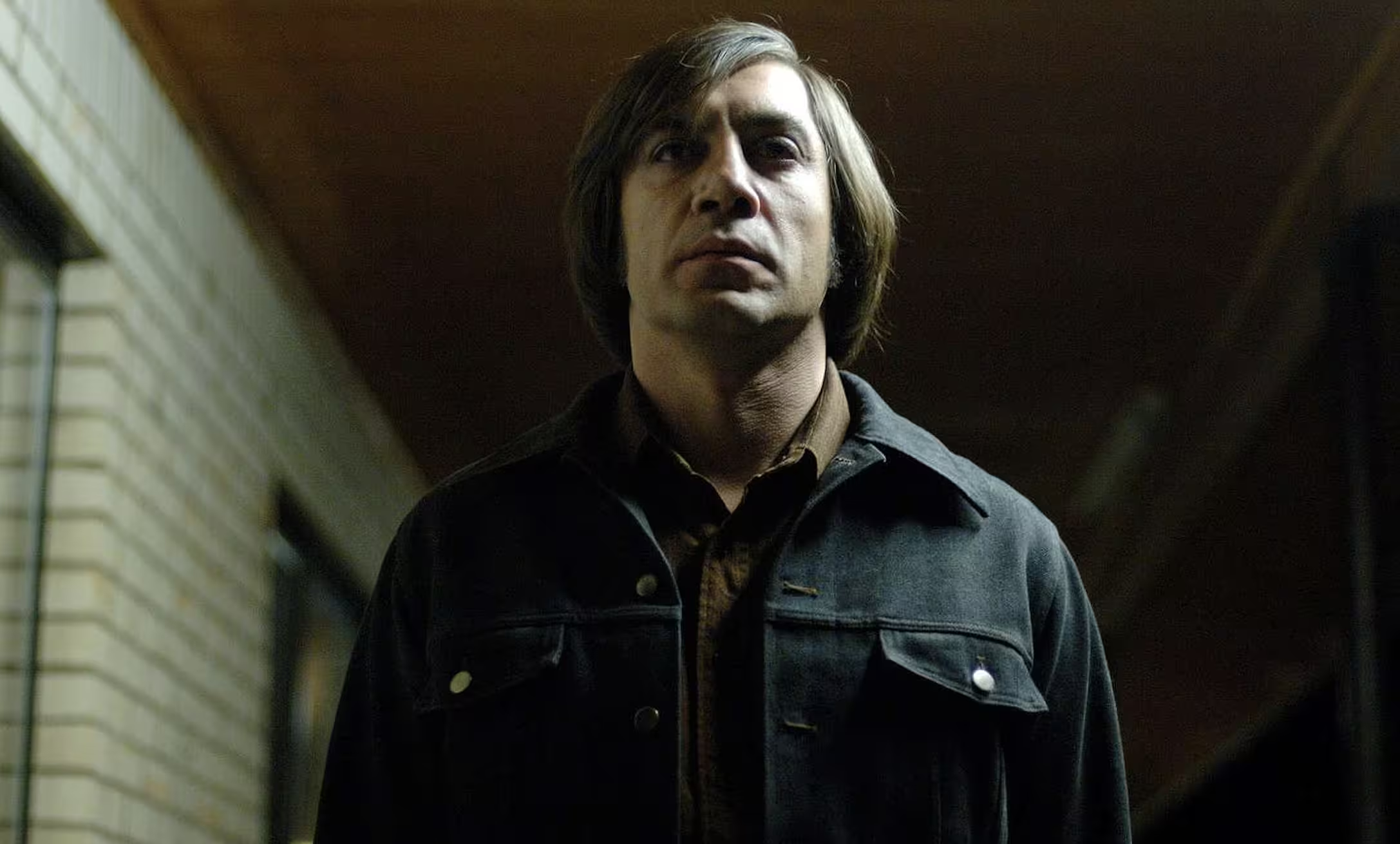
Anton Chigurh may be the most frightening villain on this list because almost nothing about him feels theatrical.
He does not want applause.
He does not deliver grand speeches about ruling the world.
He simply arrives.
In No Country for Old Men, Chigurh pursues money taken after a drug deal goes wrong. What follows is a trail of fear as he methodically tracks the people connected to it.
Javier Bardem plays him with unnerving calm.
Chigurh appears to operate according to a private moral code that makes sense only to him. At times, he places another person’s fate in the outcome of a coin toss.
One of the film’s most famous sequences occurs in an ordinary gas station.
There is no giant action set piece.
No army.
No special effects.
Just Chigurh speaking quietly with a clerk.
Yet the conversation becomes almost unbearable because the audience gradually understands that the man may be unknowingly gambling for his own life.
That is the power of Bardem’s performance.
Chigurh makes ordinary rooms feel unsafe.
He seems less like someone experiencing anger than a force moving inevitably toward its target.
And unlike villains who become memorable through elaborate costumes or supernatural abilities, he needs almost nothing.
A strange haircut.
A quiet voice.
A coin.
And the certainty that if Anton Chigurh walks through the door, somebody may not walk back out.
That is ultimately what separates the greatest movie villains from ordinary antagonists.
They do more than give the hero someone to fight.
Agent Smith turns technology into imprisonment. The T-1000 makes escape feel impossible. Thanos forces heroes to live with defeat. Darth Vader turns evil into tragedy. The Joker attacks morality itself. Hannibal Lecter turns conversation into predation.
And Anton Chigurh transforms chance into terror.
Heroes may win the story.
But sometimes, the villain is the person audiences remember forever.