83 Neighbors Turned a Summer Afternoon Into an Autistic Boy’s Dream Halloween
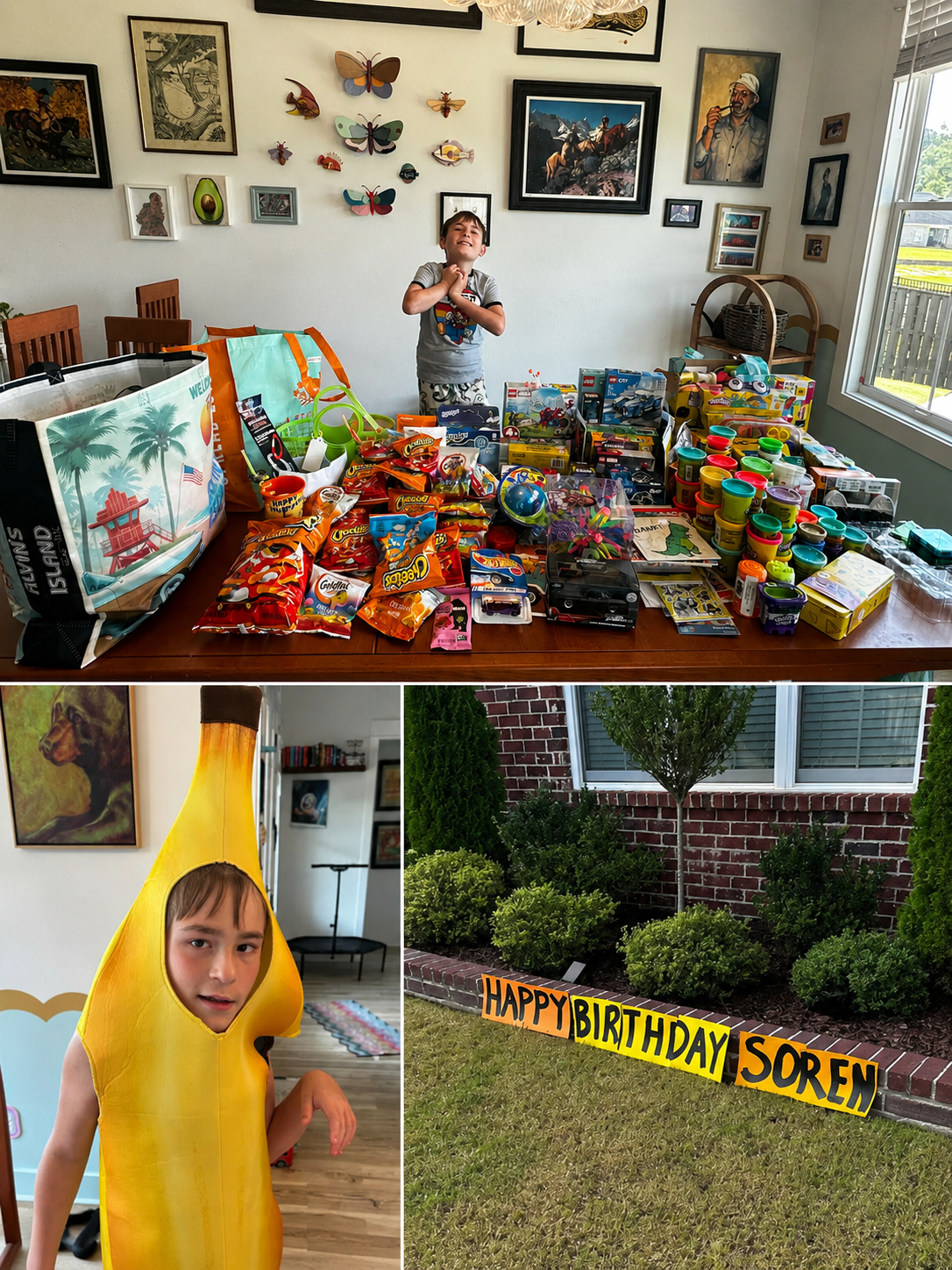
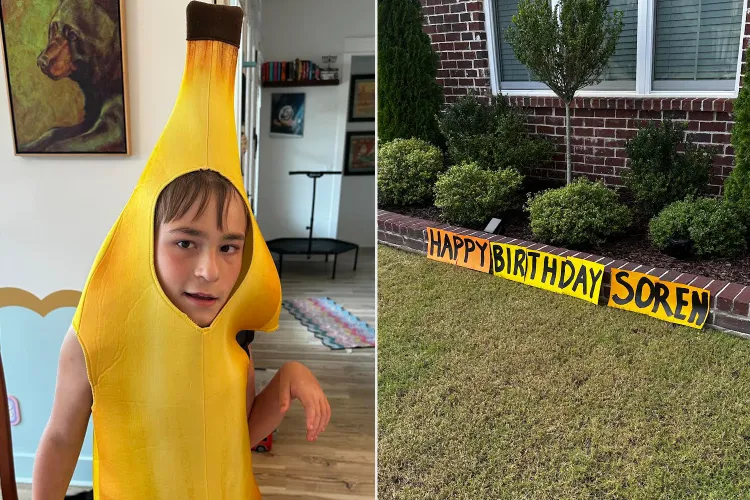
Soren Farrow put on a banana costume, picked up his trick-or-treat bucket and stepped outside expecting a birthday adventure.
What waited beyond his front door was larger than anything his mother had imagined.
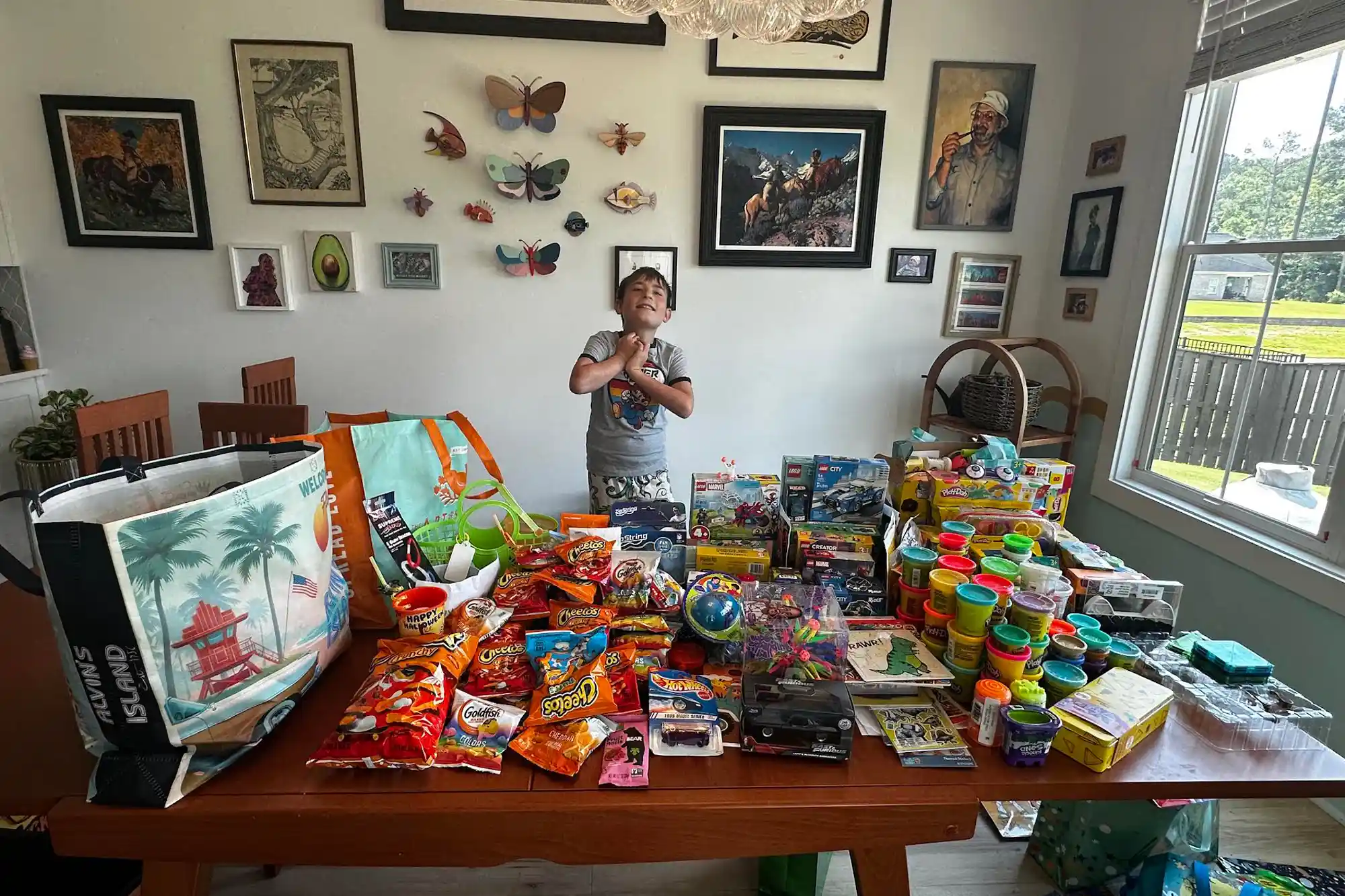
One by one, families across the neighborhood opened their homes with candy, snacks, toys and gifts prepared especially for the 11-year-old. Children stood ready to take part. Adults had purchased his favorite treats. By the end of the afternoon, 83 neighbors had helped recreate Halloween in the middle of summer.
For Soren, who is autistic, the celebration brought together two things he loves most: walking through the neighborhood and ringing doorbells.
For his mother, Leah Farrow, it provided something even more meaningful.
It showed her that her son was not merely tolerated by the community around him. He was known, welcomed and loved.
A Favorite Activity Becomes a Birthday Wish
Soren’s fascination with trick-or-treating began the previous fall.
Farrow said her son enjoys movement and loves going for walks. Halloween added another activity that immediately captured his attention: ringing doorbells throughout the evening.
Afterward, Soren began recreating the experience at home.
He would put on part of a costume, carry his bucket and walk from door to door inside the house, knocking and saying, “Trick-or-treat.”
The holiday had ended, but the joy remained.
As his summer birthday approached, Farrow began wondering whether she could give him that experience again without waiting until October.
She did not need an elaborate party or expensive attraction. The celebration Soren wanted depended on something much simpler: people willing to answer their doors.
Farrow turned to her neighborhood’s Facebook group and asked whether a few families might participate in a special afternoon of summer trick-or-treating.
She expected a small response.
Instead, 83 neighbors volunteered.
The Community Refused to Let His Mother Supply Everything
Farrow initially offered to deliver candy to participating homes so residents would not have to spend their own money.
No one accepted the offer.
Instead, neighbors began asking questions.
What kind of candy did Soren enjoy? Which snacks did he prefer? Were there toys he especially liked?
The replies transformed a simple route of open doors into a personalized birthday experience.
Some families prepared candy for his bucket. Others waited with gifts. The effort showed that residents were not participating merely to be polite.
They wanted each stop to feel special.
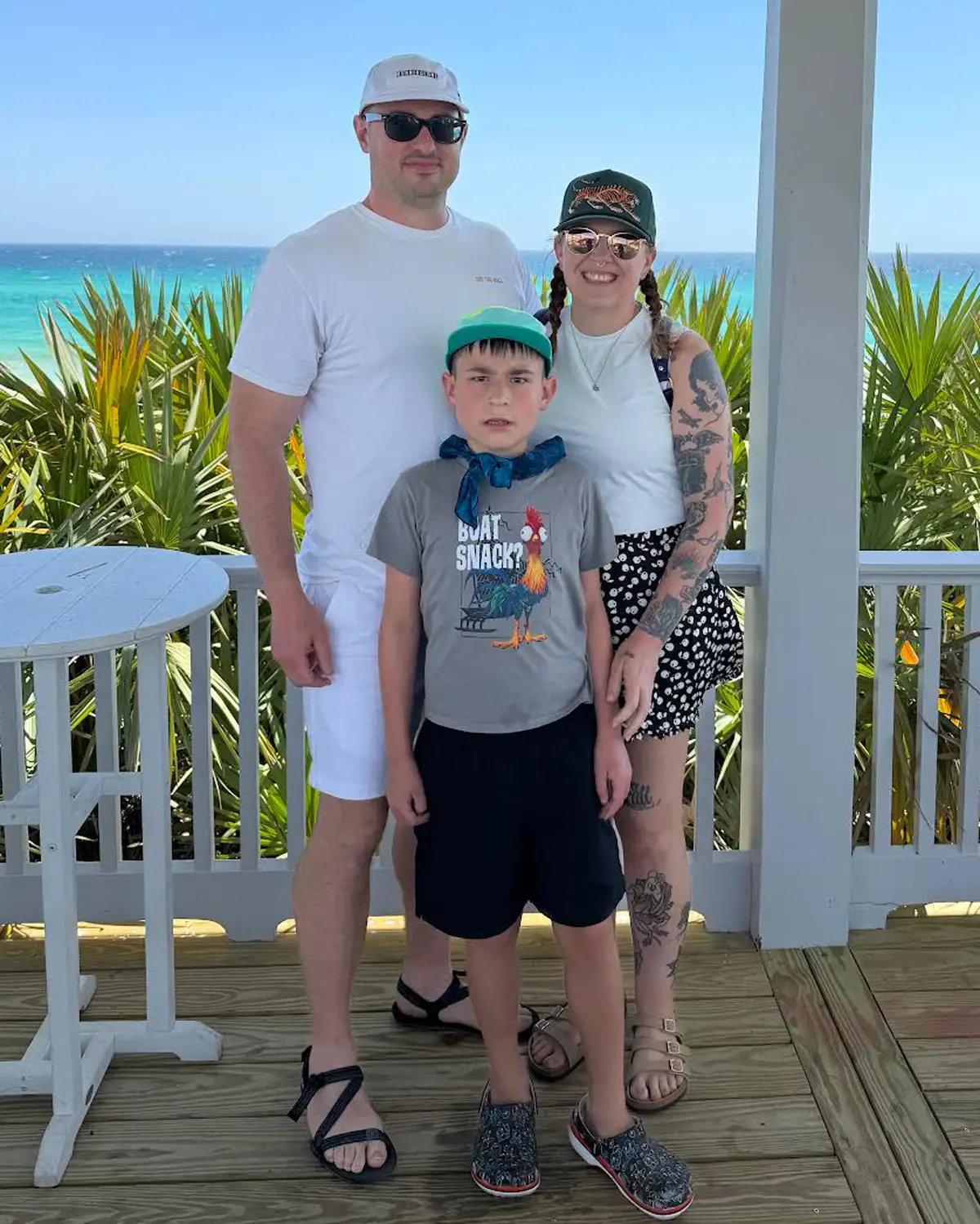
Farrow, 47, said she had never expected so many people to respond or put so much thought into the afternoon.
The surprise was not only in the number of volunteers. It was in the care behind their preparations.
The community had been offered an easy way to help. Its members chose to do more.
A Banana Costume and 83 Open Doors
When the day arrived, Soren dressed as a banana and began moving through the neighborhood with his bucket.
He showed his excitement in the ways that felt natural to him.
Farrow said he repeated favorite phrases, jumped and flapped his arms before the activity began and throughout the afternoon.
At every stop, another door opened.
The sight of Soren walking through the summer neighborhood in costume captured the playful spirit of the celebration. But the afternoon was not simply Halloween moved to a different date.
It had been designed around one child’s particular joy.
There was no demand that he celebrate his birthday in a more conventional way. His family and neighbors met him where his happiness already existed.
That acceptance became as important as the candy and presents.
The Children’s Reaction Meant the Most
Among all the neighbors who participated, the children made the deepest impression on Farrow.
They were not reluctant helpers being directed by adults. They were excited to join the surprise and eager to make Soren’s birthday memorable.
Their enthusiasm gave Farrow hope about how her son would be treated by his peers.
Parents of autistic children may worry about whether their sons and daughters will be included, understood or protected as they grow. Differences in communication, movement or sensory needs can draw attention from people who do not recognize what they are seeing.
Watching neighborhood children welcome Soren offered Farrow a different picture of his future.
Their joy suggested that acceptance did not always require a complicated lesson. Sometimes it began with an invitation to participate and a willingness to celebrate another child as he was.
The Birthday Quieted a Parent’s Fear
For Farrow, the afternoon offered relief from a question many parents carry privately: Is my child safe and accepted here?
The response from the neighborhood gave her an answer.
Seeing so many families embrace Soren reassured her that he belonged in the community around him. The doors opening across the neighborhood represented more than participation in a birthday activity.
They showed that people were willing to make space for him.
That reassurance mattered because autistic children do not all experience the world in the same way.
Farrow described Soren as sensory-seeking. He enjoys movement, music and noise. Other autistic children may find those same experiences overwhelming and need quieter surroundings.
His excitement may include repeated phrases, jumping and arm-flapping. Those behaviors are part of how he expresses himself, not something that must be hidden before other people can welcome him.
Farrow hopes the story encourages others to recognize that every autistic child has individual needs, interests and ways of communicating.
Understanding begins with paying attention to the person rather than relying on assumptions about a diagnosis.
Why Some Families Become Isolated
Farrow also acknowledged that families raising autistic children can become socially isolated.
Some parents worry that their child’s behavior may inconvenience other people. They may avoid visits, gatherings or public activities because they fear judgment, discomfort or rejection.
That isolation can affect the entire household.
Even friends who care may not know what to say or how to help. They may wait for the family to ask, while the family is already too overwhelmed or uncertain to reach out.
Farrow said small gestures can make a meaningful difference.
Contacting a parent, offering to visit or simply spending time together can reduce the feeling that a family must manage everything alone.
The neighbors who helped Soren did not need professional training or a detailed program.
They answered a request, learned what he liked and opened their doors.
A Simple Question Revealed Hidden Kindness
Farrow later shared the celebration in a video, thanking the neighborhood and emphasizing the importance of community.
She did not expect the story to connect with so many people outside the families who had participated.
Its appeal came partly from how ordinary the original request had been.
A mother asked whether a few neighbors would help her son trick-or-treat on his birthday.
The answer revealed a level of kindness she did not know was waiting nearby.
It is easy to assume people are too busy, disconnected or uninterested to help. Fear of rejection can prevent someone from asking at all.
Farrow’s experience showed the other possibility.
People may be ready to contribute but need an invitation and a clear way to do it.
Once her neighbors understood what would make Soren happy, they embraced the opportunity.
More Than Candy in a Bucket
By the end of the day, Soren had collected candy, snacks, toys and gifts from dozens of homes.
The material surprises were only one part of what the neighborhood gave him.
Every answered door communicated the same message: You are welcome here.
For Soren, the afternoon recreated the activity he had loved since Halloween.
For his mother, it became proof that a community can ease a family’s fears through dozens of small acts performed together.
Eighty-three neighbors did not change Soren into someone easier for the world to understand.
They changed the neighborhood around him for one afternoon, shaping it around his joy.
That was the real birthday gift.
Not the banana costume, the candy or the pile of presents waiting at home.
It was the knowledge that when one family reached out, an entire community was ready to open the door.