One 911 Call Exposed 15 Starving Dogs Chained in Dirt—and Gave Them a Second Chance
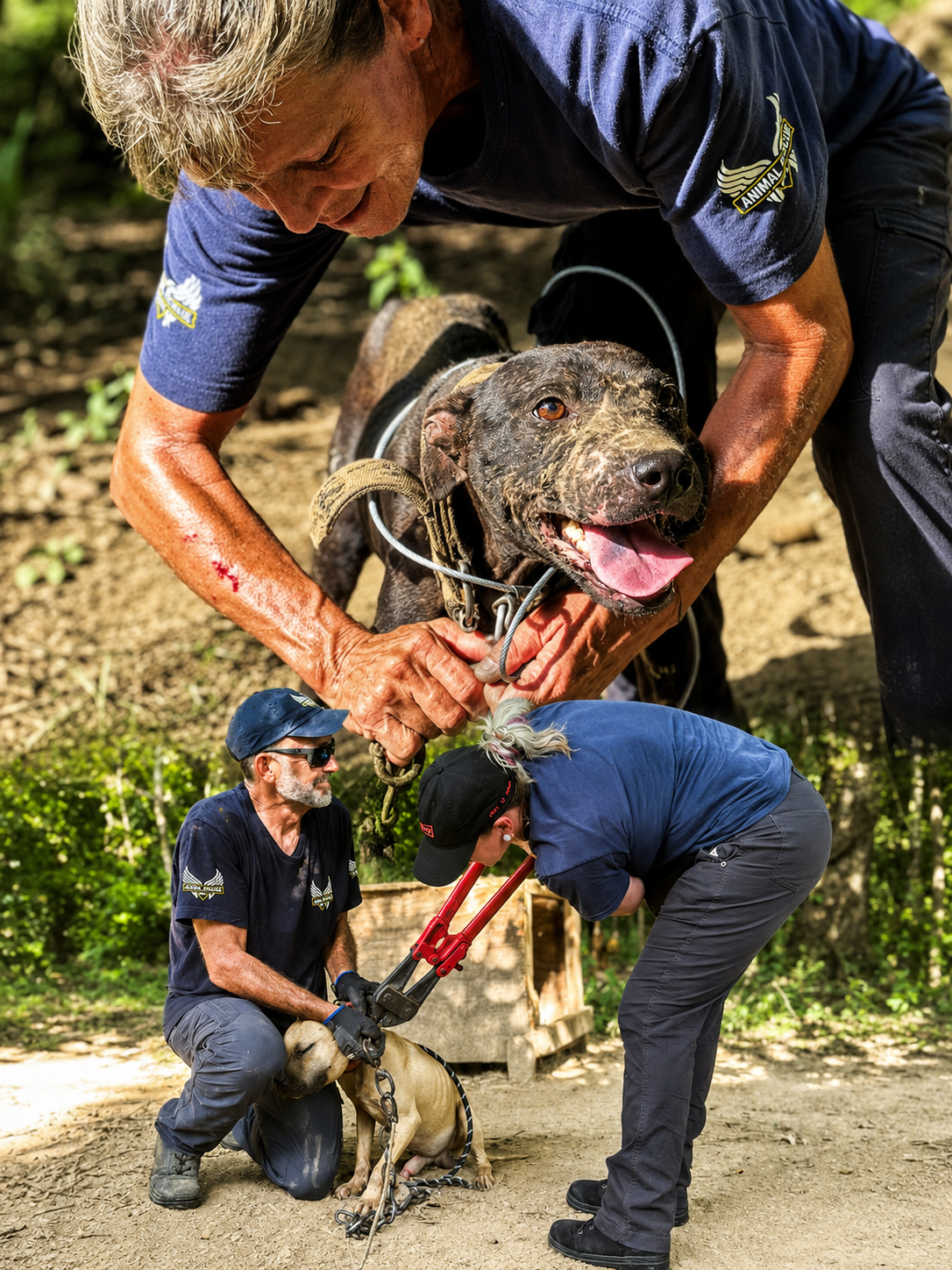
The rescue began with a single person deciding not to look away.
After a concerned citizen called 911, authorities arrived at a rural property in Natchez, Mississippi, and discovered 15 dogs living in conditions that rescuers described as deeply disturbing. A rabbit had also been abandoned on the property.
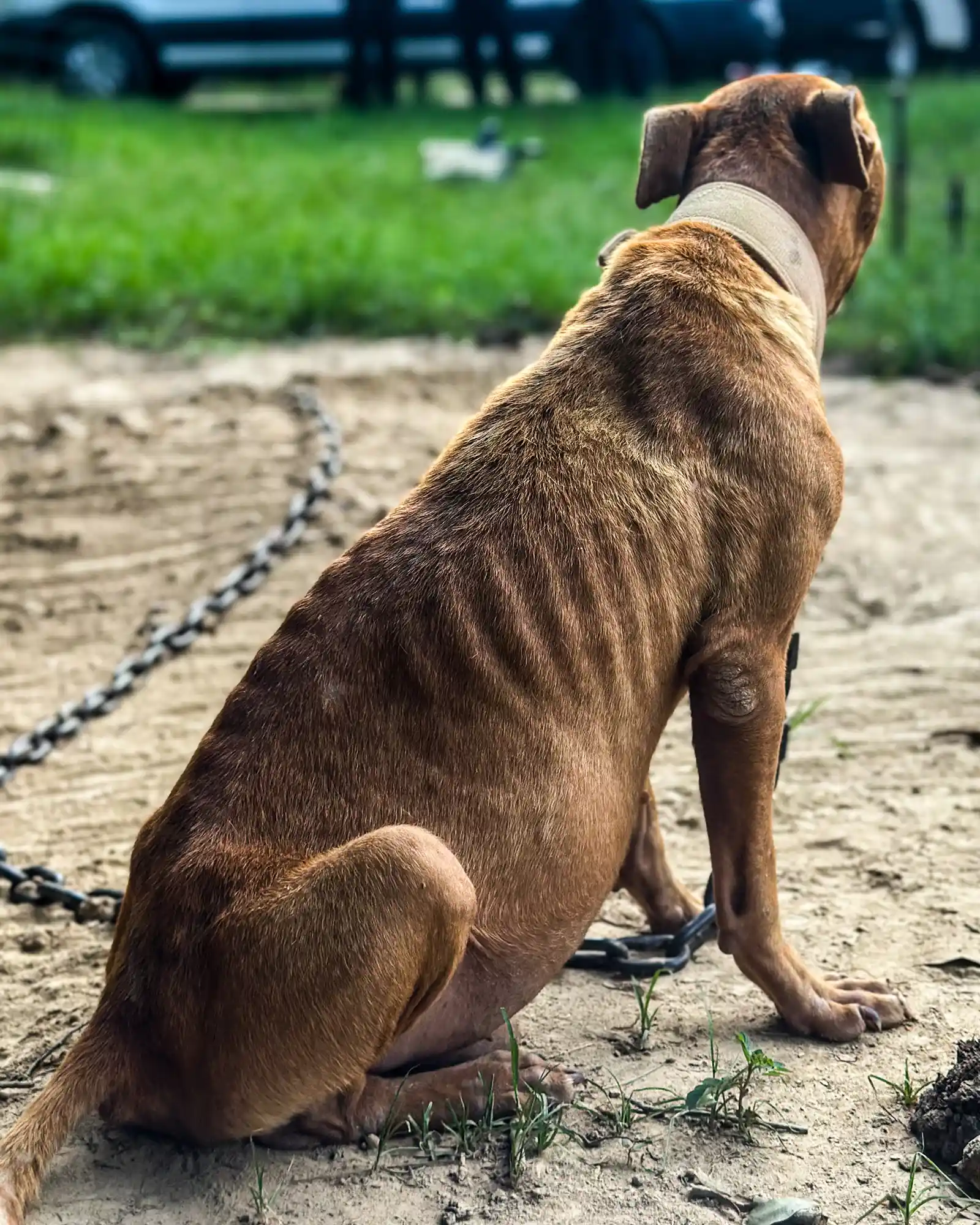
Many of the dogs were severely underweight. Heavy chains restricted their movement, while damaged doghouses and plastic barrels offered little protection from the elements.
Around each animal, the ground told its own story.
The constant dragging of chains had stripped away the grass and loose soil, leaving hard circles of bare dirt beneath the dogs’ feet. Some of the older animals carried scars from injuries that appeared to have gone untreated.
What began as a response to suspected neglect soon raised even more serious concerns.
Investigators found equipment commonly associated with dogfighting, including suspended tires and bite ropes reportedly used to strengthen a dog’s jaws. The discovery led authorities to suspect that the property may have been connected to organized animal fighting.
The rescue effort became known as “Operation Underdog.”
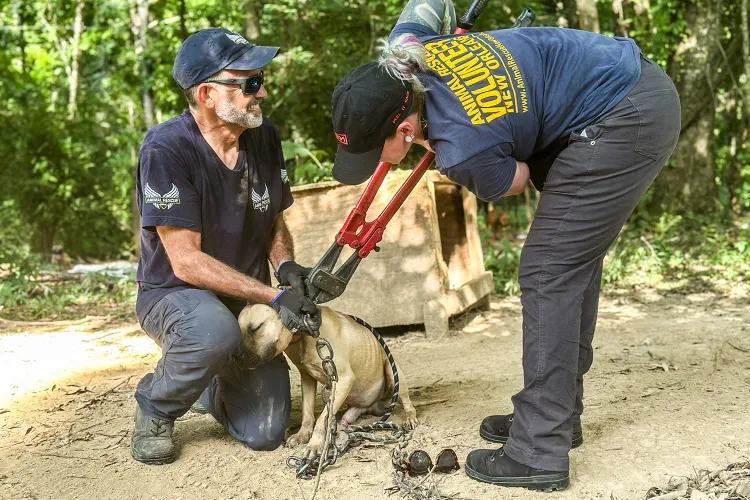
Deputies with the Adams County Sheriff’s Office seized the animals under a warrant and contacted Animal Rescue Corps, a national nonprofit organization experienced in large-scale animal cruelty cases.
The county faced a major obstacle: It had no animal control department, public shelter or comparable local resources capable of managing a rescue involving so many animals.
Animal Rescue Corps stepped in to provide the specialized help the operation required. Its team assisted with safely handling the animals, collecting evidence, arranging emergency shelter and preparing for the dogs’ eventual placement in permanent homes.
Animal Rescue New Orleans also joined the coordinated response.
For the rescuers entering the property, the suffering was immediately visible.
Some dogs had prominent ribs and little body weight left. They remained tethered outdoors by thick chains, unable to move beyond the small areas the restraints permitted.
The makeshift shelters nearby offered only the most basic cover. Plastic barrels and deteriorating structures stood where safe, clean kennels should have been.
Tim Woodward, executive director of Animal Rescue Corps, said the neglect endured by the animals was heartbreaking. Rescuers could not know when many of the dogs had last received adequate food or clean water before law enforcement arrived.
The scars found on older dogs suggested that their suffering had not begun recently.
Injuries appeared to have been left without treatment, adding another layer of concern to an already troubling scene.
The equipment discovered at the property intensified suspicions about what the animals may have experienced. Bite ropes and hanging tires can be used during the conditioning of dogs for fighting, according to the rescue organization.
However, the immediate priority was not determining every detail of the animals’ past. It was removing them from danger.
One by one, rescuers worked to free the dogs from their chains.
Photographs from the operation showed team members using heavy tools to release restrained animals and carefully guide them away from the property. At least one dog had to be freed from wire wrapped around its body.
The rabbit was also removed and brought to safety.
By the end of the operation, 16 animals had been taken from the site.
Sheriff Travis Patten praised the organizations involved, emphasizing that Animal Rescue Corps assumed every expense connected with the rescue. Its intervention saved Adams County taxpayers thousands of dollars while giving the animals access to care that the county could not have provided on its own.
The financial burden of a large cruelty seizure can be significant.
Beyond the initial operation, the animals require transportation, food, secure housing, veterinary examinations and continuing medical treatment. Dogs that have lived in long-term isolation or neglect may also need patient socialization before they are ready to enter ordinary homes.
Because the animals were seized as part of a legal case, they cannot immediately be offered for adoption.
They were transported to an Animal Rescue Corps facility outside Nashville, Tennessee, where they will remain while the court proceedings continue.
There, veterinary teams will evaluate their conditions and begin addressing the effects of neglect. The dogs will also receive behavioral support and opportunities to become comfortable around people and new environments.
Once the legal case is resolved and the animals are cleared for placement, Animal Rescue Corps plans to work with adoption partners to find them caring homes.
For some of the dogs, that process may require time.
Animals rescued from severe neglect can arrive frightened, physically weak or unfamiliar with ordinary affection. A leash, an indoor room or a gentle human touch may be completely new to them.
Recovery is not measured only by gaining weight or healing visible wounds. It also involves learning that food will arrive regularly, that water will remain available and that the person approaching them does not intend to cause harm.
The contrast between their former surroundings and their new environment is profound.
On the Mississippi property, their lives had been confined to the length of a chain. The same repetitive movement had carved circles into the earth around them.
At the rescue facility, their world can finally begin to expand.
They will have access to shelter, medical attention and people trained to recognize what each animal needs. Instead of being viewed only as evidence in a suspected cruelty case, they can begin being treated as individuals.
The operation also demonstrated the importance of cooperation when smaller communities confront large animal-welfare emergencies.
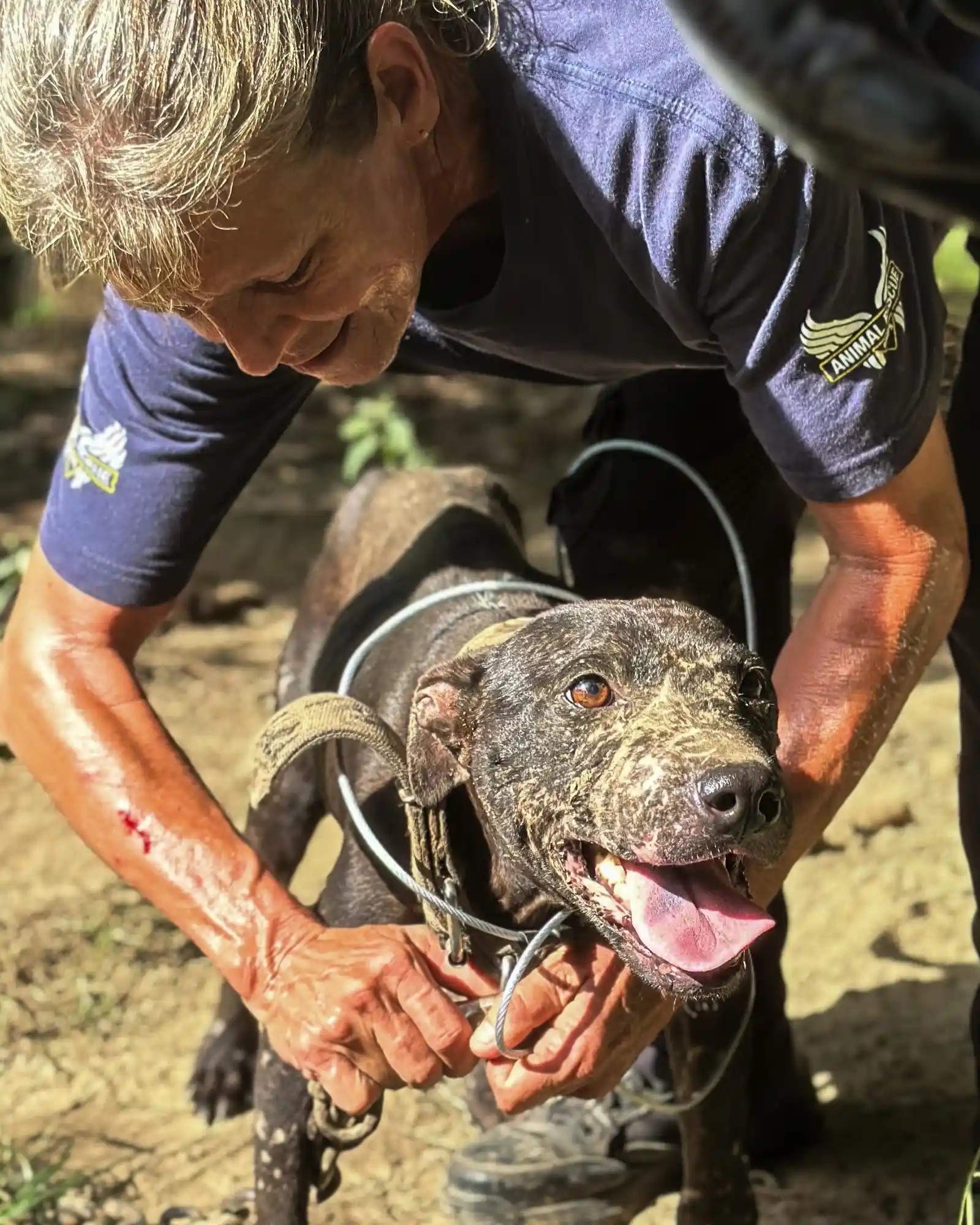
Without a local shelter or animal control service, the Adams County Sheriff’s Office could not have managed the case alone. The rescue required law enforcement authority, nonprofit resources, animal-handling experience and assistance from multiple organizations.
But none of those resources would have been mobilized without the first call.
Woodward noted that the entire rescue grew from one person being willing to contact authorities. That decision eventually brought deputies, investigators and animal welfare teams to a place where 16 animals needed help.
A phone call may have seemed like a small action at the time. For the dogs and rabbit found on the property, it became the dividing line between continued suffering and the possibility of a different life.
The investigation and court case have not yet reached their final outcome. The animals must remain in protective custody until the legal process allows them to move forward.
Their future, however, already looks different from their past.
The chains are gone. The damaged shelters have been left behind. Food, water and medical care are now part of their daily lives.
When the case is resolved, rescuers hope each animal will move from emergency shelter into a permanent home—a place where the circles worn into the dirt will be replaced by open space, safety and the freedom to begin again.