Tiny Kitten Couldn’t Stand—Then a Homemade Hot Wheels Chair Changed Everything
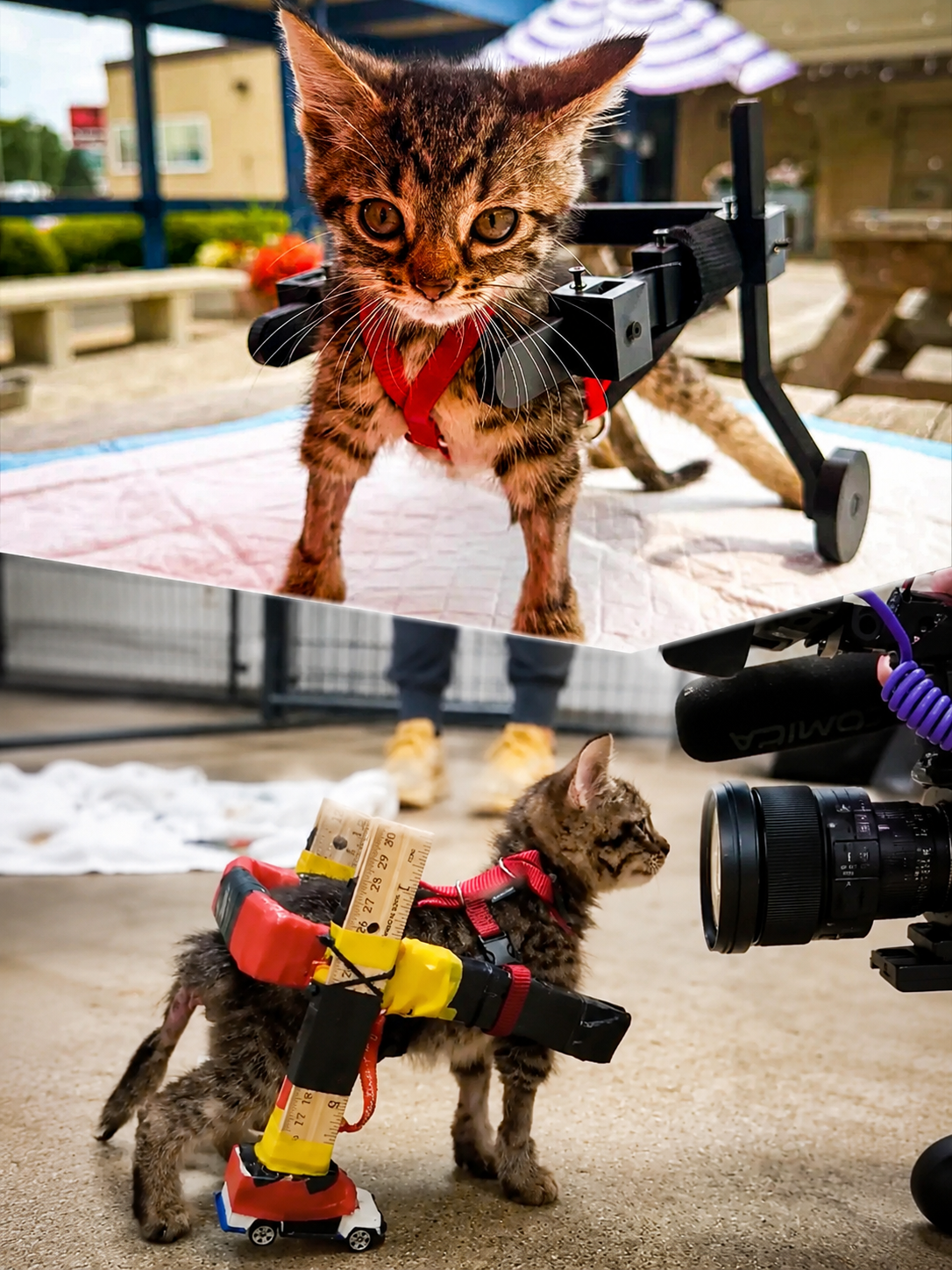
Gelato was too small for every wheelchair the animal shelter had available.
The foster kitten could not stand or walk independently, but his size made conventional mobility equipment impossible to use. Faced with an animal eager to move and no ready-made device that could help him, a veterinary technician at Cincinnati Animal CARE decided to build something herself.
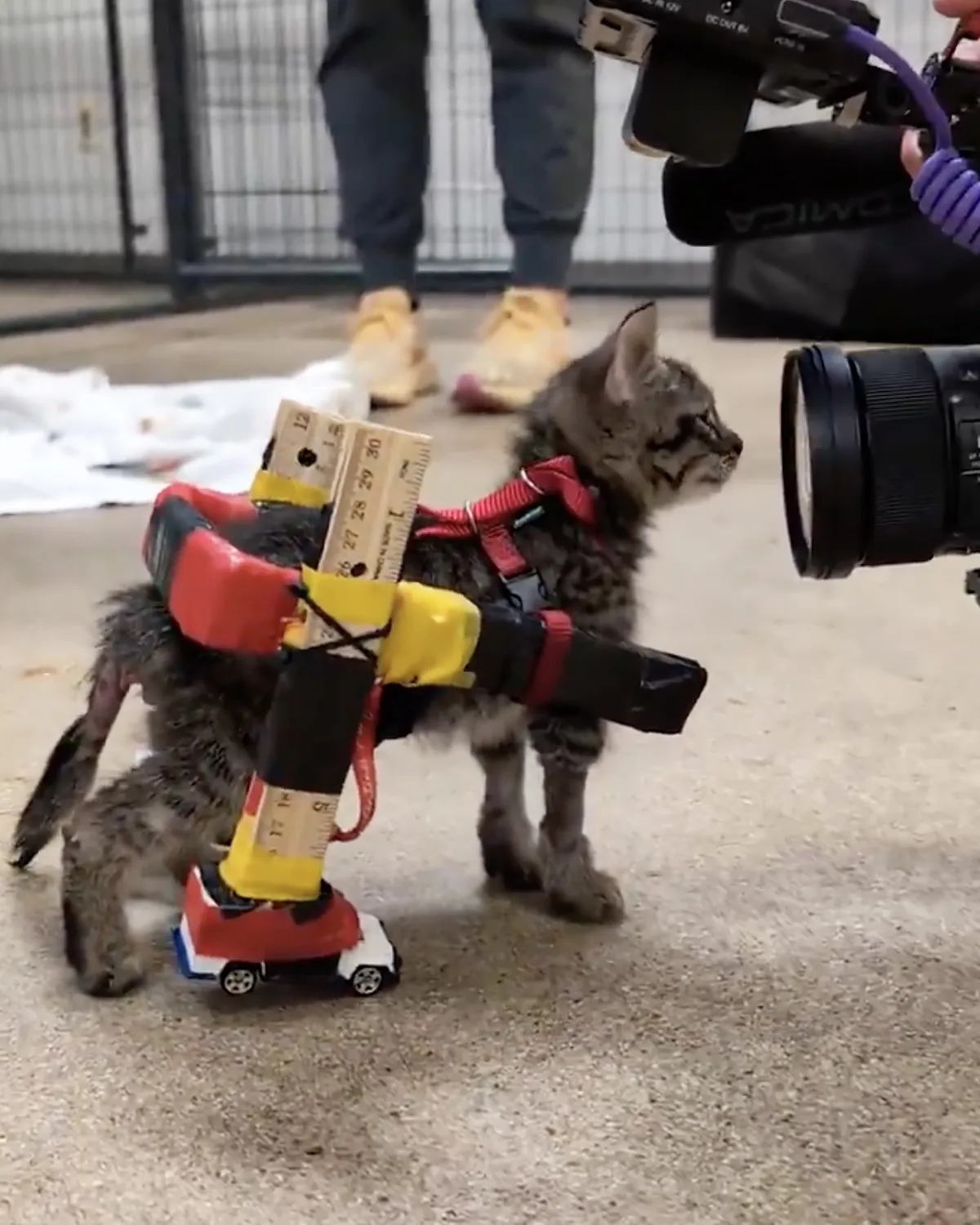
She gathered cardboard, rulers, tape and a set of Hot Wheels.
The unusual collection of household materials soon became a miniature wheelchair designed specifically for Gelato. It was simple, homemade and far from permanent, yet it gave the tiny kitten something he had not previously possessed: a way to begin exploring the world on his own.
When the shelter shared Gelato’s handmade mobility device online, his story quickly captured public attention. Thousands of people followed his progress, celebrated the creativity behind the little wheelchair and shared the post with others.
Those shares eventually reached someone capable of offering Gelato an even better solution.
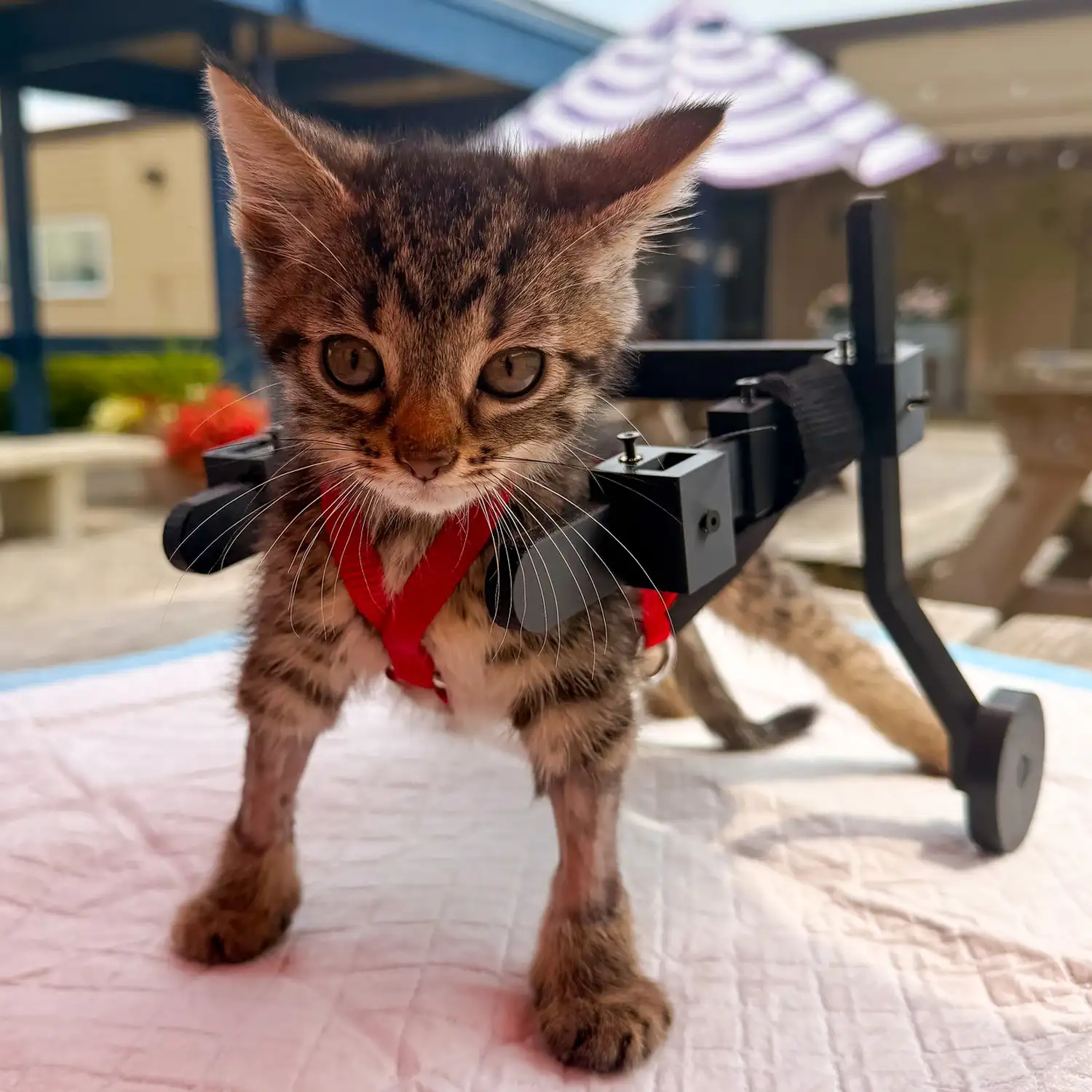
The kitten has now received a customized 3D-printed wheelchair made to fit his body, turning one shelter employee’s improvised creation into the first step toward a far more advanced mobility aid.
Gelato’s journey began after he arrived in the care of Cincinnati Animal CARE unable to support himself or walk normally. Because he was a foster kitten, the shelter’s medical team became responsible for finding a way to improve both his comfort and his independence.
The organization already had wheelchairs available for animals with mobility challenges. None, however, was small enough for Gelato.
Waiting for him to grow was not an ideal answer. The kitten needed an opportunity to move, strengthen himself and interact with his surroundings while he was still developing.
Mallory Smith, the shelter’s lead veterinary technician, began thinking beyond the equipment already on hand.
Rather than allowing the lack of a properly sized wheelchair to stop Gelato’s progress, Smith designed one from materials that could be adjusted to his tiny frame. Cardboard formed the main support, while rulers helped create a stable structure. Tape and zip ties held parts of the device together.
For wheels, she turned to Hot Wheels toys.
The finished chair did not resemble an expensive piece of veterinary equipment. It looked exactly like what it was—a loving, inventive solution built quickly for one small animal with an immediate need.
Most importantly, it worked.
Supported by the handmade frame, Gelato could begin moving in a way that had previously been impossible. The device gave his body support while allowing his legs and surroundings to become part of his daily experience.
The shelter posted images and video of the kitten using his tiny wheelchair, and viewers responded almost immediately.
Gelato’s determination was difficult to ignore. So was the ingenuity of the team caring for him.
The story spread across social media, gathering attention from people who were moved by the sight of a disabled kitten receiving a chance to become mobile. Many shared the post beyond the shelter’s usual audience, helping Gelato’s situation reach people with additional resources.
That online attention produced a tangible result.
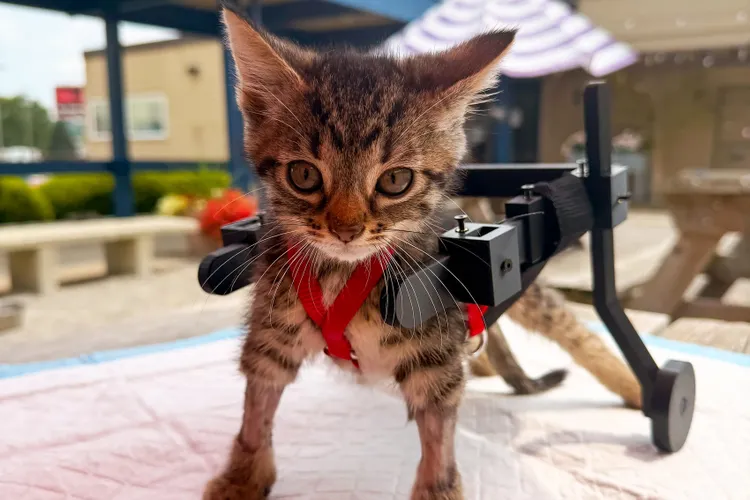
A custom wheelchair was created for Gelato using 3D-printing technology. Unlike the original device, which had been assembled from whatever Smith could find, the replacement was designed specifically around the kitten’s measurements and mobility needs.
The shelter announced the upgrade with a photograph of Gelato secured inside his new equipment.
His appearance remained unmistakably kitten-like—small, curious and alert—but the device supporting him was now more polished and durable. The improvised pieces of cardboard and toy wheels had been replaced by a fitted structure created expressly for him.
For Cincinnati Animal CARE, the moment demonstrated how public engagement can move beyond likes and comments.
Every person who shared Gelato’s story increased the possibility that it would reach someone capable of helping. In this case, that visibility connected the kitten with the support needed to produce his custom chair.
The shelter thanked everyone who reacted to the original post and helped spread it, emphasizing that online shares can make a genuine difference for animals with unusual medical needs.
The organization also recognized Smith and the rest of its medical staff for approaching Gelato’s condition creatively.
Shelter medicine often requires flexibility. Animals arrive with different injuries, illnesses and physical limitations, and the resources available may not perfectly match every situation.
Gelato’s size presented exactly that kind of problem.
There was no miniature wheelchair waiting on a shelf that could simply be adjusted and placed around him. Someone had to imagine an alternative, build it and remain willing to improve it as new assistance became available.
Smith’s homemade design did not need to be flawless to become meaningful. Its purpose was to give Gelato an immediate opportunity while demonstrating what a more permanent device could accomplish.
The cardboard chair became a bridge.
It carried him from immobility to movement, and from a local shelter’s care into the awareness of thousands of animal lovers. Eventually, it led to a professionally designed replacement that could offer better support as he continued developing.
The response to Gelato’s update was filled with affection.
Commenters celebrated the kitten’s progress, encouraged him to keep moving and marveled at how many people had become invested in his future. One person observed that Gelato had no idea how widely he was loved, while another enthusiastically cheered him forward.
Others joked that the kitten and his new “scooter” deserved to appear on a T-shirt.
Behind the playful comments was a shared emotional reaction: People had watched a vulnerable animal confront a serious limitation and receive help because several individuals refused to accept that nothing could be done.
Gelato’s story did not begin with sophisticated machinery.
It began with a kitten who could not stand, a medical worker unwilling to give up and a few ordinary items repurposed with extraordinary care.
The first wheelchair was fragile and unconventional. But without it, the public might never have seen Gelato move. His story might not have traveled beyond the shelter, and the offer of a 3D-printed replacement might never have arrived.
His progress also reflects the larger role foster programs and shelter medical teams play in giving vulnerable animals time to recover.
Animals with disabilities may require more patience, specialized equipment and individual attention than others. Their needs can be expensive or difficult to predict, but Gelato’s experience shows what becomes possible when creativity and community support work together.
He may never understand why strangers began sharing his image or why thousands of people celebrated when he received his new chair.
He only knows that the world around him is no longer beyond his reach.
A few weeks earlier, Gelato was a tiny foster kitten unable to stand on his own. Then came a wheelchair made from cardboard, rulers and toy cars. After that came the shares, the encouragement and the people who wanted to help.
Now, secured inside a custom device built especially for his body, Gelato is officially moving forward—and carrying an entire community’s hopes with him.