Valerie Vanished Into the Australian Wild—529 Days Later, the Tiny Dachshund Came Home Stronger
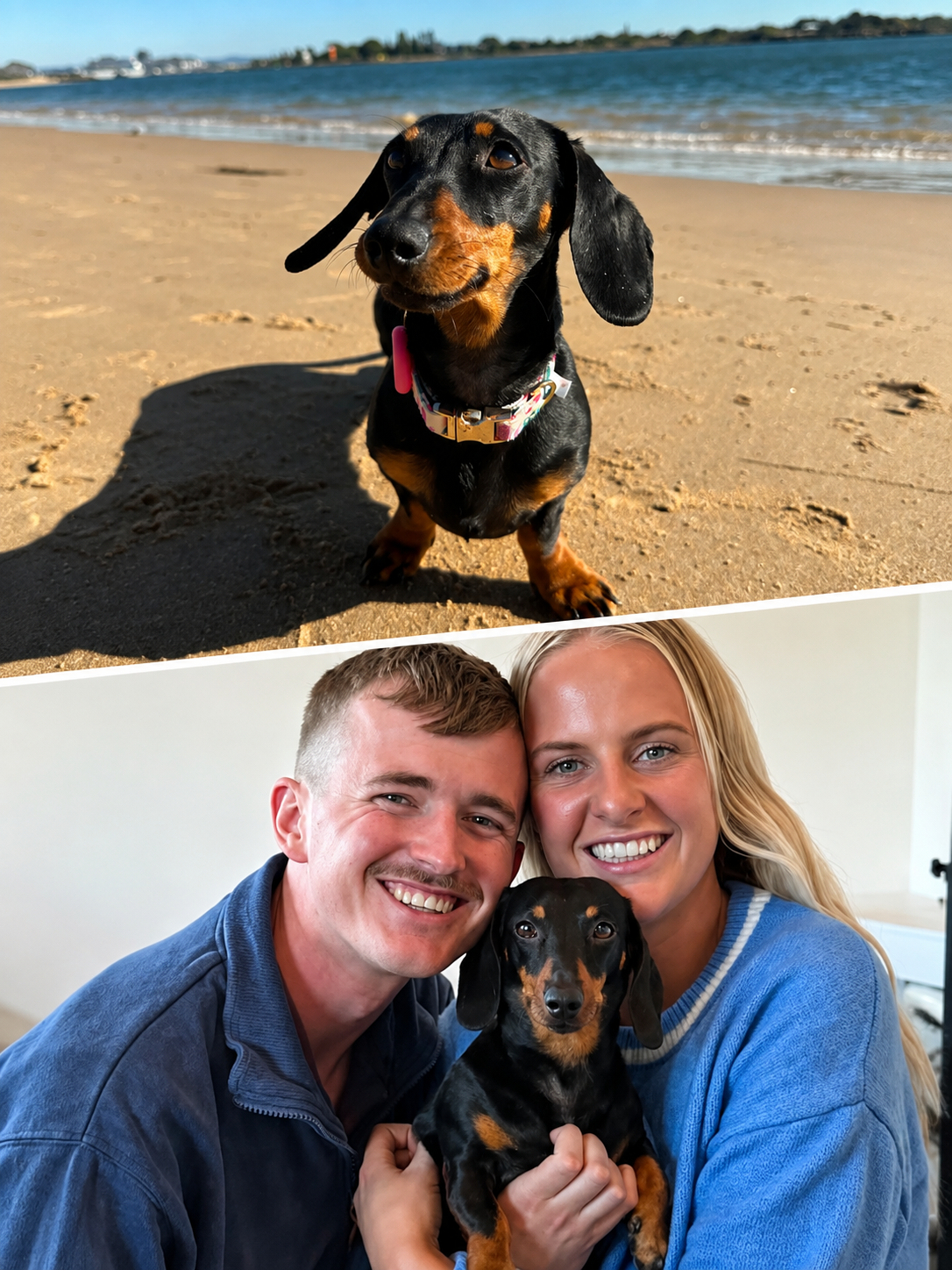
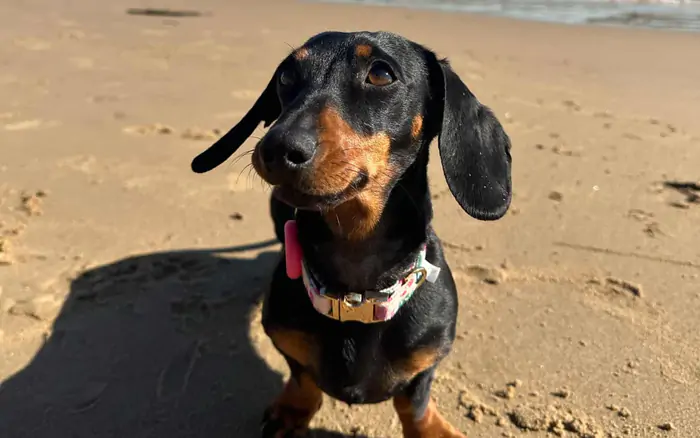
When a camera finally captured the small black shape racing across a sunlit field, the image was grainy and distant. Yet the long body, short legs and unmistakable ears were enough.
Valerie was alive.
For more than a year, the miniature dachshund had existed mostly through rumors and fleeting sightings on Kangaroo Island, a rugged stretch of land off the coast of South Australia. She had disappeared from a campground as a pampered 1-year-old pet that slept beside her owners and had never spent a night outdoors.
By the time rescuers finally secured her, Valerie had survived 529 days in the wild, endured a winter, avoided dangerous animals and learned to keep her distance from nearly every human who tried to help.
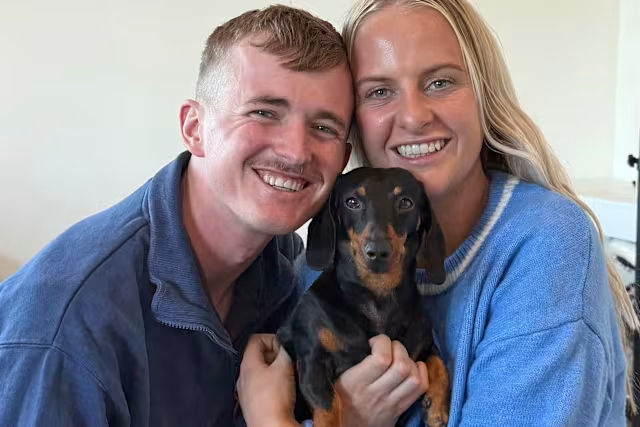
Her extraordinary journey began on November 13, 2023, when Georgia Gardner and her partner, Josh Fishlock, arrived at Stokes Bay for a camping vacation.
Valerie joined them at the beach, digging in the sand and exploring the shoreline. Later, the couple decided to fish from a rocky area about 200 meters from camp. Concerned that the stones might hurt Valerie’s feet, they left her inside a playpen containing her bed, toys and a snuffle mat.
About 15 minutes later, another camper approached them with alarming news: Valerie had escaped.
Witnesses said the dachshund had hidden beneath a vehicle. When someone tried to retrieve her, she panicked and bolted. A motorist then saw her running toward a nearby property.
Gardner initially believed Valerie would turn around as soon as she heard her owners calling. The dog was deeply attached to them and accustomed to constant affection.
Instead, Valerie disappeared into the hills.
Gardner and Fishlock searched until dark, calling her name and walking through the scrub. Local residents joined the effort. A property manager drove them across rough ground in an all-terrain vehicle, while other volunteers brought dogs, toys and food in hopes of drawing Valerie out.
Kangala Wildlife Rescue placed cameras in possible locations and used Valerie’s bed and roast chicken as bait. The cameras recorded other animals, but not the missing dachshund.
After five exhausting days, Gardner and Fishlock had to return to the mainland. Before leaving, they placed clothing carrying Josh’s scent near the search area, hoping Valerie might find it.
As the ferry pulled away from Kangaroo Island, the couple could only look back at the landscape where they believed their dog was still hiding.
Months passed.
There were reported sightings, but many could not be confirmed. Some accounts were mistaken, while others were cruel pranks. As summer gave way to winter and then another summer, hope became increasingly difficult to sustain.
The dangers were considerable. Kangaroo Island contains dense scrub, steep terrain and wildlife that could threaten a small dog. Valerie had to find water and food while avoiding snakes, eagles, vehicles and people whose attempts to approach might cause her to run farther.
She was also physically unsuited to the environment. Dachshunds were originally bred to pursue animals into burrows, but Valerie had lived as an indoor companion. Her owners described her as their “princess.” She slept in their bed and had no known experience surviving independently.
For roughly 450 days, no clear photographic proof showed that she was still alive.
Then, in February 2025, a worker on a farm around 10 kilometers from the campground noticed a small dark animal moving across a field. Photographs showed a black-and-tan dog with Valerie’s distinctive shape.
The images transformed the search.
Kangala Wildlife Rescue directors Jared and Lisa Karran began a carefully planned operation on the property. They used nine cameras, drones, thermal-imaging equipment and strong-smelling food to study Valerie’s movements without frightening her away. On March 24, cameras recorded her inspecting the trap.
The footage revealed a dog that appeared physically strong but extremely cautious. Valerie had shifted into survival mode and no longer behaved like a pet expecting a human to help her.
Rescuers resisted calls to chase or corner her. A frightened dog could have fled the area permanently, run into traffic or injured herself. Instead, they tried to make the trap feel familiar.
Gardner had saved Valerie’s belongings even after the couple moved from Broken Hill to Albury. She sent toys, bedding and a worn shirt carrying her scent to the rescue team.
For weeks, cameras showed Valerie approaching and entering the enclosure. At first, she would not settle inside. Then one night she picked up a familiar teddy bear and began playing with it.
To Gardner, the moment suggested that the dog she remembered was still present beneath the fear and caution she had developed in the wild.
Capturing her remained difficult. Native animals repeatedly entered the trap, making an ordinary pressure-triggered door risky. Jared Karran therefore constructed a remotely controlled closing mechanism using an electric car-window motor.
The rescuers watched through live camera feeds, waiting for Valerie to move completely inside.
Night after night, she failed to appear at the right moment.
On April 25, 2025, the team ended another overnight watch at about 8:30 a.m. but continued checking the cameras remotely. Around midday, Valerie unexpectedly entered the trap during daylight.
Karran pressed the control.
The door closed, ending 529 days of uncertainty. Valerie was safe, uninjured and in remarkably good condition. The rescue effort had required an estimated 1,000 hours of work and roughly 5,000 kilometers of travel by volunteers.
How Valerie survived remains partly a mystery.
Some residents wondered whether an unknown person had been feeding her. However, rescuers who observed her for weeks said she remained alone, avoided people and showed no signs of regularly approaching a home for food.
Those closest to the operation believe she probably ate small animals, reptiles, roadkill and other food she could scavenge. Whatever the precise diet, Valerie did more than remain alive. She gained muscle during her time away, confounding expectations that such a small domestic dog would emerge weak or malnourished.
Rescuers did not immediately place her in front of her owners. Valerie was allowed time to decompress in a quiet environment before undergoing veterinary checks.
On May 6, 540 days after the disappearance, Gardner and Fishlock returned to Kangaroo Island for the reunion.
Gardner sat on the floor as Valerie entered. The dog paused briefly, then ran toward her, wagging, wriggling and making the familiar happy sounds her owner had feared she would never hear again.
Gardner began to cry.
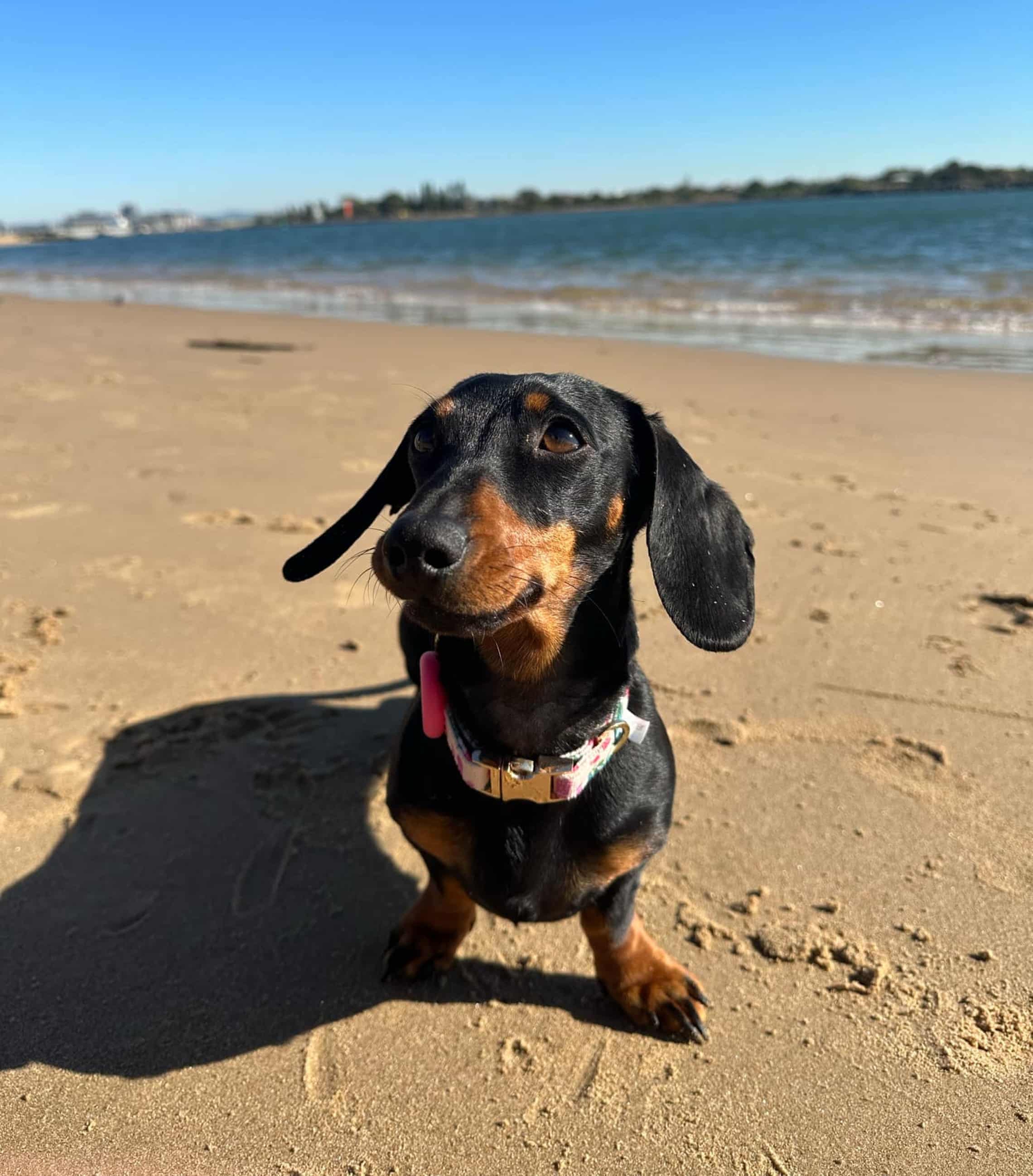
After surviving nearly half her life away from home, Valerie still remembered the people who had loved her before she vanished.
Back in Albury, she was gradually reintroduced to domestic life and reunited with Mason, the family’s cattle dog, and Lucy, their cat. She also met Dorothy, another dachshund adopted while Valerie was missing. According to her owners, Valerie adjusted surprisingly quickly to soft bedding, regular meals and the rhythms of family life.
Her story eventually brought international attention, television coverage and public appearances. But its most powerful meaning remained rooted in the community that refused to let a missing dog become a forgotten one.
Valerie survived because of instinct, adaptability and extraordinary luck. She came home because strangers continued searching long after a happy ending seemed impossible.
The tiny dachshund that vanished into the Australian wilderness returned larger, stronger and far more famous—but still unmistakably the same dog who ran into her owner’s arms.