He Entered College at 10—Now Nathan Thomas Holds a 306-Year-Old Record as the World’s Youngest Male Professor
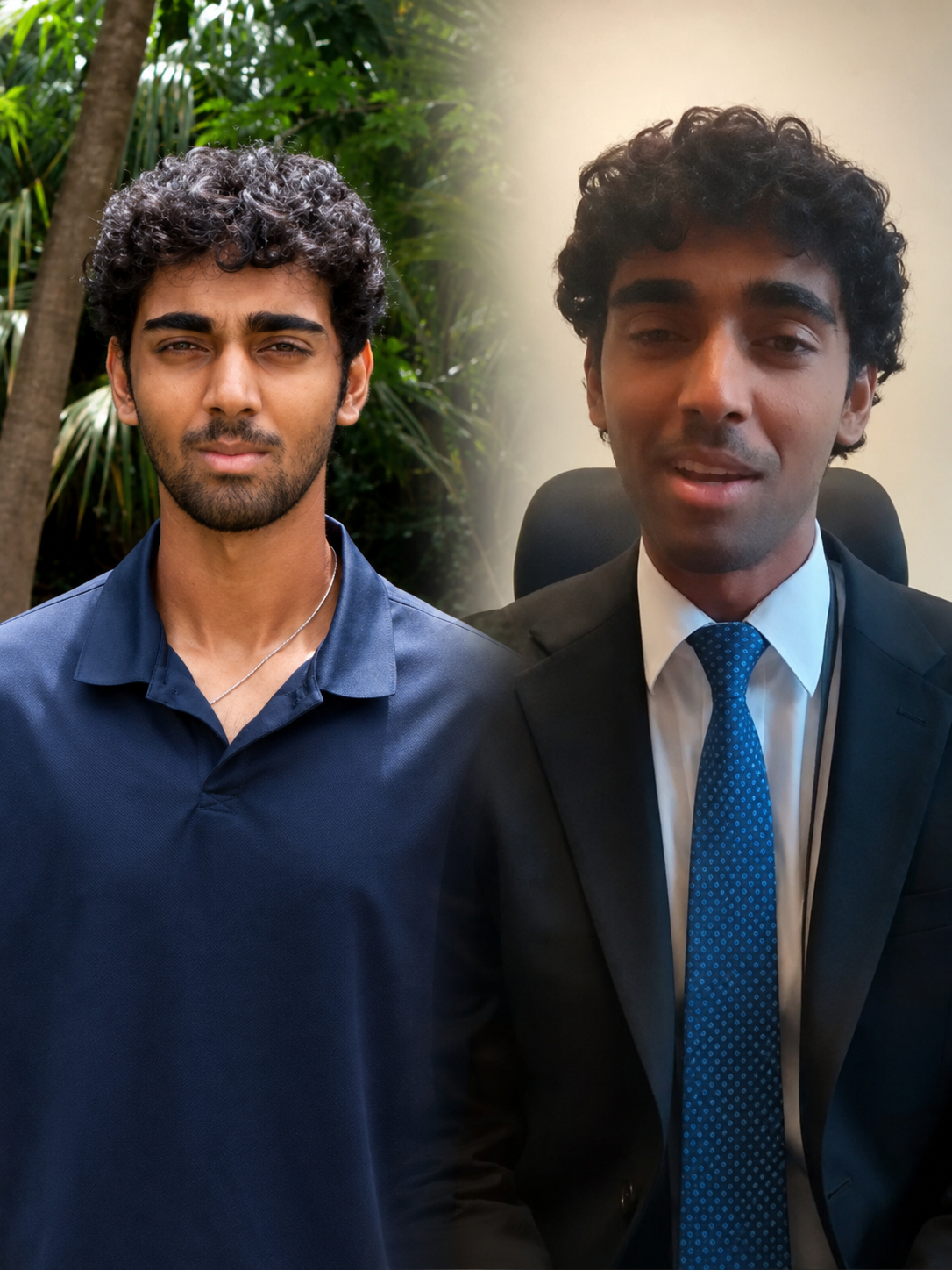
When Nathan Thomas walks into a college classroom, some of the students waiting for instruction may be the same age he is.
That unusual dynamic does not trouble him.
Once the lesson begins, Thomas says age quickly becomes irrelevant. Everyone is there for the same purpose: to understand the material, solve difficult problems and leave knowing more than they did before.
That philosophy has helped the Florida educator accomplish something no other man has done at such a young age.
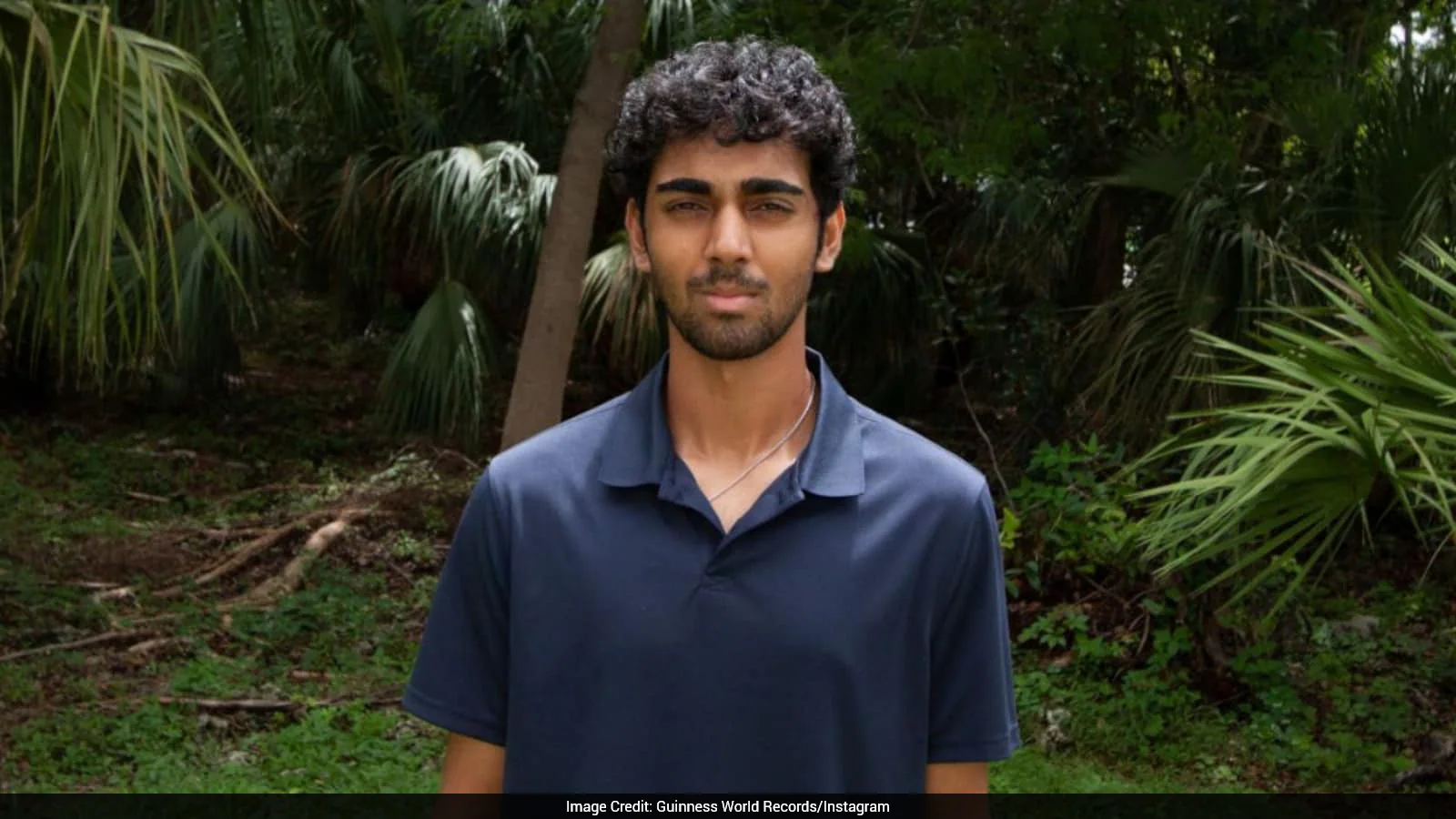
Thomas was officially recognized as the world’s youngest male professor after accepting an engineering teaching position at Miami Dade College when he was 18 years and 346 days old. The achievement broke a record that had remained untouched for 306 years.
Now 21, Thomas teaches complex programming and computing concepts while continuing his own education at law school. His remarkable path has taken him from a 10-year-old college student to an electrical engineer, professor and future intellectual property attorney—all before many people his age have completed their first university degree.
A Record That Had Stood Since the 1700s
Before Thomas entered the record books, the title of youngest male professor belonged to Colin Maclaurin.
Maclaurin, who lived from 1698 to 1746, became a professor at 19. His achievement remained the standard for more than three centuries.
Thomas surpassed it by joining the Miami Dade College faculty shortly before his 19th birthday.
He was also 16 days younger than Alia Sabur, the current holder of the record for the world’s youngest female professor. Sabur was 18 years and 362 days old when she became a professor in 2008.
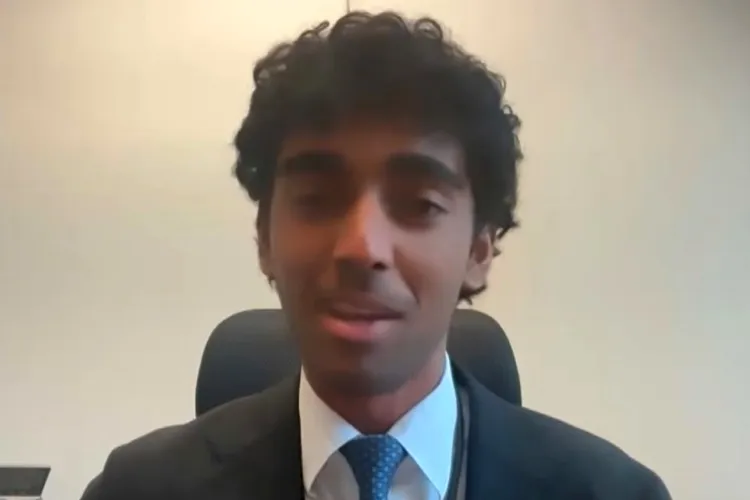
Thomas began teaching in August 2023, leading COP 2270: C for Engineers. The course requires him to guide students through programming principles and complicated technical ideas that can initially feel overwhelming.
Many professors spend decades completing their education, conducting research and gaining professional experience before standing at the front of a college classroom.
Thomas reached that position while still in his teens.
Yet he does not approach the job as a performance built around his age. His attention remains on whether his students are willing to work and whether he can help them understand the material.
College Began When He Was Only 10
Thomas’s journey through higher education started long before his professorship.
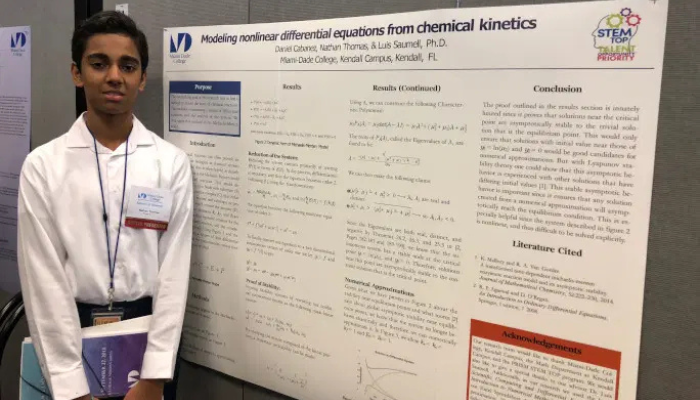
At age 10, he became a dual-enrollment student at Miami Dade College—the same institution where he would later return as a faculty member.
While most children his age were navigating elementary or middle school lessons, Thomas was already adapting to college-level expectations.
At 14, he transferred to Florida International University.
Over the following four years, he earned both a bachelor’s degree and a master’s degree in electrical engineering. He completed both programs with honors.
By 18, Thomas had accumulated the academic credentials needed to teach engineering at the college level.
His progress was extraordinarily fast, but it developed from an interest that had been present throughout his childhood.
Thomas comes from a family of engineers and said mathematics always made intuitive sense to him. Numbers and structured problems felt natural, gradually drawing him toward science, technology, engineering and mathematics.
What appeared intimidating to many students felt like a language he understood.
His Mother Made Difficult Ideas Feel Simple
Thomas credits part of his ability to teach with lessons he absorbed from his mother.
Growing up, he watched her explain complicated subjects in ways that made them feel manageable. At the time, he may not have realized how strongly her approach was influencing him.
Years later, those memories became part of his own teaching style.
Thomas now tries to break difficult concepts into clear, understandable steps. He knows students may enter his classroom feeling that a programming problem is beyond their ability.
His favorite moments come when that feeling changes.
Thomas said he can often see the instant a student finally understands something that seemed impossible only minutes earlier. The confusion disappears, the idea becomes clear and the student realizes the problem can be solved.
For him, witnessing that transformation brings a different kind of satisfaction than solving the problem alone.
Teaching allows him to experience the discovery again through someone else.
It also improves his own knowledge.
Explaining a subject forces Thomas to examine it more deeply, anticipate questions and understand why each step works. He believes that process sometimes teaches him as much as it teaches his students.
Students His Age Must Adjust—Then the Lesson Begins
Being taught by an 18-year-old professor could initially surprise students, especially those who are older than their instructor.
Thomas does not allow that difference to define the classroom.
Once students sit down and begin working, he focuses on effort rather than age. Anyone willing to participate, study and ask questions receives the same support.
His responsibilities are no different from those of another qualified educator. He must prepare lessons, explain complicated material and help students develop the computing skills required by the course.
Manny Perez, dean of Miami Dade College’s School of Engineering, Technology and Design, described Thomas as a special person capable of inspiring the students around him.
His presence offers them a visible example of what can happen when curiosity is supported early and talent is matched with sustained discipline.
Thomas’s story may be extraordinary, but his classroom philosophy remains practical.
He is there to do the job well.
The students are there to learn.
Once that shared purpose becomes clear, their birth dates matter far less than the work in front of them.
He Is Still a Student Himself
Becoming a professor did not mark the end of Thomas’s education.
He is currently enrolled at the University of Miami School of Law and expects to earn his Juris Doctor in 2028.
While attending law school, Thomas continues teaching online.
His new academic direction may seem different from electrical engineering, but he sees a clear connection between the two fields.
Engineering taught him to divide complicated problems into smaller, structured parts. That same method has helped him analyze legal questions, arguments and systems.
Rather than abandoning his STEM background, Thomas plans to combine it with the law.
His goal is to specialize in intellectual property law, particularly in areas involving science, technology, engineering and mathematics.
That career could place him at the intersection of invention and legal protection, helping researchers, engineers or technology companies navigate patents and ownership rights.
The path reflects the same curiosity that moved him through college so quickly.
Thomas does not appear interested in remaining inside one academic category. He wants to understand how different systems connect—and how his technical knowledge can serve a broader professional purpose.
More Than an Impressive Number
The record attached to Thomas’s name is undeniably remarkable.
He became a professor before turning 19. He completed two engineering degrees with honors in only four years. He displaced a record holder whose achievement had survived since the early 18th century.
But the numbers reveal only part of his story.
His success also reflects years of accelerated learning, support from a family familiar with engineering and the ability to enter educational spaces where almost everyone was older than he was.
Beginning college at 10 required more than intelligence.
Thomas had to function in classrooms designed for adults, meet advanced academic expectations and continue progressing without allowing his unusual age to distract him from the work.
Returning to Miami Dade College as a professor completed an extraordinary circle.
The institution that once welcomed him as a gifted child now employs him to teach its engineering students.
An Achievement Built Around Helping Others
World records often focus attention on an individual.
Thomas’s title is based on his age, degrees and appointment. Yet the work he values most happens when someone else succeeds.
He does not describe teaching primarily as proof that he is unusually intelligent. He describes it through the student who finally understands a difficult idea.
That distinction gives his accomplishment a meaning beyond personal recognition.
Thomas could have used his education only to advance through engineering or law. Instead, he returned to the classroom and accepted responsibility for helping other students move forward.
Some may be older than he is. Others may be sitting beside classmates born during the same year as their professor.
Whatever surprise they initially feel, it eventually gives way to the lesson.
Thomas stands before them not simply as the youngest man ever to hold his position, but as an educator prepared to explain the material, answer questions and help difficult concepts become possible.
At 18, he entered a record book.
At 21, he is already looking beyond it—toward a law degree, a career connecting technology with intellectual property and another generation of students waiting for the moment when everything finally clicks.