George Clooney Once Resented Brad Pitt—Years Later, Pitt Called Him When Life Fell Apart
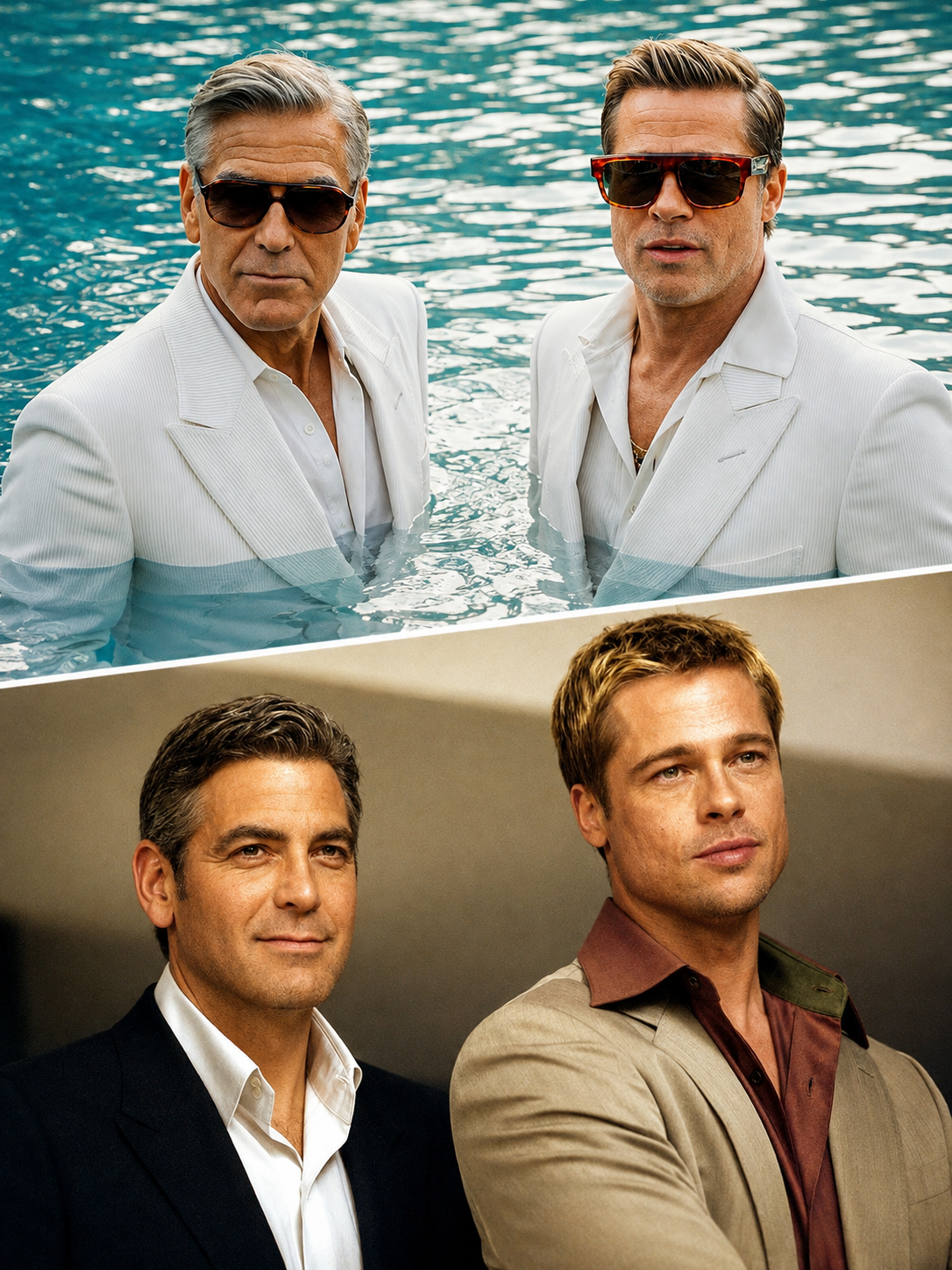
Long before George Clooney and Brad Pitt became Hollywood’s most recognizable pair of prank-loving friends, they competed for the same role.
In 1991, both actors wanted to play J.D., the charming young drifter who crosses paths with Geena Davis and Susan Sarandon in Thelma & Louise. Clooney was still years away from becoming a household name. Pitt, then a relatively unknown actor, won the part.
The brief but memorable performance helped introduce Pitt to a much wider audience. For Clooney, watching someone else receive the opportunity he wanted was not easy.
He later admitted that the loss bothered him enough that he avoided watching the movie for years. What neither man could have predicted was that this early professional defeat would eventually become a joke shared between two friends whose lives and careers would remain connected for decades.
Their story is often told through elaborate pranks, glamorous premieres and the effortless chemistry of the Ocean’s films. Beneath that public image, however, is a quieter relationship between two men who understand pressures few other people can fully comprehend.
They may not speak every day. When life becomes difficult, they know whom to call.
The Role That Went to Brad Pitt
Pitt’s appearance in Thelma & Louise lasted only a small portion of the film, but it became a defining early moment in his career.
As J.D., he brought charm and danger to a roadside encounter that changes the direction of the story. The role established him as a magnetic screen presence and accelerated his rise through Hollywood.
Clooney was still struggling to make the transition from television guest roles to major film work. Losing the part felt personal because he had reached the final stages of consideration and believed it might become his breakthrough.
The disappointment did not create a feud between the two actors. They were not yet close enough for that. Pitt later said he had known Clooney since the 1990s, but their friendship truly took shape as their careers brought them into the same professional orbit.
By the time they worked together, both had become major stars.
Pitt had built a résumé that included A River Runs Through It, Se7en and Fight Club. Clooney had broken through as Dr. Doug Ross on ER before establishing himself in films such as Out of Sight, Three Kings and O Brother, Where Art Thou?
The competition that once separated them had largely disappeared. Each man had developed a distinct career, leaving room for collaboration rather than rivalry.
The Crew That Changed Everything
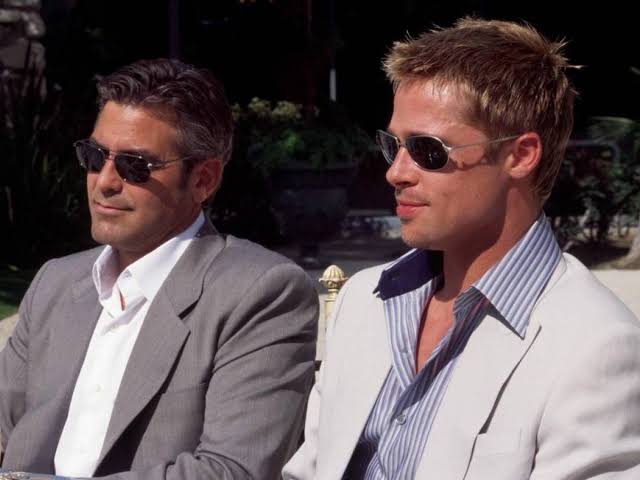
Their first major film together was Steven Soderbergh’s Ocean’s Eleven, released in 2001.
Clooney played Danny Ocean, a recently released thief assembling a team to rob three Las Vegas casinos. Pitt portrayed Rusty Ryan, Danny’s calm, constantly eating second-in-command.
Their chemistry became one of the film’s greatest strengths. Danny and Rusty communicated with the ease of people who had known each other for years, often completing plans—or jokes—with little explanation.
That rhythm reflected the growing friendship between the actors.
Ocean’s Eleven became a major commercial success and led to Ocean’s Twelve in 2004 and Ocean’s Thirteen in 2007. The ensemble also included Matt Damon, Julia Roberts, Don Cheadle and other performers who contributed to the films’ relaxed, playful atmosphere.
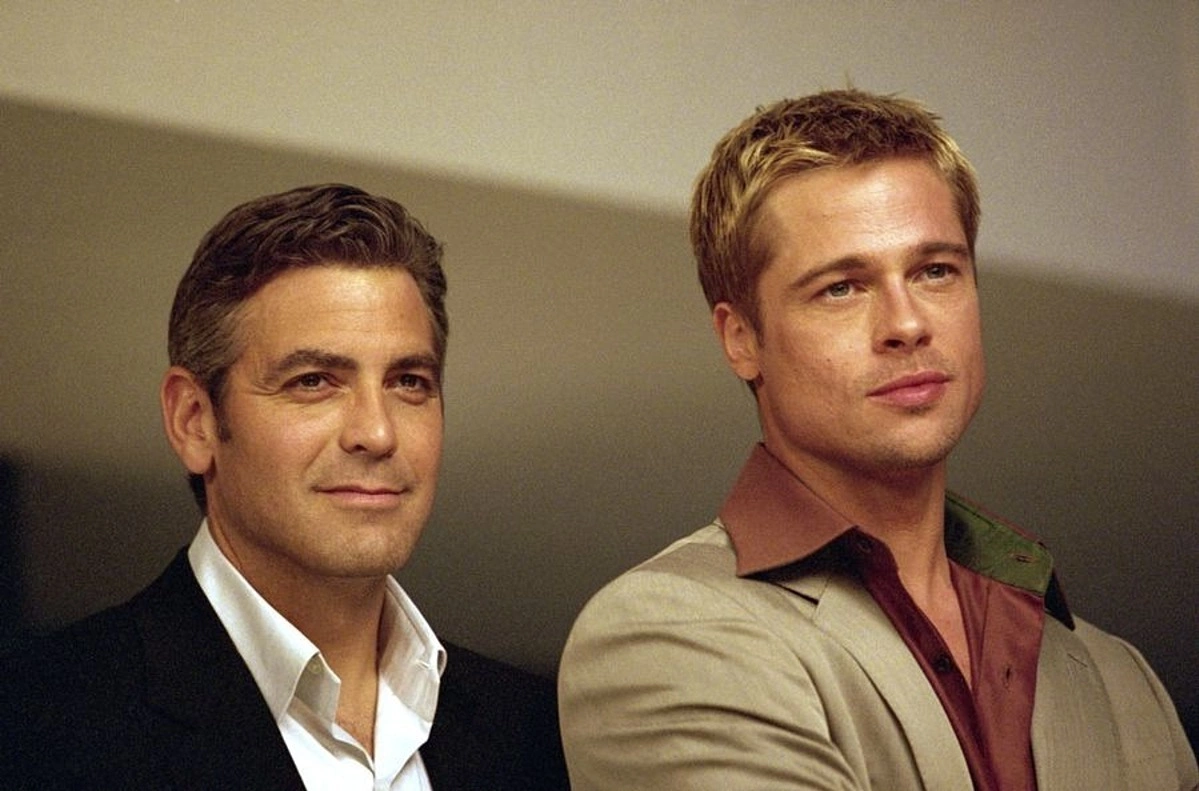
Clooney and Pitt became the public faces of that camaraderie. Their promotional appearances often seemed less like formal interviews than conversations between two friends trying to make each other laugh.
They later appeared together in the Coen brothers’ 2008 comedy Burn After Reading. Pitt played an enthusiastic but dim-witted gym employee, while Clooney portrayed a nervous federal marshal whose personal life becomes entangled in an absurd blackmail scheme.
The film offered them fewer scenes together than the Ocean’s trilogy, but it reinforced their willingness to undermine their leading-man images. Both were comfortable looking foolish, particularly when the other was nearby.
Across those projects, friendship became part of their screen appeal. Audiences were not simply watching two famous actors share a movie. They were watching men who clearly enjoyed provoking each other.
A Prank War With No Clear Winner
Their off-camera tricks became almost as famous as their films.
During the production of Ocean’s Twelve in Italy, Pitt reportedly arranged for crew members to receive instructions suggesting that Clooney demanded unusual respect. People were told not to look Clooney directly in the eye and to address him by his character’s name.
Clooney, known for his sociability on film sets, could not understand why people had suddenly become distant.
He eventually discovered Pitt’s involvement.
Clooney responded with pranks of his own, including placing embarrassing stickers on Pitt’s vehicle. He has also described sending letters in Pitt’s name to other actors, allowing confusion to build before revealing the joke.
The games continued because both men understood the rules. The objective was humiliation, not cruelty. Each prank depended on knowing that the friendship could absorb it.
Their public insults followed the same structure. Clooney joked about restraining orders; Pitt replied that he had filed one first. They mocked one another’s age, clothes and careers while promoting projects.
The humor made their friendship entertaining, but it also protected its more serious side. Genuine affection could be expressed without either man allowing the moment to become overly sentimental.
The Calls Made When Things Get “Bumpy”
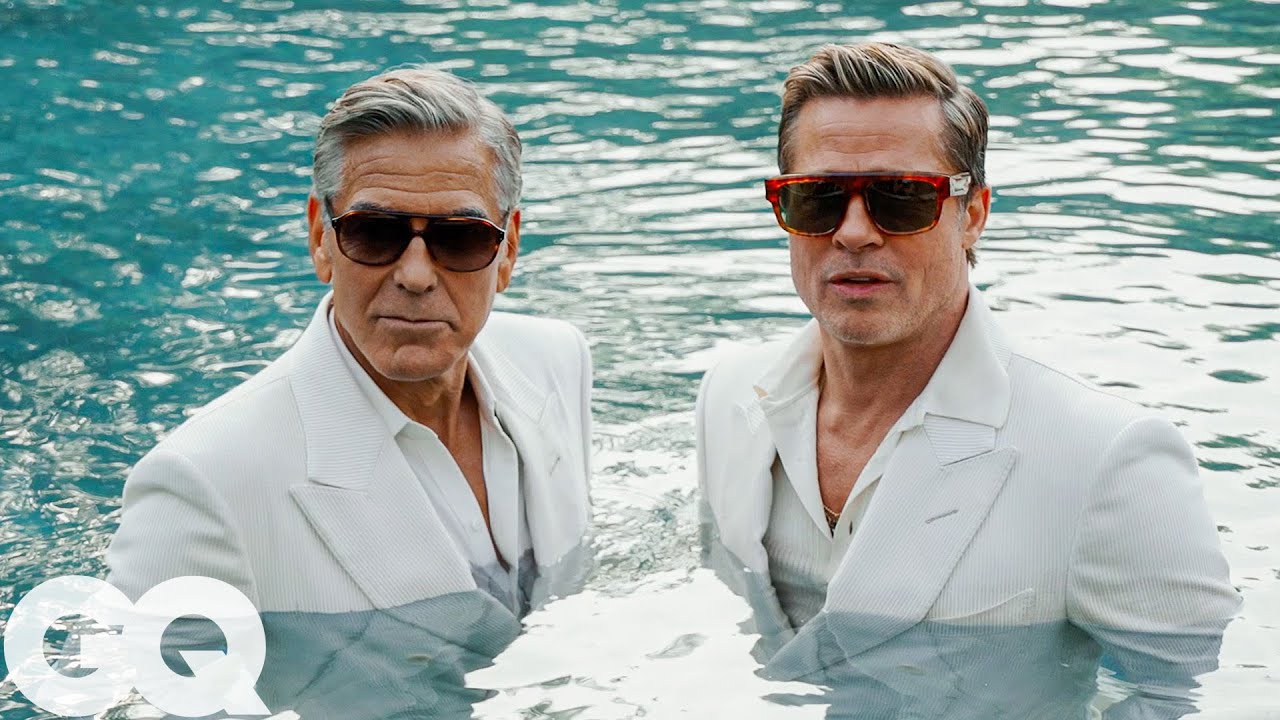
In a 2024 joint interview, Clooney and Pitt spoke more directly about what their relationship means when cameras are absent.
Clooney said they had been friends for a long time and periodically checked on one another because life could become complicated. Friendship, in his description, did not require constant contact. It required noticing when the other person might not be okay.
Pitt said Clooney has a particular ability to understand the larger picture and anticipate possible outcomes. When circumstances become “bumpy,” Pitt explained, he calls him.
That trust comes partly from the unusual lives they share.
Both men have spent decades at a level of fame that creates extraordinary privilege while also limiting ordinary freedom. Their marriages, divorces, children, homes and professional decisions have generated worldwide attention. Personal crises can become public narratives before the people involved have had time to process them privately.
Pitt compared celebrity to being separated from the herd and pursued. Clooney, he said, understands experiences that do not always need to be explained aloud. That shared knowledge creates a kind of comfort and a smaller circle within an already exclusive world.
Their comments did not identify every difficult moment they had discussed, nor did they turn private conversations into publicity material.
The importance was in the pattern: One calls, the other answers.
Reuniting as Two “Lone Wolves”
More than 15 years after Burn After Reading, Clooney and Pitt reunited as leading men in Wolfs, written and directed by Jon Watts.
The 2024 action comedy cast them as professional fixers who are separately summoned to handle the same dangerous situation. Each character believes he works best alone. Forced into an uneasy partnership, they spend the night competing, arguing and gradually recognizing how much they have in common.
The premise deliberately used the actors’ history.
Like Danny and Rusty in the Ocean’s films, the two fixers communicate through suspicion, dry humor and grudging respect. Unlike those earlier characters, they are older men confronting the possibility that the profession—and the world—may be changing around them.
Clooney and Pitt also served as producers, making the project more than a nostalgic reunion. It gave them the opportunity to shape a film around the chemistry they had developed through years of work and friendship.
By then, more than two decades had passed since Ocean’s Eleven. The actors who once seemed to represent Hollywood’s next generation were now considering age, time and how they wanted to spend the years ahead.
Both spoke about becoming more selective. A film required months away from family and other parts of life. Working together made that investment more appealing because the experience itself mattered, not only the finished product.
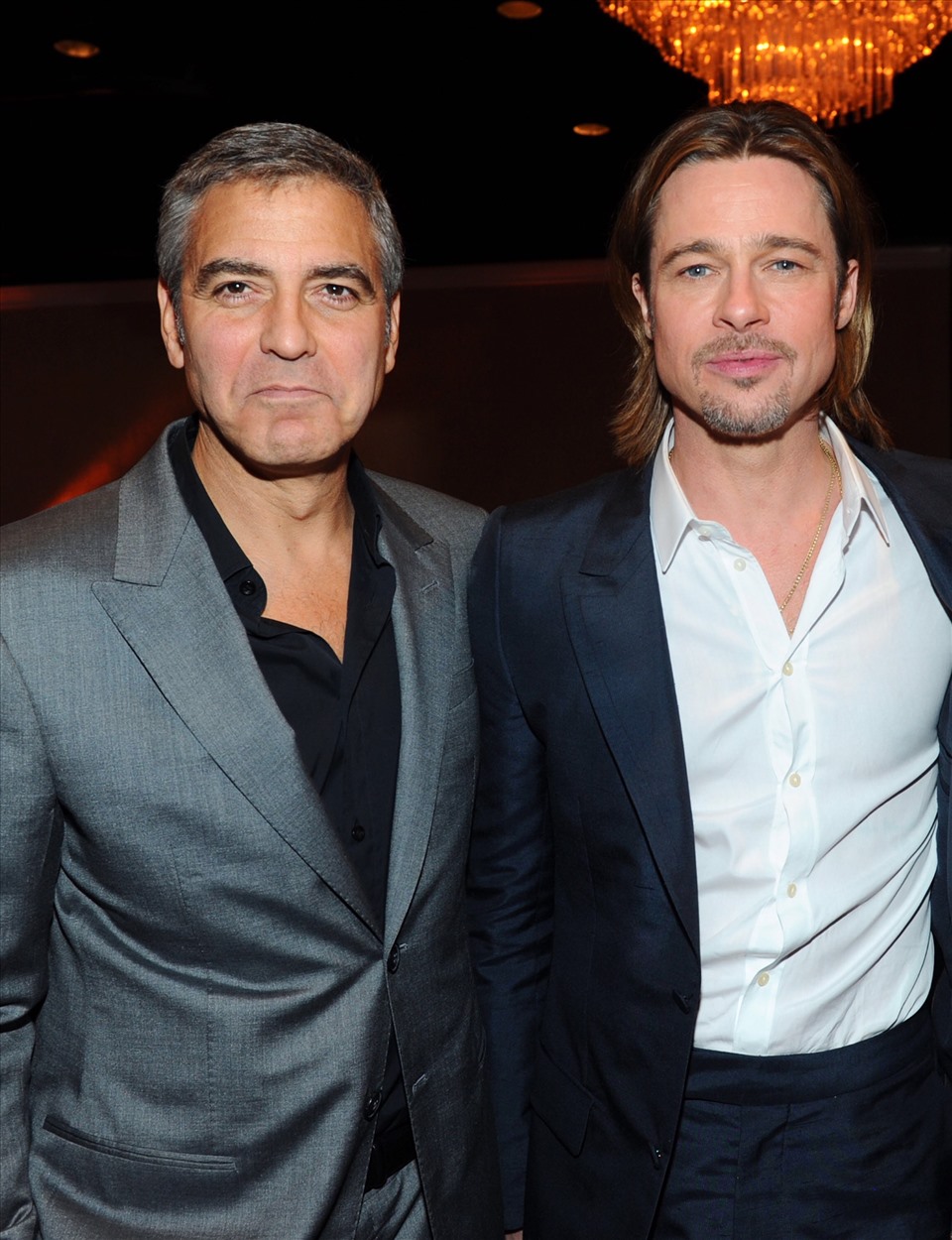
A Friendship That Does Not Need Daily Proof
Clooney and Pitt do not present themselves as inseparable companions.
Long periods can pass without a shared movie. Their careers, homes and family responsibilities move in different directions. Their friendship does not depend on frequent public appearances or carefully staged displays of loyalty.
That distance may be one reason the relationship has lasted.
Neither man appears to demand constant reassurance from the other. They reconnect when work brings them together, exchange jokes when the opportunity arises and make contact when circumstances become serious.
The friendship began against the background of competition. One man received a role that the other badly wanted, and the disappointment lingered.
Over time, that lost opportunity became part of their shared mythology rather than a source of resentment. Clooney found his own breakthrough. Pitt’s success did not prevent them from working together, and competition gave way to mutual understanding.
The pranks remain the most visible evidence of their bond because they are easy to repeat and entertaining to watch. But they are not the reason the friendship matters.
Its real value appears during the moments the public rarely sees: a private call, a difficult question, an honest assessment from someone who understands both the privileges and costs of an extraordinary life.
George Clooney once watched Brad Pitt receive the opportunity he believed should have been his.
Decades later, Pitt was calling Clooney when no movie role, award or public image could make life feel stable again.