The Ford Crown Victoria Once Ruled America—Then It Disappeared
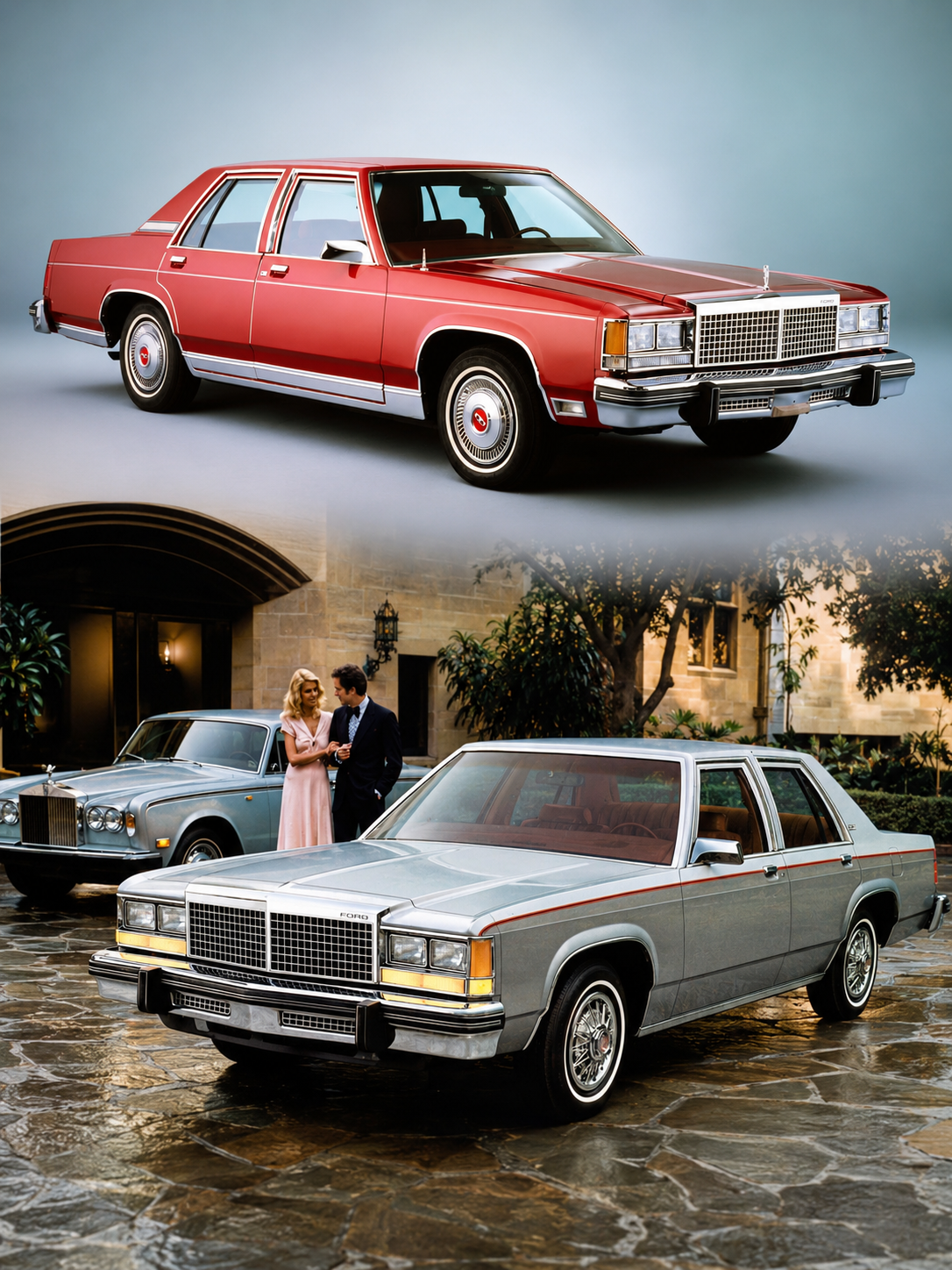
For years, American drivers reacted to a Ford Crown Victoria before they had time to identify it.
A large sedan appeared in the rearview mirror. Its headlights sat at the familiar height. Its broad grille seemed to fill the lane. Instinctively, drivers checked their speed—even when the car turned out to be an ordinary civilian model.
That reaction revealed how completely the Crown Victoria had entered American life.
It patrolled highways, waited outside government buildings, carried passengers through crowded cities and appeared in countless television pursuits. Police officers worked from it, taxi drivers spent entire shifts inside it, and families used quieter versions for ordinary errands.
Then production ended in 2011.
The Crown Victoria did not vanish immediately. Police departments and taxi companies continued operating the cars they already owned. Retired cruisers passed into private hands. Yet as those vehicles wore out, America’s streets gradually changed.
Only after the big Ford became uncommon did many people recognize what it had been: not merely a sedan, but part of the country’s visual identity.
An Old-Fashioned Design That Refused to Leave
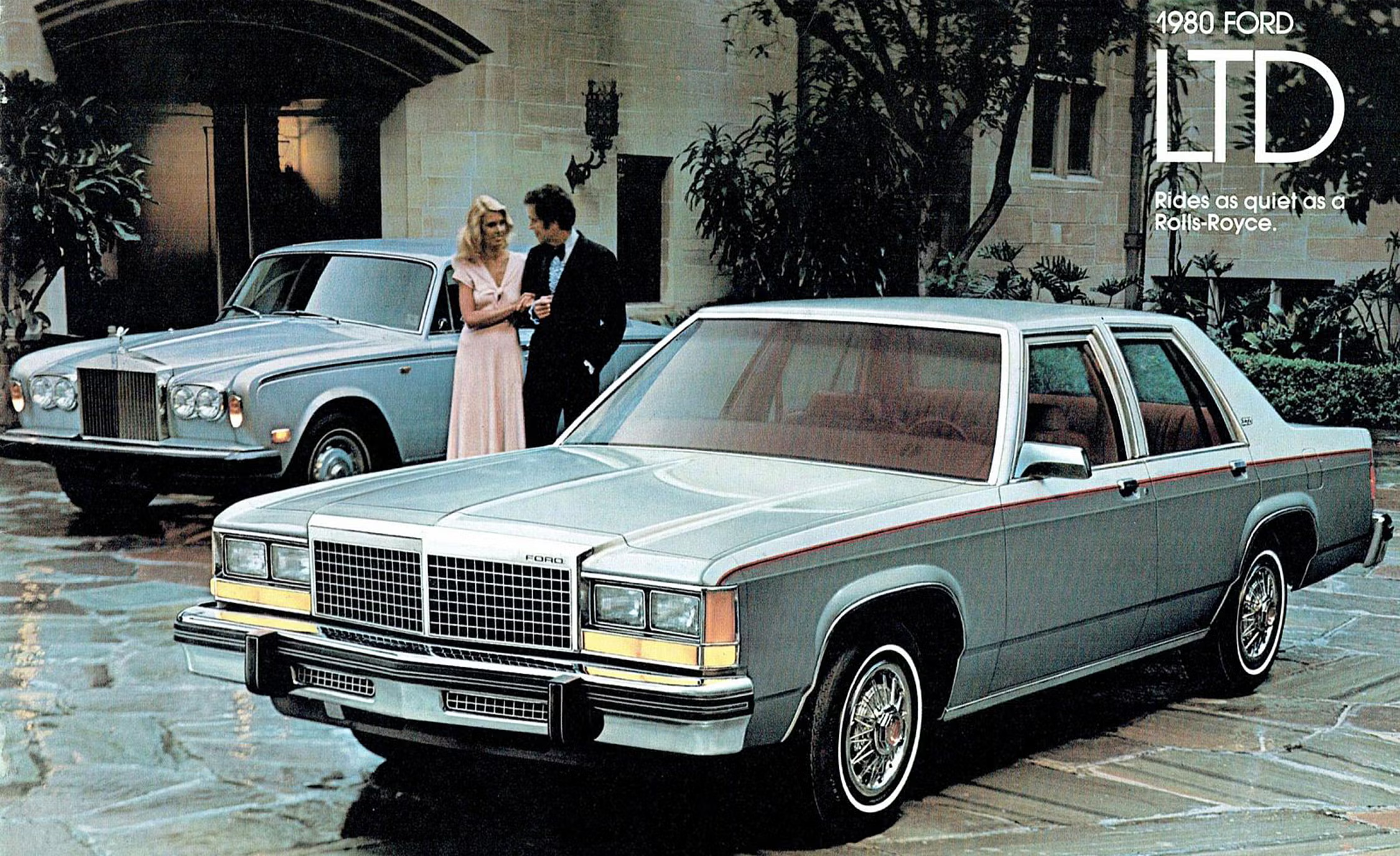
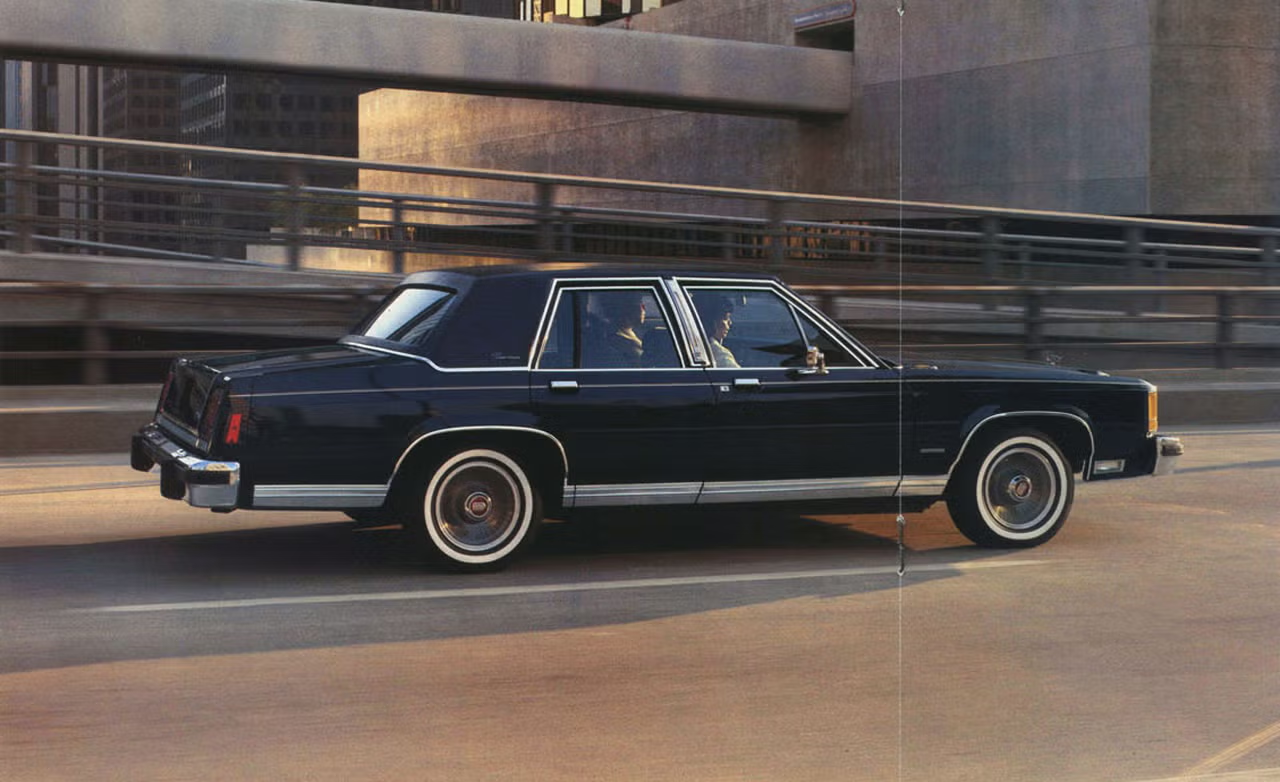
The Crown Victoria’s durability began with the Panther platform, the full-size Ford architecture introduced for the 1979 model year and used for more than three decades.
Unlike the front-wheel-drive, unibody sedans that came to dominate the market, Panther cars retained a separate body and frame. The Crown Victoria also sent power to the rear wheels and used a traditional front-engine layout.
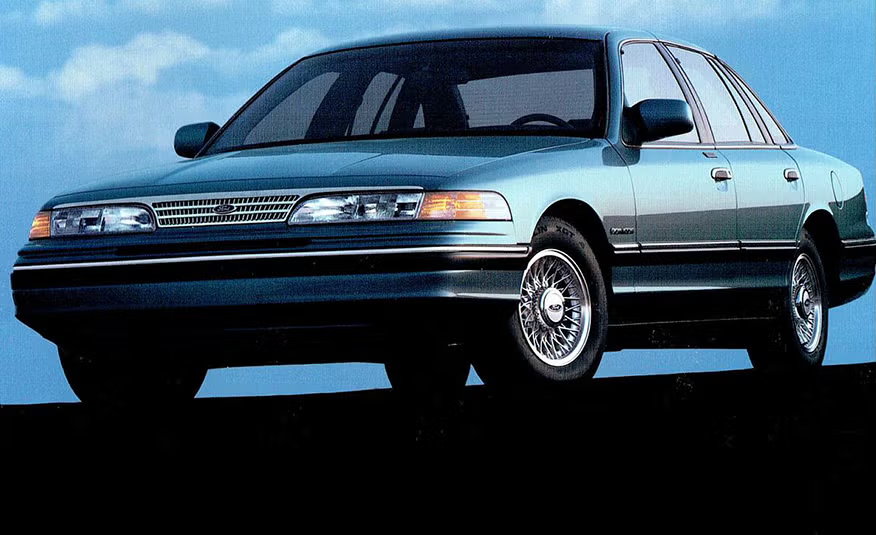
The modern Crown Victoria arrived for 1992 with rounded styling and Ford’s 4.6-liter V8. Although its appearance changed over the years, its basic philosophy remained remarkably consistent: simple mechanical construction, generous interior room and the ability to absorb demanding use.
For individual buyers, those qualities created a comfortable and relatively uncomplicated full-size car. For fleet operators, they offered something even more valuable.
Parts were widely available. Mechanics understood the platform. Vehicles could remain in service for long periods, and the separate frame made certain kinds of accident or curb damage easier to address than they might have been on some unibody cars.
The Crown Victoria was not technologically adventurous. That became one of its strengths.
While the rest of the industry pursued smaller dimensions, front-wheel drive and increasingly complicated packaging, Ford continued producing a sedan that fleet managers already knew how to buy, repair and operate.
Why Police Departments Trusted It
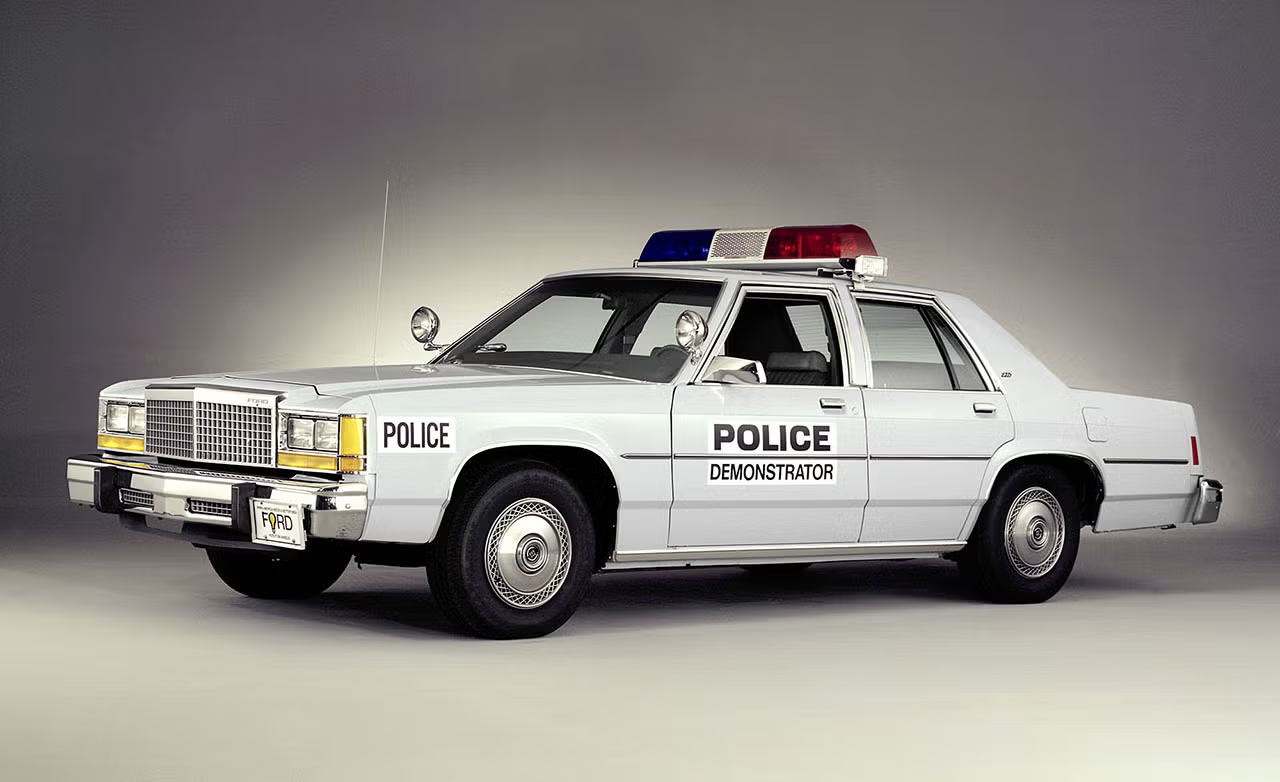
The Crown Victoria Police Interceptor, introduced for the 1992 model year, became the car’s defining version.
Ford adapted it for work that ordinary passenger cars rarely experienced. Police packages could include upgraded cooling, suspension and electrical systems, along with heavy-duty components designed for extended idling, abrupt acceleration and long hours of continuous operation.
Its cabin offered space for officers, radios, computers and other equipment. The trunk could hold emergency gear. Rear-wheel drive gave the car handling characteristics familiar to generations of police drivers, while the V8 provided dependable power rather than exotic performance.
The body-on-frame design also mattered in the daily reality of patrol work. Police vehicles crossed medians, struck curbs and accumulated hard miles. Departments needed cars that could be returned to service without excessive expense.
Fleet economics reinforced the loyalty. Once an agency owned many Crown Victorias, it also possessed spare parts, trained technicians and equipment designed to fit them. Replacing the model meant more than purchasing a different car. It could require changing an entire operating system.
After Chevrolet ended production of its rear-wheel-drive Caprice police sedan in 1996, the Crown Victoria became especially dominant. Officers and fleet managers came to regard its size, familiarity and repairability as standards against which replacements would be judged.
Its silhouette eventually became a form of traffic enforcement on its own.
A Crown Victoria did not need visible markings to influence behavior. Dark paint, steel wheels and a spotlight near the driver’s mirror were often enough to make surrounding motorists slow down.
Hollywood’s Default Police Car
The same qualities that made the Crown Victoria common in real law enforcement made it nearly unavoidable in movies and television.
Production companies could obtain retired police cars relatively easily. Multiple matching examples were available for background scenes, crashes and chase sequences. The cars looked convincing because audiences had already seen them on actual streets.
Soon, a Crown Victoria sliding around a corner became visual shorthand for an American police pursuit.
It appeared behind flashing lights, blocked intersections and absorbed punishment in action scenes. Even when viewers did not know the model’s name, they understood what it represented.
The car’s screen presence also blurred the boundary between fiction and daily life. A sedan seen on a crime drama at night might appear outside a grocery store the following morning, wearing the colors of a local department.
Few cars have played the same role so consistently in both real and fictional America.
The Sedan That Became New York’s Yellow Cab
Police departments were only part of the Crown Victoria’s story.
In New York City, the car became nearly as recognizable in yellow as it was in black and white. Taxi operators valued its large trunk, spacious rear seat and ability to withstand long shifts over damaged urban pavement.
Ford even produced an extended-wheelbase version that provided additional room for passengers.
For years, the Crown Victoria was the only commercially available model that satisfied New York City’s taxi specifications. At one point, it accounted for approximately 90 percent of the city’s taxi fleet.
That dominance gave the car two opposing identities.
On one block, a Crown Victoria might cause drivers to check their mirrors for emergency lights. On the next, the same basic vehicle might stop for a passenger raising a hand at the curb.
Taxi work demonstrated the platform’s endurance in a different way. These cars spent hours idling, crossed the same crowded streets repeatedly and accumulated mileage at a pace far beyond ordinary private vehicles.
They were not loved because they were glamorous. They were used because they worked.
Why Ford Finally Ended Production
By the 2000s, the Crown Victoria belonged to an automotive era that was rapidly disappearing.
Most American buyers had moved toward SUVs, crossovers and more efficient sedans. The Crown Victoria’s retail market weakened, leaving police departments, taxi companies and government fleets as its most important customers.
Its age also made further investment difficult to justify. The Panther architecture traced its roots back more than 30 years. Updating it to meet future expectations for efficiency, safety and performance would have required money that Ford increasingly directed toward newer global platforms.
The St. Thomas Assembly plant in Ontario, Canada, produced the Crown Victoria alongside its Panther relatives. Ford eventually decided to close the facility and end the entire line rather than redesign an aging family of large body-on-frame sedans.
The final Crown Victoria was completed on September 15, 2011. It was a civilian car built for export to Saudi Arabia.
There was no true successor that duplicated everything the Crown Victoria had offered.
Ford replaced the Police Interceptor with two vehicles: a sedan based on the Taurus and a utility model based on the Explorer. Police agencies also adopted Dodge Chargers, Chevrolet patrol sedans and an expanding range of SUVs.
In New York, the city’s Taxi of Tomorrow program selected the Nissan NV200. Hybrid sedans and other approved vehicles also became increasingly visible, breaking the Crown Victoria’s near-monopoly over the yellow-cab fleet.
The replacements often delivered more modern technology, better packaging or improved fuel economy.
None looked quite like the Crown Victoria.
America Notices the Empty Space
The car’s disappearance happened slowly enough that many people initially missed it.
Old police units remained in service. Taxi fleets continued operating their existing vehicles. Retired Interceptors were sold at government auctions and reappeared as inexpensive private transportation.
Eventually, however, the familiar shape became rare.
Police departments shifted toward muscular sedans and tall SUVs. New York’s taxi fleet became a mixture of vans, hybrids and crossovers. Movie productions began using newer patrol vehicles because those were now the cars audiences saw in real life.
The Crown Victoria’s cultural value became clearer as its practical role faded.
Hagerty included it among the 25 most memorable cars produced during the first quarter of the 21st century, placing the ordinary Ford alongside sports cars, luxury machines and supercars. The list was not limited to the fastest or most prestigious vehicles. It recognized cars that defined their time—and the Crown Victoria had done exactly that.
Collectors now preserve clean civilian models and former Police Interceptors. Enthusiasts value the V8, rear-wheel-drive layout and mechanical simplicity, but nostalgia is equally important.
The car reminds people of a particular American streetscape: yellow cabs lined up outside hotels, patrol cars idling beneath highway overpasses and government sedans parked in rows.
For decades, the Crown Victoria was too common to seem special.
It was simply there—working, waiting and blending into the background of daily life.
Then America replaced it one fleet at a time, and the road began to look different.
The Ford Crown Victoria never needed exotic styling or record-breaking performance to become unforgettable. It achieved something far rarer.
It became ordinary everywhere.