Shania Twain Spent Decades Punishing Her Body—At 60, She Changed the Meaning of Confidence
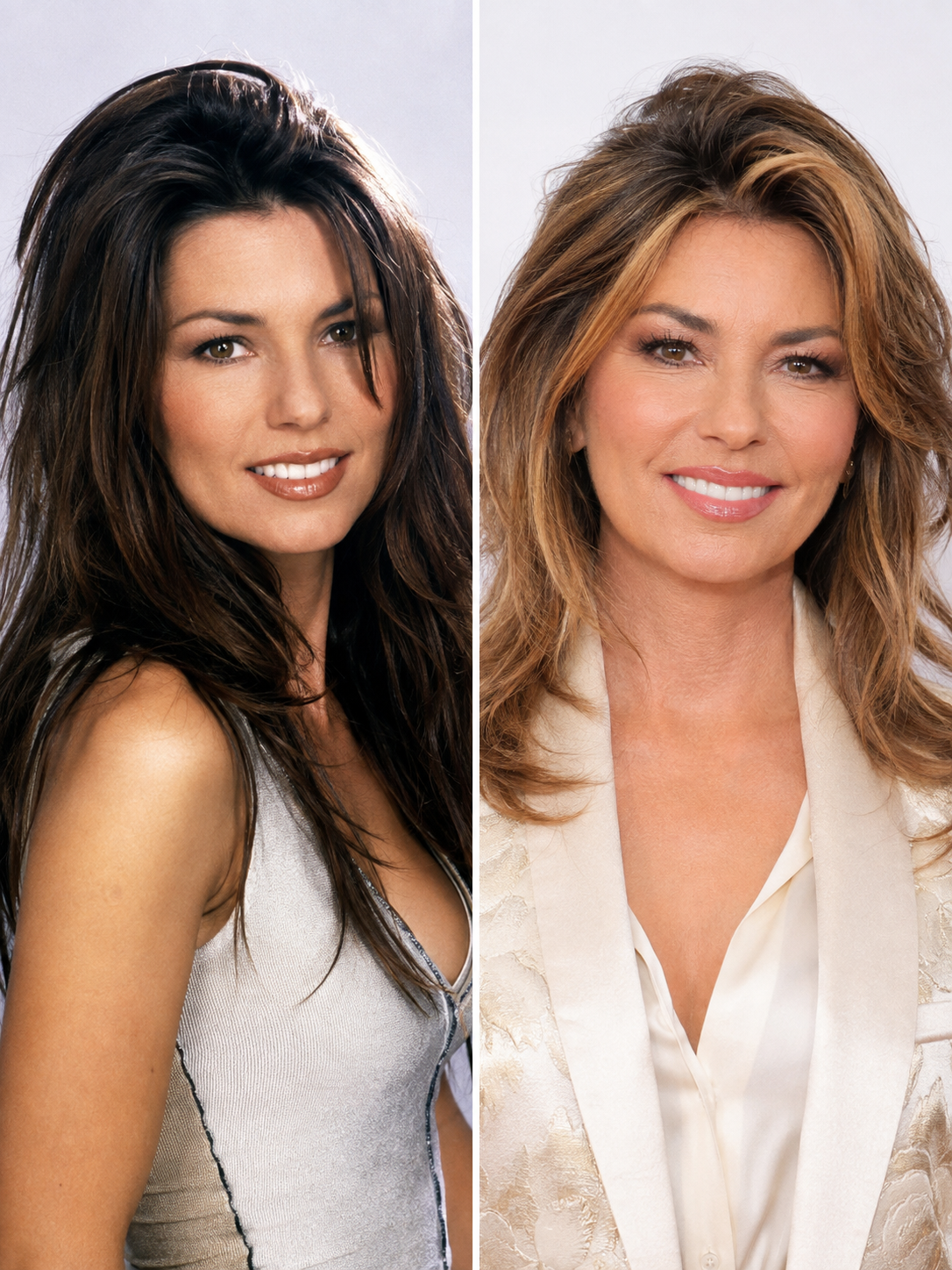
During a Las Vegas performance in 2019, Shania Twain felt something inside her legs give way.
She had torn muscles in both thighs.
The injury was not simply the result of one difficult movement onstage. Twain later connected it to a body she had pushed without properly understanding what it needed. She was going through menopause, eating too little protein, failing to stay adequately hydrated and exercising while undernourished.
For years, she had treated thinness as part of the job.
Now the body that had carried her through stadium tours, music videos and decades of choreography was forcing her to stop.
Twain had already survived Lyme disease, serious damage to her singing voice and the collapse of the marriage that had shaped both her personal life and her greatest commercial success. Yet this new confrontation was different.
She could no longer fight age as though it were another rival to defeat.
At 60, with her new album Little Miss Twain returning to the difficult childhood that formed her, the singer says she is no longer trying to look 30. Health matters more than vanity, and confidence no longer means forcing her body to remain unchanged.
For the woman who made “Man! I Feel Like a Woman!” an anthem of self-possession, that realization required learning the song’s message all over again.
The Woman Who Changed Country-Pop
When Twain emerged as a major star in the mid-1990s, country music had rarely seen anyone quite like her.
She combined traditional country storytelling with glossy pop production, rock guitars and music videos designed for a global audience. Her clothes, exposed midriff and direct performance style attracted attention in a genre that often placed narrow expectations on female artists.
Her 1995 album The Woman in Me made her a major country star. Two years later, Come On Over transformed her into an international phenomenon.
The album produced “You’re Still the One,” “That Don’t Impress Me Much,” “From This Moment On” and “Man! I Feel Like a Woman!” It became one of the bestselling albums by a female artist in music history.
Twain did not merely cross over from country to pop.
She helped erase the border.
Her image was central to that success. She appeared playful, glamorous and completely comfortable with attention. For audiences, the confidence looked effortless.
Behind that image was a woman who had spent much of her life learning to survive through discipline.
Twain grew up in poverty in Ontario, Canada, within a home marked by violence and instability. She began singing in bars as a child to help support her family.
When her mother and stepfather died in a car crash in 1987, Twain put her own ambitions aside and helped care for her younger siblings.
By the time fame arrived, work was not simply something she wanted.
It was how she had learned to create safety.

The Body Becomes Part of the Product
Twain’s rise occurred during an era when female performers were intensely judged for their weight, clothing and age.
Her appearance became part of every conversation about her music. Some critics questioned whether her revealing outfits made her sufficiently “country.” Others focused on her body as though it explained her popularity better than her songwriting.
Twain has said she enjoyed dressing boldly and does not regret the visual identity she created. But enjoying fashion did not protect her from insecurity.
The pressure to maintain a familiar body continued as she grew older.
She later acknowledged doing unhealthy things to control her weight. That included restricting food while continuing to rehearse and perform at a demanding level.
The contradiction was severe.
Her body generated the energy audiences came to see, yet she was denying it some of the basic fuel required to produce that performance.
Menopause intensified the problem.
Twain did not initially understand how hormonal changes were affecting her muscles, metabolism, hydration and recovery. She continued judging herself by standards established decades earlier, when her body responded differently.
During her 2019 Las Vegas period, the consequences became impossible to ignore.
Her severe thigh injury was not a cosmetic warning.
It was a physical breakdown.
Losing the Voice That Made Her Famous
The injury came after another long struggle with the body’s limits.
Twain contracted Lyme disease after being bitten by a tick in 2003. She later developed dysphonia, a condition that seriously affected her ability to control her voice.
For a singer known worldwide by a single vocal sound, the loss was terrifying.
Twain withdrew from recording and touring for years. She consulted specialists, underwent extensive therapy and eventually had surgery involving stabilizing implants in her throat.
When she returned, her voice was different.
It had become deeper and rougher. She could still sing, but she had to learn how to work with an instrument that no longer behaved as it once had.
The experience challenged the foundation of her identity.
A singer can change costumes, producers or musical styles. A damaged voice reaches closer to the self. Twain had to accept that recovery would not mean returning precisely to the sound she possessed in the 1990s.
She would need to become a different singer.
That adjustment now mirrors the way she speaks about aging.
The goal is no longer restoration.
It is adaptation.

Betrayal Removes Another Foundation
While Twain was struggling with her health and voice, her marriage to producer Robert John “Mutt” Lange collapsed.
The couple had married in 1993 and created much of her most successful music together. Lange co-wrote and produced the albums that made Twain a global star.
Their partnership blurred the boundaries between work, marriage and identity.
In 2008, the marriage ended after Lange became involved with Marie-Anne Thiébaud, a close friend of Twain’s. The betrayal left Twain without both her husband and the creative partner who had helped shape her sound.
She later described the period as devastating.
Twain eventually found support and love with Frédéric Thiébaud, Marie-Anne’s former husband. The two married in 2011.
Her professional return followed slowly.
She performed in Las Vegas, released Now in 2017 and later issued Queen of Me in 2023. Each step required her to trust a changed voice and create without Lange directing the process.
The woman who once appeared completely in control had to reconstruct nearly every part of her life.

Menopause Changes the Battle
Twain now describes menopause as difficult physically but unexpectedly liberating emotionally.
Her body changed. Her weight shifted. The methods she had once used to control her appearance became less effective and more dangerous.
Eventually, she stopped treating those changes as personal failure.
She began eating more protein, paying closer attention to hydration and focusing on the strength required for performing rather than the smallest possible number on a scale.
The shift sounds practical, but it represents a profound break from decades of conditioning.
Twain’s career had taught her that visibility came with judgment. Every new photograph could invite commentary about her face, body or clothing.
At 60, she says she no longer accepts the premise that her body is something shameful.
She is not attempting to recreate the woman in the “Man! I Feel Like a Woman!” video. That woman existed at a particular age, inside a particular moment of pop culture.
Trying to preserve her forever would require harming the person Twain is now.
The decision is not surrender.
It is a different form of control.
Little Miss Twain Returns to the Beginning
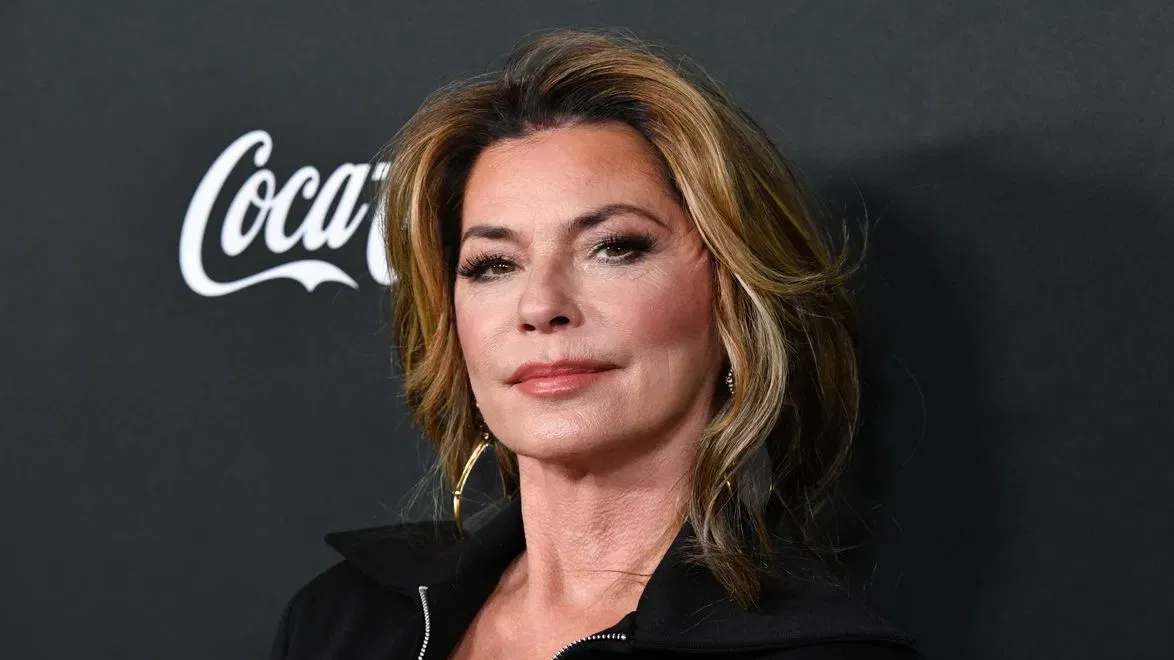
Released in July 2026, Little Miss Twain looks backward toward the years before fame.
The album explores Twain’s childhood and early adulthood, including the bars where she performed underage, the poverty surrounding her family and the mother who believed her daughter could become a star.
Its title track honors her late mother and features Tanya Tucker, with Twain’s son Eja Lange also contributing vocals.
The project connects the famous woman with the child who learned to perform under pressure.
That younger Shania often had little control over her surroundings. Music became a way to earn money, escape violence and imagine a future beyond the life she knew.
The adult star later gained enormous power, but she carried the old survival instinct with her. She kept pushing, restricting and demanding more of herself because stopping had once felt dangerous.
The new album does not present childhood as a simple origin story for success.
It asks what survival habits cost when they continue long after the original danger has passed.
Confidence Without Punishment
Twain still cares about fashion, performance and feeling attractive.
Accepting age has not required her to reject glamour. It has changed the price she is willing to pay for it.
She no longer believes looking younger is worth malnutrition, exhaustion or another injury. Her body is not an obstacle between her and the stage.
It is the only reason she can reach the stage at all.
That distinction gives new meaning to the confidence she has represented for decades.
In the 1990s, confidence meant walking into a male-dominated genre and refusing to dress, sing or behave according to its rules.
At 60, it means refusing another demand—the idea that a successful woman must remain visually frozen at the age when the public first loved her.
Shania Twain has not defeated time.
Her voice changed. Her muscles required different care. Her reflection no longer matches the young woman preserved in music videos.
What changed most was the judgment she placed on those facts.
The queen of country-pop once built an empire around songs that told women to recognize their own worth.
After illness, betrayal and injury, she finally began extending that lesson to herself.
Confidence, she discovered, is not forcing the body to remain young.
It is deciding the body that survived deserves to be cared for.