Jelly Roll Steps Away From Touring for Up to Two Years After Divorce and a Life-Changing Run

Jelly Roll ended one of the biggest touring chapters of his career with an announcement few fans expected.
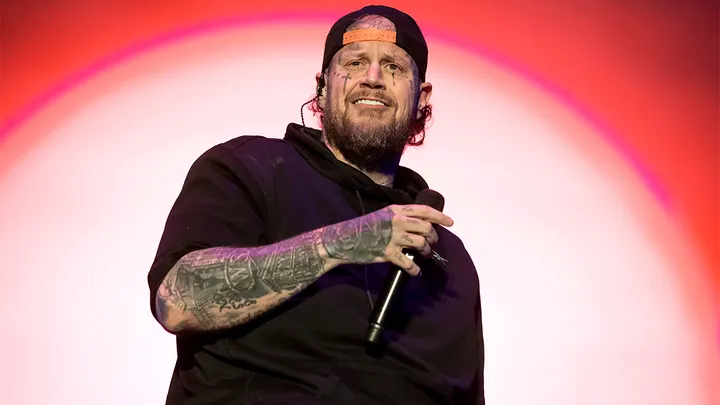
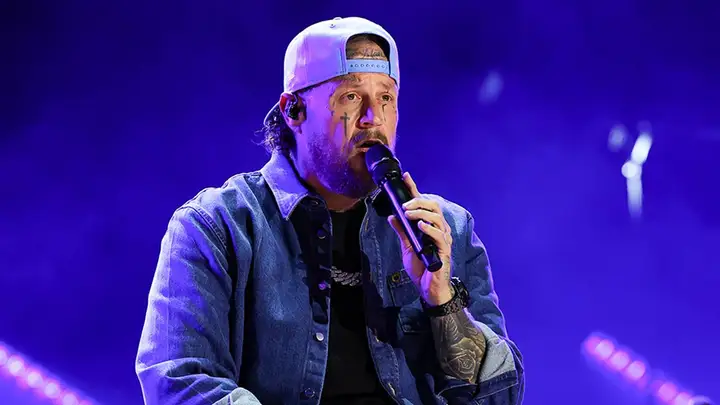
Standing before the crowd at Rice-Eccles Stadium in Salt Lake City on July 28, the country star said he was preparing to leave the road for “a year or two.”
The reason was not a shortage of opportunities.
After months of stadium performances, personal upheaval and an extraordinary physical transformation, the 41-year-old singer said he needed time to heal.
The Salt Lake City concert marked the final date of his co-headlining stadium tour with Post Malone. Two nights later, Jelly Roll played one last scheduled solo show at Weidner Field in Colorado Springs, Colorado.
Then the calendar went quiet.
His official website listed no upcoming concerts, leaving the man who had spent years building a direct emotional connection with audiences facing a new kind of challenge: learning what comes after the noise stops.
A Goodbye Without a Firm Return Date
Jelly Roll did not describe the break as retirement.
Instead, he thanked the audience for what he called a once-in-a-lifetime experience and explained that the Colorado Springs performance would be his last for an extended period.
The language suggested both exhaustion and intention.
He was not merely canceling a handful of dates or pausing for a few weeks. By saying he expected to step away for one or two years, the singer made clear that recovery would not be rushed to fit a touring schedule.
For an artist whose recent rise has depended heavily on the emotional honesty of his music and live performances, the announcement carried unusual weight.
Jelly Roll has built his career by speaking openly about addiction, incarceration, family wounds and personal change. His songs often describe people trying to rebuild lives after years of damage.
Now he appears to be applying that same message to himself.
The person who has repeatedly encouraged listeners to seek redemption is choosing to protect his own recovery before returning to the stage.
The Tour Ended During a Painful Personal Year
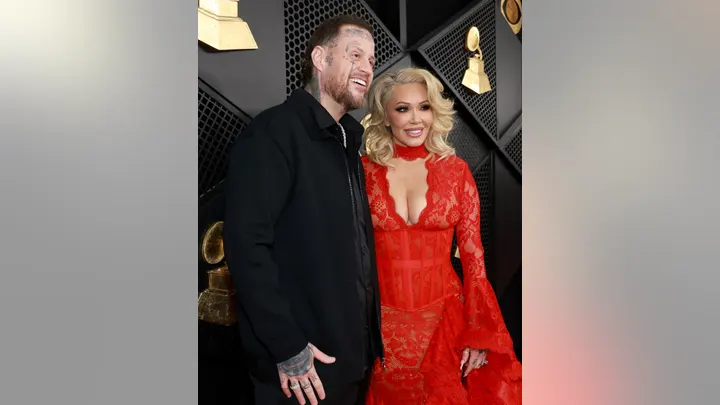
The decision came shortly after Jelly Roll finalized his divorce from Bunnie Xo, ending a marriage that had lasted nearly a decade.
The two met at one of his concerts in Las Vegas in 2015 and eloped the following year. Bunnie later became stepmother to his daughter, Bailee, and son, Noah.
Jelly Roll, whose legal name is James DeBoard, filed for divorce on May 18, 2026. Court documents listed May 9 as the date of separation and cited irreconcilable differences.
The divorce was finalized in early July, only weeks before he told the Salt Lake City audience that he needed time away.
The financial terms remain private, though reports indicated that the former couple agreed to divide assets that included homes, vehicles, an aircraft and intellectual property. Jelly Roll was also expected to make a confidential one-time payment, eliminating future alimony claims.
Despite the legal end of the marriage, both have rejected the idea that infidelity caused the split.
Jelly Roll told fans that neither person had cheated. His daughter Bailee echoed that account, and Bunnie offered the same denial on her Dumb Blonde podcast.
The public details suggest a relationship that has ended as a marriage without becoming a complete personal rupture.
A Divorce Without a Total Goodbye
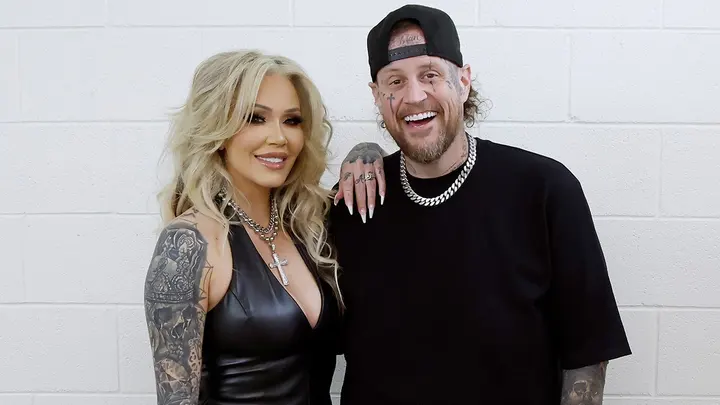
Even after dividing their lives legally and financially, Jelly Roll and Bunnie have said they do not intend to erase one another.
Bunnie stated that they still planned to welcome a child through a surrogate and co-parent after the divorce. Jelly Roll later supported her account, telling fans that what she had said was true and referring to her as his best friend.
That arrangement reflects the complexity of a long relationship that became intertwined with family, business and public identity.
Bunnie was present through Jelly Roll’s rise from a struggling independent artist to a major country star. She also took on an important role in the lives of his children.
Ending the marriage therefore involved more than separating two people.
It required untangling a shared public life while preserving relationships they still considered meaningful.
Bunnie drew additional attention over the Fourth of July weekend when she was photographed kissing reality television personality Dylan Wolf at Jelly Roll’s Goodnight Nashville Bar.
She later said the encounter was not part of a new relationship, describing it as a moment within her newly single life and adding that Jelly Roll understood.
In a podcast episode that was later deleted, Bunnie also said Jelly Roll had begun dating again after the separation.
Those details kept the breakup in entertainment headlines even as Jelly Roll continued performing before enormous crowds.
The Stage Did Not Pause for Private Pain
The tour with Post Malone represented a major professional achievement.
Stadium shows require months of planning, travel and physical effort. For Jelly Roll, the performances also arrived during a period when nearly every part of his private life was changing.
He continued working through the divorce and released the inspirational single “Hands Up” in June.
The song maintained the hopeful direction that has become central to his recent career. Yet the announcement in Salt Lake City showed that career momentum could not indefinitely replace the need to process what had happened.
Artists often speak about touring as an escape.
The nightly structure provides a goal: arrive in a new city, prepare, perform and move again. Crowds offer immediate emotional energy, but that energy disappears when the venue empties.
For Jelly Roll, the final concert may have marked the point when movement was no longer enough.
The break creates room to face the year without another city waiting the next morning.
His Body Has Already Been Through a Major Transformation
The singer’s decision to step away also comes during an extended health journey.
Jelly Roll has lost approximately 275 pounds over the past several years. He has shared major milestones as well as the daily habits behind the change, making his physical transformation another public part of his story.
The weight loss has represented far more than a cosmetic shift.
Touring at his previous size required enormous strain. As he became healthier, he spoke openly about movement, food and the effort required to change patterns developed over many years.
The process paralleled the themes of his music.
Transformation was not presented as a single breakthrough followed by permanent success. It required repeated choices and an acceptance that setbacks did not erase progress.
His upcoming break may become another stage of that work.
Healing after divorce can involve emotional rest, but leaving the road may also give him greater control over sleep, exercise, eating and time with family.
The decision suggests that health is no longer something he intends to fit around the career.
For the next chapter, the career may have to fit around his health.
From Prison History to Stadium Crowds
Jelly Roll’s rise has always carried an unusual emotional charge because he has never hidden the life that came before fame.
He spent years moving through jail and the criminal justice system before music became a sustainable path. His later success allowed him to address audiences who recognized parts of their own struggles in his history.
Songs including “Save Me” and “Son of a Sinner” helped establish him as an artist willing to admit weakness without romanticizing it.
That honesty turned concerts into more than entertainment.
Fans often treated the shows as gatherings built around survival, forgiveness and the possibility that a person could become more than his worst period.
His final remarks in Utah fit that identity.
Rather than pretend endless touring had left him untouched, he admitted he needed space to recover.
The vulnerability was consistent with the man audiences had come to see.
What Healing May Mean Away From the Spotlight
Jelly Roll did not offer a detailed explanation of what his time off will include.
He did not announce a formal treatment program, a new album schedule or a confirmed date for returning to live performance.
The central promise was simply absence.
That uncertainty may be necessary.
A break designed around healing loses some of its purpose if every month is already filled with deadlines and promotional expectations.
For the first time in years, Jelly Roll may be able to separate his personal recovery from the responsibility of inspiring an audience each night.
His children, changed family structure and continuing connection with Bunnie will remain part of that process. So will the health goals he has spent years pursuing.
The man leaving the stage is not the same person who began the climb toward stadium fame.
He is lighter physically, more successful professionally and newly separated from the partner who witnessed much of the journey.
The Applause Was Not the Cure
The final stadium crowd gave Jelly Roll one more roar before the break.
But applause, however powerful, cannot settle a divorce or complete a health transformation. It cannot tell a person how to rebuild a family relationship after the legal papers are signed.
Jelly Roll has spent much of his career turning pain into songs other people could use.
His decision to stop touring suggests that some pain cannot immediately be turned into another performance.
Sometimes it must be lived through privately.
There is no confirmed return date and no guarantee that the break will last exactly one or two years. What remains clear is that the singer left the road at a moment when demand for him was still high.
He did not wait for the crowds to disappear.
He chose to step away while they were still cheering.
For an artist whose life has repeatedly been defined by survival, the next act may not begin with another hit or stadium entrance.
It may begin with the quiet work of becoming whole when no audience is watching.