Michelle Yeoh’s 40-Year Journey: From a Career-Ending Ballet Injury to Making Oscar History at 60
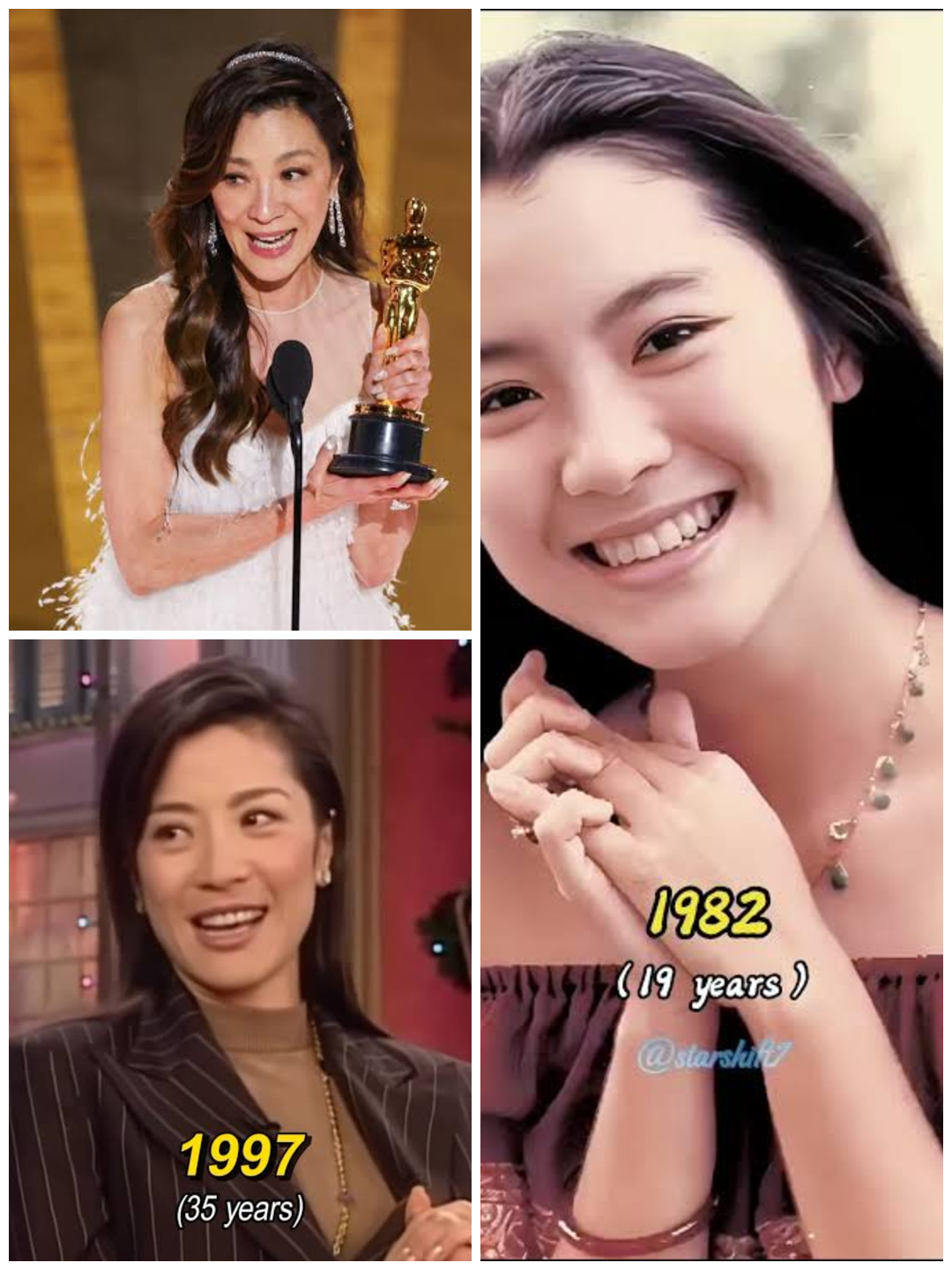
When Michelle Yeoh walked onto the Academy Awards stage in March 2023, the gold statue in her hands represented far more than one extraordinary performance.
It marked the end of a journey that had begun with a dream she was forced to abandon, continued through some of Hong Kong cinema’s most dangerous action sequences, survived years of Hollywood typecasting and finally produced a leading role substantial enough to use nearly everything she had learned along the way.
At 60, Yeoh won Best Actress for Everything Everywhere All at Once, becoming the first Asian woman to receive the Academy Award in that category.
The victory looked like a sudden Hollywood breakthrough.
In reality, she had been preparing for it for almost four decades.
The First Dream Was Ballet, Not Movies
Born in Ipoh, Malaysia, on August 6, 1962, Yeoh grew up immersed in physical activity and particularly loved dance. As a teenager, she moved to England and studied at London’s Royal Academy of Dance, imagining a future as a professional ballerina.
Then a back injury changed the direction of her life.
Her hopes of performing professionally were effectively over, and Yeoh eventually returned to Malaysia. In 1983, she entered and won the Miss Malaysia competition. Soon afterward, an unexpected opportunity brought her to Hong Kong for a commercial opposite Jackie Chan.
That advertisement opened a door into the film industry.
Yeoh had no traditional martial-arts background, but she had something unusually useful: years of dance training. She understood balance, timing, choreography and how the body could communicate through movement.
She began studying action techniques with stunt performers rather than approaching fight scenes as a trained combat athlete.
The difference hardly mattered once the cameras started rolling.
Hong Kong Turned Her Into an Action Star
After an early role in The Owl vs. Bombo, Yeoh pushed for the opportunity to do action herself.
The breakthrough arrived with Yes, Madam! in 1985, opposite martial artist Cynthia Rothrock. Instead of remaining a glamorous supporting presence while male heroes handled the fighting, Yeoh became one of the fighters.
The movie helped launch her as a major female action star, followed by titles including Royal Warriors and Magnificent Warriors.
Her performances were unusually physical even by the standards of 1980s Hong Kong filmmaking. Yeoh learned to work directly with stunt teams in an era when many sequences relied on practical effects, wires and performers accepting risks that modern productions would approach very differently.
Her career was accelerating when she stepped away from acting after marrying businessman and producer Dickson Poon. The marriage ultimately ended, and Yeoh returned to movies in spectacular fashion.
Her comeback film was Police Story 3: Supercop in 1992 with Jackie Chan.
The production produced some of the most famous stunt work of her career. Yeoh clung to moving vehicles and performed a motorcycle sequence involving a moving train—work she would later look back on and wonder how she had agreed to attempt it.
She was no longer simply succeeding in a male-dominated action genre.
She was matching its biggest stars.
James Bond Introduced Her to a Global Audience
Hollywood audiences encountered a different kind of Bond woman in 1997.
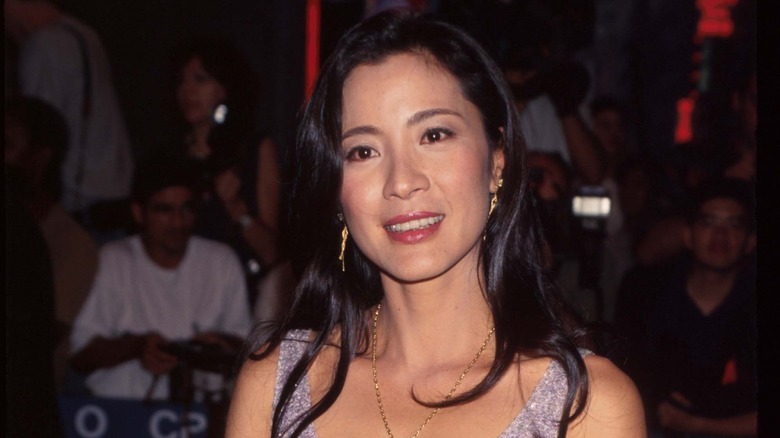
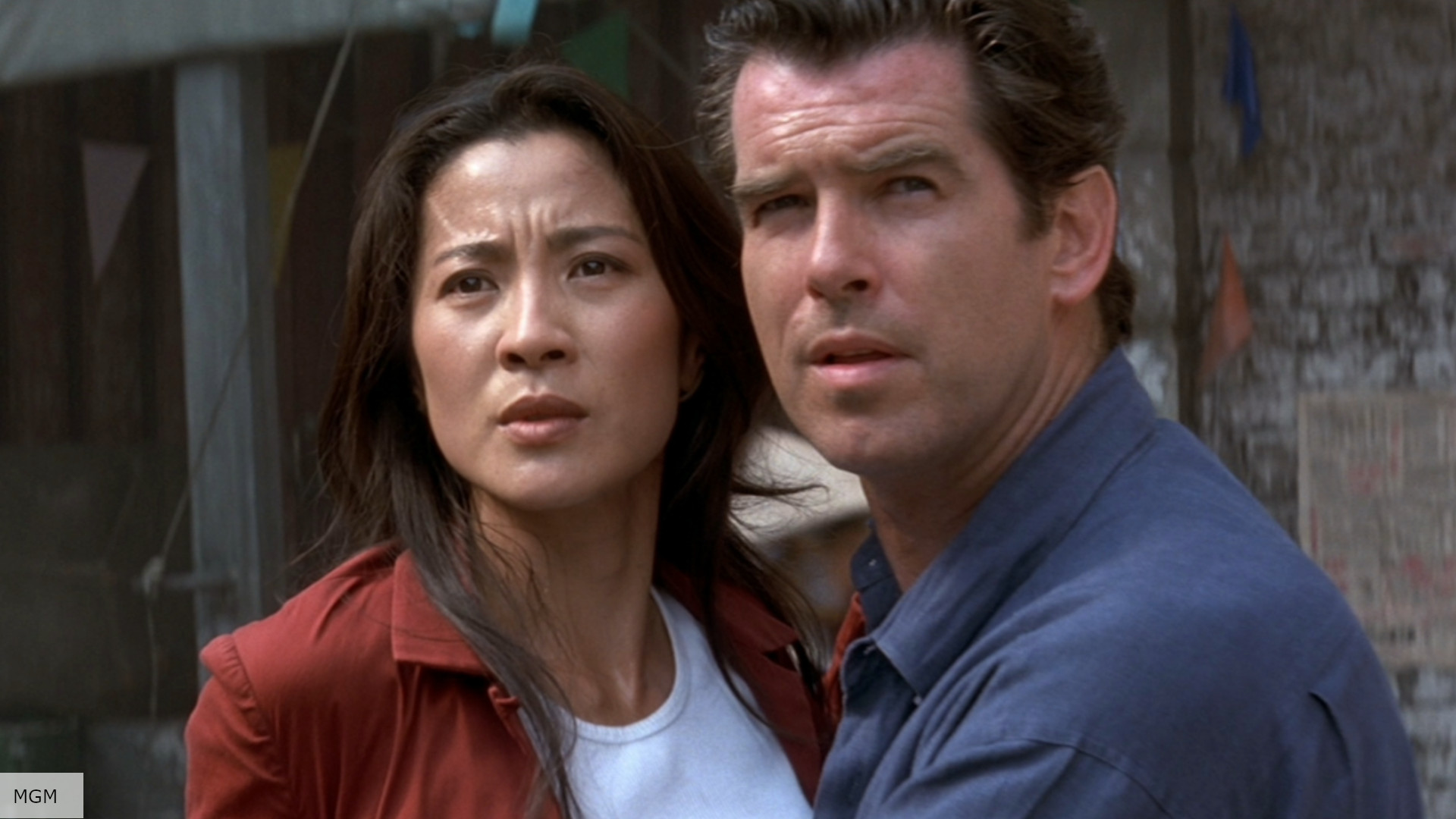
In Tomorrow Never Dies, Yeoh played Chinese intelligence officer Wai Lin opposite Pierce Brosnan’s James Bond. The character was not designed merely to be rescued or seduced. She had her own mission, combat ability and authority.
The official Bond franchise has described Wai Lin as Bond’s equal rather than his sidekick, and the film deliberately used Yeoh’s martial-arts abilities to reinforce that independence.
For Yeoh, the role was important for another reason.
She had grown up in Asia seeing people who looked like her occupy every type of role. Entering Hollywood made her aware of how narrowly Asian performers were often represented. She later described Tomorrow Never Dies as a turning point because Wai Lin could stand beside one of Western cinema’s most famous heroes without being treated as inferior.
Yet even that breakthrough did not immediately produce a flood of complex Hollywood roles.
Crouching Tiger Proved She Was More Than an Action Star
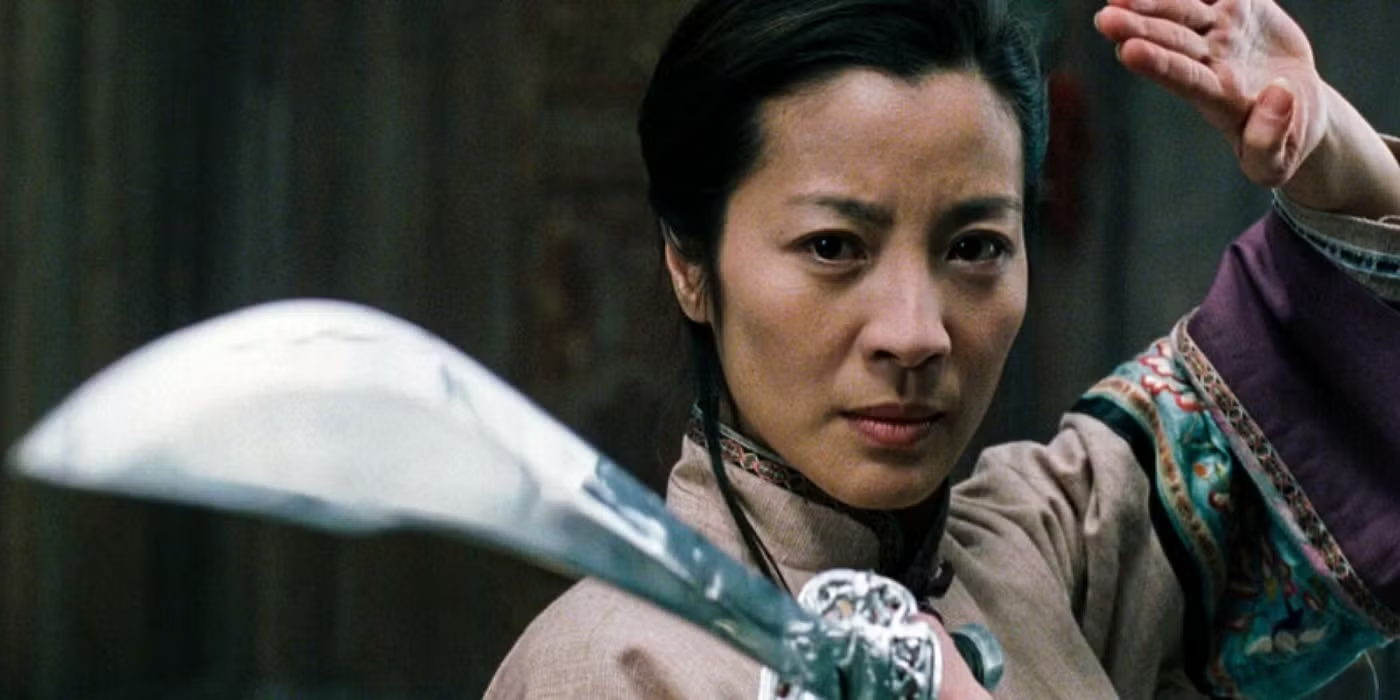
Ang Lee’s Crouching Tiger, Hidden Dragon gave Yeoh another opportunity in 2000.
As Yu Shu Lien, she combined the physical command audiences already knew with restrained romantic longing and emotional maturity. The performance earned her a BAFTA nomination for Leading Actress.
Making the film was physically painful.
Yeoh injured her knee early in production and required surgery before returning to complete the movie.
The performance demonstrated something that would become increasingly important later in her career: her greatest strength was never simply the ability to perform action.
It was her ability to make physical movement express character.
A fight could communicate heartbreak, loyalty, anger or love before a line of dialogue was spoken.
Still, Hollywood frequently offered Asian women roles that Yeoh found limiting. She later recalled waiting years for material that felt worthwhile rather than accepting parts based on stereotypes.
A New Generation Finally Saw What Hollywood Had Missed
Yeoh continued working internationally in movies including Memoirs of a Geisha and eventually television through Star Trek: Discovery, where she played Philippa Georgiou.
Then Crazy Rich Asians arrived in 2018.
As Eleanor Young, the intimidating mother of Henry Golding’s Nick, Yeoh could easily have played a conventional disapproving parent. Instead, she worked with director Jon M. Chu to give Eleanor greater complexity, believing the character needed to be understood rather than reduced to cruelty.
The film became culturally significant for its contemporary Asian and Asian American representation. Yeoh later said its success changed how Asian characters could be seen onscreen—not merely as historical figures, stereotypes or background characters, but as people occupying the center of modern popular entertainment.
Marvel’s Shang-Chi and the Legend of the Ten Rings followed in 2021, with Yeoh playing Ying Nan opposite Simu Liu and Tony Leung.
Yet after decades of international fame, one thing was still missing.
A major American movie had never truly been built around Michelle Yeoh.
Evelyn Wang Changed Everything
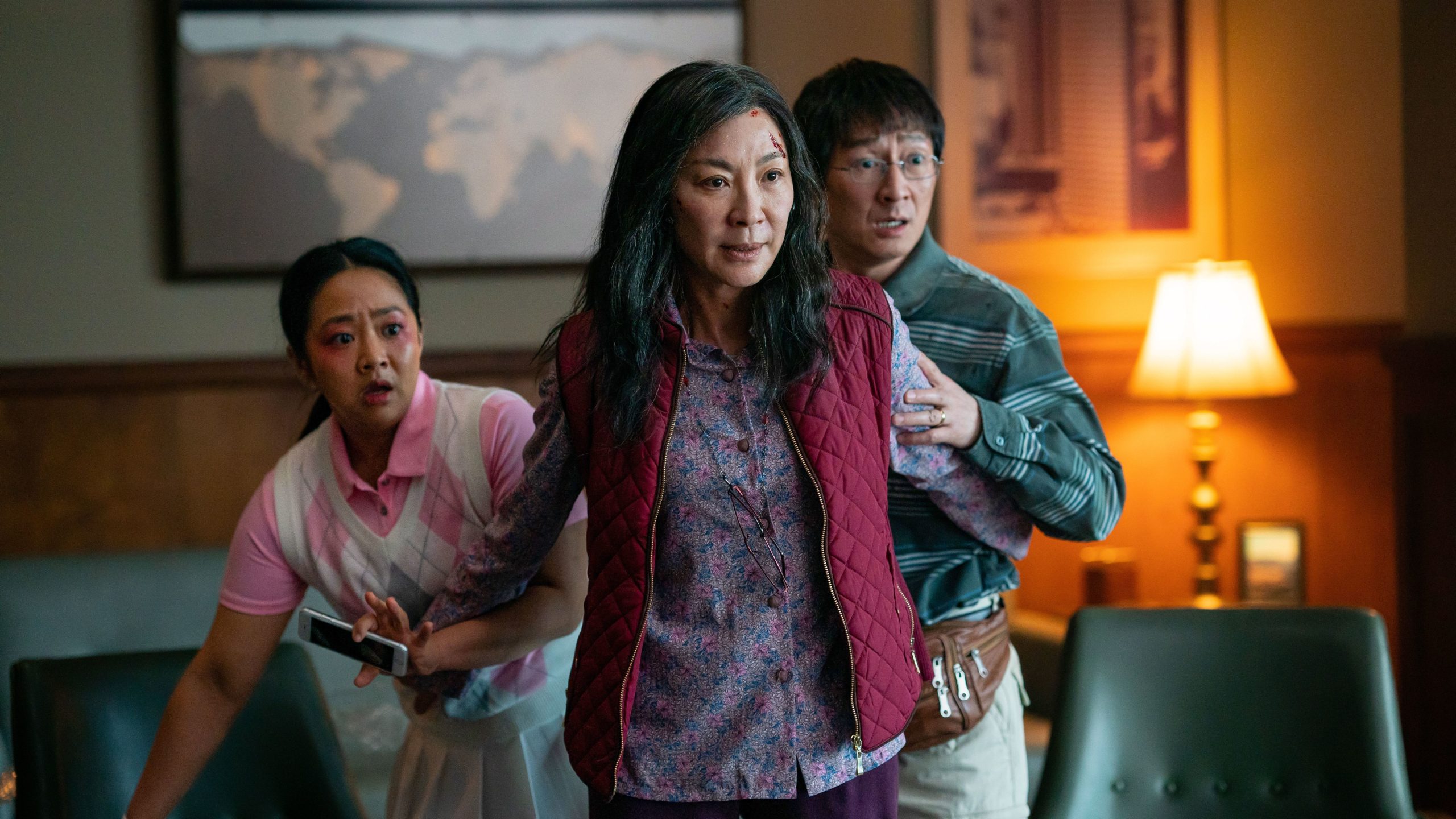
When Daniel Kwan and Daniel Scheinert offered Yeoh Everything Everywhere All at Once, she recognized what made Evelyn Wang different.
Evelyn was not an elegant warrior, queen or glamorous international figure. She was an exhausted immigrant mother running a laundromat, struggling with taxes, her marriage and her relationship with her daughter.
Then the multiverse exploded around her.
The role allowed Yeoh to draw upon virtually every chapter of her career—martial arts, comedy, romance, drama and physical performance—while keeping the emotional story centered on an ordinary woman.
Yeoh had waited roughly 25 years after entering Hollywood for a leading American role of that scale.
On March 12, 2023, the Academy finally called her name.
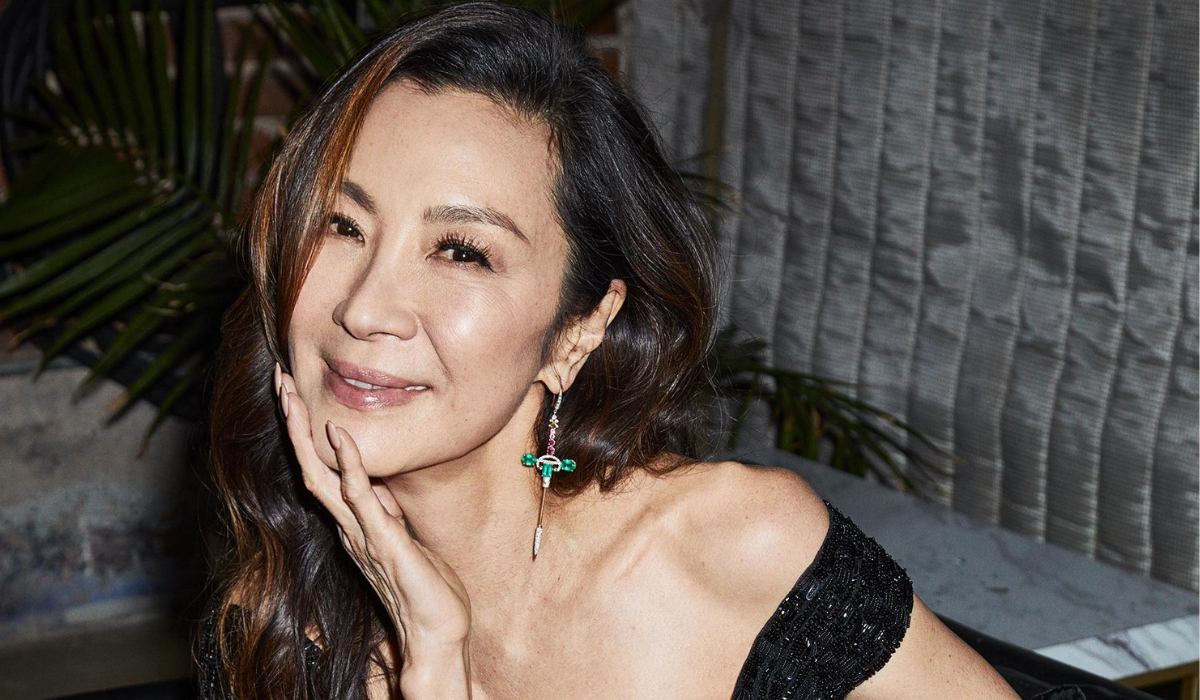
Everything Everywhere All at Once won seven Oscars, including Best Picture, while Yeoh became the first Asian woman to win Best Actress.
Standing onstage, she turned her own experience into a message for women who had been told opportunity diminishes with age: never accept the idea that your prime has already passed.
The Oscar Was Not an Ending
Yeoh did not treat the Academy Award as a retirement gift.
She joined Jon M. Chu again as Madame Morrible in Wicked and returned in 2025’s Wicked: For Good. She also revisited Philippa Georgiou in Star Trek: Section 31 in 2025.
Her next major chapter takes her into another celebrated science-fiction universe. Yeoh stars with Hunter Schafer in Blade Runner 2099, an eight-episode limited series scheduled to premiere on Prime Video on November 25, 2026. Yeoh plays Olwen, a Replicant approaching the end of her life.
It is a remarkable destination for someone whose original career plan disappeared because of a back injury.
Michelle Yeoh lost ballet, entered movies almost by accident, fought for the right to perform action, retired, returned, crossed from Hong Kong into Hollywood and spent years working inside an industry that often could not imagine enough roles for women like her.
Then the industry changed enough to finally give her Evelyn Wang.
Her Oscar did not create Michelle Yeoh’s greatness.
It simply forced Hollywood to recognize a career that had been proving it for nearly 40 years.