His Daughter Asked Strangers for a Few Birthday Cards — Nearly 100,000 Arrived for the 96-Year-Old WWII Veteran
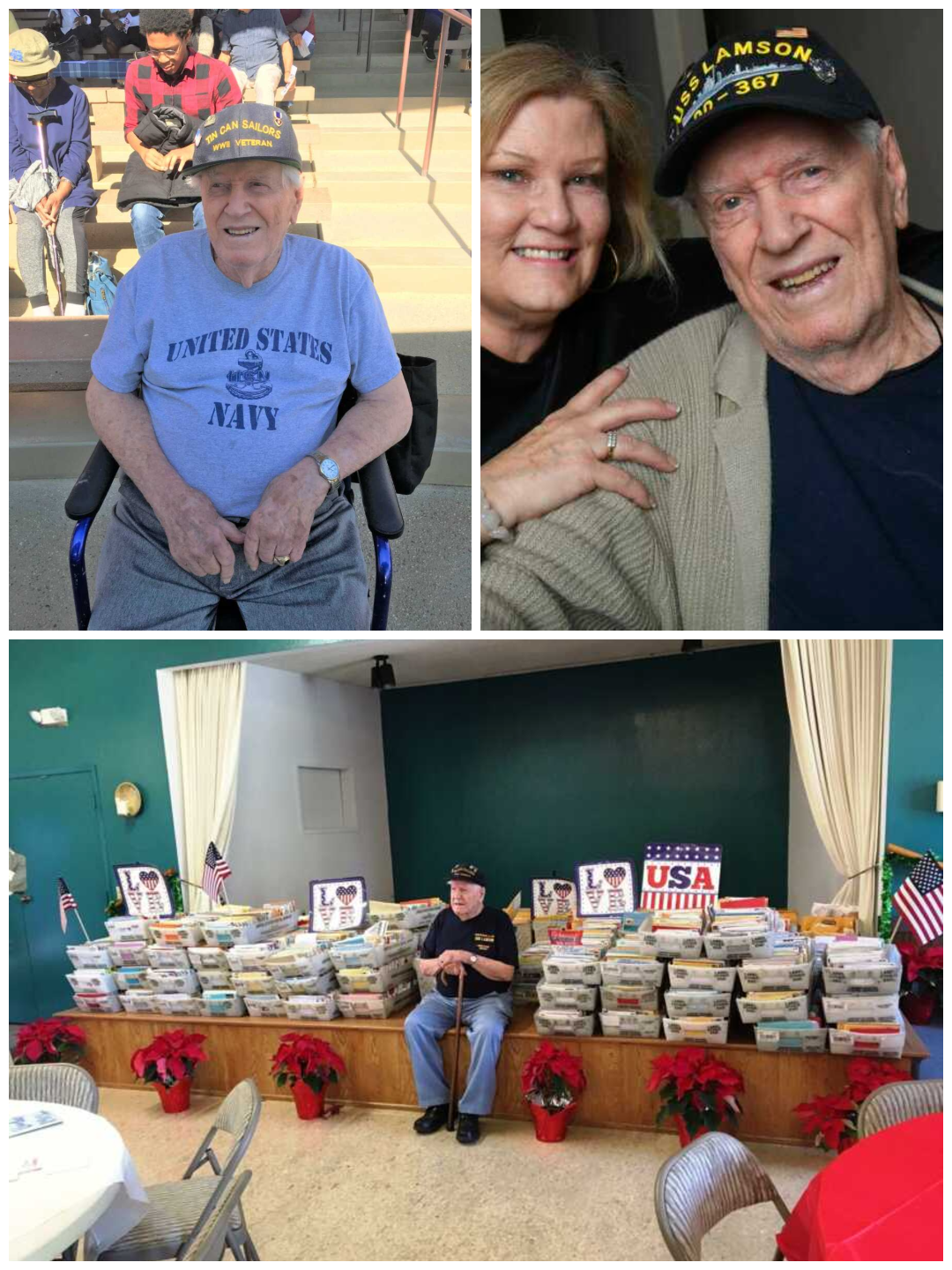
Sue Morse expected a modest response when she asked people online to help make her father’s 96th birthday feel a little less lonely.
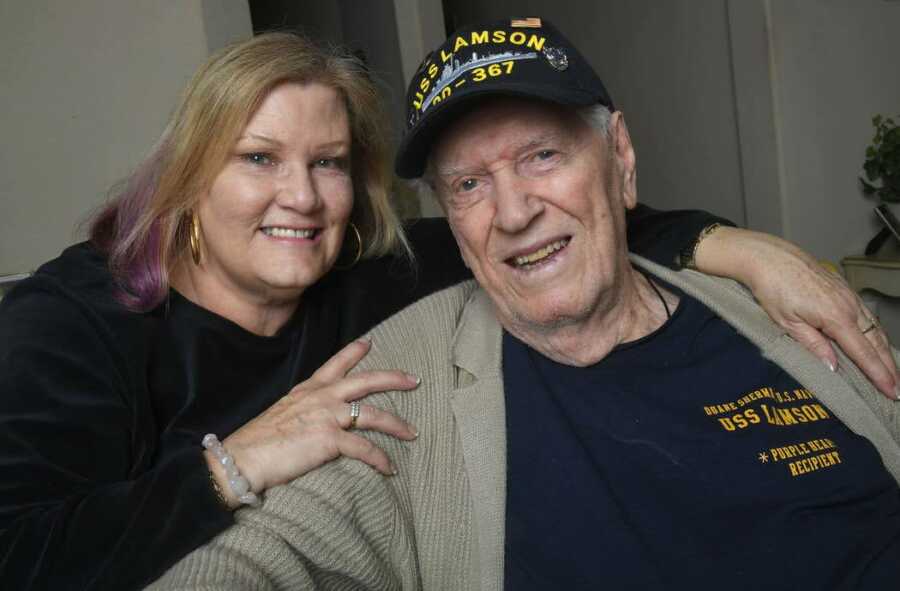
Her father, Duane Sherman, had outlived his old friends and college buddies. A World War II Navy veteran and Purple Heart recipient, he had reached an age when there were fewer familiar names left to write his address on an envelope.
So Sue made a simple Facebook request.
Her dad was turning 96, she explained, and probably would not receive many birthday cards. If anyone wanted to send one, she provided her personal post office box.
She hoped a few strangers might respond.
Instead, the request traveled far beyond her circle of friends.
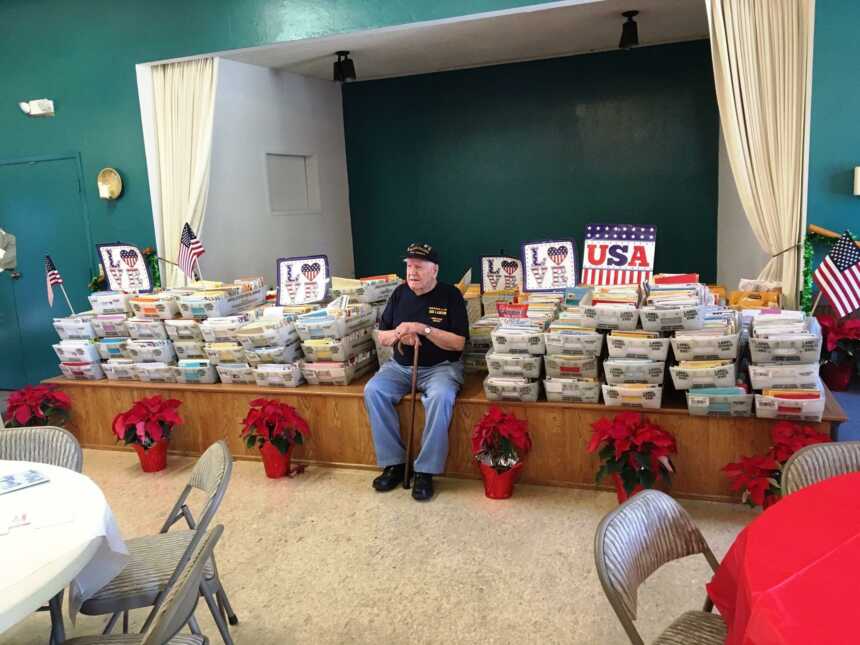
By the time the outpouring was over, nearly 100,000 birthday cards had reached Sherman from all 50 states and roughly 16 countries.
A Facebook Post Became Something Much Bigger
Sue realized the request was spreading when friends in New Jersey began telling her they had seen the post only days after she shared it.
Then news organizations began contacting the family.
Soon, cards were arriving not by the dozens, but by the thousands.
Sherman was almost completely blind by then, which meant Sue became his eyes for the mountain of mail.
She and several friends formed what they jokingly called the “card squad.” Once a week, they gathered at a friend’s house and worked through enormous stacks of envelopes.
On some days, they opened between 5,000 and 7,000 cards.
The volume was staggering.
But Sue did not want the messages to become merely a statistic.
Whenever she found a particularly personal story or heartfelt note, she saved it and read it aloud to her father. She eventually kept approximately 4,000 cards at her own home.
Some people sent far more than paper greetings.
Packages included shirts, sweatshirts, baseball caps, gift cards and pieces of wartime memorabilia.
Whenever someone included a gift or an especially meaningful message, Sue tried to send a personal reply on her father’s behalf.
For her, the response carried a message of its own.
It showed her that people had not forgotten the generation her father represented.
He Had Joined the Navy at 19
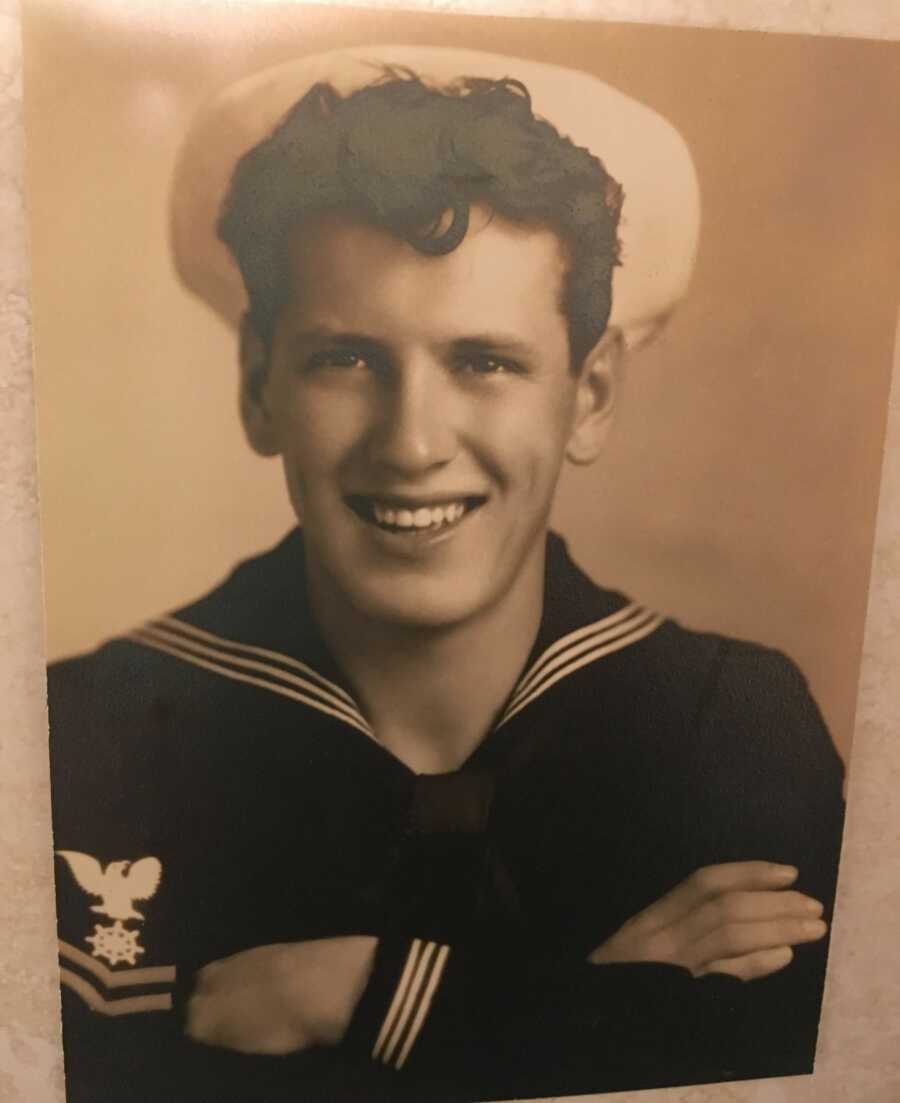
Long before strangers around the world knew Sherman as the elderly veteran receiving bins of birthday cards, he had been a 19-year-old from a small Kansas town eager to serve.
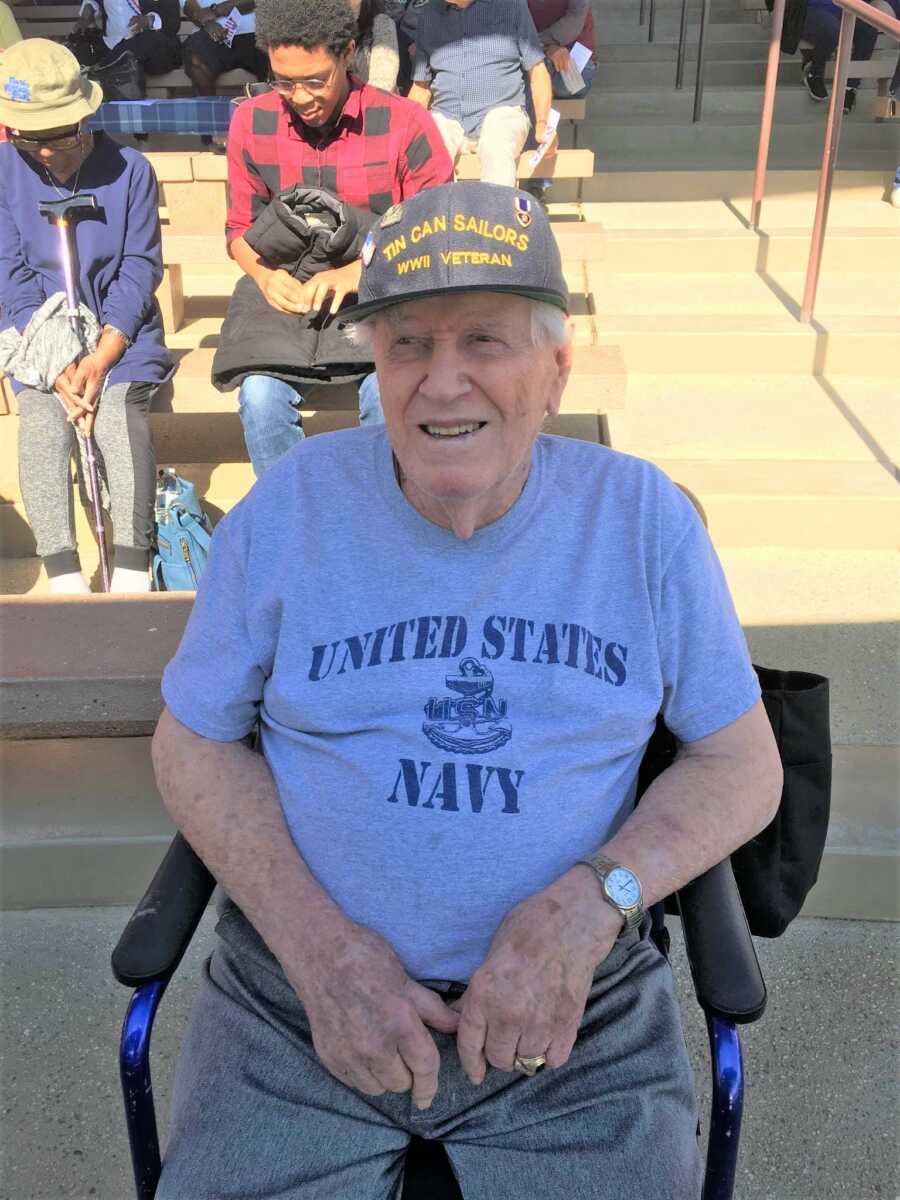
In January 1942, shortly after the attack on Pearl Harbor, he entered the U.S. Navy.
Sherman had wanted to enlist earlier, but his mother initially urged him to wait.
After Pearl Harbor, that changed.
Within weeks, he was in the Navy.
Sherman eventually served aboard the USS Lamson, DD-367, and spent about three and a half years in uniform during World War II.
His service would take him into one of the war’s most frightening moments.
On Dec. 7, 1944, during the Battle of Ormoc Bay off the Philippines, a kamikaze aircraft struck the Lamson.
Sherman and other sailors escaped the damaged ship and waited for rescue in a life raft.
Fragments from the attacking aircraft struck Sherman in the back.
For those wounds, he received the Purple Heart.
Sue said the shrapnel never caused him major long-term physical problems. Her father also never described himself as suffering from what later generations would recognize as post-traumatic stress.
His attitude toward the war was characteristically direct.
Looking back, he told his daughter that he and the other young men simply believed they were doing what the country needed them to do.
His Service Continued After World War II
Sherman left active Navy service in 1945 when World War II ended, but his connection to the military did not disappear.
During the Korean War, he joined the Naval Reserve and taught sonar at the Navy’s sound school in San Diego.
Decades later, that chapter of his life became part of his extraordinary 96th birthday celebration.
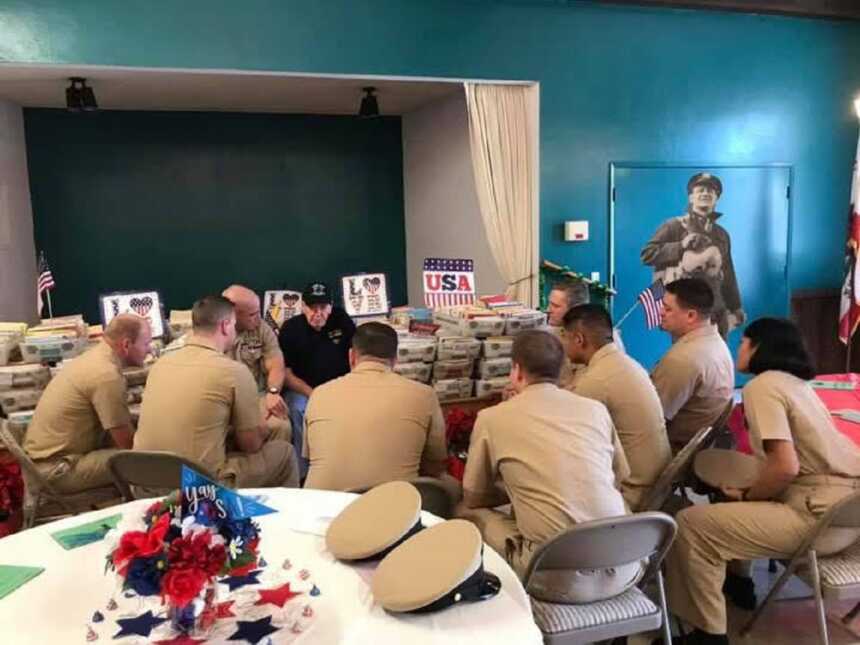
Sue arranged a special party for him, and approximately 10 to 15 Chief Petty Officers stationed at the San Diego sonar school made a two-hour drive to attend.
They sat with Sherman, listened to his stories and honored the aging sailor whose own service belonged to a very different generation of the Navy.
For Sue, the gathering added another emotional layer to a birthday already unlike anything her family had expected.
But even after the candles were blown out, the mail did not stop.
Birthday Cards Turned Into Year-Round Messages
The original request had been for Sherman’s birthday.
Strangers decided that was not enough.
Cards continued arriving for Valentine’s Day.
Then St. Patrick’s Day.
Father’s Day.
The Fourth of July.
People who had never met Sherman wanted him to know that their gratitude did not expire when his birthday ended.
Eventually, the flood of mail slowed, but a small group of correspondents remained.
Sue estimated that 10 to 12 people became regular card writers.
She tried to stay in touch with them, sometimes sending postcards with updates about her father.
What had begun as one viral Facebook plea had become a continuing relationship between an elderly veteran and strangers scattered across the country.
Sue Spent His Final Years Beside Him
The birthday-card campaign was also part of a much deeper father-daughter relationship.
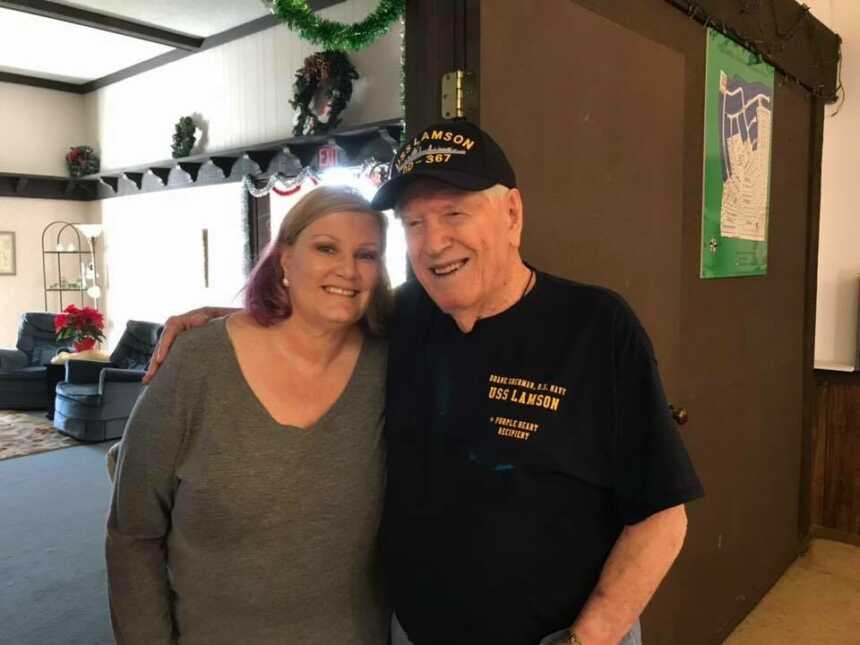
For nearly the final six years of Sherman’s life, Sue placed her own furniture in storage and moved in with him so she could become his caregiver.
She did not describe that sacrifice as a burden.
She considered it an honor.
Living together gave her something she might never otherwise have received: time to hear his wartime memories, learn the stories behind his years in uniform and understand more fully the young sailor her father had once been.
Sherman eventually suffered a series of small strokes.
He died in May 2021 at age 98.
Even then, the connections created through that birthday request were still visible.
One couple who had regularly mailed him cards traveled to attend his funeral.
Some of the Chief Petty Officers who had visited him for his birthday were there as well.
The strangers who had once known him only through a Facebook post had become part of the final chapter of his life.
His Story Changed How Sue Sees Other Veterans
After watching what those cards meant to her father, Sue became even more intentional about recognizing veterans she encounters.
If she notices an older man wearing a Navy cap, military shirt or something else identifying his service, she tries to stop and talk.
Sometimes she buys a veteran’s meal.
She sends messages and cards to friends who served in Vietnam.
Her reason is simple: each aging veteran carries experiences that may disappear if nobody takes the time to listen.
Sue began describing them as “living history.”
That idea became the enduring lesson behind the mountains of birthday mail.
Sherman had survived a kamikaze attack, floated in a life raft off the Philippines, carried shrapnel in his back and lived long enough to watch the world become almost unrecognizable from the one he knew at 19.
Yet one of the moments that touched him most deeply came near the end of his life.
His daughter asked whether a few strangers might remember him.
America answered with nearly 100,000 envelopes.