More Than 50 Years Later, Teri McMinn Is Still Answering the Question Everyone Asks About Texas Chain Saw Massacre
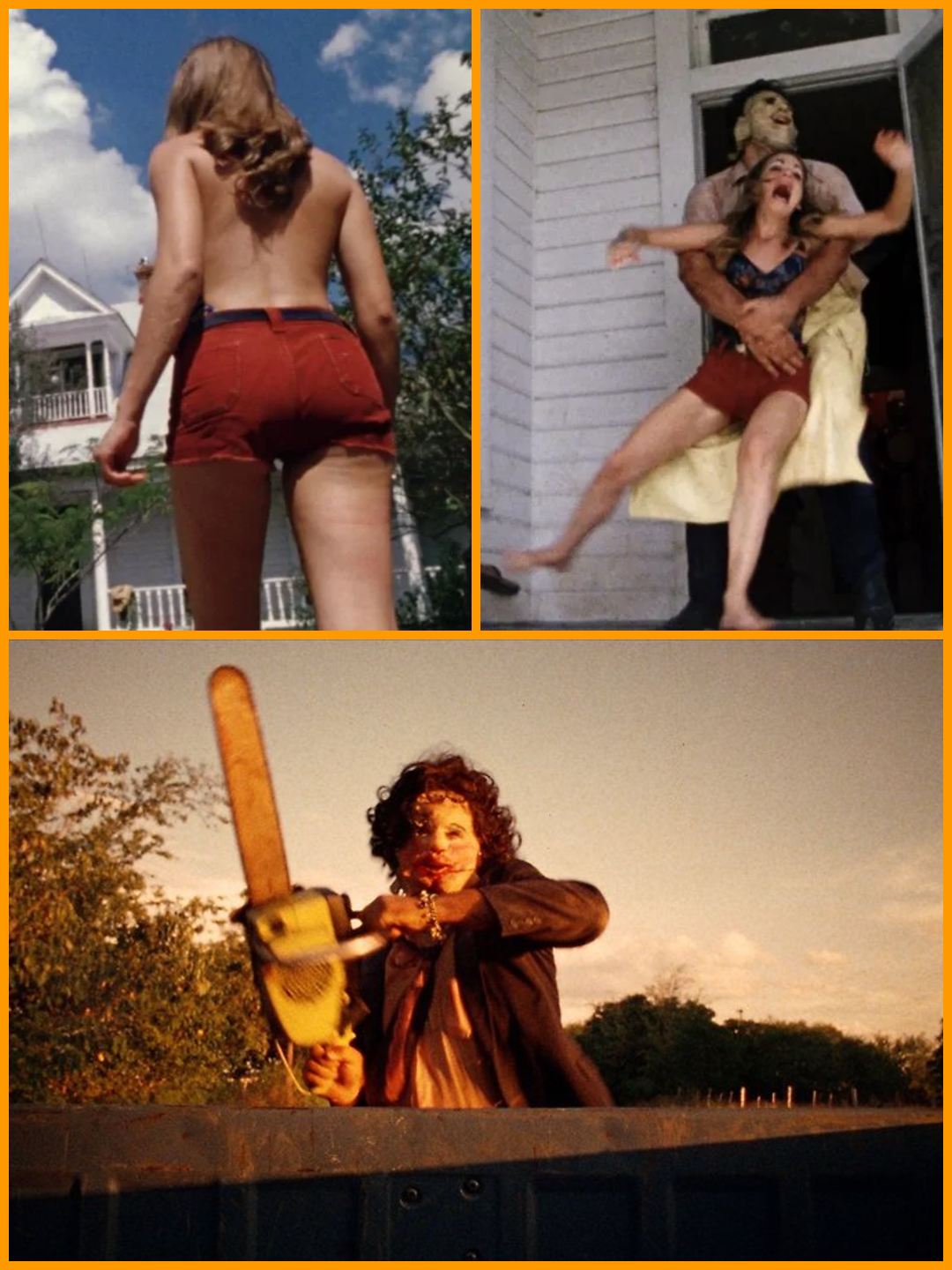
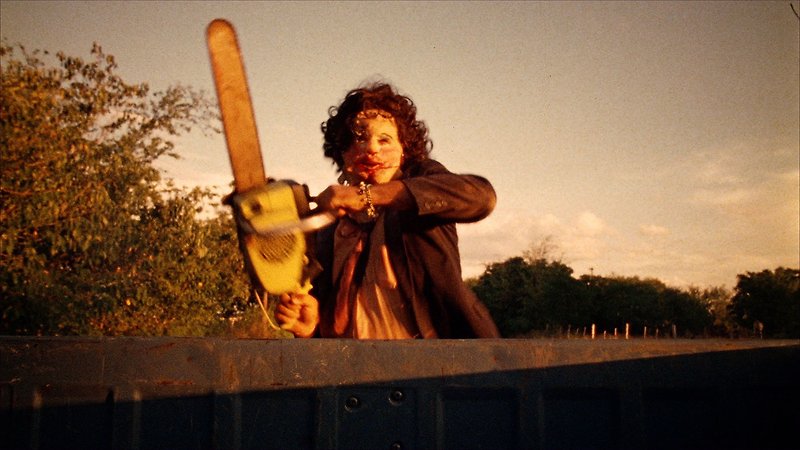
More than half a century after The Texas Chain Saw Massacre terrified moviegoers, Teri McMinn can still count on being asked about one particular moment.
It is the scene that made her character, Pam, unforgettable.
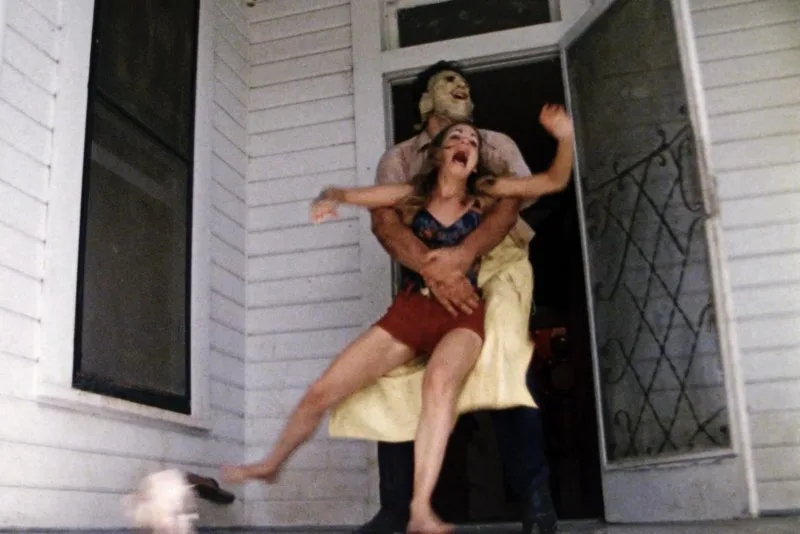
Leatherface grabs her, carries her into his gruesome workspace and appears to impale her on a meat hook. Pam is left hanging helplessly while another victim meets a horrifying fate nearby.
The sequence feels painfully real.
According to McMinn, however, the experience of filming it was far less brutal than generations of viewers have imagined.
“It was not painful,” she recalled while revisiting the making of the 1974 horror landmark. The sequence took several hours to complete, roughly from 9 a.m. until noon, but director Tobe Hooper never actually showed the hook entering Pam’s body. The terror came largely from what viewers believed they were seeing.
That distinction helps explain one of the movie’s enduring achievements: The Texas Chain Saw Massacre has spent decades living in people’s memories as something more graphic than what Hooper actually put on the screen.
The Scene Everyone Still Wants to Know About
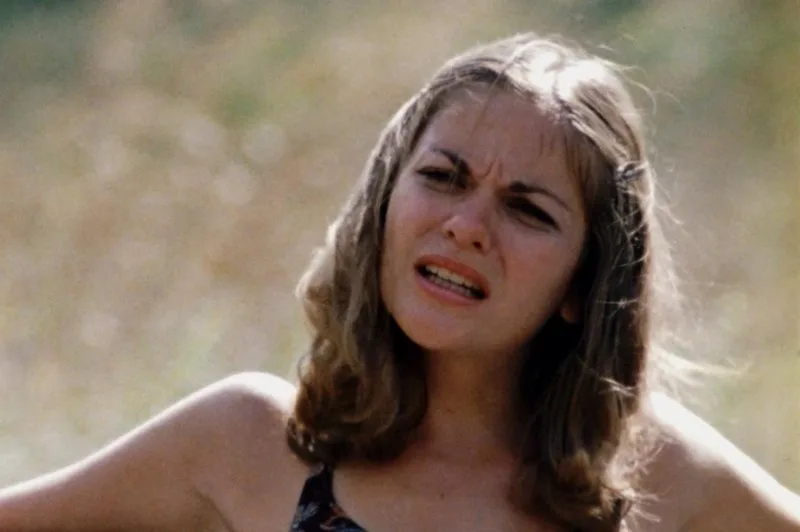
Pam begins the movie as one of five young travelers whose journey through rural Texas becomes increasingly unsettling.
Played by McMinn, she eventually encounters Leatherface, the towering masked killer portrayed by Gunnar Hansen.
Her meat-hook scene became one of the most recognizable images associated with the movie, yet its effectiveness depends heavily on suggestion.
The camera never gives audiences the explicit penetration shot they may remember seeing. Hooper instead allows positioning, performance, sound and the viewer’s imagination to complete the illusion.
McMinn says questions about how that sequence was created have followed her ever since.
“It’s the most asked question in the world,” she said.
For a film famous for making audiences squirm, that behind-the-scenes reality is revealing. Some of its most disturbing moments work precisely because they leave enough unseen for the mind to make them worse.
A Tiny Texas Production Became a Horror Landmark
Nobody involved could have known how long the movie would follow them.
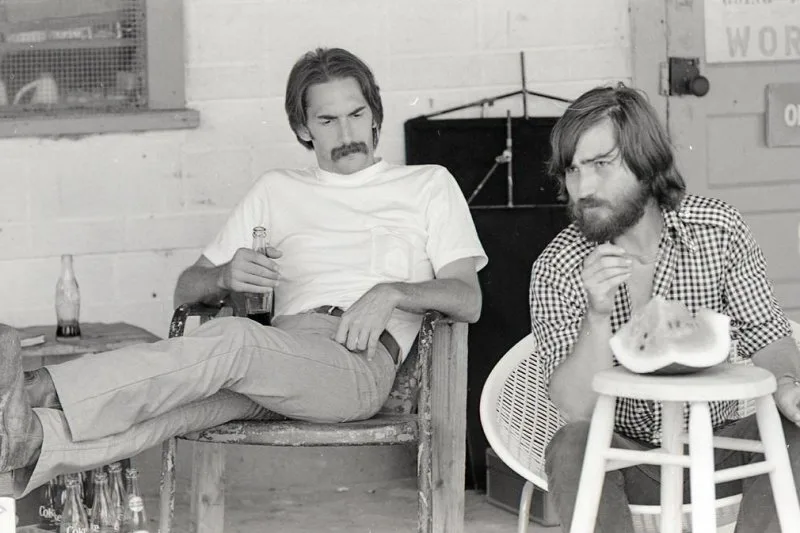
Hooper directed and co-wrote The Texas Chain Saw Massacre with Kim Henkel, assembling a largely local cast for a low-budget production shot in Texas.
McMinn herself had been working in theater when Henkel noticed her photograph in an Austin newspaper and invited her to read for the film.
She ultimately became Pam, joining Marilyn Burns, Paul A. Partain, William Vail and Allen Danziger as the group of young travelers at the center of the story.
Their trip places them in the path of Leatherface and a deeply disturbing family whose isolated existence becomes increasingly nightmarish.
What looked like a rough independent horror production in the Texas heat would ultimately outlive countless larger and more polished films.
Its atmosphere became part of the reason.
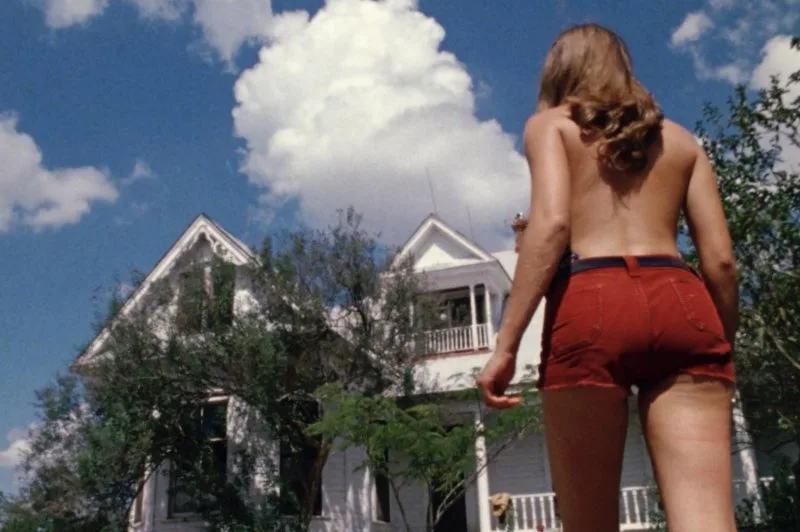
Rather than presenting an obviously artificial movie world, The Texas Chain Saw Massacre often feels dirty, sweaty and alarmingly immediate. The horror seems to unfold in places that could actually exist just beyond an ordinary rural road.
That sensation was no accident.
For Henkel, the terror was never meant to be simply a collection of killings.
The Family Represented Something Bigger
The movie’s violence works on the most immediate level possible: people enter the wrong place and encounter a family capable of horrifying acts.
But Henkel has described another idea beneath the surface.
The cannibal family also functioned as a metaphor for larger forces controlling and exploiting ordinary people.
That underlying idea gave the film a dimension beyond Leatherface’s mask and chainsaw.
The killers were frightening not simply because they were monsters hiding in rural Texas, but because the story reflected anxieties about power, survival and a world that seemed capable of consuming people.
For an audience, none of that had to be consciously understood for the movie to work.
The immediate terror was enough.
A van full of young people. An isolated landscape. An unfamiliar house. A chainsaw suddenly roaring to life.
Yet the uneasiness beneath those images helped the film retain its power long after its initial shock value should have faded.
Pam’s Birthday Became Part of the Movie’s Strange Legacy
McMinn’s connection with the film now includes a coincidence that has become an annual celebration.
August 18 has been embraced as Texas Chain Saw Massacre Day — and it also happens to be McMinn’s birthday.
In 2026, she turned 75.
She jokingly describes the date as a “double whammy for Pammy,” because birthday wishes and posts celebrating the movie arrive together. The attention becomes so intense, she said, that it can take her days to catch up with all the messages.
It is an extraordinary afterlife for a character from a scrappy horror film made when McMinn was a young actress.
Pam does not survive the movie.
But audiences never really let her disappear.
Fans continue to revisit her scenes, ask about the meat hook and celebrate the performers who helped create a film that has become embedded in horror culture.
What Audiences Remember Isn’t Always What They Saw
Perhaps the strangest achievement of The Texas Chain Saw Massacre is the gap between its reputation and what appears on screen.
Its title promises carnage.
Its atmosphere suggests almost unbearable brutality.
Its characters scream, run and stumble through environments designed to feel sickeningly real.
And yet one of its most notorious images — Pam hanging from that hook — depends largely on illusion.
Hooper did not need to show everything.
McMinn did not need to actually endure the agony that the scene suggests.
The audience did the rest.
That may be why the sequence still inspires questions more than 50 years later. Viewers remember the feeling of watching it so vividly that the imagined violence becomes almost indistinguishable from something explicitly shown.
For McMinn and Henkel, revisiting the movie decades later means separating those memories from what actually happened during production while also recognizing how extraordinary its legacy became.
A movie created far from the machinery of a major Hollywood production became a reference point for generations of filmmakers.
A character whose screen time ended in terror became permanently associated with one of horror cinema’s defining images.
And McMinn, now celebrating both her 75th birthday and the strange annual holiday connected to the movie, continues to answer the same fascinated question.
No, that infamous meat hook did not actually hurt her.
But the illusion worked so well that audiences are still asking about it more than five decades later.