Millions Watched Jackie Raise Her Eaglets Through Snow and Storms — Now Big Bear’s Beloved Bald Eagle Has Died at 14
For years, millions of people knew exactly where to find Jackie.
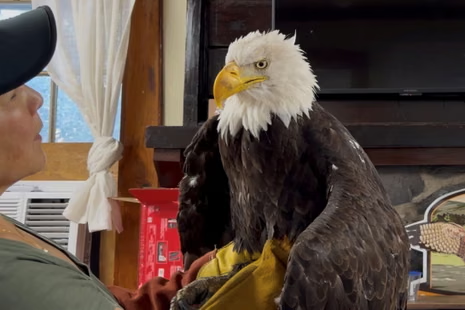
High above Big Bear Lake in California’s San Bernardino Mountains, the bald eagle could often be seen through a livestream camera sitting patiently on eggs, rearranging sticks beside her mate Shadow or sheltering young eaglets against snow and freezing wind.
Then, in July 2026, something changed.
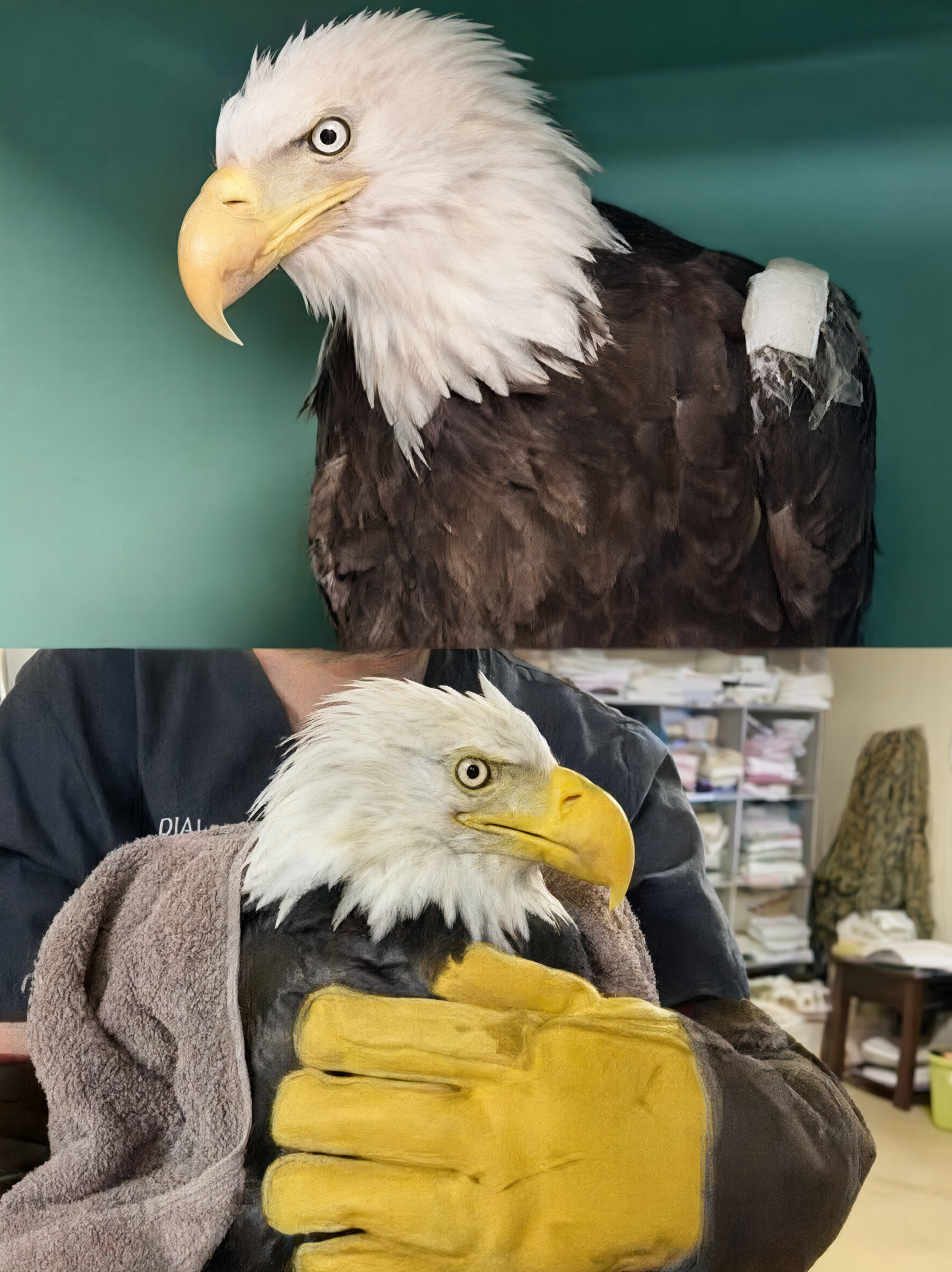
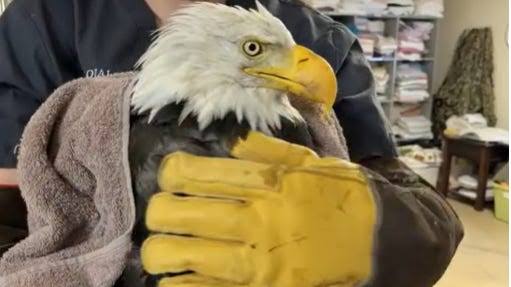
Jackie appeared weak. After a confrontation with two younger eagles, she was found on the ground and unable to fly normally. Wildlife rescuers rushed her for treatment, beginning more than three weeks of intensive efforts to save one of California’s most recognizable wild birds.
On Monday, Aug. 10, those efforts came to an end.
Jackie died after her condition continued to deteriorate despite round-the-clock medical care.
She was 14.
Jackie Became Far More Than a Bird on a Camera
Jackie’s rise to unlikely internet fame began with the Big Bear eagle nest camera operated by Friends of Big Bear Valley.
The livestream allowed viewers around the world to watch bald eagles in an unusually intimate way.
There was no script and no guarantee of a happy ending.
People saw eggs laid and eggs lost. They watched brutal winter storms cover the nest in snow. They saw chicks hatch, parents deliver food and young eagles eventually leave the nest.
At the center of much of that story was Jackie.
She was believed to have hatched in Big Bear Valley in 2012, making her especially significant to those following the local bald eagle population.
Jackie eventually became part of the nesting pair watched by the cameras, forming a partnership with Shadow that drew an enormous audience.
Their daily behavior often became its own form of entertainment.
Viewers watched them bring branches to the nest, argue over positioning, trade incubation duties and work together to raise their offspring.
During periods when people around the world were isolated at home, especially during the pandemic years, the livestream became a source of comfort for many viewers.
She Became Famous for Sitting Through the Snow
One of Jackie’s most memorable qualities was her persistence.
Big Bear’s high-elevation winters regularly brought punishing conditions to the nest.
Snow could accumulate around her while temperatures dropped, yet Jackie frequently remained over her eggs.
In 2024, viewers watched as she stayed on the nest for more than two and a half days during a winter storm.
Scenes of the eagle almost disappearing beneath falling snow became some of the most striking images associated with her.
Not every nesting season ended successfully.
Some eggs failed to hatch.
Other young birds did not survive.
Those losses became part of the emotional experience for people who followed Jackie and Shadow year after year.
Yet each season, the pair returned to the rhythms of nest building, courtship and incubation.
That persistence helped turn Jackie into something more than a wildlife subject.
To many followers, she became a symbol of resilience.
2026 Brought Another Dramatic Nesting Season
Jackie’s final year began with both disappointment and hope.
Earlier in 2026, Jackie and Shadow had two eggs in their nest, but ravens entered while the nest was unattended and destroyed them.
The loss was difficult for longtime viewers.
Then Jackie laid again.
Two new eaglets eventually hatched: Luna and Sandy.
Their arrival gave viewers another opportunity to watch the family develop from tiny hatchlings into young birds preparing for independence.
Sandy’s name carried special meaning.
The eaglet was named in honor of Sandy Steers, the longtime executive director of Friends of Big Bear Valley, whose conservation work had helped bring Jackie and Shadow’s lives to audiences around the world.
By late June, both young eagles had fledged.
Their parents’ work appeared to be moving into another familiar stage as the eaglets explored beyond the nest.
Then Jackie’s behavior began causing concern.
A Fight With Two Eagles Led to Her Rescue
In mid-July, Jackie was seen in an altercation with two subadult bald eagles near the north shore of Big Bear Lake.
Observers noticed that she was not defending herself with her usual strength.
She appeared lethargic.
After the encounter, Jackie remained on the ground and seemed unable to fly.
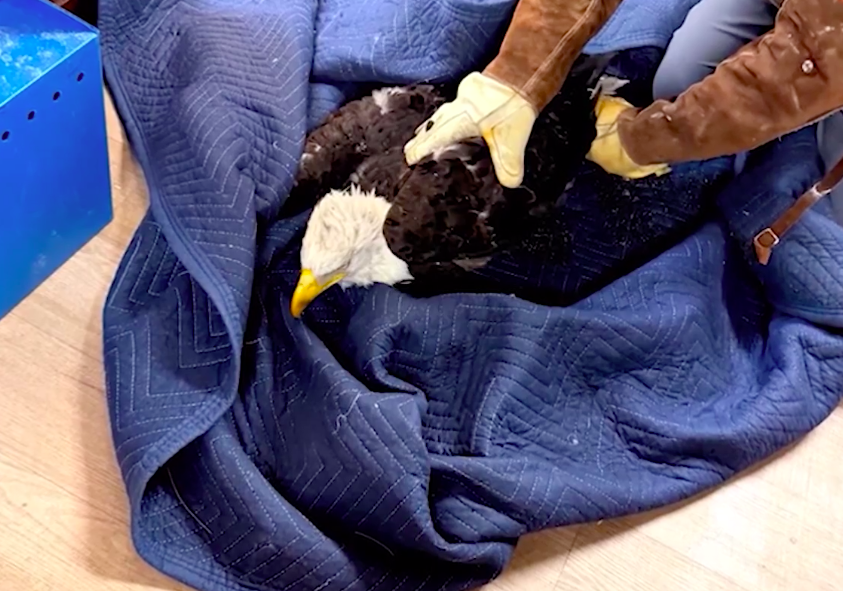
The San Dimas Raptor Rescue team responded and recovered her.
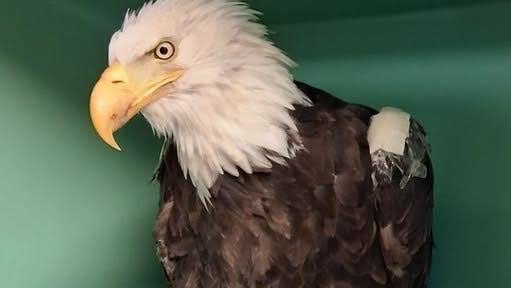
She was transported to the Ojai Raptor Center, where specialists quickly discovered that the situation was more serious than injuries from an eagle fight.
Jackie was suffering from severe anemia.
Veterinarians also found inflammation involving her kidneys.
The fight may have been the event that brought her condition to everyone’s attention, but medical teams suspected she had already been ill.
Another Bald Eagle Donated Blood to Help Save Her
Jackie’s treatment became intensive.
One of the most dramatic interventions came when she received a blood transfusion from Spirit, a female bald eagle living at CALM Zoo in Bakersfield.
For a time, there were hopeful signs.
Some kidney measurements improved.
Jackie’s blood levels also showed temporary progress.
But the anemia persisted.
Her packed cell volume—the proportion of blood made up of red blood cells—remained dangerously low and later fell again.
Veterinarians continued searching for the underlying cause.
Jackie underwent extensive testing while specialists from multiple organizations became involved in her care.
She received oxygen, supportive treatment and continuous monitoring.
For supporters watching from afar, every medical update became an emotional event.
A small improvement brought hope.
A setback brought fear.
By early August, Jackie’s condition had become critical again.
Doctors Could Not Find the Cause of Her Illness
Despite extensive testing, specialists were unable to determine exactly what was causing Jackie’s severe anemia.
Her condition continued to worsen.
The Ojai Raptor Center reported that she remained critically ill and required oxygen therapy and intensive monitoring.
Over the final days of her life, the medical team continued treatment while consulting other specialists.
But Jackie’s body was no longer responding enough to reverse the decline.
She died in the early hours of Aug. 10.
The raptor center described its staff as heartbroken and said caring for Jackie had been an extraordinary privilege.
Her remains were transferred into the care of the California Department of Fish and Wildlife.
Shadow Was Still Near Big Bear
As Jackie remained hospitalized, longtime viewers naturally wondered what was happening with Shadow.
He had continued to be seen around the Big Bear area, although not always regularly at the nest.
Friends of Big Bear Valley explained that this period of the year, after young eagles have fledged and before the next breeding season begins, can naturally involve less nest activity.
Luna and Sandy also gradually disappeared from the cameras.
Neither had been seen on the nest cameras since late July, suggesting they may have begun moving farther from the area as part of their normal transition toward independence.
For viewers accustomed to seeing the entire family together, the empty nest now carries a different meaning.
What will happen when the next breeding season arrives remains uncertain.
Jackie’s Legacy Reached Beyond the Nest
The fascination with Jackie and Shadow ultimately contributed to something larger than online viewing.
Their popularity helped draw attention to the landscape surrounding Big Bear Lake and efforts to protect bald eagle habitat from development.
Supporters rallied around a multimillion-dollar campaign to preserve nearly 63 acres near the eagles’ territory.
Tens of thousands of donations contributed to the effort.
In that sense, Jackie’s influence extended beyond the millions of hours people spent watching her through a screen.
Seeing her life unfold in real time helped transform an abstract idea—wildlife conservation—into something deeply personal.
People knew the individual eagle that used those trees.
They knew her mate.
They watched her offspring grow.
Protecting habitat no longer meant protecting an anonymous patch of wilderness.
It meant protecting Jackie’s home.
The Camera Will Continue, but Jackie Will Be Missing
Wild animals rarely become part of people’s daily routines.
Jackie did.
Viewers checked on her before work, watched her during storms and waited anxiously for eggs to crack.
They celebrated when eaglets hatched and mourned when nests failed.
For more than a decade, Jackie’s life unfolded without knowing that millions of people were following it.
She was simply doing what wild bald eagles do—surviving harsh winters, defending territory, raising young and returning repeatedly to the same mountain home.
That may be why her death has affected so many people.
The nest camera made an individual wild animal familiar without turning her into something she was not.
Jackie remained wild until the end.
Her final weeks were spent far from her familiar nest as veterinarians fought an illness they could not fully explain.
But the story she leaves behind remains visible across Big Bear Valley.
It is there in Shadow.
It is there in Luna and Sandy and the other eaglets she helped raise.
And it is there in the acres of mountain habitat that thousands of people decided were worth protecting after watching one bald eagle build a life among the pine trees.
Millions once opened a livestream to see what Jackie was doing that day.
Now the nest will look different.
But the reason so many people learned to care about it will remain.