Al Pacino in the 1970s: 8 Roles That Turned a Young New York Actor Into a Hollywood Legend
- NgoPhong
- August 12, 2026
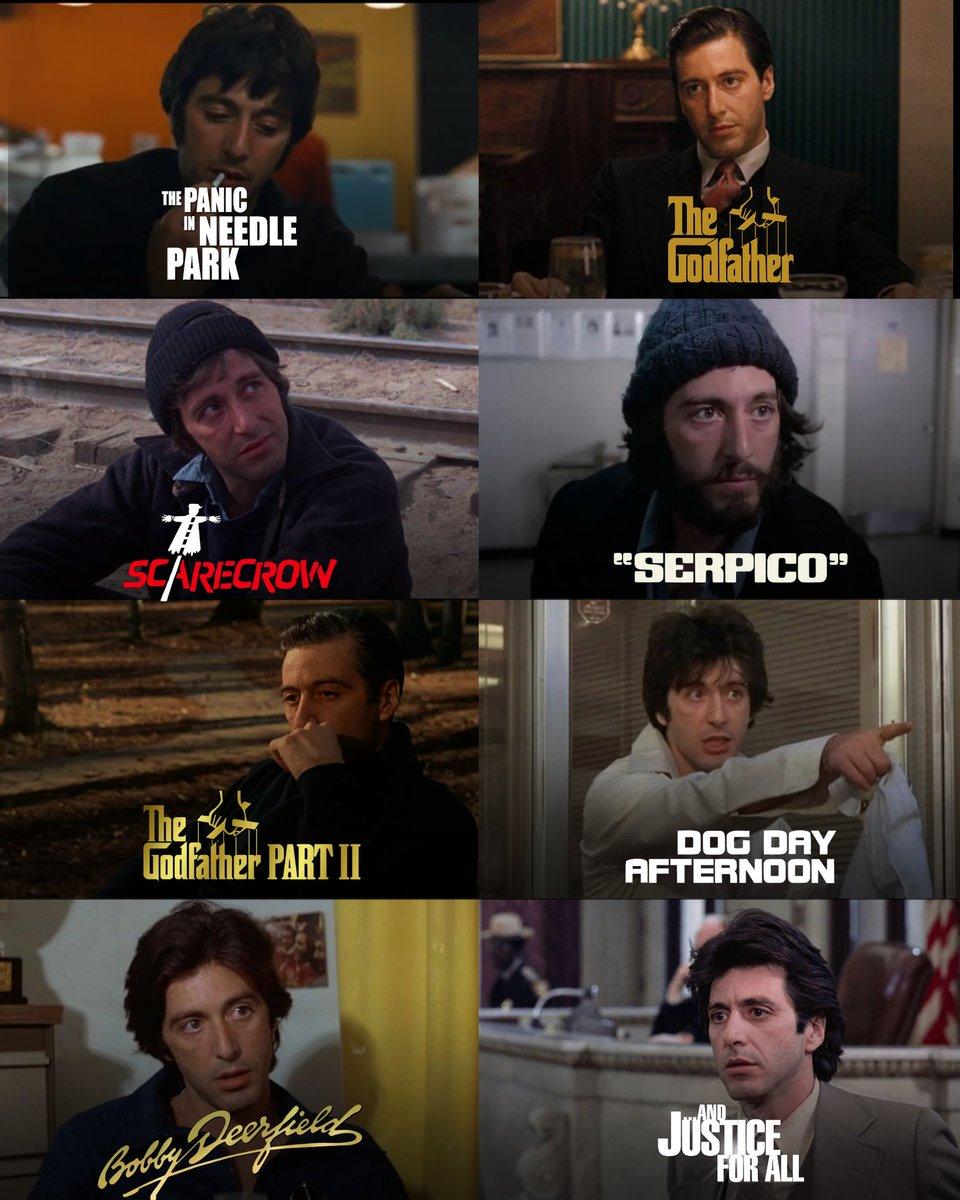
At the beginning of the 1970s, Al Pacino was hardly a movie star. By the end of the decade, he had played Michael Corleone twice, transformed himself into an honest cop battling corruption, turned a disastrous bank robbery into one of cinema’s great performances, and collected five Academy Award nominations.
The remarkable part is how quickly it happened.
Pacino’s first substantial film role arrived in 1971. Over the next nine years, he made only eight feature films — yet five of those performances would receive Oscar nominations. The Academy records show an extraordinary four consecutive nominated performances from The Godfather through Dog Day Afternoon, followed by another for …And Justice for All.
Together, those eight roles reveal the decade in which Pacino stopped being a promising New York actor and became one of the defining screen performers of his generation.
1. The Panic in Needle Park (1971) — Bobby
Before Michael Corleone, there was Bobby.
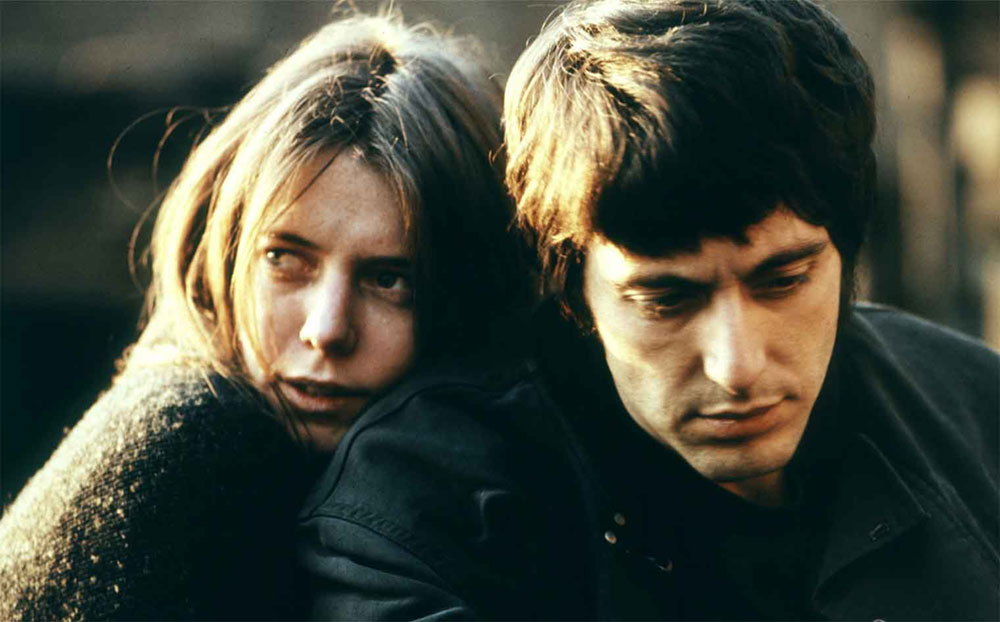
Jerry Schatzberg’s The Panic in Needle Park gave Pacino his first leading feature-film role, casting him as a small-time hustler and heroin addict living around Manhattan’s Upper West Side. The film follows Bobby’s destructive relationship with Helen, played by Kitty Winn, as addiction gradually consumes them.
Pacino was still largely unknown to movie audiences, and that anonymity worked in the film’s favor. He did not yet arrive carrying the weight of celebrity. Bobby feels nervous, charming, impulsive and dangerous in ways that seem almost documentary-like.
The movie also became an important bridge to what came next. Cannes later described Panic as the film that revealed Pacino to audiences.
Within a year, Hollywood would see him very differently.
2. The Godfather (1972) — Michael Corleone
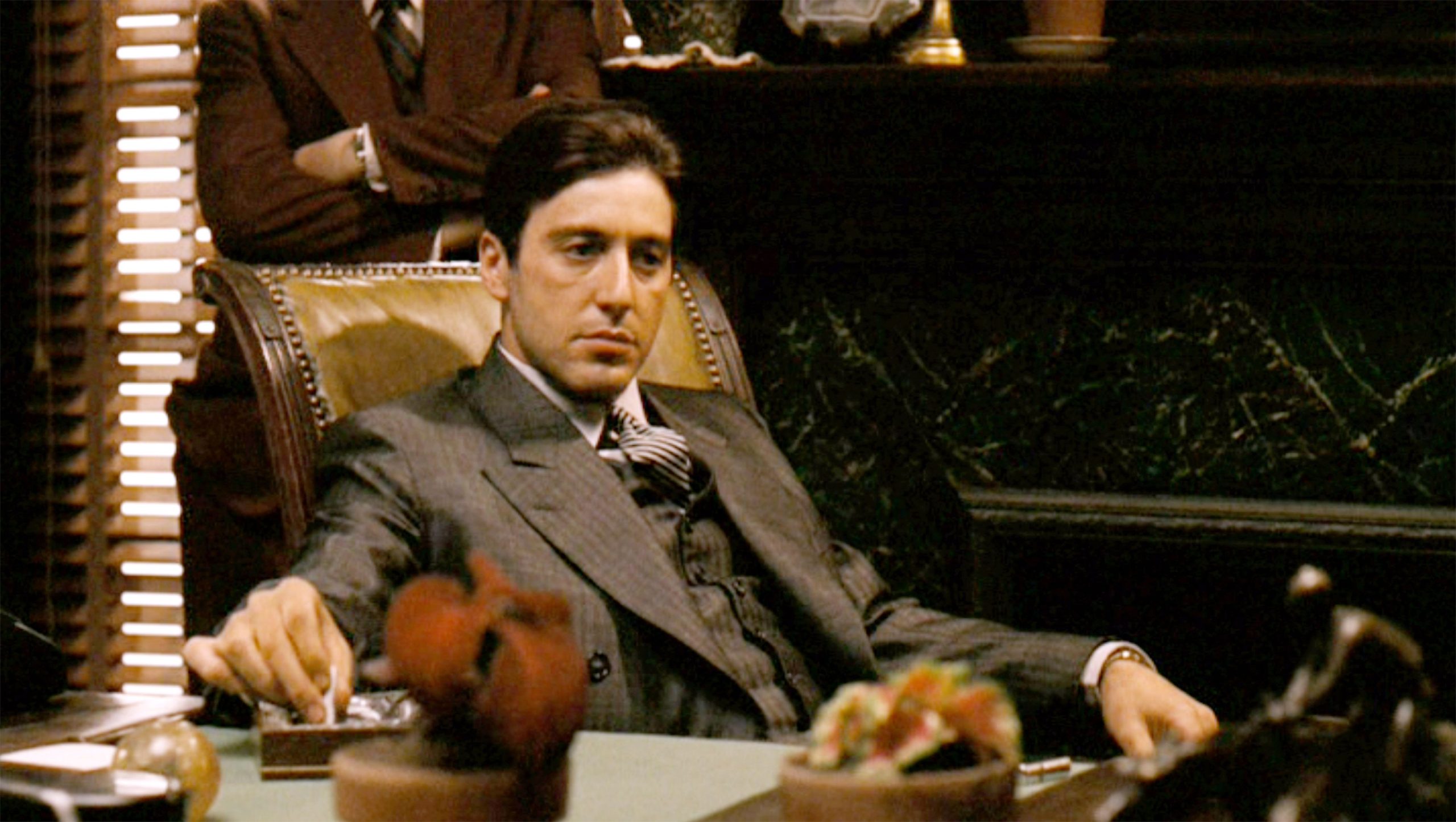
Francis Ford Coppola’s The Godfather changed Pacino’s career permanently.
Michael Corleone begins the film as the son who appears least interested in his family’s criminal empire. Pacino’s achievement is in making Michael’s transformation gradual. He does not suddenly become ruthless; the darkness seems to close around him scene by scene.
By the end, the young outsider has become the new Don.
Pacino received his first Academy Award nomination, for Best Supporting Actor.
The performance established many qualities that would define his early career: stillness, restraint and an ability to make silence feel threatening. Michael could dominate a scene without raising his voice.
Pacino was no longer merely promising. He was suddenly at the center of one of the most celebrated films in American cinema.
3. Scarecrow (1973) — Francis Lionel “Lion” Delbuchi
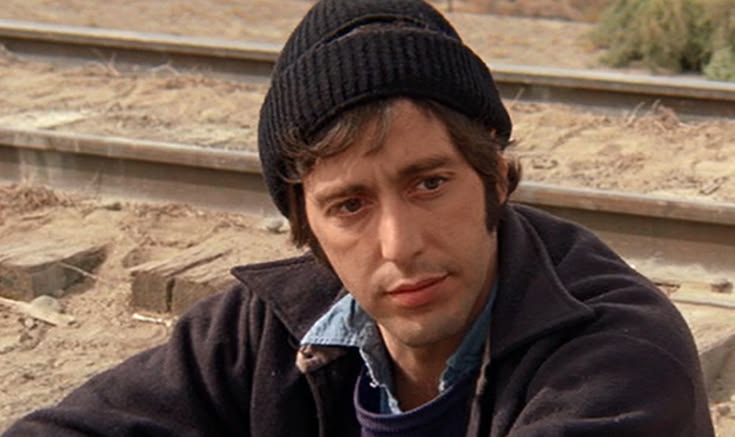
Pacino could have immediately chased another gangster role.
Instead, he made Scarecrow.
Directed by Jerry Schatzberg, the road movie paired him with Gene Hackman. Pacino plays Lion, a wandering former sailor trying to reconnect with the family he left behind, while Hackman plays Max, an ex-convict with plans to open a car wash.
Lion is loose, funny and vulnerable — almost the opposite of Michael Corleone.
The film won the top prize at the 1973 Cannes Film Festival, and Cannes has continued to celebrate it as a significant American film of the era.
Commercially, Scarecrow never became The Godfather. Artistically, however, it proved something crucial: Pacino’s intensity did not require crime-family mythology. He could disappear into a smaller, sadder and more fragile man.
4. Serpico (1973) — Frank Serpico
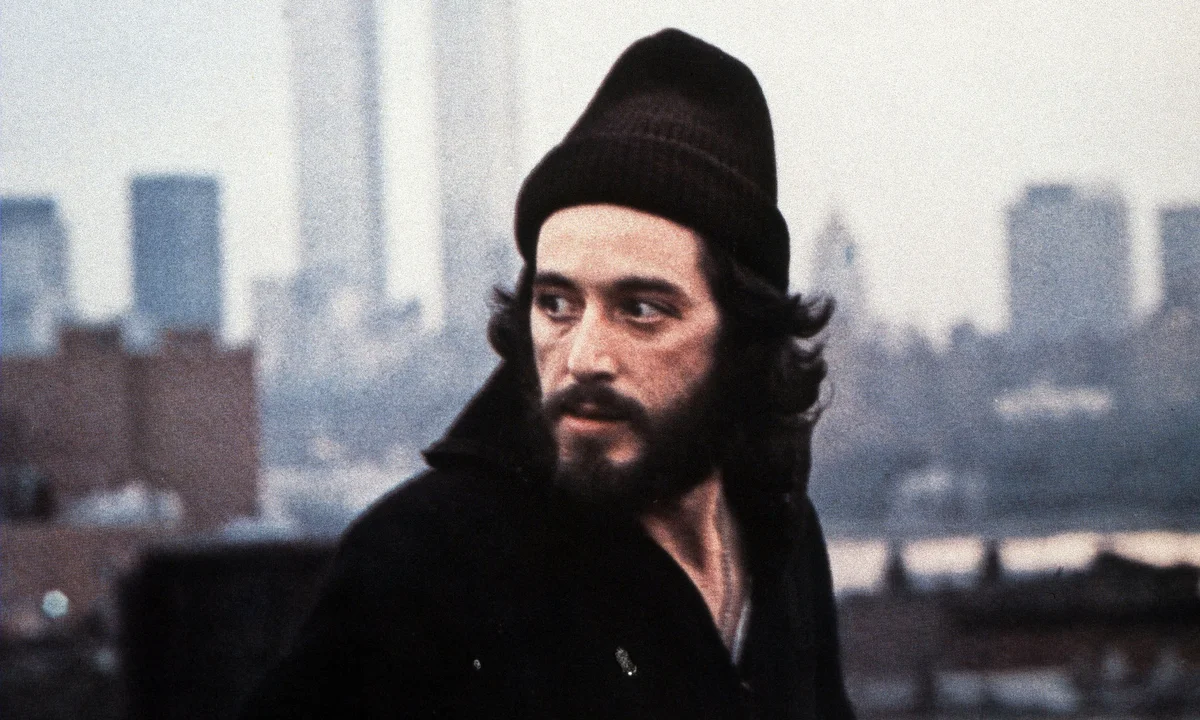
That same year, Pacino transformed again.
Sidney Lumet’s Serpico cast him as real-life New York police officer Frank Serpico, whose refusal to participate in corruption placed him in conflict with fellow officers.
Pacino lets the character evolve physically as well as emotionally. The increasingly bearded, unconventional Serpico appears to become more isolated as his determination hardens.
The role brought Pacino his first Best Actor Oscar nomination.
It also expanded his public image. Michael Corleone had shown that Pacino could portray a man surrendering to corruption. Serpico showed him moving in the opposite direction — a man refusing to compromise even when that refusal leaves him almost completely alone.
5. The Godfather Part II (1974) — Michael Corleone
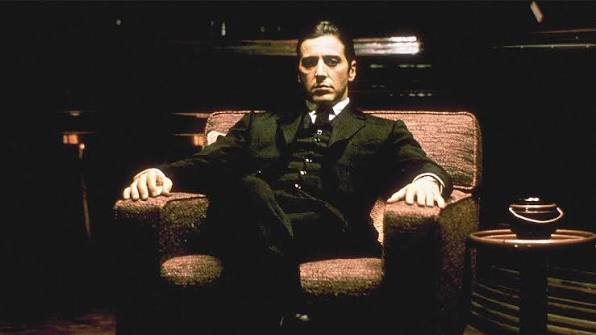
Returning to Michael Corleone could easily have become repetition.
Pacino instead made him colder.
In The Godfather Part II, Michael has acquired the authority he was only beginning to possess at the end of the first film. But power has not brought peace. It has made him suspicious, isolated and increasingly willing to destroy personal relationships in order to protect his empire.
The emotional transformation between the two films is enormous.
The young war veteran who once appeared separate from his family has become a man whose need for control leaves him almost spiritually empty.
Pacino received another Best Actor nomination, his third Oscar nomination in three consecutive years.
Michael Corleone remains one of Pacino’s defining characters because the two films allowed him to portray not simply a gangster, but the gradual corrosion of a human being.
6. Dog Day Afternoon (1975) — Sonny Wortzik
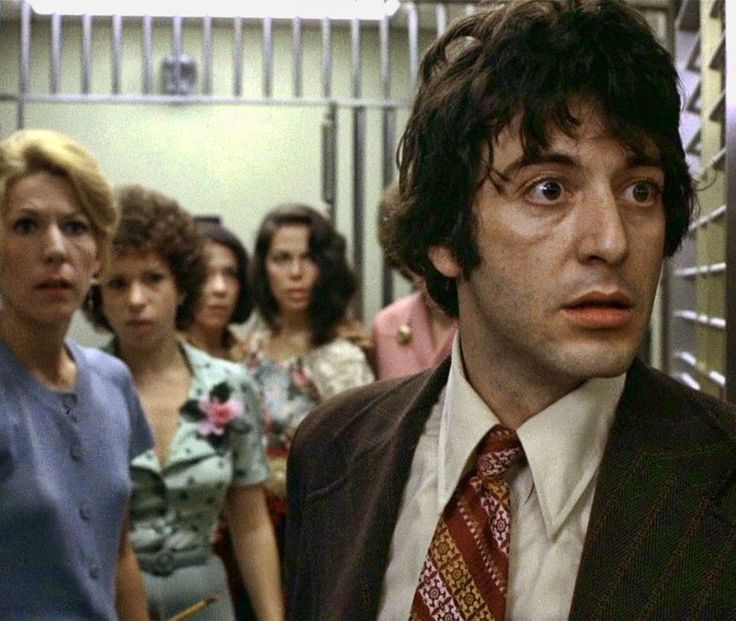
Then Pacino exploded.
Lumet’s Dog Day Afternoon gave him Sonny Wortzik, a Brooklyn bank robber whose supposedly straightforward crime collapses into a prolonged hostage crisis and media spectacle.
Where Michael Corleone keeps emotion buried, Sonny seems incapable of containing anything.
He sweats, shouts, improvises, negotiates and swings between confidence and panic.
Yet Pacino never reduces him to chaos. The character’s desperation gives the performance its humanity.
AFI lists Sonny alongside Michael Corleone and Frank Serpico among Pacino’s indelible screen characters, while the role earned him a fourth consecutive Oscar nomination.
By 1975, the range was impossible to miss: Pacino could dominate a film by barely moving, or by appearing ready to burst apart.
7. Bobby Deerfield (1977) — Bobby Deerfield
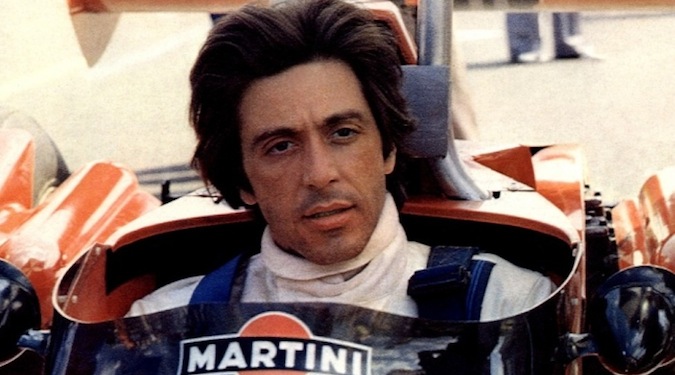
Pacino’s next choice was unexpectedly romantic.
Sydney Pollack’s Bobby Deerfield cast him as a successful American race-car driver competing in Europe who falls in love with Lillian Morelli, a terminally ill woman played by Marthe Keller.
The movie represented a deliberate move away from the urban intensity and crime-centered stories that had fueled Pacino’s rise.
Bobby is emotionally guarded, controlled and obsessed with understanding risk. His relationship with Lillian forces him toward questions that cannot be solved with precision.
The film was not destined to become one of Pacino’s signature classics, but his performance still earned a Golden Globe nomination for Best Actor in a Drama.
More importantly in the story of his decade, it demonstrated his willingness to take risks when Hollywood might easily have kept casting him as gangsters, cops and criminals.
8. …And Justice for All (1979) — Arthur Kirkland
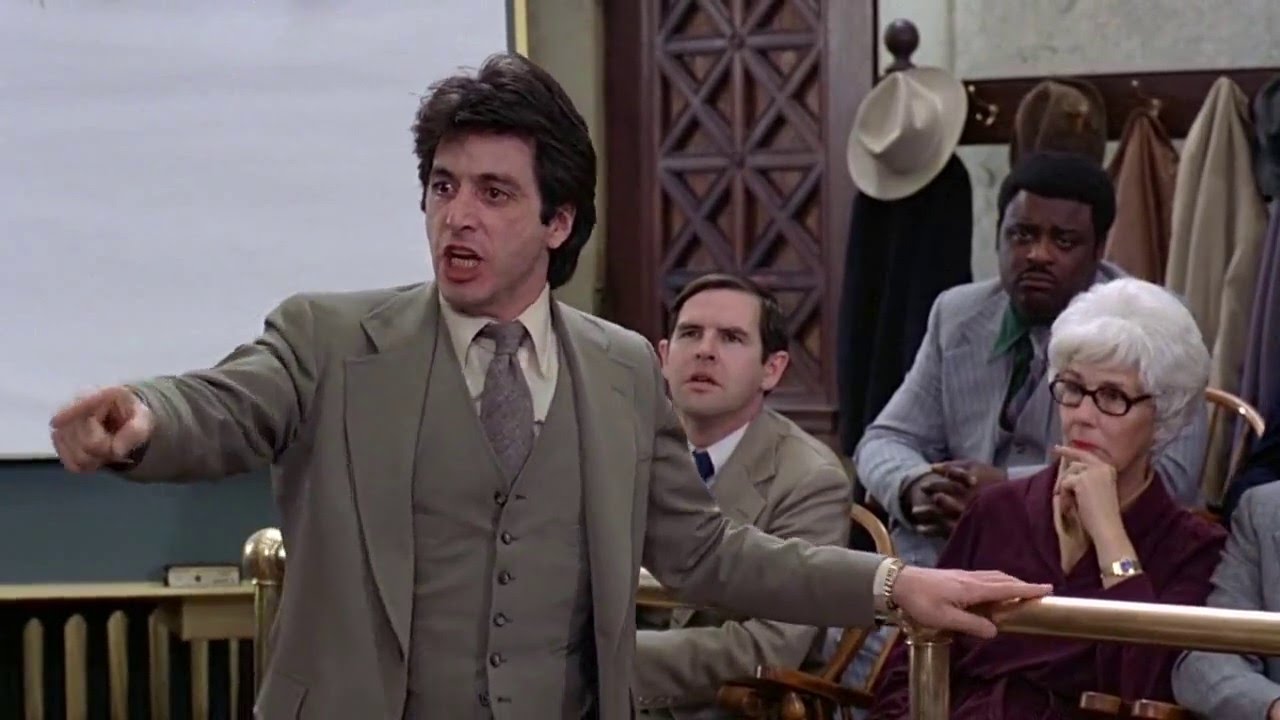
Pacino closed the decade in a courtroom.
In Norman Jewison’s …And Justice for All, he plays Arthur Kirkland, an idealistic Baltimore defense attorney increasingly disgusted by the contradictions and failures of the legal system.
The performance combines multiple versions of 1970s Pacino.
There is Serpico’s moral frustration, Sonny’s volatility and Michael Corleone’s ability to hold enormous tension beneath apparent control.
Eventually, that control breaks.
The film produced Pacino’s fifth Academy Award nomination of the decade, this time for Best Actor.
It was a fitting ending to an astonishing run.
Pacino entered the decade with almost no Hollywood identity. He left it with Michael Corleone, Frank Serpico and Sonny Wortzik already attached permanently to his name.
Five of those eight performances earned Oscar nominations. Scarecrow won Cannes’ top honor. Even the less celebrated Bobby Deerfield showed an actor determined not to become trapped by his own success.
The 1980s would bring Tony Montana and another iconic chapter. The Oscar itself would not arrive until Scent of a Woman years later.
But the legend had already been built.
It happened in the 1970s, eight roles at a time — from a desperate addict wandering New York to a lawyer finally unable to stay silent.