Greer Miller Was Told to Wait One Day. Her Instinct Said Baby John Shouldn’t

Two bottles were enough for Greer Miller.
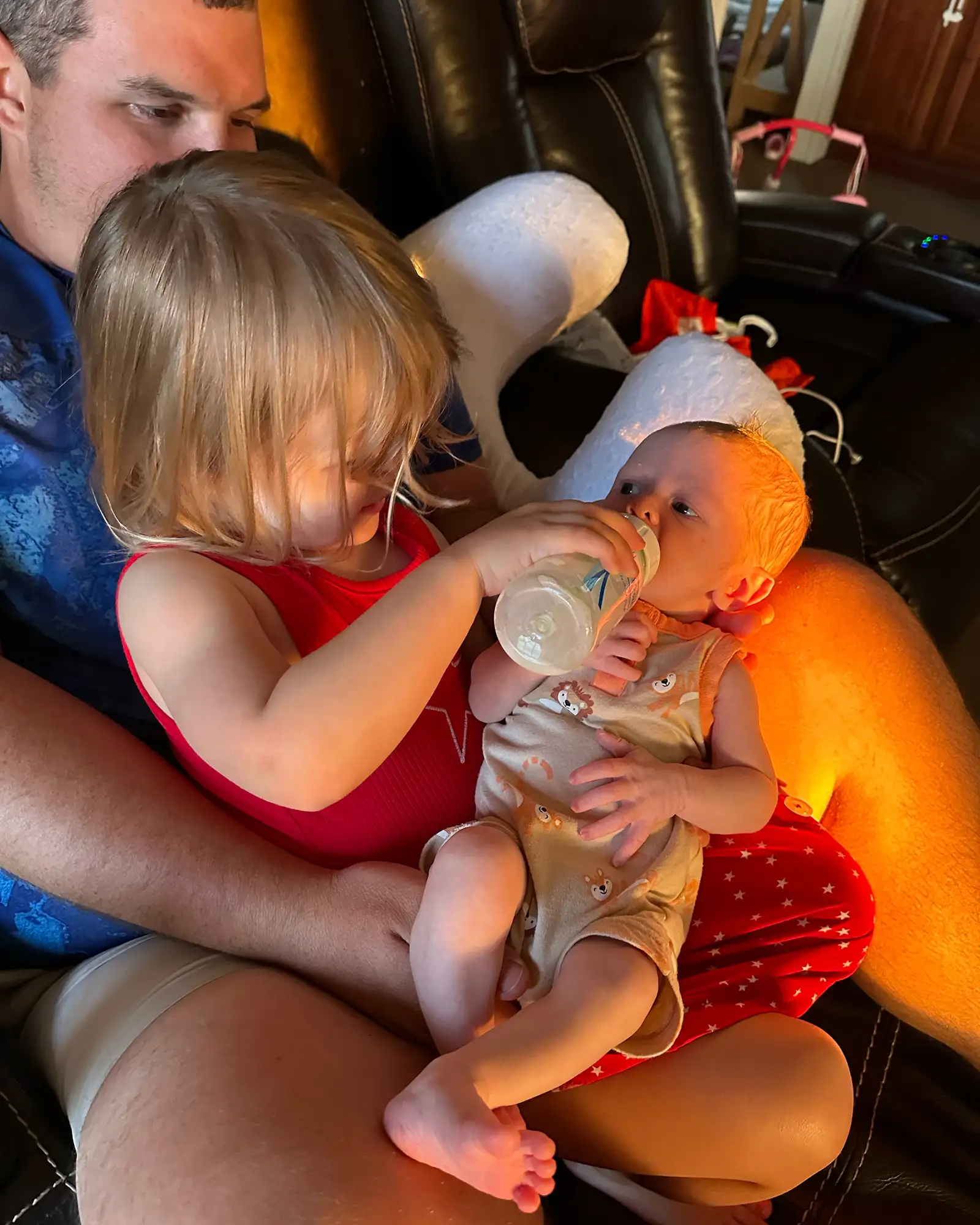
Her baby boy, John, had been sleeping far more than she remembered his older sister sleeping as a newborn. He wasn’t putting on weight, either. A pediatrician had suggested a milk allergy and told Greer that if John failed to gain even one ounce by the next day, she should take him to the hospital.
Greer didn’t wait for the next day.
She and her husband, Kris Miller, took John to Children’s Hospital in Macon, Georgia. The choice began years of hospital stays, worsening kidney disease and a search for the organ that could keep their son alive.
Greer, a 30-year-old special education teacher from Montrose, Georgia, had already had John’s sister, Charlotte, two years earlier. John weighed 9 pounds at birth, and Greer knew babies could sleep a lot. What she was seeing still felt different.

The Difference She Couldn’t Ignore
At first, there wasn’t one dramatic sign Greer could point to.
John slept. He ate. But he seemed too tired, and no matter how much he was fed, the number on the scale wasn’t moving the way his mother expected.
“He was a very sleepy baby — too sleepy,” Greer told PEOPLE, which first reported the family’s story.
She had asked whether low blood sugar might explain what she was seeing. The pediatrician raised the possibility of a milk allergy, so the family changed John’s formula.
Still, Greer’s concern stayed with her.
“My mom intuition was like, ‘Something’s not right,’” she said.
The hospital visit brought back a detail from Greer’s pregnancy. At her 20-week ultrasound, John had been diagnosed with hydronephrosis, a condition involving urine backing up into the kidneys. By the time he was born, the Millers had been told the problem had resolved.
Now doctors wanted to know about it.
John was rushed to the ICU. Greer asked the question she had been fearing: Was her son in kidney failure?
“I dropped to my knees in absolute shock and disbelief,” she recalled.
Doctors found that John’s kidneys weren’t working as they should. He was diagnosed with vesicoureteral reflux, in which urine flows the wrong way, and stage 4 chronic kidney disease.
The Doctor Told Her What Waiting Could Have Cost
The next move was urgent. John needed to be airlifted to Atlanta for specialized care.
Then a doctor told Greer and Kris how close the situation had come.
“If you would have waited any longer, this baby would have gone into cardiac arrest and would not be here,” Greer recalled the doctor saying.
The concern that had pushed Greer past the plan to check his weight the next day had led her to the hospital before that point.
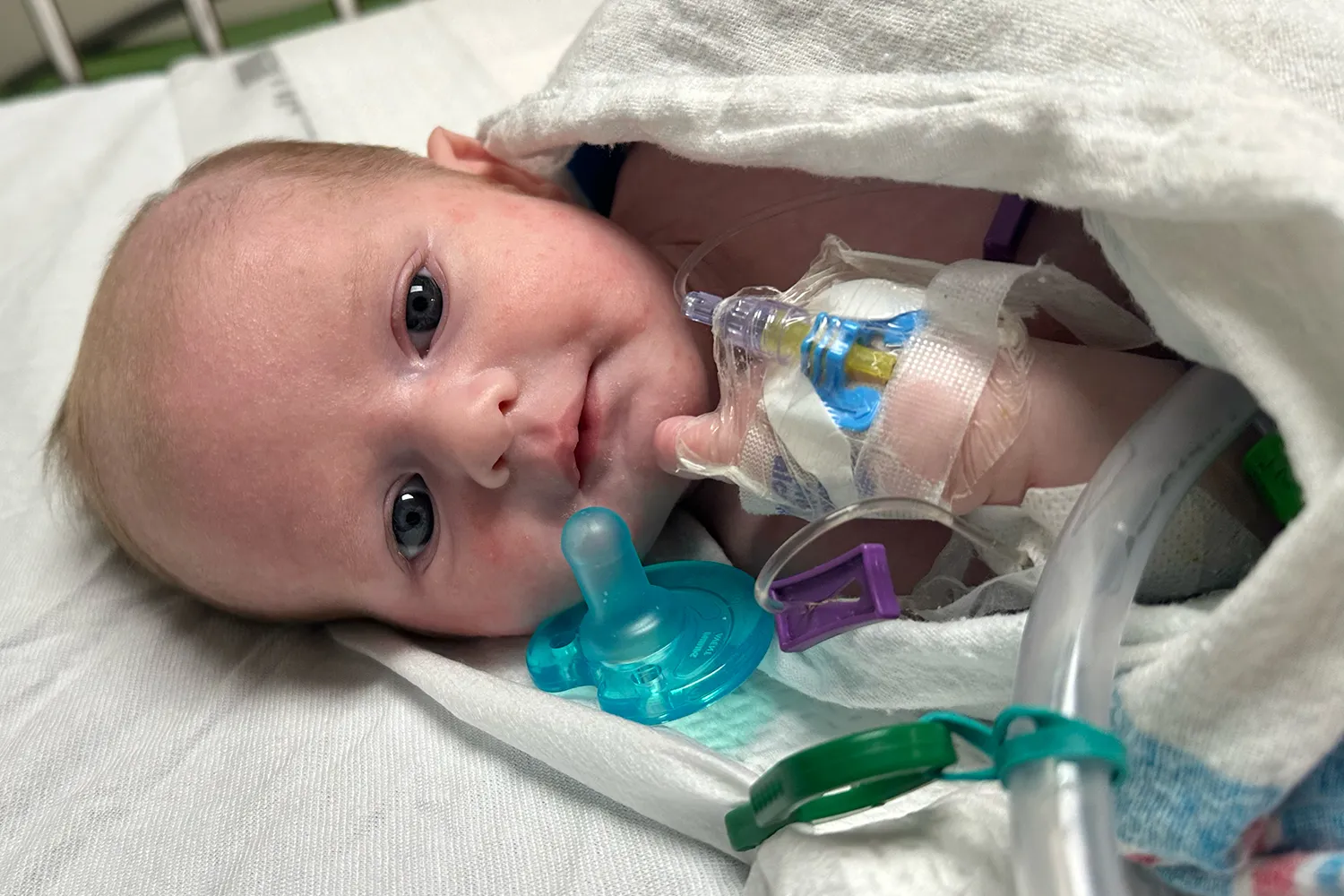
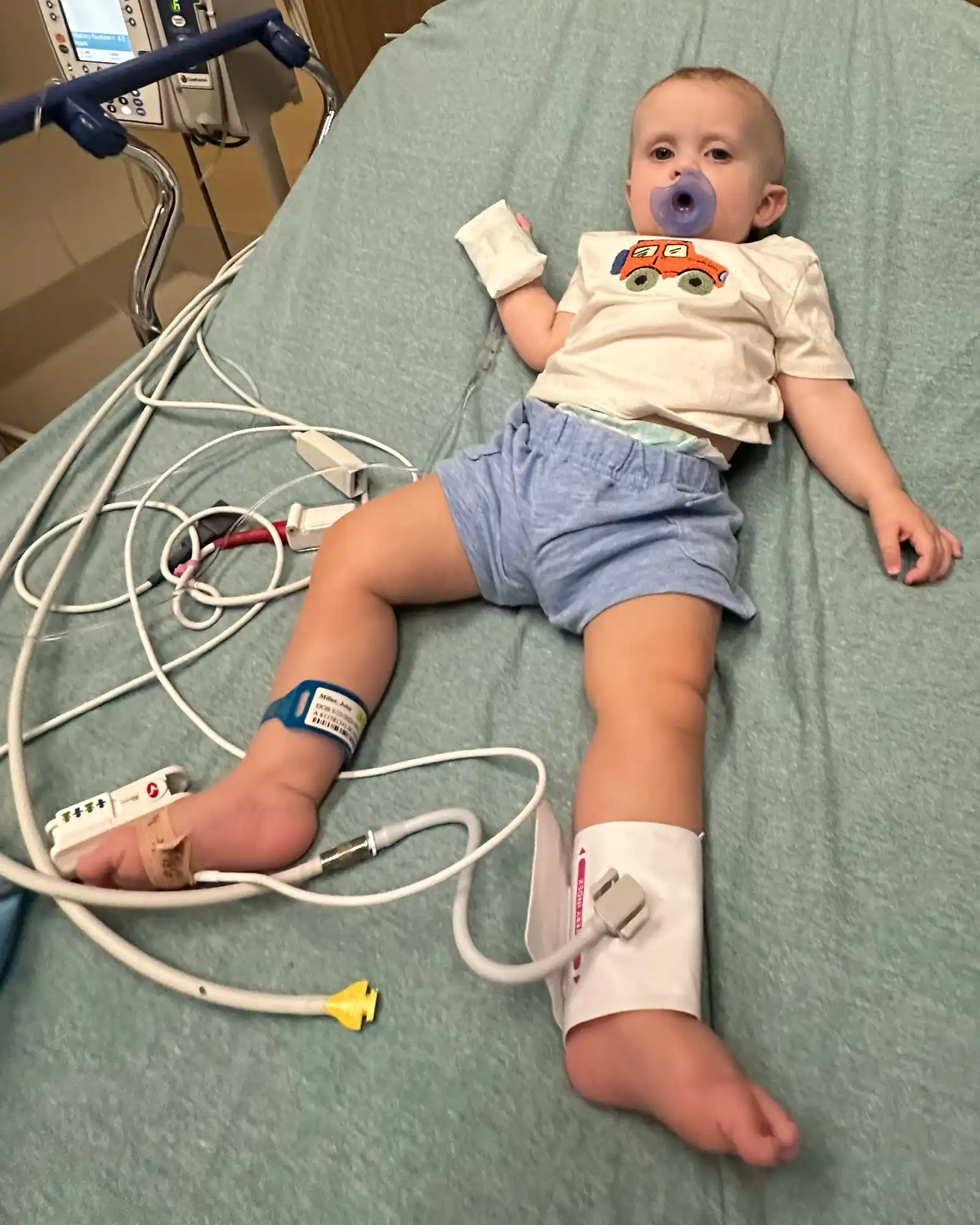
John arrived at Children’s Healthcare of Atlanta on July 2, 2024. What followed was not a quick fix. He was hospitalized nine times during the first year of his life, according to PEOPLE.
By June 2025, his kidney disease had reached stage 5. A transplant was needed, but there was another problem: John was still too small for an adult-sized kidney.
Dr. Bhargava Mullapudi, division chief of pediatric transplant surgery at Children’s Healthcare of Atlanta, explained that a small baby must grow enough to physically accommodate an adult organ.
That milestone came in January 2026, when John weighed 22 pounds and became eligible for transplant.
His parents and grandparents couldn’t donate. Greer turned to the Facebook page she had created after John’s diagnosis and shared the direct donation link, asking people to spread it. Thirty people volunteered.
After a local news story in April, the number rose to 100.
One Donor Was a Relative
Among those potential donors, the family was told one person was related to John. His identity was protected, so Greer and Kris weren’t initially told who it was.
The answer came only after the family pieced together what had happened.
Kris’s 37-year-old first cousin, Lance Keith Miller, had died in a motorcycle accident on May 29. Lance was an organ donor. His widow planned for one of his kidneys to be donated directly to John.
The news carried two truths at once.
“We are so grateful and also heartbroken at the same time,” Greer said.
Lance’s father and Kris’s father were fraternal twin brothers, making the cousins closely related genetically. The kidney turned out to be a near-perfect match for John.
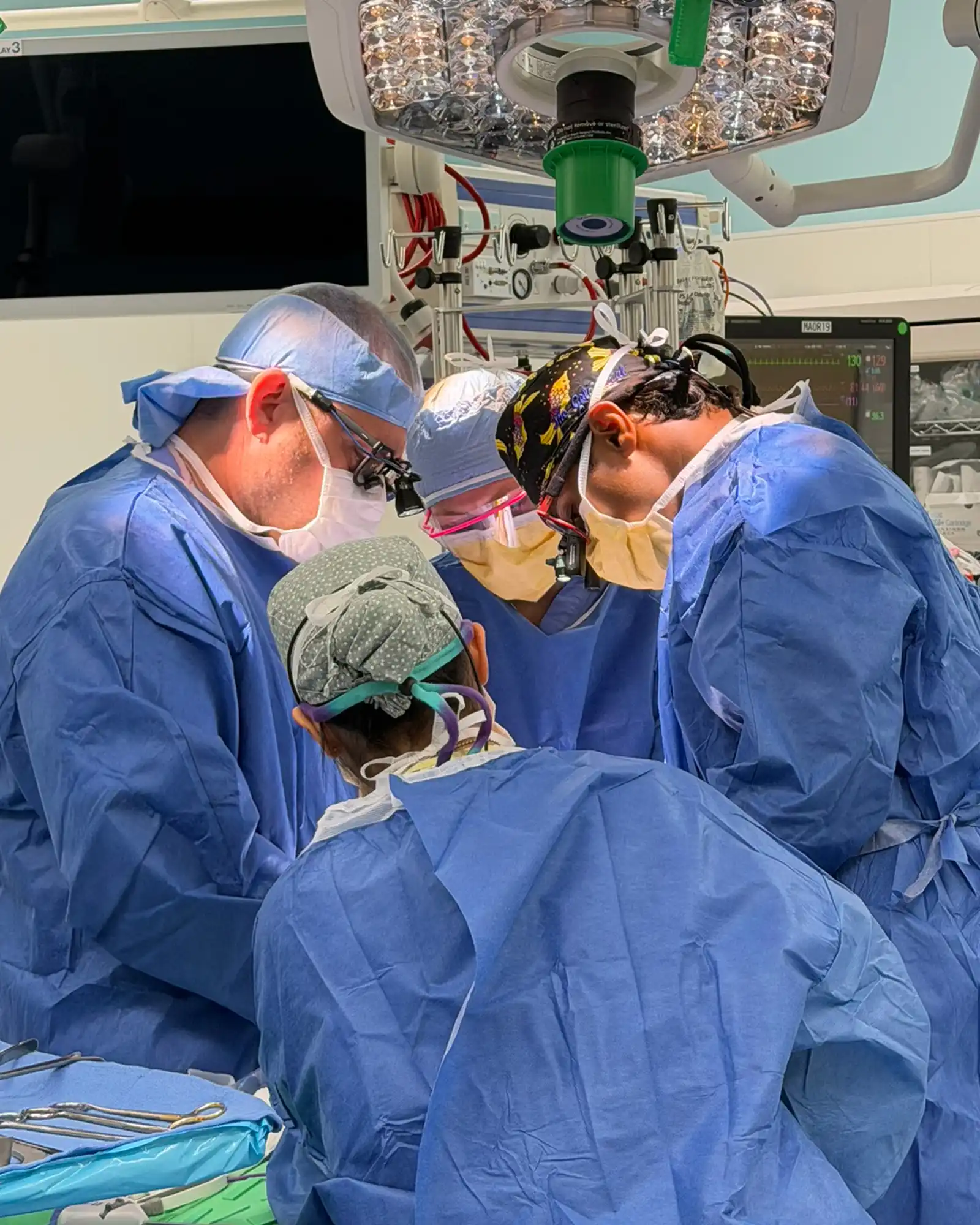
On June 3, 2026, Mullapudi’s team transplanted Lance’s kidney into the toddler. The operation was Children’s Healthcare of Atlanta’s 2,000th solid organ transplant.
Lance’s donation saved five lives in all, including John’s.
What John Will Learn About Lance
The change in John showed up quickly at home.
After the transplant, he had more energy. He stayed awake later. He played with Charlotte in ways his parents hadn’t seen before.
“He is doing things we never thought he would do,” Greer said.
Kris and Greer plan to tell John about Lance when he is old enough to understand who gave him the kidney he carries. They also hope their son’s story gets more adults thinking about organ donation.
Before that conversation comes, there is a visit the family is looking forward to. Lance’s widow has told Greer she wants to hold John because, as Greer recalled her saying, “Lance is in there.”
Greer and Kris are more than willing. Their son, now staying awake later and playing with his sister, will arrive carrying the kidney his cousin gave him.