Steve McQueen Made This Motorcycle Escape Legendary — But the Most Famous Jump Wasn’t Actually His
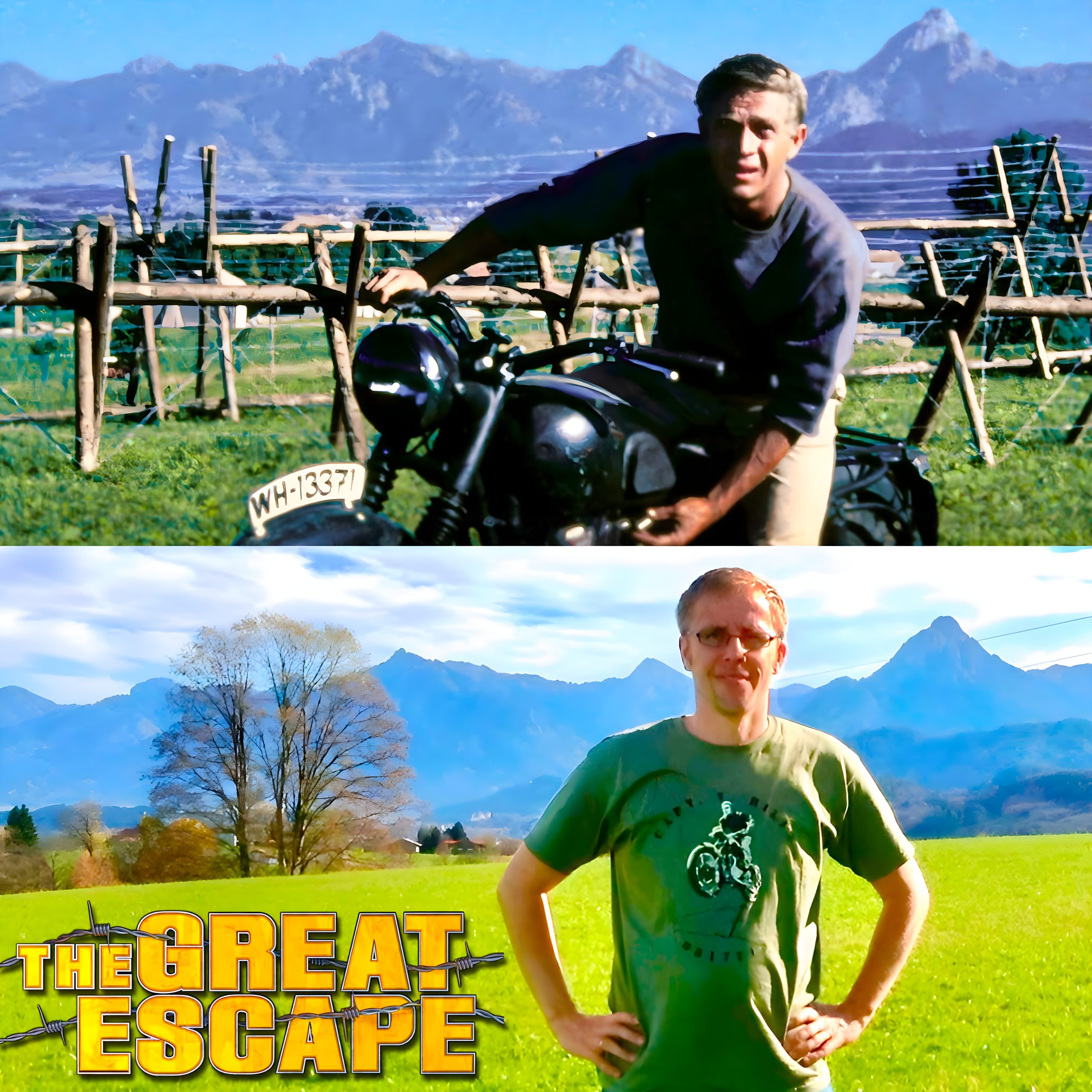
More than 60 years after The Great Escape reached theaters, one image still seems to contain everything audiences loved about Steve McQueen.
A motorcycle racing across an open field. German soldiers closing in. A barbed-wire fence ahead. And Captain Virgil Hilts, the American prisoner known as “The Cooler King,” making one desperate attempt to reach freedom.
It became one of the defining images of McQueen’s career.
But the story behind that sequence is almost as fascinating as the scene itself.
The dramatic countryside was real. Much of the motorcycle chase was filmed in Bavaria, Germany, around Füssen and nearby communities. McQueen really was an accomplished motorcycle rider and handled a significant amount of the riding seen in the movie.
But when Hilts finally launches his motorcycle over the fence, the man on the bike is not Steve McQueen.
It is his friend Bud Ekins.
And that single stunt helped turn both the movie and the quiet Bavarian field where it was filmed into pieces of Hollywood history.
A Movie Escape That Became Bigger Than the Movie
Released in 1963 and directed by John Sturges, The Great Escape assembled an extraordinary cast that included McQueen, James Garner, Richard Attenborough, Charles Bronson, Donald Pleasence and James Coburn.
The movie was inspired by the real mass escape from Stalag Luft III, a German prisoner-of-war camp during World War II.
On the night of March 24, 1944, 76 Allied prisoners escaped through a tunnel known as “Harry.” Most were eventually recaptured. Fifty of the recaptured men were murdered by the Gestapo, while only three ultimately succeeded in reaching safety.
The film took liberties in transforming that grim history into a sprawling Hollywood adventure.
Among its most memorable additions was McQueen’s motorcycle chase.
His character, Hilts, steals a German motorcycle and races through the countryside while soldiers pursue him, eventually attempting to cross what the movie presents as the German-Swiss frontier.
It was not part of the actual 1944 escape.
Yet it became perhaps the most recognizable sequence in the entire film.
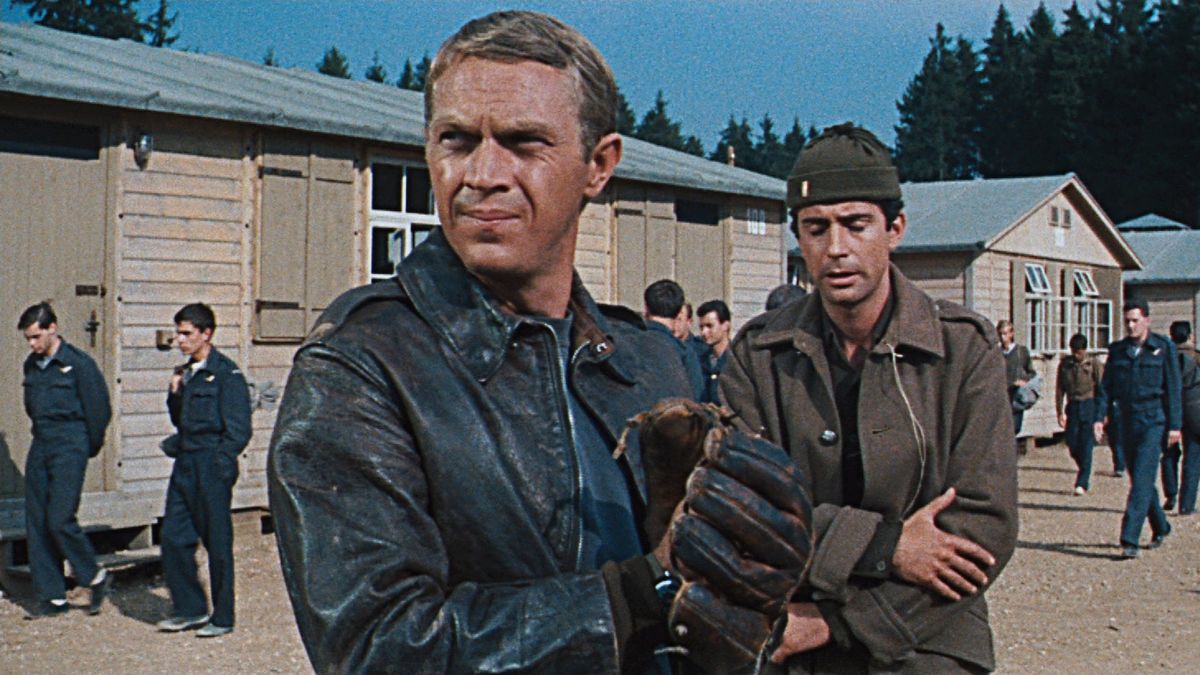
McQueen Didn’t Need Much Help Looking Comfortable on a Motorcycle
That was partly because Steve McQueen was not simply an actor pretending to know how to ride.
Motorcycles and racing were genuine passions for him.
His skill allowed him to perform much of the riding during the chase himself. In fact, McQueen was reportedly such a capable rider that he even appeared as one of the German motorcyclists pursuing Hilts in portions of the sequence — effectively helping to chase his own character through the magic of editing.
The motorcycle used for the sequence was a Triumph TR6 Trophy, modified to resemble a German military motorcycle.
That created one of the entertaining ironies behind the scene: a British motorcycle was being disguised as a German machine for an American movie star playing an American prisoner escaping Nazi Germany.
For viewers, however, none of that mattered.
McQueen looked completely at home on the bike.
That authenticity helped make what followed feel even more believable.
Then Came the Fence
Near the end of the chase, Hilts finds himself trapped by a series of barbed-wire barriers.
He races toward one of them.
The motorcycle climbs a ramp and flies over the first fence before landing in the field beyond.
It is the shot generations of movie fans would remember.
There was only one problem.
The filmmakers could not allow their star to perform it.
Insurance concerns kept McQueen from doing the major jump for the movie, so the production turned to Bud Ekins, his friend and fellow motorcycle enthusiast.
Ekins was far more than an anonymous Hollywood stunt double.
He was an accomplished off-road motorcycle racer whose friendship with McQueen eventually opened the door to a long career performing stunts for movies.
For The Great Escape, however, his job was simple to describe and considerably harder to execute:
Make the jump look like Steve McQueen had done it.
Ekins delivered.
The leap became one of the most celebrated motorcycle stunts ever put on film.
McQueen never tried to steal the credit, either. Accounts of his later appearances have him openly identifying Ekins as the rider responsible when people congratulated him for the jump.
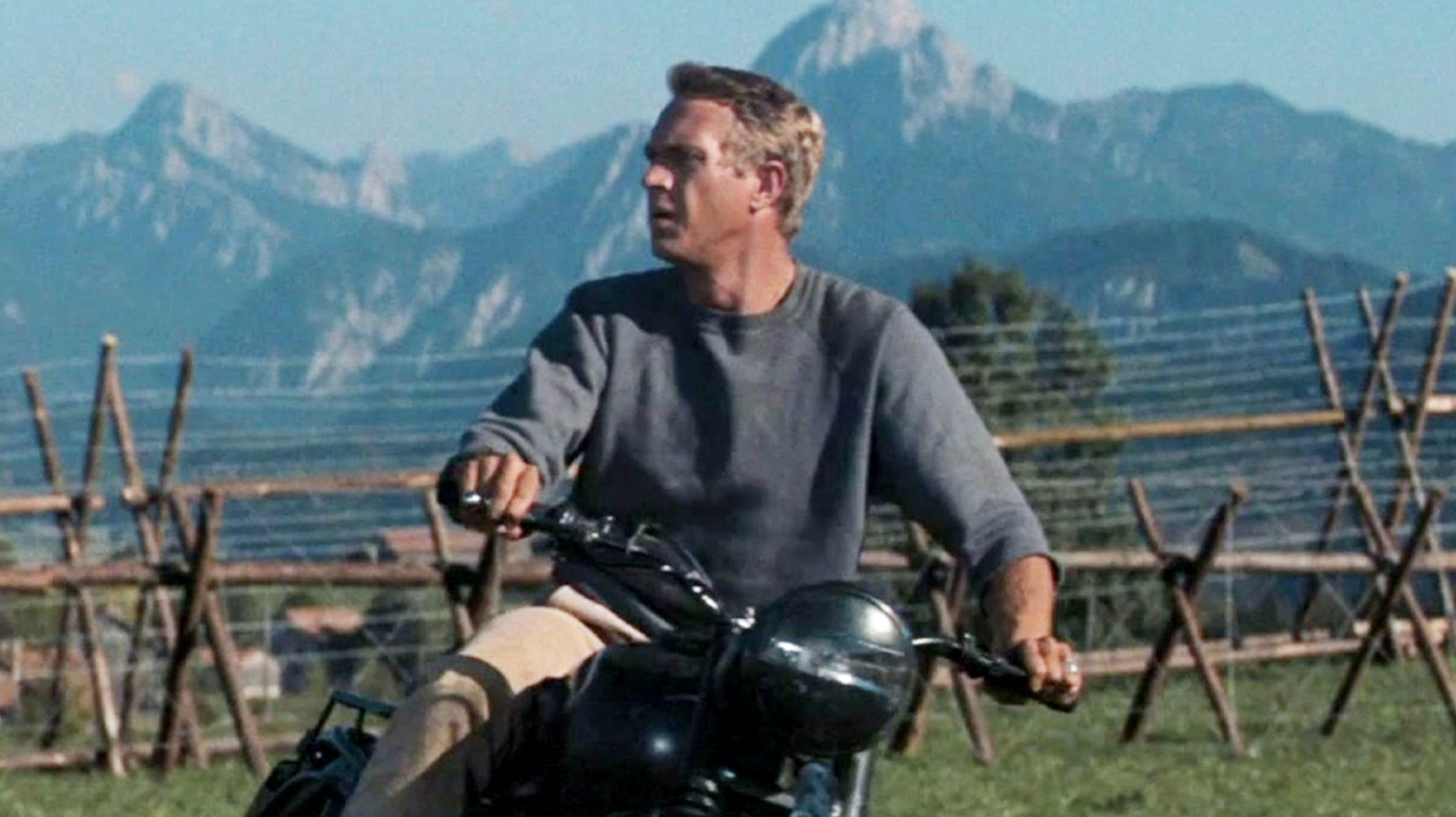
The Famous “Swiss Border” Wasn’t Really the Swiss Border
There is another illusion hidden in the sequence.
The movie makes Hilts appear tantalizingly close to Switzerland and freedom.
In reality, the motorcycle scenes were filmed around Füssen and the surrounding Bavarian countryside, with portions of the chase taking place in meadows near the German-Austrian border region.
The famous jump site has been identified in the countryside near Rossmoos and Benken, around the Füssen/Pfronten area. Researchers and movie-location enthusiasts have spent years matching the landscape seen in the film with the modern countryside.
The Alps provided exactly the visual scale the filmmakers needed.
From the audience’s perspective, Hilts appeared to be racing toward a national border and perhaps finally escaping his pursuers.
In geographic reality, Switzerland was nowhere near as close as the film suggested.
Hollywood had turned an ordinary stretch of Bavarian countryside into one of cinema’s most famous borders.
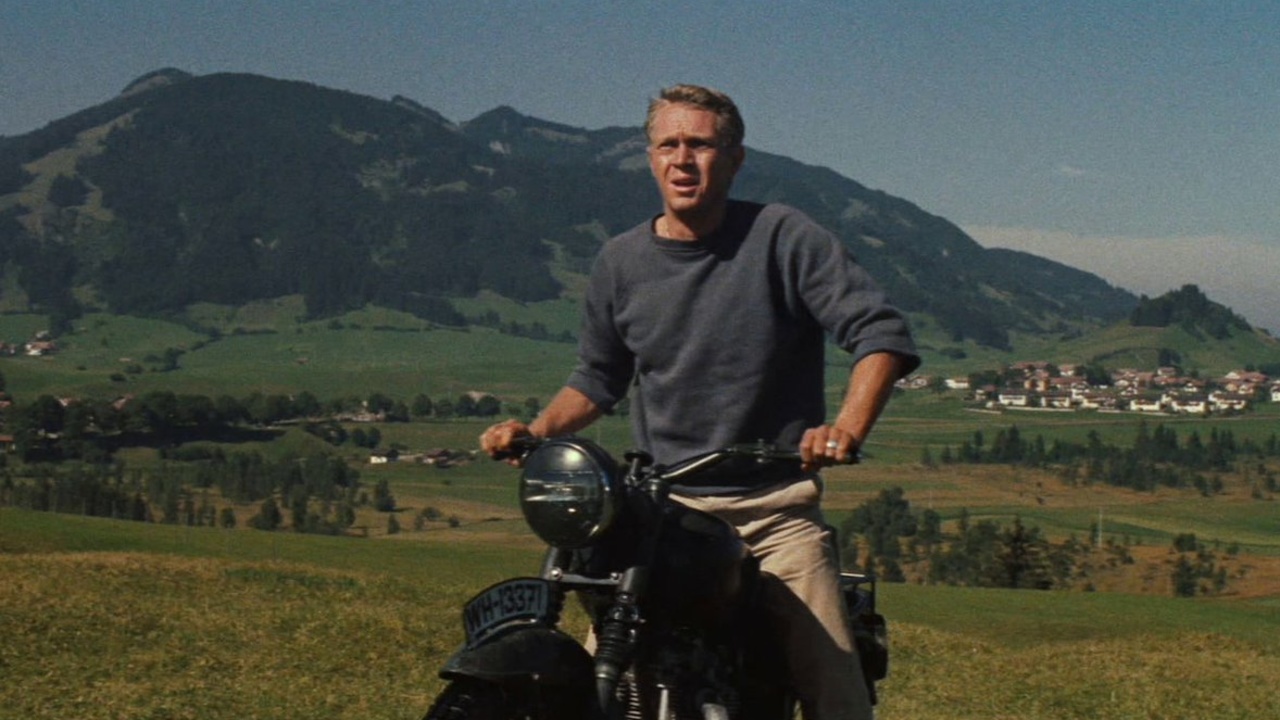
Much of The Great Escape Can Still Be Found in Bavaria
The motorcycle field was only one part of the production’s extensive use of Germany.
The prisoner-of-war camp itself was constructed near Bavaria Film Studios outside Munich, while the escape sequences spread across numerous locations in Bavaria.
Füssen’s railway station appeared in the movie. Pfronten and other nearby communities were used for additional scenes. Even Neuschwanstein Castle can be spotted during the aerial escape involving Hendley and Blythe.
That means fans exploring the region today are not simply looking for one famous patch of grass.
They are walking through a landscape that helped create much of the film’s final act.
And in some ways, the relative normality of those places makes seeing them today even more striking.
There is no film crew.
No pursuing soldiers.
No movie border.
Just roads, fields, mountains and towns.
But place an image from 1963 beside the landscape today, and suddenly the scene comes back.
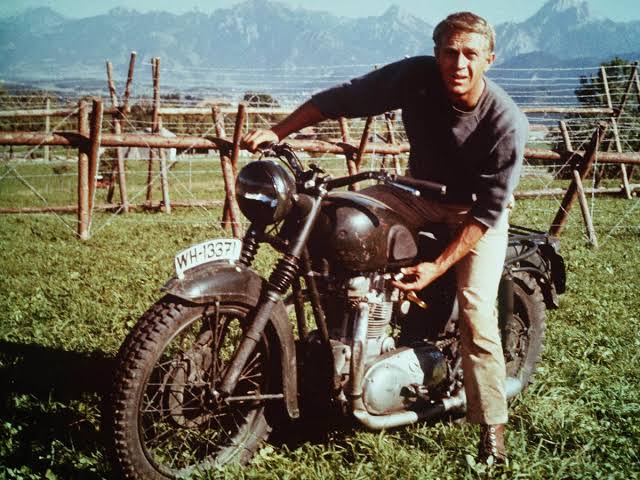
Why That Jump Still Belongs to Steve McQueen
Learning that Bud Ekins performed the famous leap does not really diminish McQueen’s role in the sequence.
If anything, the complete story makes it more interesting.
McQueen brought his genuine love of motorcycles into Hilts’ escape. He performed a large portion of the riding. Ekins supplied the one spectacular moment the studio could not risk allowing its star to attempt.
Together, they created something audiences have associated with McQueen ever since.
And the motorcycle chase became more than a stunt.
It helped crystallize the screen image that followed McQueen for the rest of his life: independent, fearless, cool under pressure and somehow most comfortable when moving fast.
Today, the field near Füssen looks far less dramatic without a movie camera pointed at it.
But for anyone who knows The Great Escape, it is difficult to look at that quiet Bavarian landscape without imagining a Triumph motorcycle accelerating toward a fence.
The place is real.
The jump was real.
The rider was Bud Ekins.
And more than six decades later, the moment still looks like pure Steve McQueen.