Paris Jackson Met Her Mother Debbie Rowe at 15 — Their Quiet First Meeting Became the Start of Something Unexpected

For most of Paris Jackson’s childhood, Debbie Rowe was more of a name than a presence.
Paris knew she had a mother somewhere outside the world in which she was being raised. But for years, she did not seem consumed by questions about who Rowe was or why they were apart.
Then, at around 15 years old, mother and daughter finally found themselves in the same room.
There was no dramatic confrontation.
No tearful speech.
Paris simply walked downstairs, saw Rowe sitting in the living room with her grandmother and greeted her.
“Hey, Mom.”
Rowe answered, “Hi.”
Then they spent the day together.
Years later, Paris would remember that surprisingly ordinary introduction as the beginning of a relationship that slowly became something neither of them had been able to experience during her childhood.
Paris First Asked About Her Mother as a Preteen
Paris, now 28, revisited the story during the Aug. 12 episode of Call Her Daddy.
She explained that she first became curious about Rowe when she was around 10 or 11.
At that age, however, her questions were relatively simple.
She wanted to know her mother’s name.
Once she was given the answer, Paris said she was satisfied and moved on.
That changed several years later.
At about 15, Paris and Rowe finally connected. Their relationship did not instantly become the close mother-daughter bond they have today, but it opened a door.
Paris said the two became significantly closer toward the end of her teenage years.
Looking back, she now sees the gradual pace of that relationship as part of why it was able to develop naturally.
Their First Meeting Was Almost Strikingly Normal
For someone meeting her mother for the first time as a teenager, Paris remembers remarkably little anxiety around the moment itself.
Rowe was sitting with Paris’ grandmother when Paris came downstairs.
Paris greeted her as “Mom,” Rowe greeted her back, and they talked briefly.
Then they left the house and spent the day together.
The simplicity of the encounter stands in sharp contrast to the unusual family circumstances that preceded it.
Paris is one of Michael Jackson’s three children.
Rowe and Jackson had two children together: Michael Joseph Jackson Jr., known as Prince, who was born in 1997, and Paris, who was born the following year.
Jackson’s youngest son, Bigi, formerly known publicly as Blanket, was born through surrogacy.
Rowe had married Michael Jackson in 1996 after the two knew each other through the dermatology office where she worked as an assistant.
Their marriage ended in divorce in 2000.
Rowe subsequently gave Jackson full custody of Prince and Paris.
She eventually settled in Palmdale, California, where she lived privately and bred horses.
That meant Paris grew up without the conventional day-to-day presence of her biological mother.
Michael Jackson’s Death Changed Paris’ World
Michael Jackson died in 2009, when Paris was 11.
By her early teens, she was navigating adolescence after the loss of her father while living within a family structure that remained under intense public attention.
In 2013, when Paris was 15, she began establishing a relationship with Rowe.
At the time, the developing connection reportedly had the support of Paris’ grandmother and legal co-guardian, Katherine Jackson.
Paris had reached a point when she wanted to know her mother rather than simply know about her.
Rowe was open to that possibility.
The relationship that followed was not built overnight.
Paris’ description now suggests something much more gradual: two people learning who the other was without trying to force themselves into a predetermined version of mother and daughter.
Paris Says They Are More Alike Than She Expected
One discovery became increasingly clear as Paris got to know Rowe.
They had a great deal in common.
Paris joked that astrology might help explain some of it: Rowe is a Sagittarius, while Paris is an Aries.
Both, she said, have plenty of “fire.”
More seriously, Paris described herself and her mother as very similar.
That resemblance was something she could only discover after the relationship had been allowed to develop on its own.
And over time, Paris said she learned an important lesson from the experience.
Expectations can damage relationships before they are given a chance to become what they naturally might be.
If she enters a relationship expecting someone to behave in a particular way, Paris explained, disappointment and resentment can quickly follow when reality looks different.
Removing those expectations creates another possibility.
Something authentic can develop instead.
That philosophy appears to have become central to the way Paris understands her relationship with Rowe.
A Cancer Diagnosis Brought Them Even Closer
Their bond became especially visible when Rowe faced breast cancer.
In 2016, Rowe spoke publicly about the support she received from her daughter during treatment.
She described Paris as her “rock” and said her daughter responded almost immediately after learning about the diagnosis.
Paris remained beside her during the difficult period.
Then, in 2017, she celebrated a milestone in her mother’s treatment publicly.
Rowe had completed chemotherapy.
Paris posted a photograph of her holding a “Chemo Done!” sign and enthusiastically praised her mother for fighting through the illness.
It was a striking image when viewed against the beginning of their story.
Only a few years earlier, they had barely known one another.
Now Paris was helping her mother through cancer treatment.
Their connection had become more than a biological fact.
It had become a relationship tested by illness, fear and care.
The Relationship Has Continued Into Paris’ Adult Life
The two women have remained in each other’s lives.
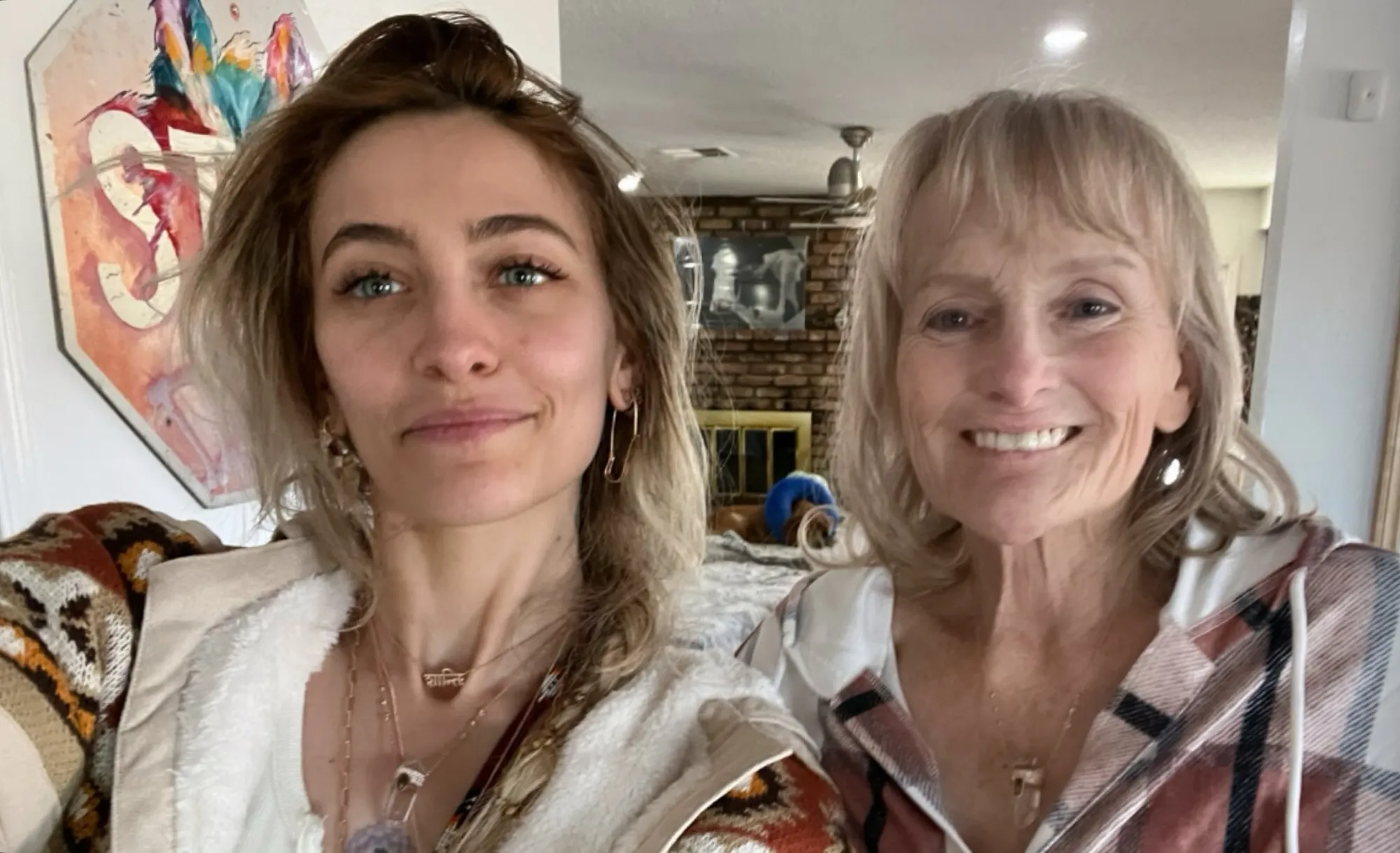
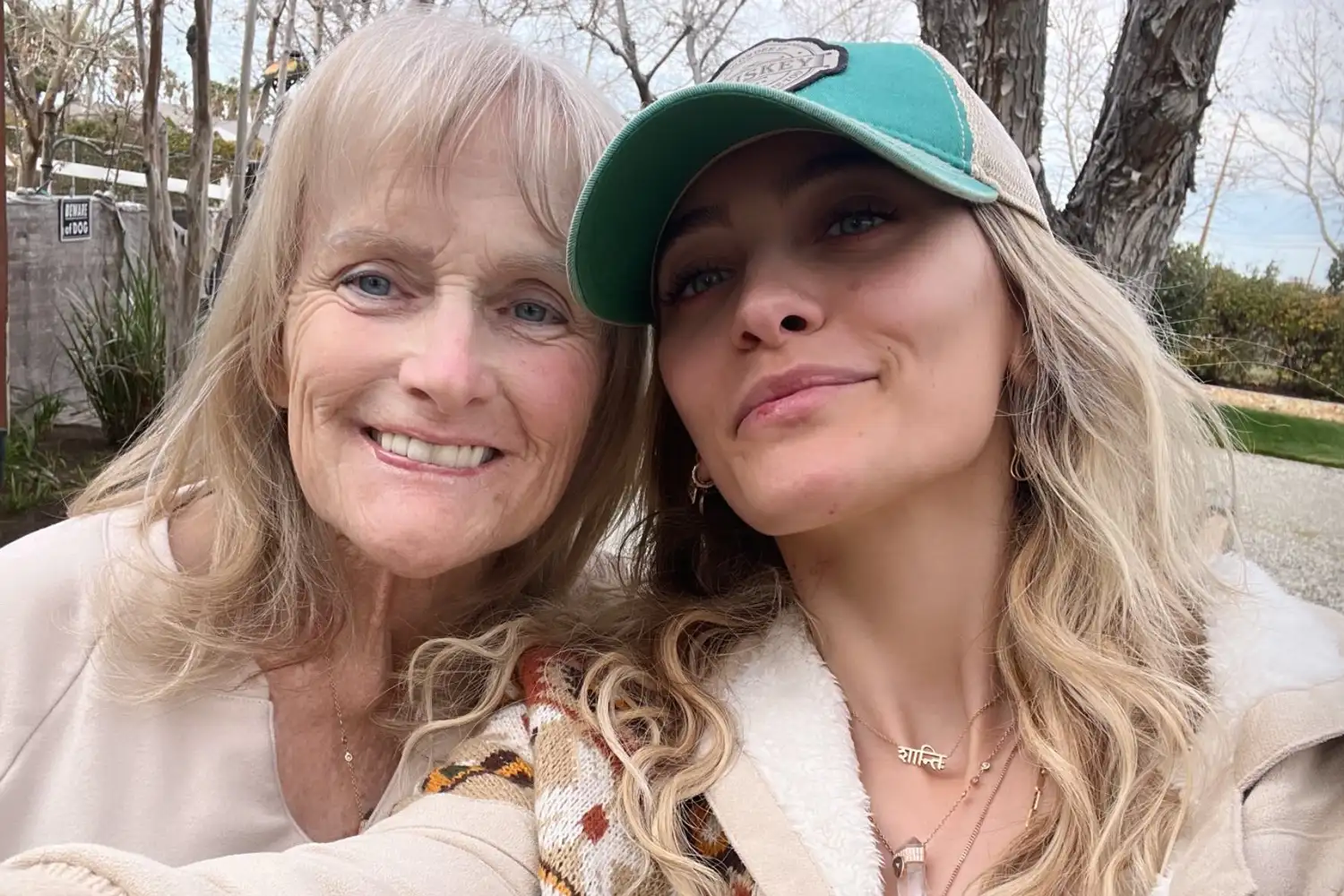
More recently, Paris shared rare photographs of herself with Rowe in February.
One showed them smiling side by side.
Another captured them cuddling outdoors.
Paris captioned the glimpse simply: “Lately ❤️.”
It was an understated update, but it reflected just how much their relationship had changed.
At 15, Paris was meeting Rowe for the first time.
By her late 20s, sharing a quiet moment with her mother no longer required a dramatic explanation.
It was simply part of her life.

Paris Learned Not to Force the Relationship Into a Mold
The most revealing part of Paris’ reflection may not be the unusual circumstances of the first meeting.
It is the way she talks about what happened afterward.
She does not describe reconnecting with Rowe as filling a perfectly shaped hole left by childhood.
She does not suggest that years apart disappeared once they finally met.
Instead, she emphasizes the absence of expectations.
That approach allowed her to discover Rowe as an actual person rather than only as the mother she had imagined.
It also gave their relationship room to become something individual to them.
That perspective is especially meaningful given how much of Paris’ family story has always been defined publicly by enormous expectations.
She was Michael Jackson’s daughter before she was old enough to decide what that meant.
Her parents’ relationship had been dissected for years.
Her childhood was something strangers often felt they understood.
Yet the connection she eventually developed with her mother seems to have grown in the opposite way.
Quietly.
Gradually.
Without a script.
From Two Strangers to Mother and Daughter
Paris’ first encounter with Debbie Rowe could easily have become an overwhelming moment.
Instead, it began with two words.
“Hey, Mom.”
There was no immediate attempt to make up for 15 years in a single afternoon.
They talked.
They spent time together.
And eventually they kept doing it.
By the end of Paris’ teenage years, the connection had become much stronger. When Rowe faced cancer, Paris was there. Years later, the pair could smile together in photographs without their relationship needing to be explained entirely through their past.
Paris now sees that progression as evidence of something she has learned well beyond her relationship with her mother.
Sometimes the most meaningful connections do not emerge when people demand that they look a certain way.
They grow when there is enough room for something real to take shape.
For Paris and Rowe, that process began at 15 with an almost ordinary afternoon.
What made it extraordinary was everything that came after.