He Was 5 When a Gunman Took Him From a School Bus and Held Him Underground. Thirteen Years Later, He Walked Across a Graduation Stage
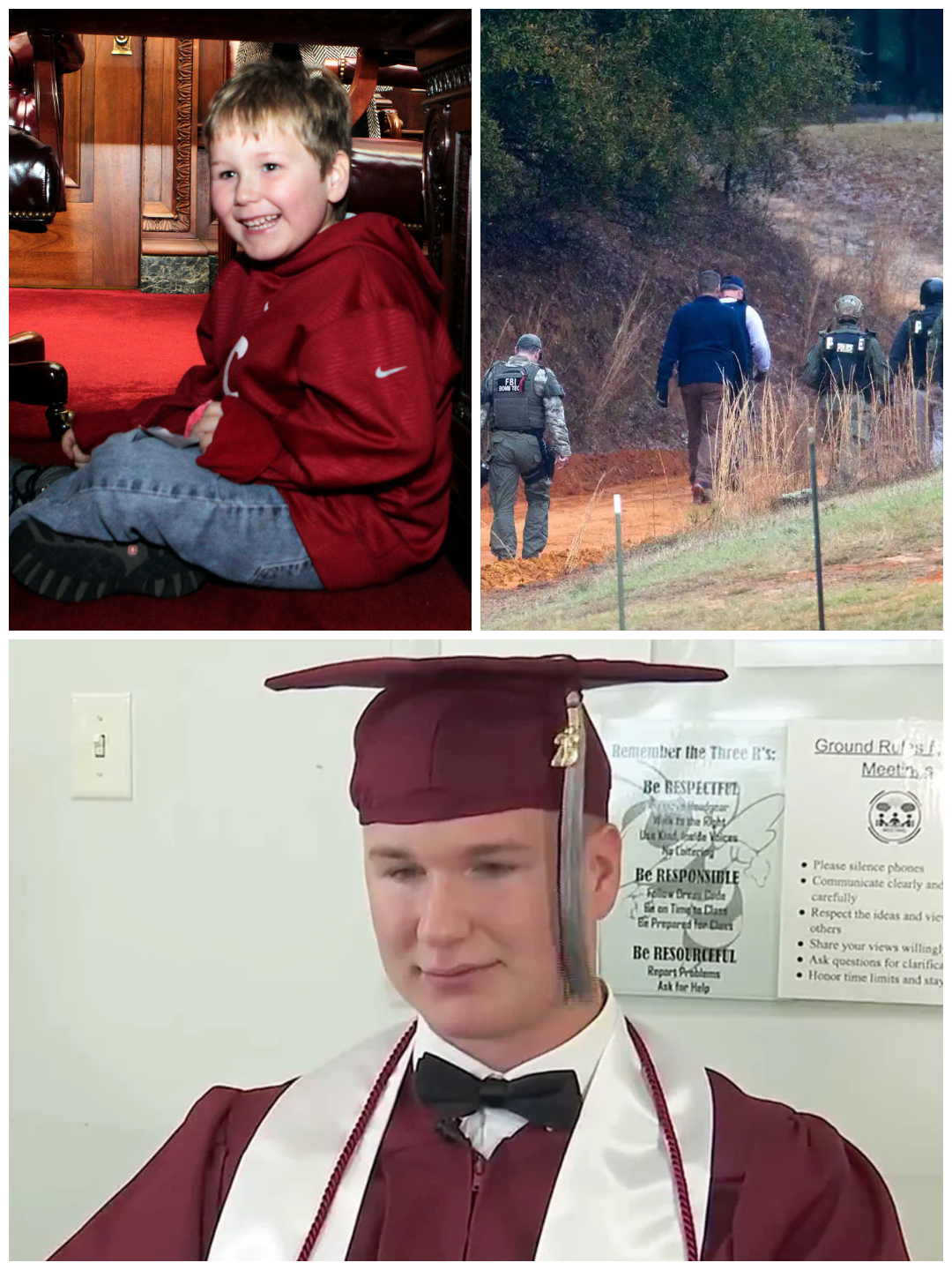
For six terrifying days in 2013, millions of people knew Ethan Turner simply as the little boy trapped underground.
He was 5 years old when a gunman took him from a school bus in rural Alabama and held him hostage inside a bunker while law enforcement surrounded the property and the country waited for news.
Thirteen years later, Ethan stepped into a very different spotlight.
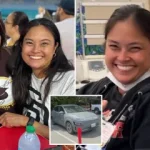
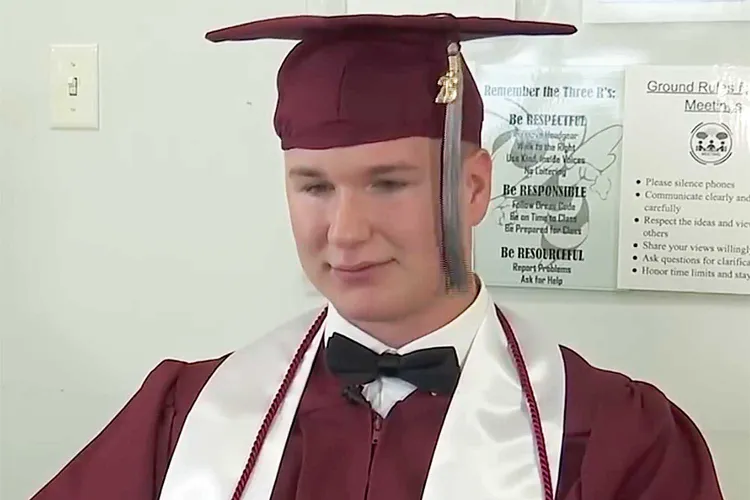
Now 18, he has graduated from Abbeville High School.
The milestone brought his family, former educators and members of the community back to a story they have never forgotten — but Ethan hopes graduation marks something more than survival.
He wants people to see the person he became after the bunker.
Not just the child who was once inside it.
The School Bus Ride That Changed Everything
In 2013, Ethan was still known as Ethan Gilliam.
He was riding a school bus in rural Alabama when Jimmy Lee Dykes boarded the vehicle carrying a gun.
Bus driver Charles Poland tried to protect the children.
Dykes fatally shot him.
He then took 5-year-old Ethan hostage and brought him into an underground bunker, beginning a six-day standoff that quickly drew national attention.
For nearly a week, Ethan remained inside while authorities worked to bring the situation to an end.
The case dominated headlines.
To strangers watching from around the country, the child became known by a haunting shorthand: “the boy in the bunker.”
Authorities eventually entered the bunker, rescued Ethan and killed Dykes during the operation.
The immediate crisis was over.
But for Ethan and the people around him, the more complicated part was only beginning.
He had to go back to being a child.
Returning to School After a Nationally Watched Trauma
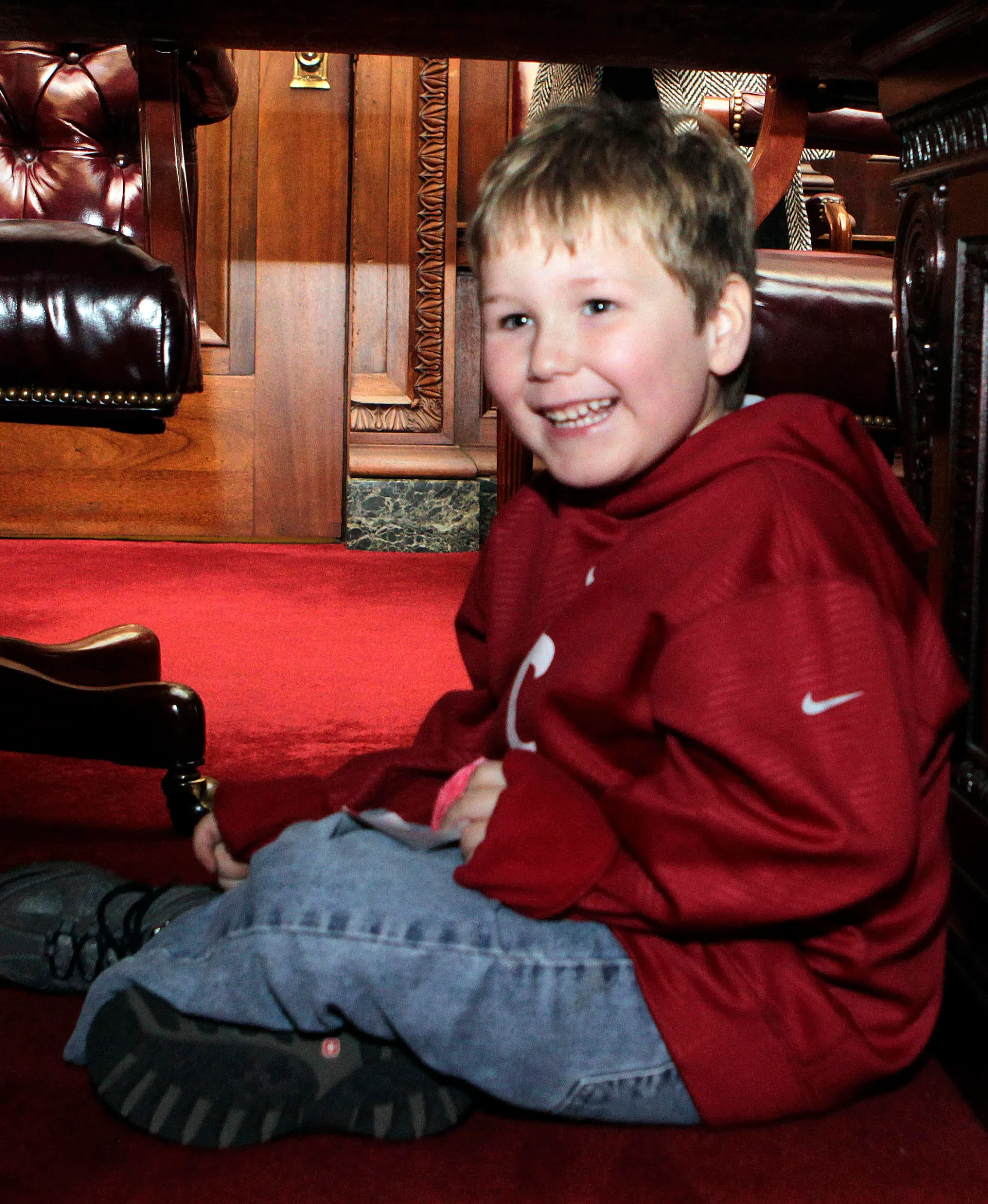
Phillip Parker, the former principal of Midland City Elementary, knew Ethan during the period surrounding the kidnapping.
He remembered what it was like for school staff to watch the little boy return after an ordeal almost impossible for most children to imagine.
Years later, seeing Ethan graduate stirred those memories again.
Parker described the moment as deeply emotional for the teachers and administrators who had watched him recover and readjust.
What stood out most was how well Ethan managed to move forward.
Parker said he could hardly imagine another child handling the aftermath any better.
That adjustment did not mean pretending the kidnapping had never happened.
Instead, the years that followed became about refusing to let one terrible event become the only story attached to Ethan’s name.
That message came repeatedly from his mother, Nicci Turner.
His Mother Taught Him That Trauma Is Not Identity
Nicci said she has always tried to teach her children a simple but powerful distinction:
Something that happens to you is not the same thing as who you are.
She encouraged them not to remain trapped in the role of victim, but to keep moving forward even after painful experiences.
For Ethan, that lesson carried unusual weight.
The kidnapping happened before he was old enough to define himself on his own terms.
The public already had a label for him before he reached adolescence.
As he grew older, he had to build an identity beyond that label.
Now, at graduation, he is speaking directly about that desire.
He does not want strangers to reduce him to “that boy” from the bunker case.
He also does not want what happened to him to make other children afraid of ordinary things such as getting on a school bus.
His past is part of his story.
He does not want it to become the whole story.
He Found Peace in Building Things With His Hands
As Ethan moved through school, his interests began pulling him toward something tangible.
He liked painting.
He liked building.
He developed an interest in nature, forestry and simply being outdoors.
Eventually, he found welding.
At Abbeville High School, Ethan participated in Future Farmers of America and explored practical trade skills.
Welding became the one that captured him most.
There is something fitting about that interest.
Welding is about joining pieces together, using heat and patience to create something stronger than what existed before.
For Ethan, it also became a path toward the future.
After graduating, he plans to attend Wallace Community College and study welding.
It is an ordinary next step for an 18-year-old.
And that ordinariness may be exactly what makes it so meaningful.
Thirteen years ago, Ethan’s future was uncertain enough that people across the country were waiting to learn whether he would even come out of that bunker alive.
Now he is choosing a career.
Graduation Meant More Than a Diploma
For Ethan’s family, watching him cross the graduation stage was a proud moment.
For the educators who remembered the 2013 standoff, it carried another layer.
They had seen the frightened child return to school.
Now they were seeing the young man finish high school.
Retired Dale County Superintendent Donny Bynum also thought about someone who was missing from the ceremony.
Charles Poland.
The bus driver died while trying to protect the students on Ethan’s bus the day of the kidnapping.
Bynum said he believed Poland would have been proud to see what Ethan had accomplished and imagined him looking down on the graduation with pride.
That connection makes Ethan’s milestone impossible to separate completely from the people whose actions helped shape the outcome of that day.
Ethan survived.
Poland did not.
The graduation therefore carries both celebration and remembrance.
From a National Headline to an 18-Year-Old With Plans
The contrast between 2013 and 2026 could hardly be sharper.
Then, Ethan was a kindergartner at the center of a terrifying national story.
Now, he is an 18-year-old interested in welding and forestry, preparing for community college and trying to decide what kind of adult he wants to become.
That shift is precisely what his mother hoped for.
The bunker did not disappear from his history.
But it did not stop him from accumulating new chapters either.
There were school years after the standoff.
There were classes.
Teachers.
Projects.
New interests.
Skills he discovered he was good at.
Eventually, there was a cap and gown.
Those ordinary years matter because they are what allowed Ethan to become something other than the child frozen in the public memory of 2013.
He Wants His Story to Help Someone Else Keep Going
Ethan is not trying to erase what happened.
He hopes it can be useful to someone facing difficult circumstances of their own.
His advice is simple: do not give up.
Keep moving.
Do not expect yourself to solve everything at once.
Pace yourself and continue forward.
It is a message that sounds straightforward until it is placed beside what Ethan survived.
At 5, he had no control over the event that made him famous.
At 18, he has far more control over what happens next.
He can choose a school.
He can choose a trade.
He can choose how much of the past defines the person he becomes.
That may be the most important part of his graduation story.
The little boy once known across America as “the boy in the bunker” did not remain there in anyone’s memory simply because the world stopped watching.
He kept growing.
He returned to school.
He found things he loved doing.
He made plans.
And thirteen years after a gunman tried to reduce his future to six terrifying days underground, Ethan Turner walked across a high school graduation stage with the rest of his life still ahead of him.