People Have Watched Fatal Attraction for Almost 40 Years. Its Director Says One Frame Has Been Hiding in Plain Sight
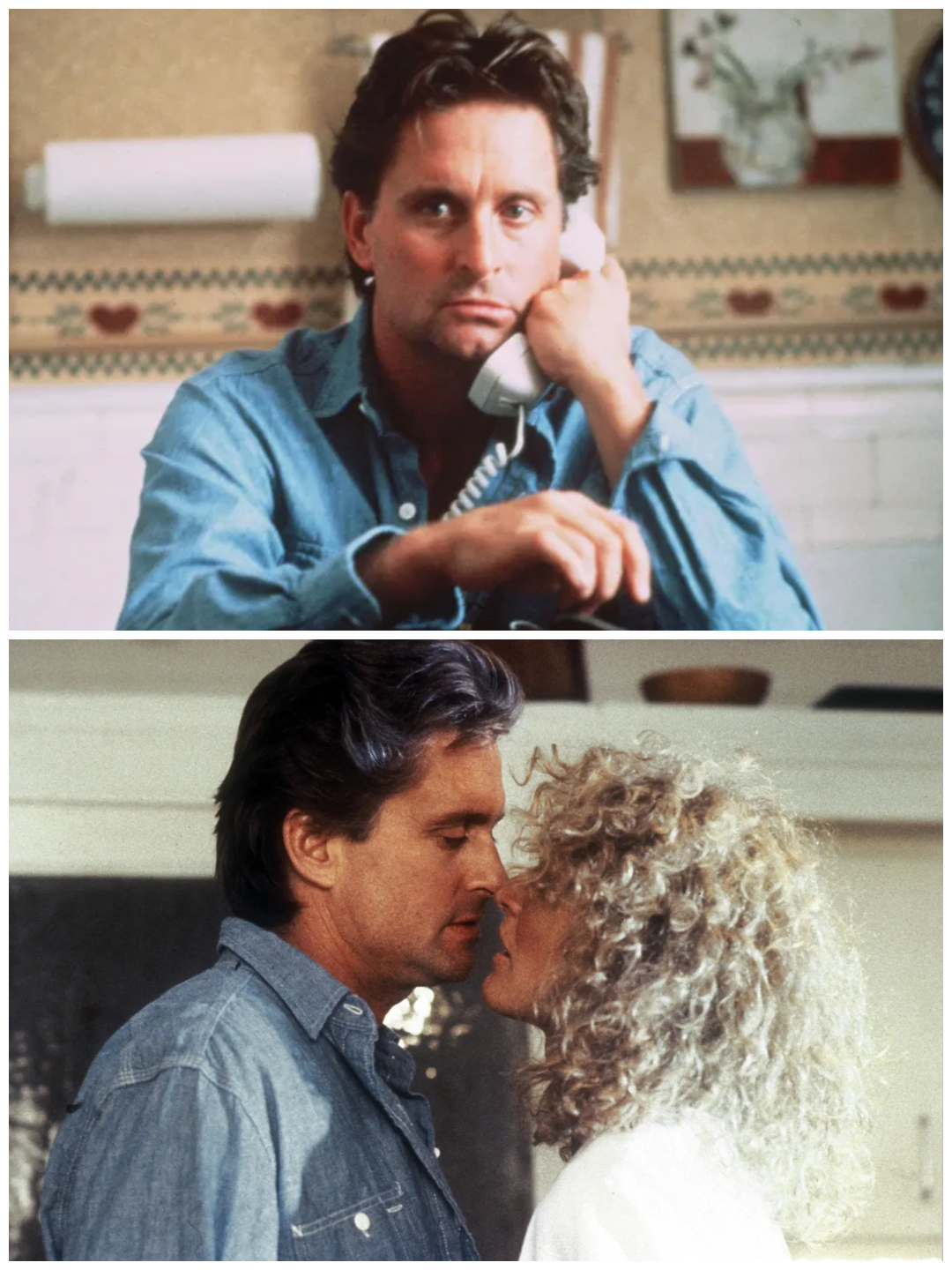
For nearly four decades, audiences have watched Fatal Attraction as one of the defining psychological thrillers of the 1980s.
They have studied Glenn Close’s increasingly frightening performance as Alex Forrest, Michael Douglas’ unraveling portrayal of married lawyer Dan Gallagher, and the movie’s many tense scenes that helped turn it into a cultural phenomenon.
But according to director Adrian Lyne, there is one detail almost everyone has missed.
It lasts for only a single frame.
During a recent event at the Academy Museum of Motion Pictures in Los Angeles, Lyne revealed that one of the film’s famous intimate sequences briefly contains an explicit image of Douglas that was never removed from the final cut.
The moment happens so quickly that Lyne says audiences simply do not register it.
“We left it in,” he said while discussing the film. “It’s so quick you didn’t see it.”
For a movie that has been analyzed, replayed and discussed since 1987, the idea that something remained hidden in plain sight for almost 40 years is remarkable.
And the story behind that single frame says a lot about the way Lyne constructed one of Fatal Attraction’s most memorable scenes.
The Detail Appears During the Famous Kitchen Encounter
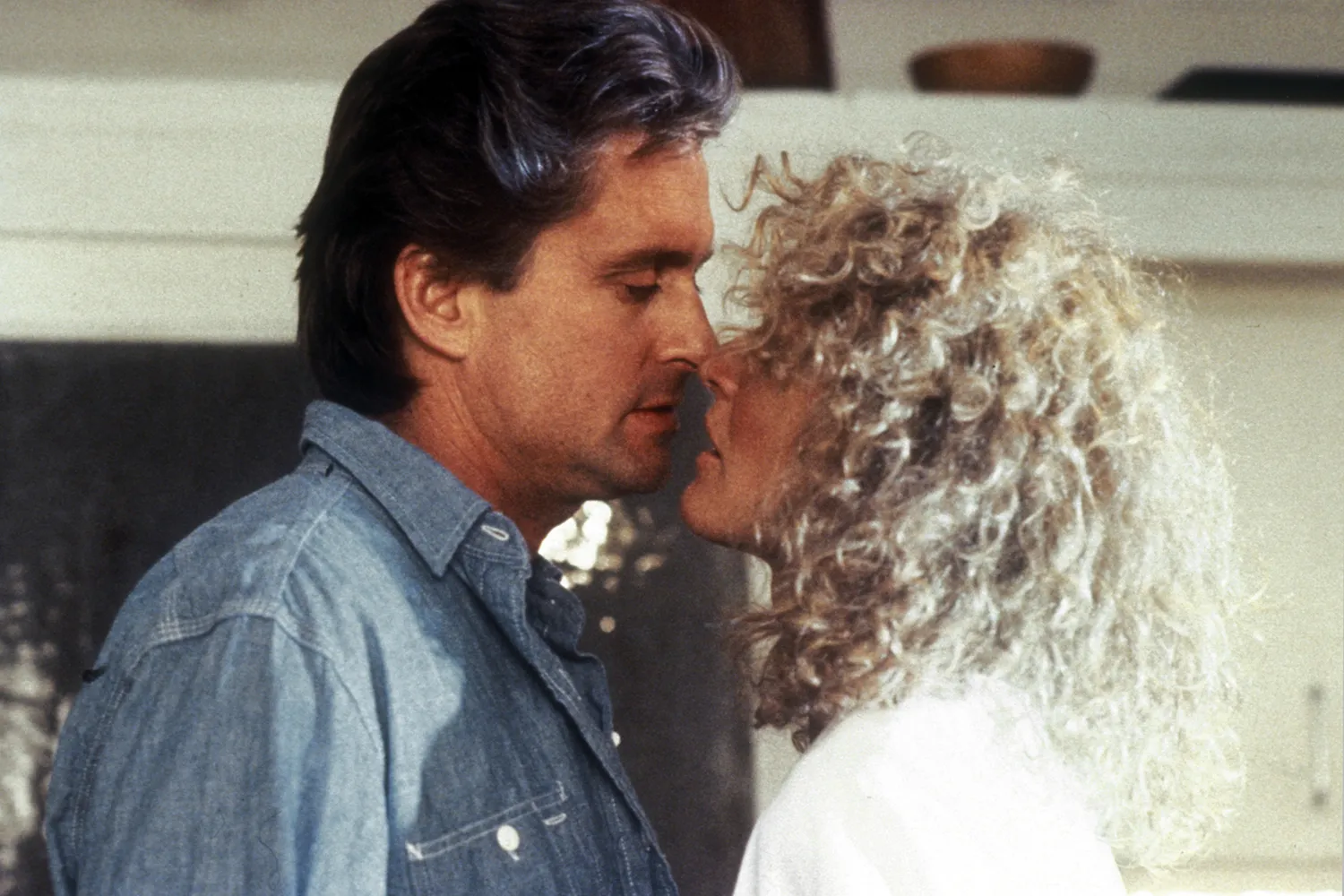
The moment comes during the first major intimate scene between Dan Gallagher and Alex Forrest.
Instead of staging the sequence in a bedroom, Lyne chose Alex’s kitchen.
That decision was deliberate.
At an Aug. 14 Academy Museum screening of another of his films, Unfaithful, Lyne explained that he often tried to avoid traditional bedroom scenes because he found them visually predictable.
The kitchen gave him more opportunities to build movement, awkwardness and humor into the scene.
There were dishes, water, counters and other ordinary objects that could make the encounter feel spontaneous rather than carefully staged.
Lyne said that kind of humor was especially important in scenes involving sex because audiences in the United States and Britain could become uncomfortable if everything was played too seriously. Giving viewers moments to laugh, he argued, prevented the scene itself from becoming unintentionally funny.
Michael Douglas, he added, was particularly good at finding those comic beats.
That is what led to the one-frame surprise.
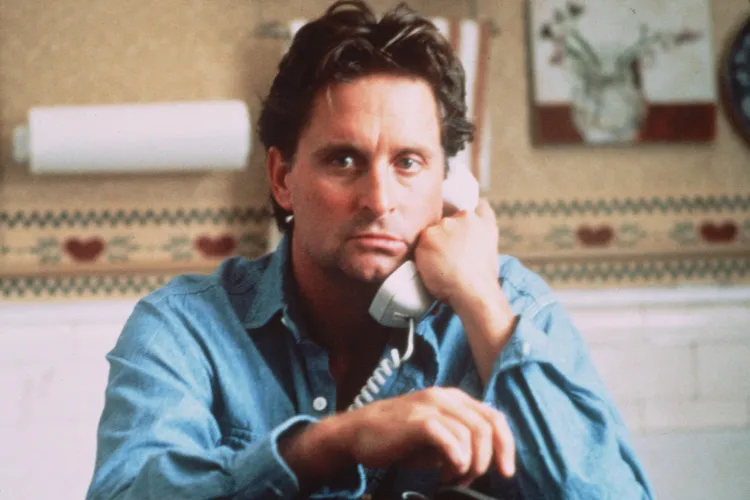
Douglas Was Not Wearing Underwear During the Scene
In the sequence, Douglas’ character struggles with his clothing while he and Close move through the kitchen.
Lyne recalled that Douglas questioned how the scene was being shot because he was not wearing underwear.
As Dan fumbles with his pants, there is a fleeting moment when the camera captures more than audiences were necessarily supposed to see.
According to Lyne, the image appears for exactly one frame.
Not one shot.
Not one second.
One frame.
The director openly acknowledged what appears in it during the Academy Museum event, explaining that the brief image of Douglas’ genitals remained in the finished movie.
The decision was not an accident discovered decades later.
Lyne said the filmmakers knew it was there and chose not to remove it because it passed by so quickly.
That helps explain how millions of viewers could have watched the movie without noticing.
A standard film plays at 24 frames per second.
That means one frame can vanish before the brain has much opportunity to process exactly what appeared onscreen.
Pause the movie at precisely the right instant, and the detail becomes visible.
Watch it normally, and it is almost impossible to register.
The Moment Was Part of the Scene’s Deliberate Awkwardness
Douglas has spoken before about the same sequence, although his recollection emphasizes something slightly different.
In a 2017 interview, he described adding a moment of physical comedy in which Dan, with his pants down, stumbles while carrying Alex and then tries to move toward the bed.
Douglas said he wanted the beat because the intensity of the scene needed a brief release.
The awkwardness gave audiences a second to relax before the movie continued.
That detail fits closely with Lyne’s broader philosophy about intimate scenes.
The kitchen encounter was not designed simply to appear glamorous or provocative.
It was supposed to feel messy, physical and slightly ridiculous in the way real human encounters sometimes are.
Plates can clatter.
People can trip.
Clothing can become awkward.
And, apparently, a camera can capture one frame that no one expects viewers to notice.
Fatal Attraction Became Much Bigger Than a Single Scene
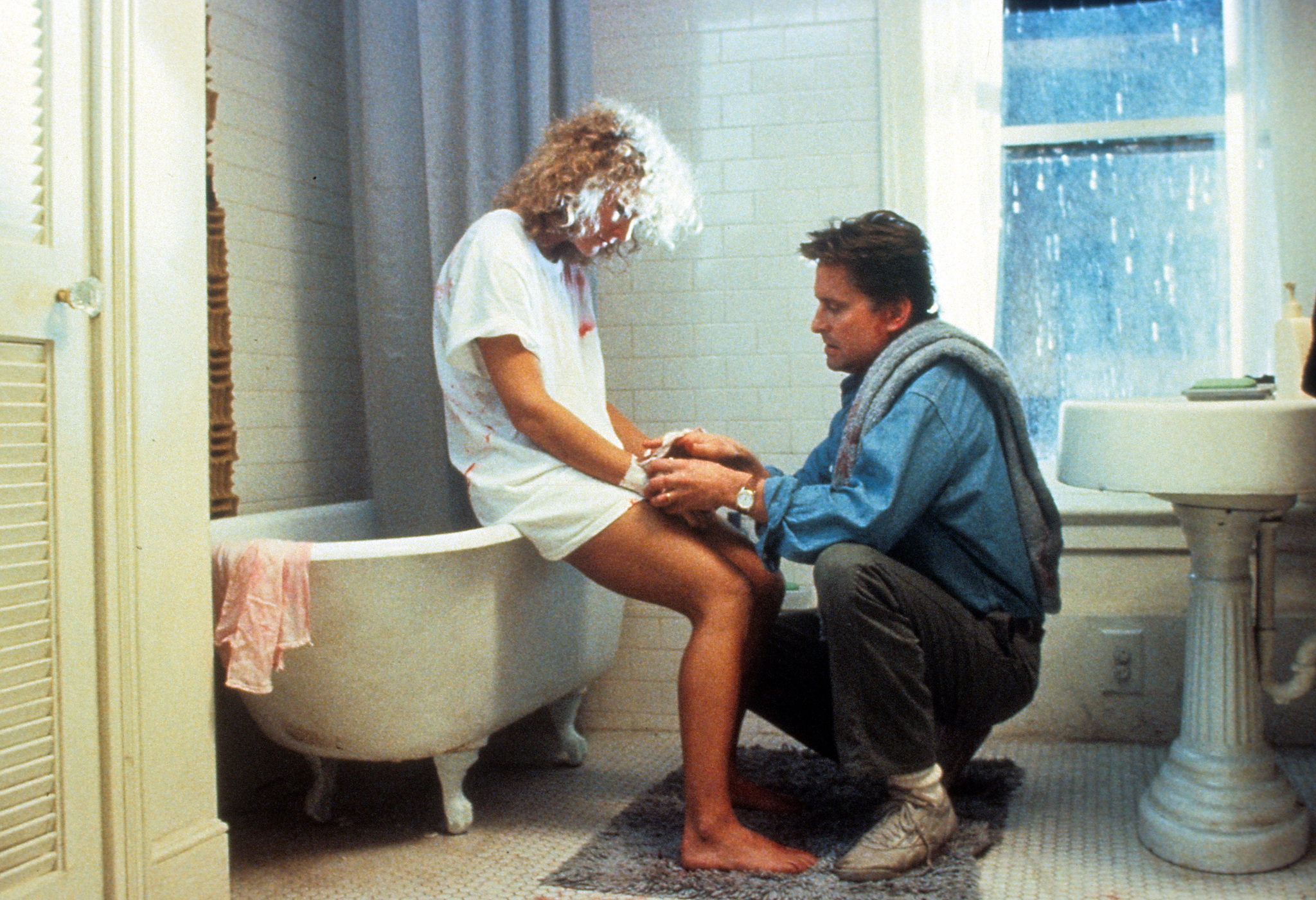
Released in 1987, Fatal Attraction became one of the decade’s most talked-about thrillers.
Douglas starred as Dan Gallagher, a married New York lawyer who begins an affair with Alex Forrest, played by Close.
What Dan initially treats as a brief encounter becomes increasingly dangerous when Alex refuses to accept that the relationship is over.
The story turns from infidelity drama into psychological horror as Alex intrudes further into Dan’s family life.
The film became a major box-office success and received six Academy Award nominations, including Best Picture, Best Actress for Close and Best Director for Lyne.
Its influence extended far beyond awards.
The movie became part of the cultural vocabulary of the late 1980s, and Alex Forrest became one of the era’s most recognizable thriller characters.
That is part of what makes Lyne’s new revelation so entertaining.
This is not an obscure movie that disappeared after release.
Fatal Attraction has been watched repeatedly for decades on VHS, DVD, cable television, streaming platforms and theatrical retrospectives.
Yet one frame apparently continued slipping past viewers.
Even Glenn Close Was Surprised by How Well the Movie Held Up
The film has also recently returned to the attention of some of the people who made it.
In 2025, Close attended a private screening after Kim Kardashian revealed that she had never seen Fatal Attraction.
Close later said it had been a very long time since she had watched the movie herself.
Her reaction surprised even her.
She told PEOPLE that she thought the film still worked remarkably well decades after its release and suggested that cultural attitudes had shifted significantly since it first appeared in theaters.
That continued interest is another reason small production details can suddenly become fascinating again.
Movies that remain culturally relevant invite audiences to return to them.
And every return creates the possibility of noticing something new.

One Frame, Almost 40 Years of Viewings
Lyne’s revelation does not change the plot of Fatal Attraction.
It does not rewrite the meaning of the movie or solve some long-running mystery about its characters.
What makes it irresistible is how small the secret is.
Audiences have spent almost 40 years watching the same kitchen scene.
Many probably remember the sink, the movement through the room and the intentionally awkward humor.
But almost no one noticed what appeared for a fraction of a second.
Now that Lyne has pointed it out, longtime fans may find themselves tempted to revisit the movie with one question in mind:
How did we miss that?
The answer may simply be that the director understood exactly what he was doing.
One frame was enough to leave the image in the movie.
And one frame was also short enough to hide it from almost everyone who watched.