Dolly Parton Left a “Roadmap” for Her Career to Continue Long After Her Death
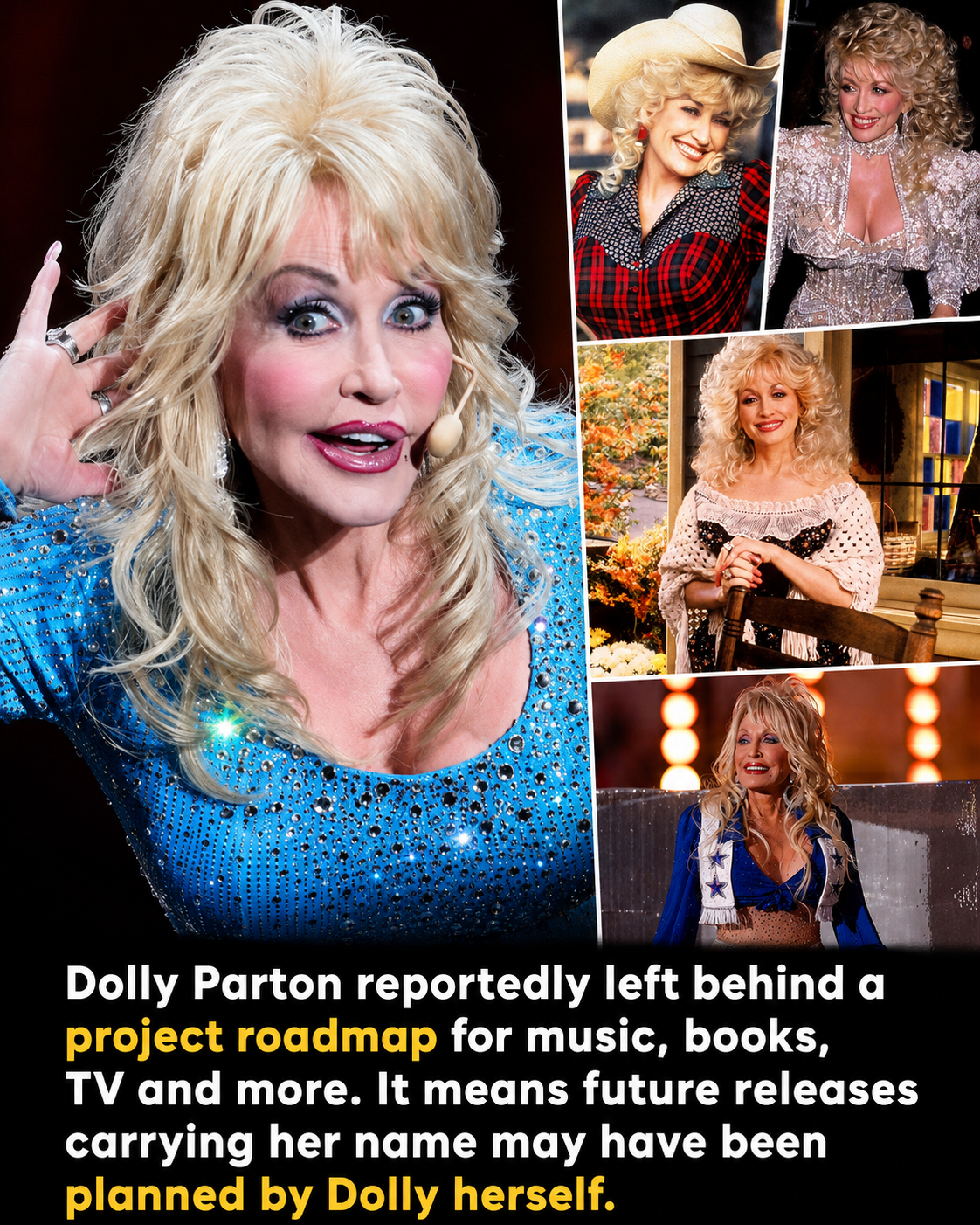
Dolly Parton spent more than six decades creating the kind of career that seemed almost impossible to contain in one industry.
There were thousands of songs.
Movies.
Books.
Dollywood.
Television.
Businesses.
Children’s literacy programs.
Food, fashion and products carrying her unmistakable personality.
So when Parton died on Aug. 25, 2026, at age 80, it was reasonable for fans to wonder what would happen to all the projects still connected to her name.
Would her estate begin creating new Dolly products?
Would unreleased material suddenly start appearing?
Would other people decide which projects seemed appropriate for her legacy?
According to her longtime manager Danny Nozell, Dolly had already thought about those questions herself.
And she had been preparing for them for years.
Before her death, Parton personally worked with a handpicked team to create what Nozell called a “project roadmap” — a long-term plan covering creative projects, entertainment, products and experiences that could continue appearing long after she was gone.
In other words, Dolly Parton did not simply leave behind a catalog.
She left instructions for what could come next.
Dolly Was Still Planning While the World Saw an 80-Year-Old Legend
By the final years of her life, Parton had already accomplished more than enough to retire.
She had sold more than 100 million records.
Her songs included standards such as “Jolene,” “Coat of Many Colors,” “9 to 5” and “I Will Always Love You.”
She had starred in movies, built Dollywood into a major destination and turned the Imagination Library into an international literacy program.
Nobody would have questioned her if she had decided to stop.
That was apparently never how Dolly operated.
Nozell said she continued working right up until the day she died.
More importantly, her work was not limited to finishing whatever happened to be immediately in front of her.
She was thinking years ahead.
Parton assembled people she trusted and helped create a roadmap intended to guide them “for decades to come.”
That phrase changes the way fans may view what appears under Dolly’s name in the future.
Some of it was already part of her plan.
Her Team Wants Fans to Know the Difference
Posthumous celebrity projects can be complicated.
Once an artist dies, audiences sometimes wonder whether a new album, product or production genuinely reflects that person’s wishes or whether someone else simply found a way to keep a valuable name in circulation.
Dolly’s team appears aware of that concern.
Nozell has emphasized that many of the projects now moving forward were already in various stages of development while Parton was alive.
He said fans seeing unreleased music, books, products, experiences or campaigns through Dolly’s official channels should know that she had personally put her stamp on them.
That distinction is important.
It does not mean Dolly completed every detail herself.
A musical still needs producers.
A television project still needs writers, directors and performers.
A hotel must still be operated.
Future music may require decisions about how and when it is released.
But the larger direction was not invented only after her death.
Dolly had already been involved.
The Roadmap Goes Far Beyond Music
For a singer, the obvious posthumous release would be unreleased recordings.
Dolly’s plan is much broader.
Projects already discussed by her team stretch across entertainment, hospitality, merchandise, television and publishing.
One of the largest is DOLLY: A True Original Musical, the Broadway production based on her life.
Parton had been deeply involved in the show before her death. She wrote music for it and worked on telling her own story for the stage.
The Broadway production is scheduled to begin previews in December 2026, with its official opening planned for Jan. 19, 2027 — what would have been Dolly’s 81st birthday.
The musical is only one part of what remains in development.
There is also a planned biopic.
A docuseries.
A musical documentary.
A scripted television series.
An animated project connected to her Billy the Kid books.
And an avatar performance concept that could eventually allow audiences to experience a new kind of Dolly show even though she is no longer physically onstage.
The woman who spent her career refusing to stay in one category apparently planned her legacy the same way.
Fans Will Also Be Able to Walk Into Dolly’s World
Some projects are physical rather than digital.
The Dolly Parton SongTeller Hotel in Nashville is part of the expanding lineup, along with Dolly’s Life of Many Colors Museum.
The museum is designed to preserve and present Parton’s story through the objects, clothes, career memories and personal history connected to her life.
These projects offer something recordings cannot.
They create places where fans can physically enter the world Dolly spent decades building.
That fits with a pattern she had already established through Dollywood.
Parton understood that people did not merely want to hear her music.
They wanted experiences connected to what she represented: Tennessee, family, humor, glamour, storytelling and an affection for the Smoky Mountains.
Her roadmap appears designed to keep expanding that idea.
Even Dolly Dolls Were Part of the Plan
Then there are the products.
Dolly Dolls.
Coffee.
Home décor.
Bedding.
Dog treats.
Food.
Jewelry collaborations.
Holiday merchandise.
At first glance, a list like that might sound like exactly the kind of licensing explosion that can happen after a famous person dies.
But Parton had already been participating in many of these ventures herself.
She even joked publicly about the Dolly Dolls while she was alive, poking fun at their plastic construction in the kind of self-deprecating way fans immediately recognized as her humor.
That matters because Dolly understood branding better than almost anyone in entertainment.
She spent decades making fun of her own wigs, rhinestones, cosmetic procedures and exaggerated image while simultaneously turning all of them into valuable pieces of a carefully protected identity.
The joke was often part of the business strategy.
She Had Been Building This Kind of Legacy Her Entire Career
The roadmap may sound extraordinary, but it fits the way Dolly Parton handled her career long before anyone was discussing what would happen after her death.
One of the most famous examples involved “I Will Always Love You.”
When Elvis Presley wanted to record it, his manager Colonel Tom Parker wanted a large share of the publishing.
Dolly refused.
She desperately wanted to hear Elvis sing her song, but she understood the long-term value of ownership.
Years later, Whitney Houston turned “I Will Always Love You” into a worldwide phenomenon.
Dolly still owned her publishing interest.
That ability to look beyond the exciting opportunity directly in front of her became one of the defining features of her business career.
The project roadmap appears to be the ultimate version of the same instinct.
Think beyond today.
Protect the work.
Plan for what happens next.
Her Death Does Not Mean the Ideas Suddenly Stopped
This is what may surprise fans most over the coming years.
New Dolly Parton projects will continue appearing.
Some may arrive soon.
Others may take years.
And when they do, it would be easy to assume they were created because an estate wanted to keep a famous brand profitable.
Nozell’s explanation paints a different picture.
Dolly knew she had unfinished dreams.
She knew she would not personally be there to complete everything.
So she selected people she trusted and helped give them a path forward.
They still have decisions to make.
But they are not beginning with an empty page.
Dolly left them a roadmap.
Dolly Planned for a Future She Would Never See
There is something deeply characteristic about that idea.
Dolly Parton spent her life talking about dreams, but she was rarely passive about them.
She turned songs into businesses.
She turned childhood memories into attractions.
She turned her father’s difficulty reading into a literacy program that eventually delivered hundreds of millions of books to children.
Dreaming, for Dolly, usually came with a plan.
Apparently, even death did not change that.
Before she was gone, she was already thinking about the music fans might hear later, the stories they might watch, the books they might read and the places they might visit.
She could not stay to see all of those projects completed.
So she did the next best thing.
She helped decide what should happen without her.
Dolly Parton left behind songs everyone knows.
She left behind Dollywood, the Imagination Library and one of entertainment’s most recognizable names.
But she also left something less visible.
A plan.
And if Danny Nozell is right, fans may still be seeing Dolly’s own ideas come to life decades from now.