Dolly Parton’s Hidden Tattoos Had a Very Different Purpose Than Fans Imagined
For years, Dolly Parton’s long sleeves helped fuel one of the strangest rumors surrounding her famous image.
Was she secretly covered in tattoos?
Fans speculated that beneath the rhinestones, lace and elaborate stage costumes, Dolly might have extensive body art that she simply refused to show the public.
The truth was both less dramatic and far more personal.
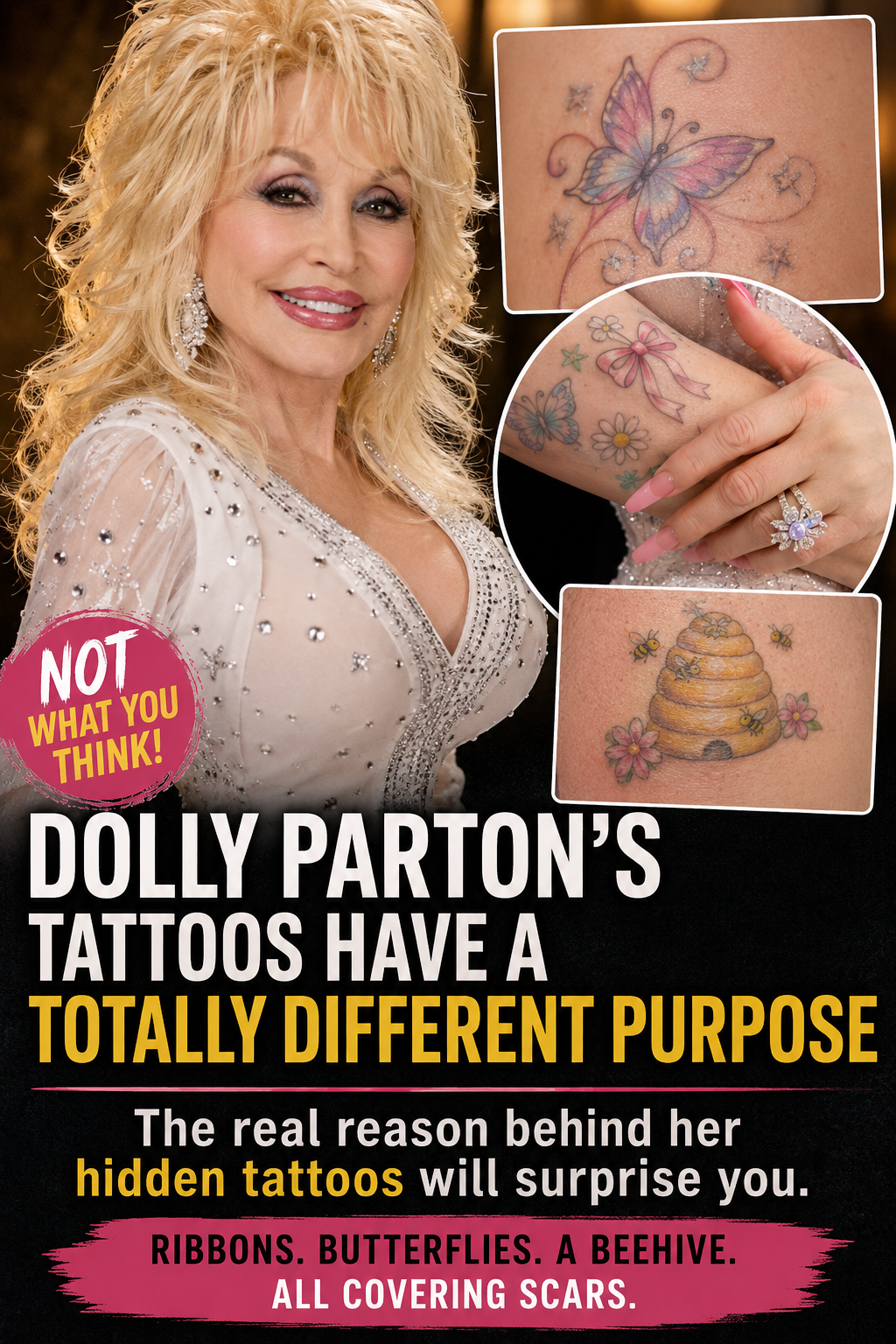
Dolly eventually confirmed that she did have tattoos.
More than one.
But they were nothing like the dark, elaborate sleeves people imagined.
Her tattoos were small, colorful and deliberately feminine — butterflies, ribbons, bows and other delicate designs rendered mostly in pastel shades.
And in many cases, Dolly had not gotten them because she wanted tattoos at all.
She was using them to hide scars.
One of the most revealing examples was a tiny beehive she had tattooed over a mark left by a feeding tube after a period when she had been seriously ill.
For Dolly, even a permanent reminder of a difficult medical experience could become something prettier.
It fit a philosophy she expressed repeatedly throughout her life:
Turn the negative into something positive.
The Long Sleeves Created a Mystery
Few entertainers have controlled their visual identity as carefully as Dolly.
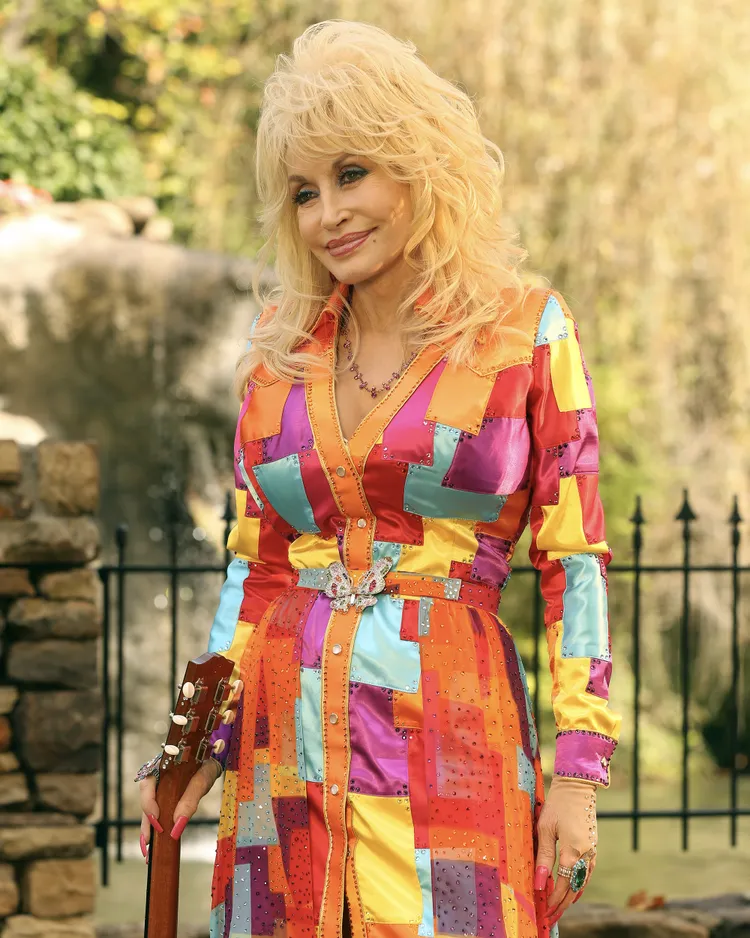
From her enormous blonde wigs to her high heels, acrylic nails and glittering outfits, she understood that appearance could become part of the show.
She also rarely dressed casually in public.
Long sleeves were common.
So were gloves, lace and layers of fabric.
Eventually, fans started wondering what she might be hiding.
The tattoo rumors grew.
Some versions became increasingly elaborate, suggesting that Dolly’s arms and body were secretly covered with ink and that her clothes existed primarily to conceal it.
Dolly found the speculation amusing.
Over the years, she occasionally acknowledged that there was a small amount of truth hiding inside the exaggeration.
Yes, she had tattoos.
No, she was not secretly covered from head to toe.
“I’m not a tattoo girl” was essentially how she described herself.
The tattoos existed for a much more practical reason.
Dolly’s Fair Skin Made Scars Especially Noticeable
Dolly explained that her very fair complexion made scars difficult for her.
When she had surgeries or other medical procedures, some marks did not heal in a way she liked.
She said scars could turn purple against her pale skin.
Rather than stare at a mark she disliked, Dolly came up with a solution entirely consistent with her personality.
Cover it with something beautiful.
If a scar was going to remain, she could transform the way it looked.
That meant flowers, bows, ribbons, butterflies or other small decorative images.
The ink was generally light and colorful instead of heavy black tattooing.
For someone famous for believing that more sparkle usually improved almost anything, turning scars into artwork made a strange kind of sense.
The tattoos were not meant to announce rebellion.
They were not designed as public statements.
Most people were never supposed to see them at all.
They were for Dolly.
One Scar Became a Tiny Beehive
Perhaps the most striking example came from a period when Dolly became ill enough to require a feeding tube.
Afterward, the tube left a small indentation on her side.
Dolly did not like the appearance of the mark.
So she looked at the little depression and imagined something else.
A beehive.
She had a small yellow-and-brown hive tattooed over the area, complete with a tiny bee.
The indentation itself became part of the design.
Instead of trying to pretend the scar had never existed, she incorporated it into the artwork.
That detail says something important about how Dolly approached her appearance.
She spent decades altering, decorating and exaggerating herself, and she never pretended otherwise.
She openly joked about cosmetic procedures.
She joked about wigs.
She joked about makeup.
The beehive tattoo followed the same logic.
Something bothered her.
So she changed it until she could smile when she looked at it.
Butterflies Were an Obvious Choice
Among the designs Dolly mentioned most often were butterflies.
That was hardly surprising.
Butterflies appeared repeatedly throughout her life and career.
They fit the visual world she loved — colorful, delicate and a little whimsical.
They also represented transformation and freedom, ideas that suited someone who spent her life moving far beyond the circumstances into which she had been born.
Dolly grew up poor in rural East Tennessee and eventually became one of the most famous entertainers in the world.
She built businesses.
Wrote thousands of songs.
Starred in movies.
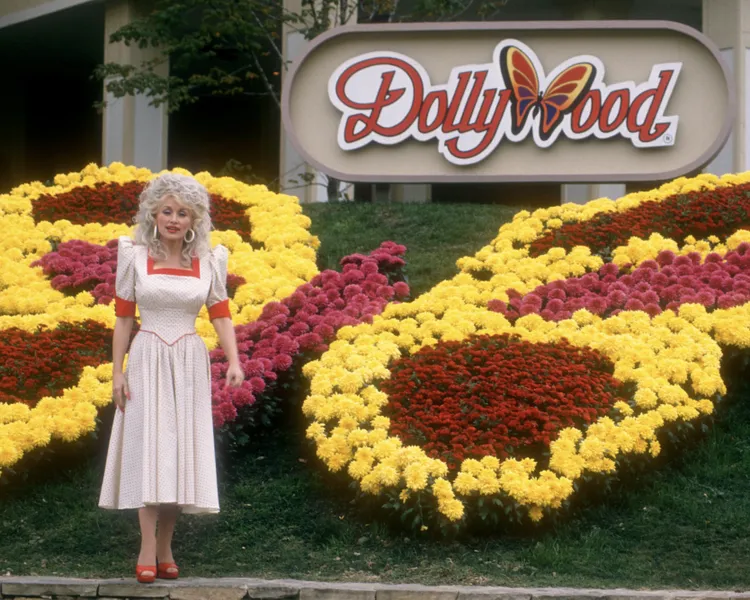
Created Dollywood.
Established a childhood literacy program that reached millions of families.
A butterfly was almost too perfect a symbol.
But Dolly did not turn her tattoos into another branding opportunity.
She mostly kept them private.
That Privacy Made the Rumors Bigger
Dolly’s willingness to discuss almost anything often made the subjects she kept private even more fascinating.
She could tell jokes about her body before an interviewer had the courage to ask.
She could talk openly about cosmetic surgery.
She could describe exactly how she built the exaggerated Dolly Parton image.
Yet she did not routinely display her tattoos.
That created a vacuum fans happily filled with speculation.
Every glimpse of color near a sleeve became evidence.
Every outfit became another clue.
The reality was more modest.
There were several tattoos, but they were scattered decorative pieces rather than some enormous secret collection.
Dolly herself seemed to enjoy allowing a little mystery to remain.
She understood that not everything about a famous person needed to be completely explained.
She Even Had the Perfect Answer About Carl Dean
When Dolly was asked whether she had her longtime husband Carl Dean’s name tattooed somewhere on her body, she once gave an answer that sounded exactly like her.
No.
She did not need to.
Carl was tattooed on her heart.
It was sentimental, funny and unmistakably Dolly.
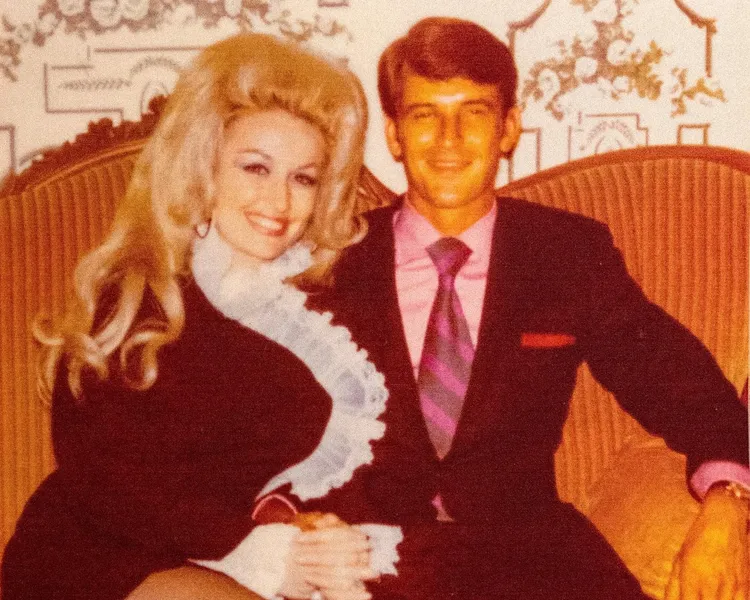
The couple spent nearly six decades married while maintaining an unusually private relationship.
Carl avoided the spotlight that surrounded his wife.
In a way, Dolly’s hidden tattoos belonged to the same private world.
The public could see the rhinestones.
Not everything underneath them needed to belong to everyone else.
The Tattoos Fit a Much Larger Dolly Philosophy
The most interesting part of Dolly’s tattoos was never really the designs.
It was why she got them.
A scar represented something unpleasant — surgery, illness, an injury or a difficult period.
Dolly could not always make the mark disappear.
But she could decide what she saw when she looked at it.
A purple scar could become a butterfly.
An indentation from a feeding tube could become a beehive.
It was a surprisingly literal version of something Dolly did throughout her career.
She turned poverty into songs.
She turned heartbreak into music.
She turned an exaggerated appearance that critics sometimes mocked into one of entertainment’s most valuable and recognizable images.
And when life left marks on her body, she sometimes turned those into art too.
The rumors imagined that Dolly Parton’s clothes were hiding some enormous secret.
They were wrong about the scale.
But they were right about one thing.
There really were tattoos underneath some of those famous outfits.
They simply were not there for the reason everyone assumed.
Dolly was not trying to shock anyone.
She was taking scars she did not like and giving herself something prettier to see instead.