Ethan Hawke Thought Robin Williams Hated Him on Dead Poets Society — Then One Phone Call Changed Everything
- NgoPhong
- September 4, 2026
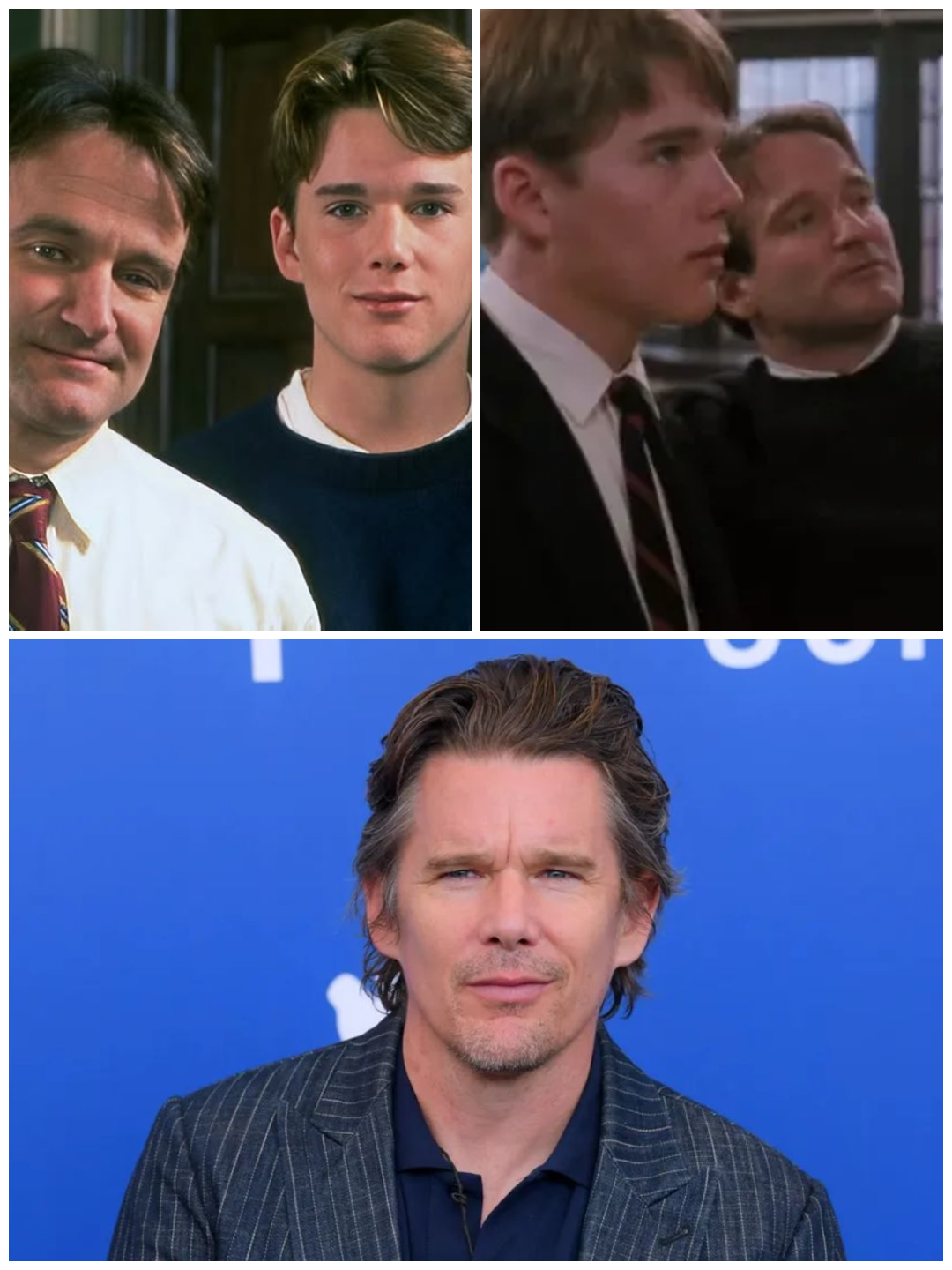
When audiences think of Dead Poets Society, they usually return to a few unforgettable images.
Robin Williams standing on a desk as John Keating. A classroom of boys being told to seize the day. Ethan Hawke’s Todd Anderson slowly finding his voice. And, of course, the final moment when students rise from their desks and say, “O Captain! My Captain!”
Released in 1989, Peter Weir’s film became one of the defining school dramas of its era. It was emotional without being sentimental, literary without feeling distant, and anchored by Williams in one of the warmest and most moving performances of his career.
For Hawke, though, the experience of making the film was more complicated than viewers ever saw.
He was only 18, serious, ambitious and trying desperately to prove himself. Williams, by contrast, was already a huge presence — brilliantly funny, fast, improvisational and constantly alive between takes.
Hawke later admitted that, during filming, he came to a painful conclusion.
He thought Robin Williams didn’t like him.
Then, after the movie was over, Hawke learned he had read the entire situation wrong.
Hawke Was Young, Intense and Trying to Be Taken Seriously
Todd Anderson is one of Dead Poets Society’s quietest characters.
He arrives at Welton Academy shy, inward and overwhelmed, especially when compared with his outgoing roommate Neil Perry, played by Robert Sean Leonard. Todd spends much of the movie trying to disappear into the walls until Keating slowly draws him out.
Hawke brought exactly the right emotional fragility to the role. But off camera, he was not drifting through the experience lightly.
He was 18 and intensely focused.
This was not just another job. It was a major film with an extraordinary cast, a respected director and one of the biggest stars in the world standing right in front of him. Hawke wanted to be good. He wanted to belong there. And like many very young actors, he approached that challenge with seriousness that could border on tension.
Williams’s energy did not naturally calm that tension.
If anything, it made Hawke even more self-conscious.
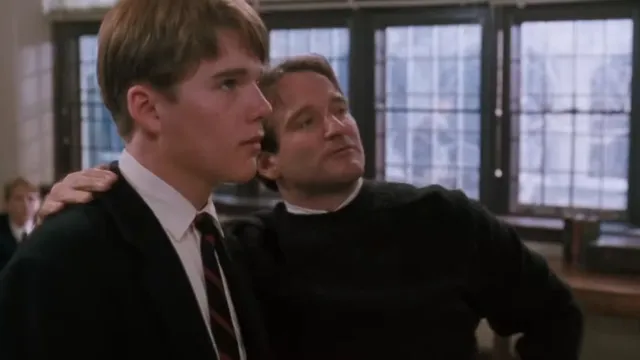
Robin Williams Was Doing What Robin Williams Did
Williams was not just the leading actor in the film.
He was Robin Williams.
By then, audiences already knew his mind seemed to move at a different speed from almost everyone else’s. He joked constantly, improvised constantly, and could shift from comedy to tenderness in an instant.
On the Dead Poets Society set, that playful energy did not disappear when the camera stopped rolling.
Williams kept things loose.
He made jokes between takes, entertained people around him and brought the kind of spontaneity that often makes a long production feel lighter.
For Hawke, that created a problem.
He was not laughing very much.
He has said that he was so serious during that period that he often failed to respond the way Williams probably expected. Instead of joining in, he would stay stiff and focused. In Hawke’s mind, this made him look awkward, humorless, maybe even ungrateful.
The more that happened, the more he worried.
Eventually, he began to think Williams must dislike him.
Hawke Thought His Silence Meant He Was Failing With Williams
It is an easy misunderstanding to imagine.
An 18-year-old actor is standing beside one of the most gifted performers in the business. That older performer is trying to lighten the atmosphere, and the teenager barely reacts. From Hawke’s point of view, it started to look terrible.
He later described believing that Williams hated him.
Not because Williams had said anything cruel.
Not because there had been some open conflict.
But because Hawke’s own discomfort shaped the way he interpreted everything. He was too tense to relax, too intimidated to match Williams’s energy, and too young to trust that not every silence means rejection.
For much of the shoot, he seems to have carried that belief with him.
Then filming ended.
And shortly afterward, something happened that answered the question far more clearly than any on-set conversation had.
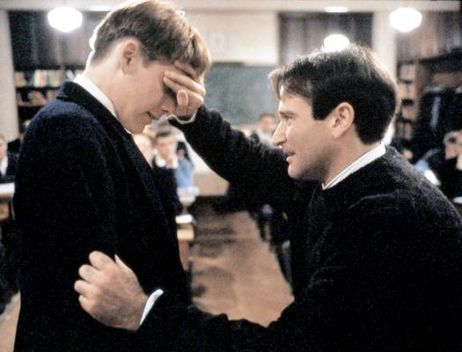
Williams Quietly Helped Hawke Get His First Agent
This is the payoff at the center of the story:
After Dead Poets Society was finished, Robin Williams privately called a talent agent and told the agent there was a young actor from the set who had real promise. That young actor was Ethan Hawke.
Hawke later received a phone call from the agent.
The meeting request did not come from a studio publicity push or some generic post-movie momentum. It came because Williams had gone out of his way, on his own, to recommend him.
That was the moment Hawke realized how badly he had misread the situation.
The man he thought disliked him had actually been helping him behind the scenes.
And not in some vague, polite way.
Williams used his own influence to tell an agent that Hawke was worth paying attention to.
For a young actor just starting out, that was no small kindness. It was practical. It was generous. And it helped open the next stage of Hawke’s career.
The Gesture Meant More Because Williams Never Announced It
What gives the story real emotional weight is how quiet the act was.
Williams did not apparently walk over to Hawke during filming and say, “I believe in you.” He did not make a show of mentoring him in front of the cast. He did not tell Hawke directly that he was taking steps to help.
He simply did it.
That fits something many actors have said about Williams over the years. For all his extraordinary public energy, he also had a deeply personal instinct to encourage people, especially younger performers. He could be expansive onstage or on set, but the kindness often showed up in specific off-camera gestures.
In Hawke’s case, the gesture corrected a private insecurity he had carried throughout the production.
He thought he had made a bad impression.
Instead, Williams had noticed something hopeful in him.
It Changed the Way Hawke Understood the Entire Experience
Once Hawke knew what Williams had done, the emotional logic of the whole shoot shifted.
What he had interpreted as distance or disapproval now looked more like a misunderstanding created by youth and nerves. Williams had likely seen exactly what Hawke was: a young actor taking everything very seriously, maybe too seriously, but doing real work.
That does not mean the age gap and difference in temperament suddenly vanished in retrospect.
Those differences were real.
Williams was relaxed where Hawke was tense. Williams played; Hawke strained. Williams was already secure in his place; Hawke was still trying to figure out whether he deserved his.
But the later phone call changed the meaning of those differences.
Hawke no longer had to remember Dead Poets Society as a time when he failed to connect with Robin Williams.
He could remember it as a time when he misunderstood him.
And when Williams understood him better than he realized.
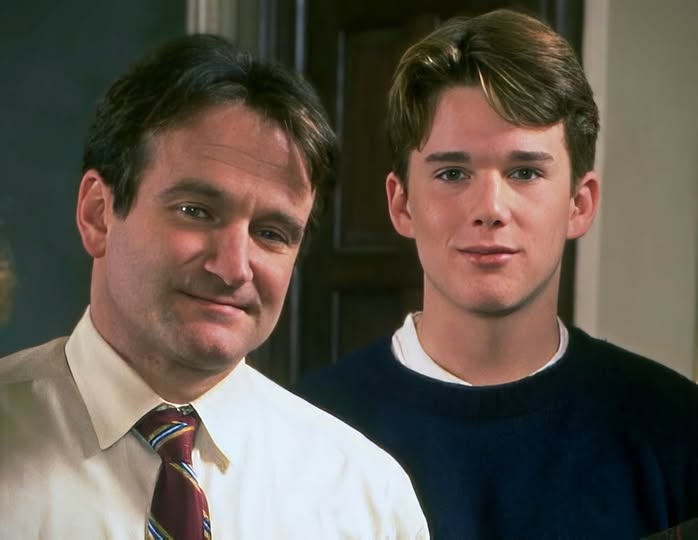
Todd Anderson Found His Voice — and Hawke Found an Early Champion
That hidden story gives Dead Poets Society an extra layer because it quietly echoes the movie itself.
Todd Anderson spends much of the film afraid that he has nothing to say, or at least nothing worth saying out loud. John Keating sees otherwise. He recognizes something in Todd before Todd fully recognizes it in himself.
Offscreen, Hawke was going through his own smaller version of that uncertainty.
He was the young actor who worried he was getting it wrong.
Williams, without making a speech about it, saw enough to pick up the phone and help.
Years later, that is what makes the anecdote so moving. Ethan Hawke spent the shoot thinking Robin Williams hated him. After filming, he learned the opposite was true in the most useful way possible: Williams had already called ahead and told the industry to watch that kid.
For a movie built around the idea that one teacher can change the course of a young person’s life, it feels fitting that one of Dead Poets Society’s kindest lessons happened after the cameras stopped rolling.