Police Track Down a Truck After Neighborhood Gunfire — Then a Woman Says She Bought the Gun That Same Day

A series of 911 calls reporting gunfire in an Austell, Georgia, neighborhood quickly turned into a high-risk police stop after officers located a truck matching the description connected to the incident.
The encounter unfolded on October 28, 2023, after residents reported hearing multiple shots behind homes in the area. One witness told police that after hearing the gunfire, he looked over a fence and saw people near a dirt-road area behind the houses. He described seeing a pistol and estimated hearing roughly four shots before the pair left.
Within minutes, officers found a truck they believed was associated with the shooting.
What followed was no ordinary traffic stop.
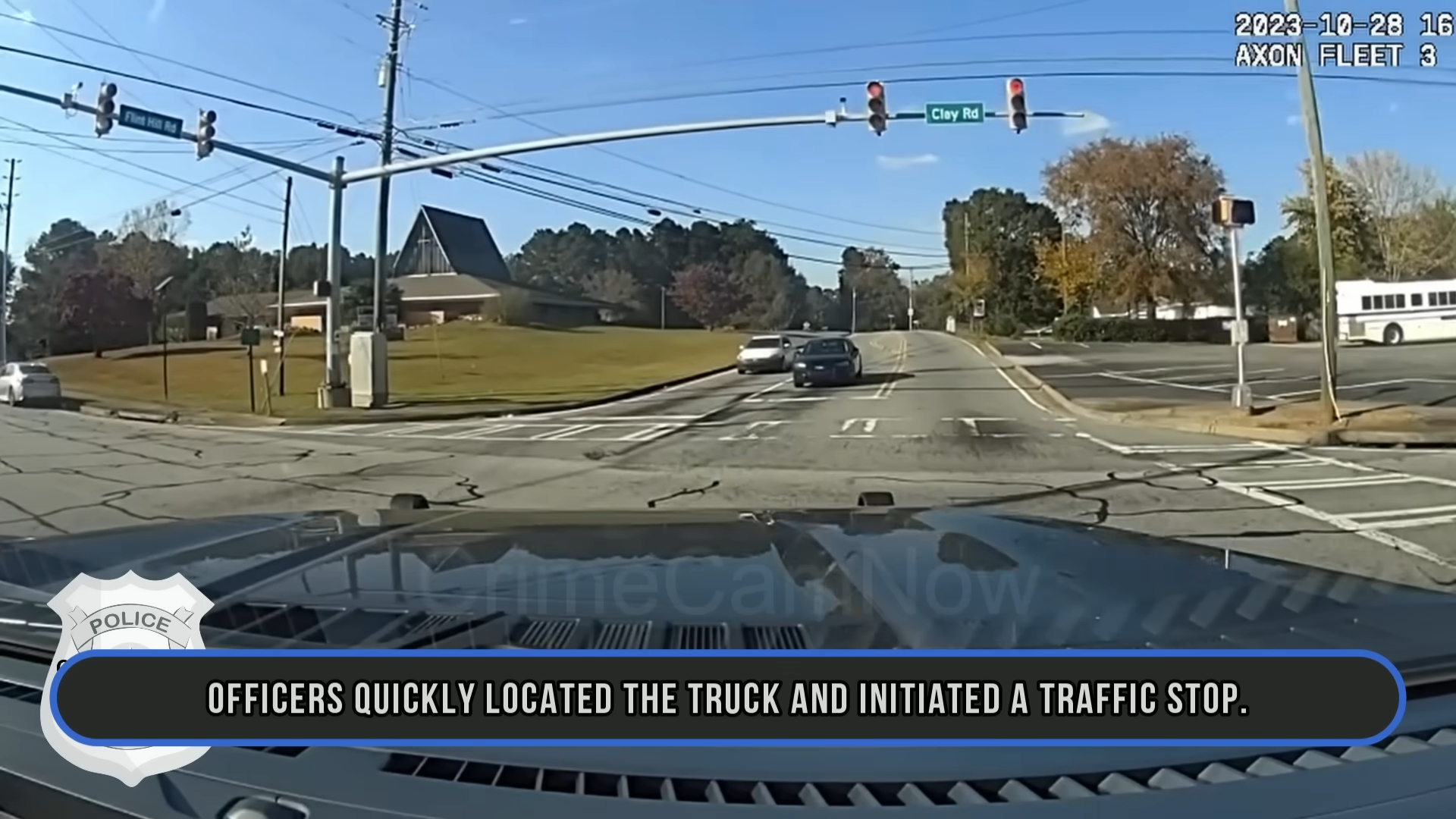
Officers Locate the Truck
At approximately 1:18 in the footage, officers identify the vehicle and initiate a stop.
Because the call involved a firearm, they approach the situation as potentially dangerous from the beginning.
Commands are shouted repeatedly.
“Put your hands up!”
“Hands out!”
“Everybody, hands out!”
The occupants are instructed not to step out until police are ready to control their movements. Officers position themselves around the vehicle while monitoring both people inside.
The tension is obvious.
Eventually, one occupant is directed backward toward officers and ordered to sit down with her hands on top of her head.
A firearm is then secured.
Police also detain the male occupant while continuing to search for ammunition and determine exactly what had happened before the truck left the neighborhood.
For the moment, however, officers make an important distinction.
Neither person is immediately told that they are under arrest.
Instead, they are told that they are being detained while police investigate a reported shooting.
“Nobody’s Under Arrest at This Moment”
At around 3:26, an officer sits down with the woman and begins explaining the situation.
Her truck matches the description associated with the shooting call, he tells her.
For that reason, both occupants are being temporarily detained while officers determine what happened.
“Nobody’s under arrest at this moment,” the officer says.
That status changes in significance almost immediately.
Another officer indicates that the woman has already admitted involvement.
“She admitted to doing it,” he says.
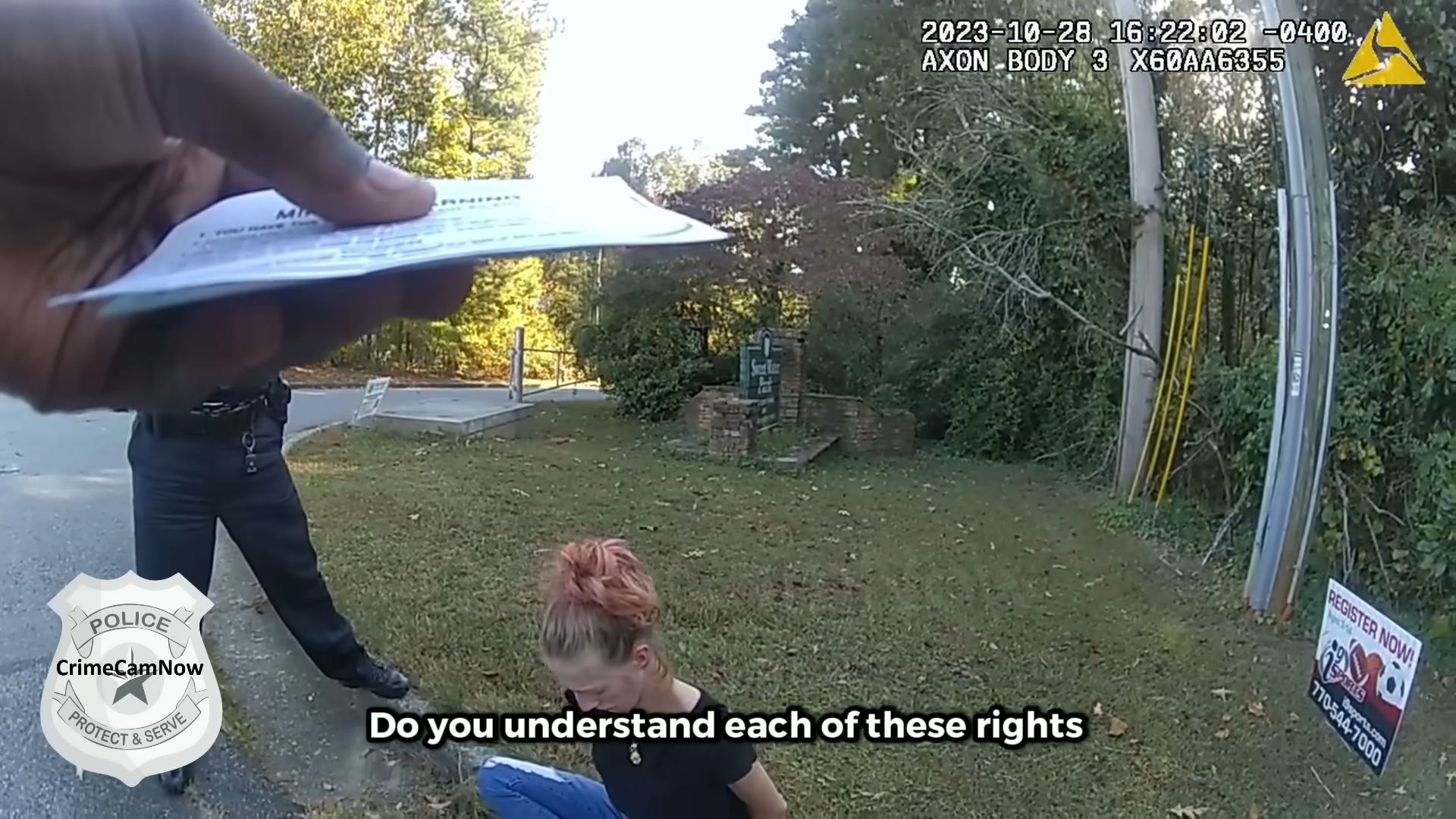
The interviewing officer then moves into a formal rights warning.
He tells the woman she has the right to remain silent and asks whether she understands the rights being explained to her.
He then asks whether she still wants to speak with him.
She agrees to continue the conversation.
That decision opens the door to a much more detailed account of the gun, when she obtained it and what she had been doing shortly before police found the truck.
One fact immediately stands out.
The firearm was apparently brand new.
She Says She Bought the Gun That Day
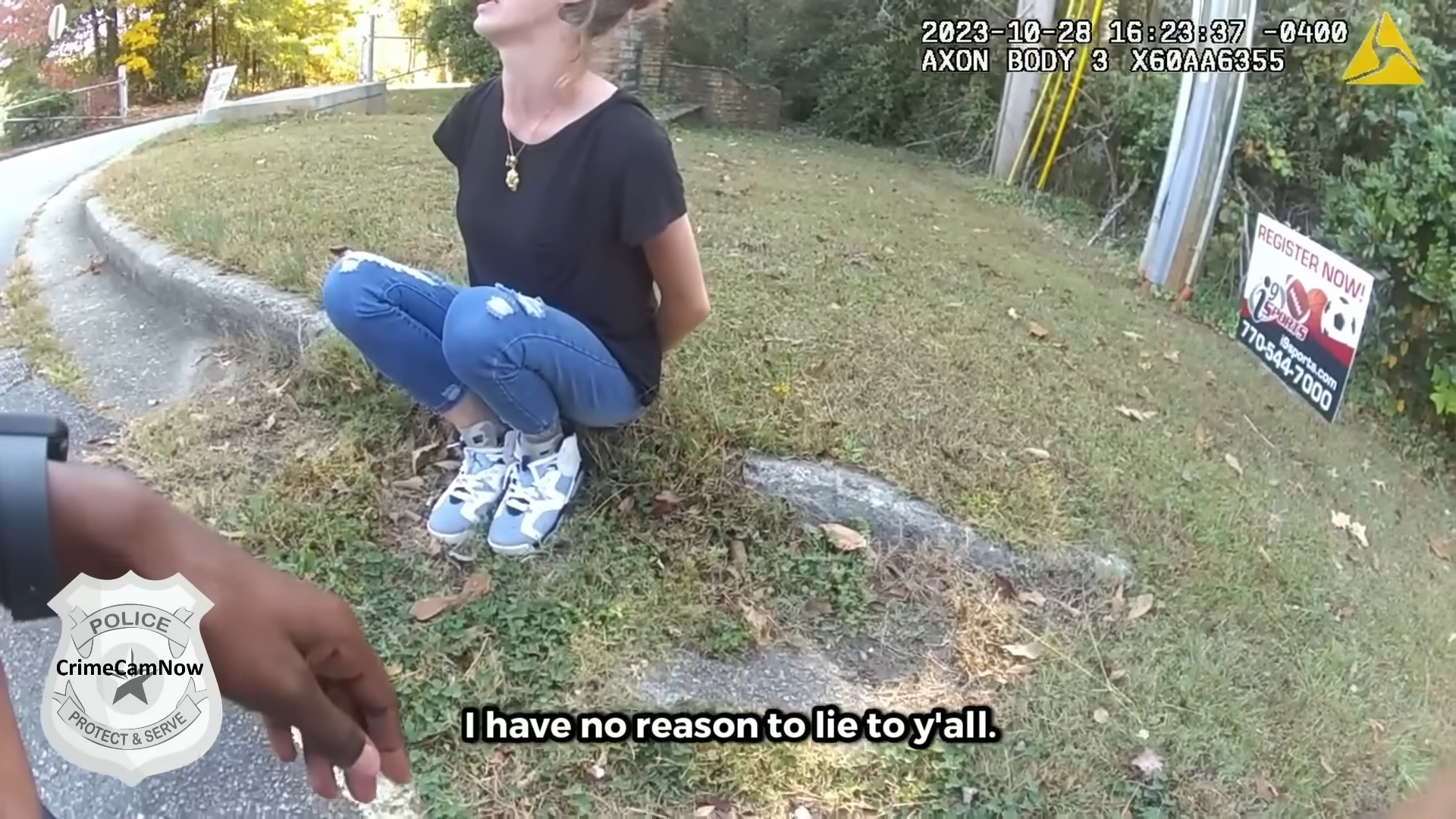
At approximately 5:30, the officer asks the woman to start again from the beginning.
His first major question is simple:
“When did you purchase your gun?”
Her answer is equally simple.
“Today.”
The officer appears surprised enough to clarify.
She had purchased the gun that same day.
He asks which pawn shop sold it to her and then begins narrowing down the timeline.
The conversation briefly turns to alcohol. The officer says he smells an alcoholic beverage and asks whether she has been drinking.
The woman says she has not consumed alcohol that day.
She does acknowledge drinking the previous day.
The officer then returns to the firearm purchase.
He asks whether she bought the gun only a couple of hours earlier.
After comparing the time of the interview to the purchase timeline, he determines that the transaction may have taken place less than an hour earlier.
The woman also tells him that the receipt is still in her wallet.
Police ask for permission to retrieve it, and she agrees.
That detail dramatically changes the context of the investigation.
This was not, according to her account, a firearm she had owned for months or years.
She had obtained it only shortly before neighbors reported hearing gunfire.
From Purchase to Police Stop in Less Than an Hour
The timeline now begins to come together.
Residents hear multiple shots in the neighborhood.
A witness sees people in the area behind the homes.
The pair leave.
Police locate a truck matching the description.
A firearm is recovered during a high-risk stop.
And the woman tells investigators that she had purchased that firearm earlier the same day — possibly less than an hour before police began questioning her.
At this stage, however, officers still need to establish the most important part of the case.
Who actually fired the weapon?
The male occupant had been near her.
A witness had initially described seeing a man with a pistol.
But police now had the woman acknowledging involvement and explaining where the firearm came from.
The next questions become much more direct.
Why did she go to that area?
Where exactly was she shooting?
Was anyone else firing?
And how many rounds had actually been discharged?
Those answers would soon move the investigation from a detention into an arrest.