Race Car Driver Says ‘I Owe You My Life’ After Rival Pulls Him From a Burning Ferrari
Motor racing is built on rivalry.
Drivers fight for position, defend every corner and measure success in fractions of a second. On the track, the person beside you is usually the person you are trying to beat.
But during a race in Shanghai, one driver suddenly became something far more important to another.
He became the man who saved his life.
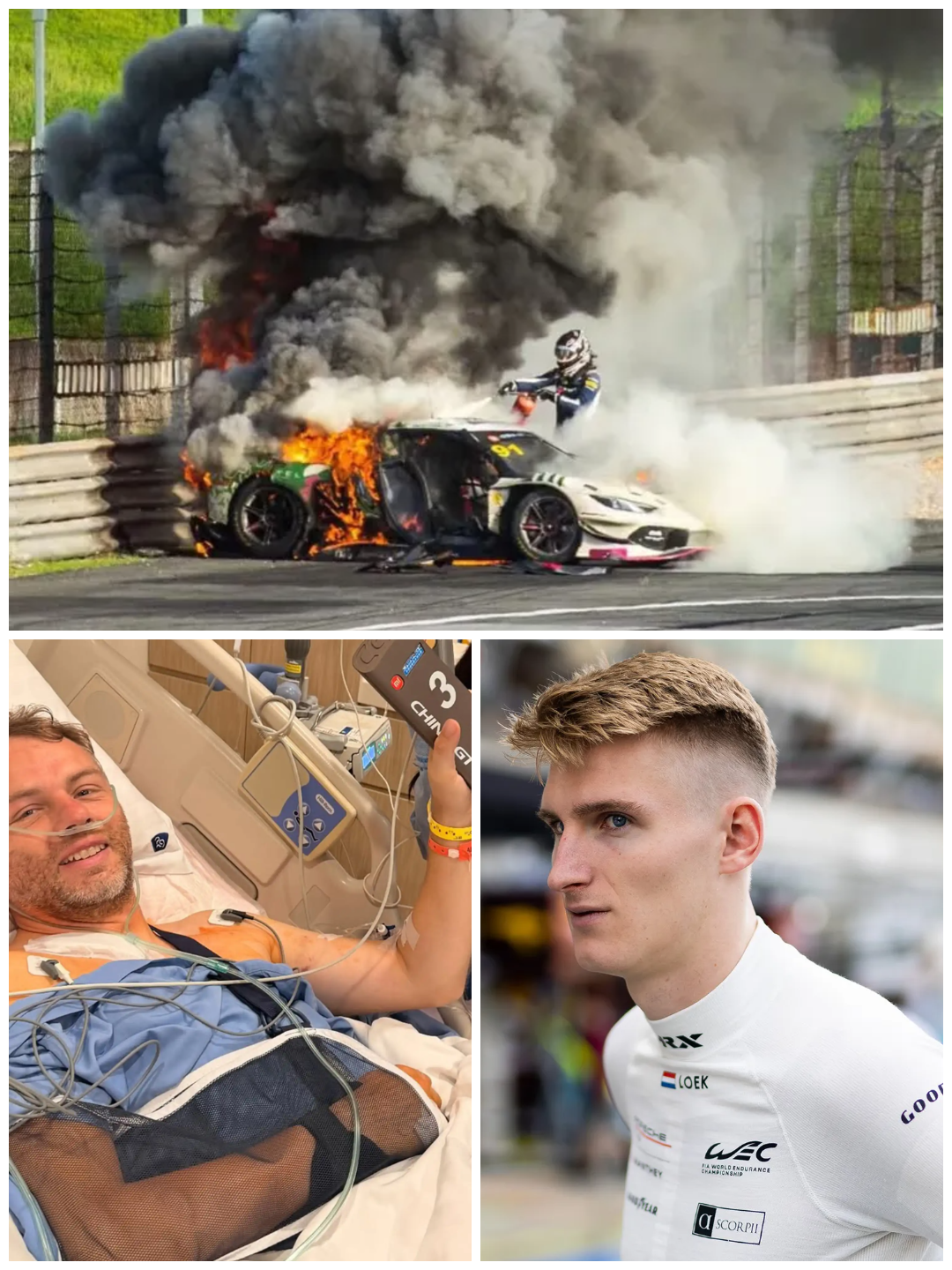
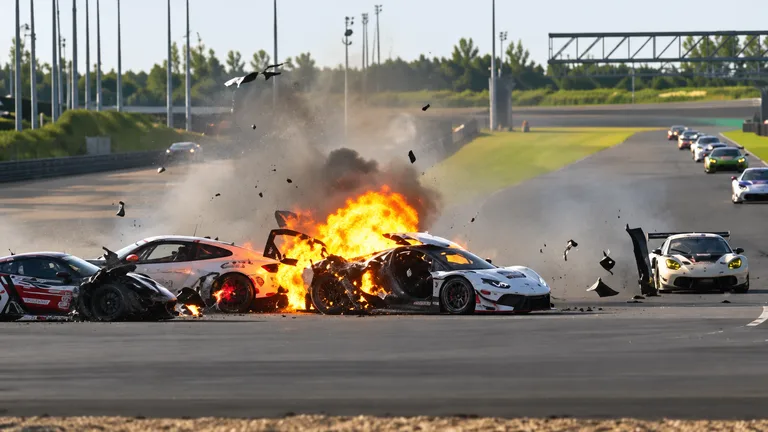
British racer Ollie Millroy was competing in the China GT Championship on Sept. 5, 2026, when a violent crash left his Ferrari engulfed in flames. With the car burning and Millroy critically injured, fellow driver Loek Hartog stopped and ran toward the wreck.
What happened next had nothing to do with points, trophies or finishing positions.
Hartog helped extinguish the flames and pulled Millroy away from the burning car before emergency crews reached him.
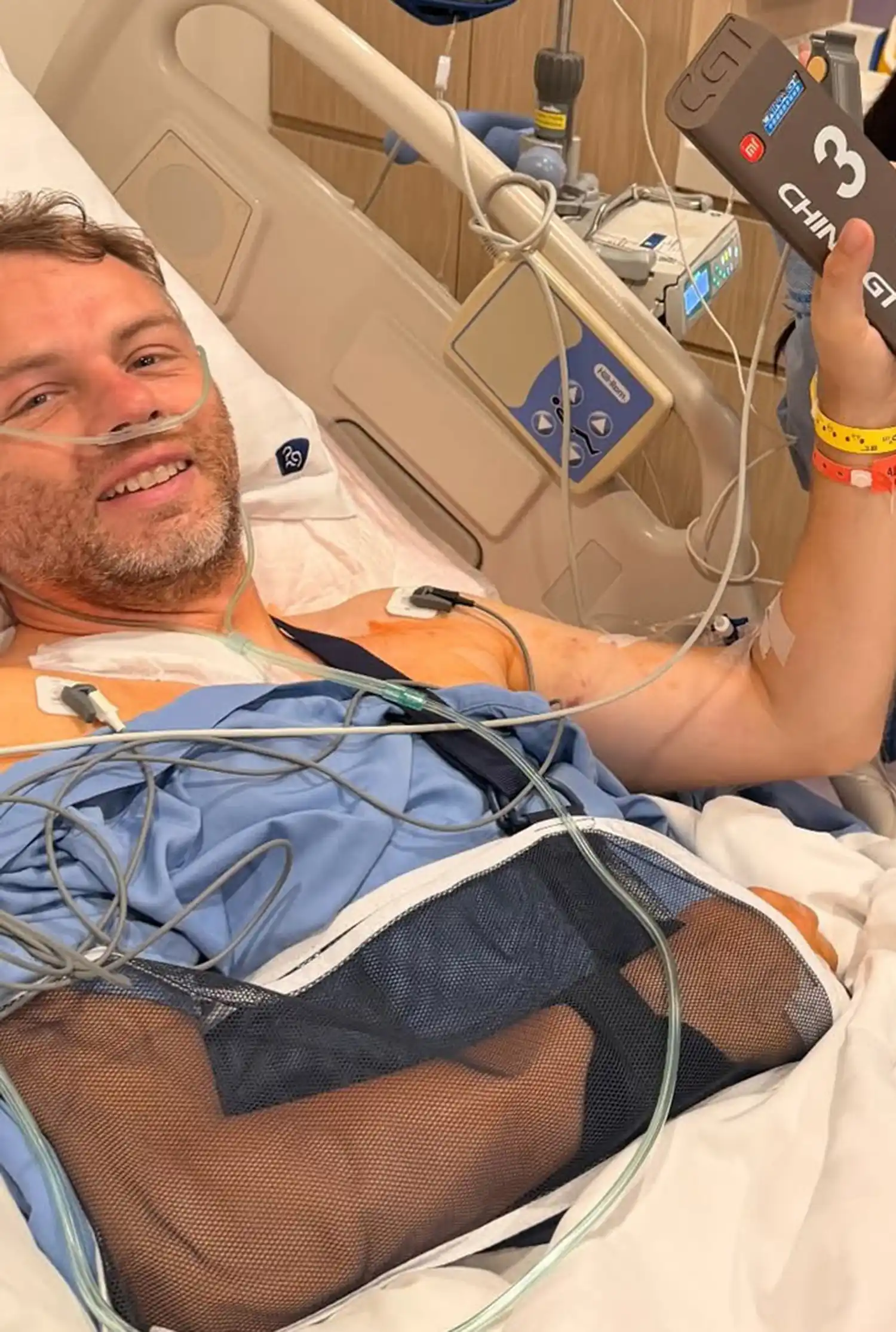
Days later, from a hospital in Shanghai, Millroy publicly thanked the rival who had risked his own safety to rescue him.
“I owe you my life,” he wrote.
For a sport where competitors are trained to keep moving forward, Hartog’s decision to stop has become the defining moment of the race.
The crash occurred during the China GT Championship event in Shanghai.
According to PEOPLE, Millroy’s Ferrari caught fire after a collision, leaving the British driver in immediate danger.
Hartog, a Dutch racer competing against him, saw what was happening and reacted almost instantly.
Rather than waiting for marshals or fire personnel, he approached the burning vehicle himself.
The images from the incident were frightening.
Flames surrounded the Ferrari as Hartog moved toward the wreck, working to help Millroy out of a situation that could have become fatal within seconds.
His actions were later described as an “incredible act of bravery.”
Millroy survived, but he suffered multiple serious injuries and was hospitalized in Shanghai, where he was awaiting surgeries following the crash.
From his hospital bed, however, one of his clearest messages was not about the accident itself.
It was about Hartog.
Millroy credited the Dutch driver with saving his life and expressed deep gratitude for the fact that another competitor had been willing to place himself in danger when Millroy could not escape on his own.
That gratitude transformed an already dramatic racing accident into a story about something rarely visible beneath the aggressive image of motorsport.
Drivers may compete against one another.
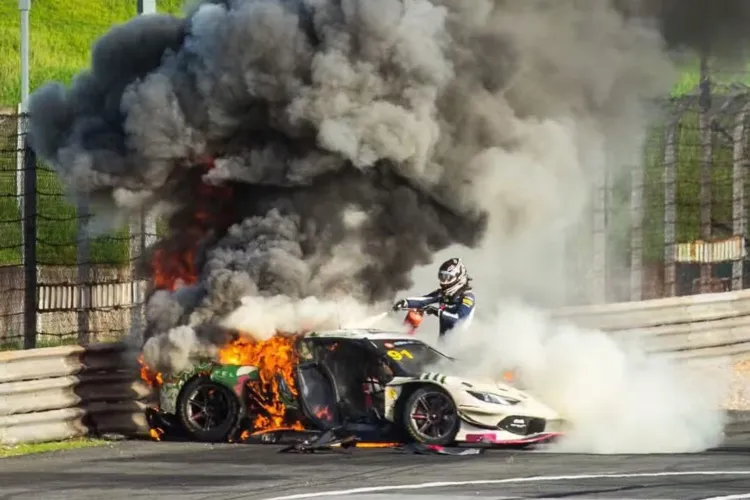
But when a car catches fire, rivalry disappears very quickly.
Hartog’s own reaction to the praise was notably understated.
He said he acted largely on instinct and suggested that what he did should not be regarded as extraordinary.
In his view, helping another driver in immediate danger was simply what anyone should do.
That response only strengthened the admiration surrounding the rescue.
Because what may feel obvious in hindsight is very different in the moment.
A burning race car is extraordinarily dangerous.
Fuel, heat, debris and the possibility of further fire can turn a rescue attempt into a second emergency.
Drivers are not professional firefighters.
They are also often shaken, disoriented or injured themselves after a major accident.
Hartog nevertheless moved toward the danger.
The incident also raised uncomfortable questions about why he appeared to be the person taking the most immediate action in the first place.
According to PEOPLE, there was no immediate intervention from safety marshals or fire crews when Hartog began helping Millroy.
That apparent delay quickly became part of the controversy surrounding the race.
AAI Motorsport, Millroy’s team, sharply criticized the emergency response following the accident.
The team said the handling of the crash had fallen below the safety standards it expected and subsequently announced that it would withdraw from future China GT events.
That decision turned Hartog’s rescue into more than an inspiring individual moment.
It also became evidence, in the eyes of critics, of a system that had not responded quickly enough.
China GT organizers later said they would review safety procedures and emergency protocols following the incident.
That review matters because modern motor racing has spent decades learning painful lessons about fire.
Today’s cars are designed with survival cells, fire-resistant equipment and numerous safety systems that have dramatically improved a driver’s chances of surviving severe crashes.
But none of those measures eliminates risk.
When fire breaks out, seconds matter.
A driver who is injured, unconscious or trapped may be unable to release his harness or exit quickly enough on his own.
That is why trained emergency crews, fire suppression and rapid response procedures are fundamental parts of professional racing.
Shanghai became a reminder that those systems cannot simply exist on paper.
They have to work immediately.
For Millroy, the consequences of the crash will extend far beyond one race.
His injuries require medical treatment and recovery, and it remains unclear when he will be able to return to competition.
But whatever happens next in his racing career, the relationship between him and Hartog has already changed.
The man he once lined up against as a competitor is now someone Millroy credits with the most important victory possible: getting him out alive.
There is something particularly powerful about that in motorsport.
Race drivers depend on trust more than fans sometimes realize.
They may battle aggressively at extraordinary speeds, but every driver also relies on the people around him to respect certain boundaries.
A mistake from another competitor can have enormous consequences.
So can an act of courage.
Hartog’s rescue represented the strongest version of that unwritten bond.
When he saw a fellow driver in trouble, he did not ask what team Millroy drove for.
He did not think about the championship.
He did not continue past the wreck because the race was still happening.
He stopped.
And then he ran toward the flames.
The race itself was ultimately canceled following the accident, but whatever sporting result might have emerged would have struggled to matter compared with what had already happened.
There are races drivers remember because they won.
There are others they remember because they lost.
And then there are moments when competition suddenly feels very small.

For Ollie Millroy, Sept. 5 became one of those moments.
His Ferrari was burning.
He was badly hurt.
And before the official rescue response had fully reached him, another race car driver was already there.
Loek Hartog arrived as a rival.
He left as the man Millroy says saved his life.
In a sport obsessed with who crosses the line first, Hartog showed that sometimes the most important decision a driver can make is to stop.