Kim Zolciak’s Son KJ Biermann Released From Custody, Now Living Under Strict Conditions With His Mother

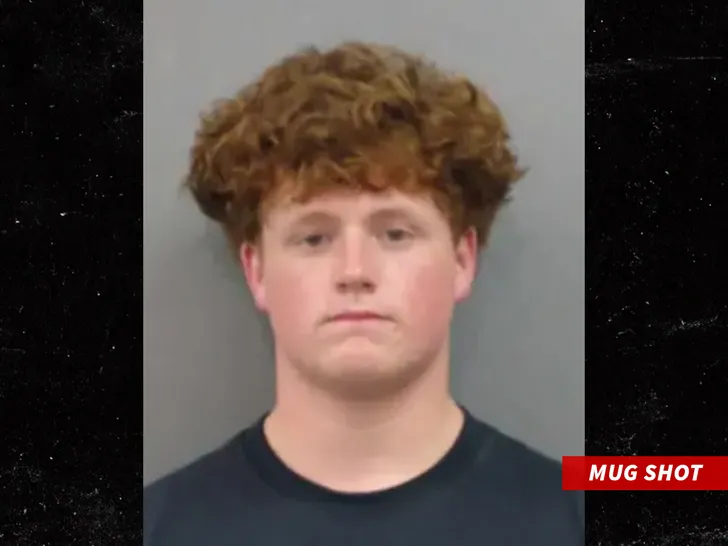
Kroy “KJ” Biermann Jr., the 15-year-old son of Kim Zolciak and former NFL player Kroy Biermann, has been released from custody after spending several weeks detained in connection with a serious criminal case in Georgia.
KJ is now living with his mother, who is providing full-time supervision while the teenager remains subject to strict court-imposed restrictions.
The release follows a Fulton County judge’s decision to set bond at $200,000 after prosecutors and defense attorneys presented sharply different accounts of the case and of KJ himself.
He has not been convicted of any crime and continues to deny the allegations against him.
The case involves an alleged sexual assault concerning a teenage classmate at a fitness facility in Alpharetta, Georgia. A grand jury later returned a seven-count felony indictment.
Because KJ is a minor, the case has also raised significant legal questions about whether it should remain in adult court or be transferred into Georgia’s juvenile justice system.
KJ Returns Home After Weeks in Detention
KJ was arrested on August 17 and held at a youth detention facility while his attorneys sought bond.
He was released after the court approved a $200,000 bond and imposed extensive conditions designed to control his movements and limit contact with other minors.
Sources familiar with his current situation say he is now living at Kim Zolciak’s home and remains under her direct care.
That arrangement was specifically discussed during the bond hearing.
His attorney argued that Kim was available to supervise her son closely and could ensure that he complied with every condition imposed by the court.
The judge ultimately agreed to release KJ, but only under substantial restrictions.

Court Imposed Strict Rules
KJ’s release does not mean he has returned to an ordinary teenage routine.
Among the conditions, he must remain at his mother’s residence and attend school virtually rather than return to a normal classroom environment.
He is also required to wear electronic monitoring equipment.
The court prohibited him from using a cellphone and from accessing social media.
He is further barred from having direct or indirect contact with the alleged victim, her family or people associated with her.
One of the broadest restrictions prevents KJ from having contact with anyone aged 16 or younger.
Those conditions reflect prosecutors’ concerns raised during the bond hearing, while also allowing the teenager to await the next stage of his case outside detention.
Seven Felony Counts Remain Pending
The legal case against KJ remains serious.
A Fulton County grand jury indicted him on seven felony counts related to the alleged April incident.
The charges include aggravated child molestation, aggravated sodomy, aggravated sexual battery, multiple counts of sexual battery involving a child under 16 and false imprisonment.
These are allegations, not convictions.
KJ’s attorney has repeatedly stated that his client is innocent and has challenged how prosecutors have presented the evidence publicly.
The defense is expected to enter a not-guilty plea.
Under Georgia law, certain serious charges involving defendants between the ages of 13 and 17 can initially be handled in superior court rather than juvenile court.
That is one reason KJ’s legal team is trying to have the case transferred.
Defense Wants Case Moved to Juvenile Court
KJ’s attorney, Jason Sheffield, has argued that his client should be treated as a juvenile rather than face the full consequences of an adult prosecution.
The defense emphasizes KJ’s age and argues that rehabilitation should remain a central consideration.
Court filings have described him as a student and football player with academic achievements and potential scholarship opportunities.
Sheffield has also argued that even when young defendants face serious allegations, their age and development should matter when determining how their cases proceed.
The state, however, has taken a much more severe view of the allegations.
That conflict is likely to remain one of the most important legal battles in the case.
Prosecutors Raised an Earlier Juvenile Matter
During the bond hearing, prosecutors disclosed that KJ had already been under court supervision in connection with an earlier juvenile matter.
They said that prior case involved a separate allegation of sexual battery.
The prosecutor also described evidence allegedly recovered from KJ’s phone in connection with that earlier matter.
Because those claims involve minors, many details have remained limited or sealed.
KJ’s attorney has strongly disputed the way the state characterized the prior case.
Sheffield said the prosecution’s description created a misleading impression of what happened and how the juvenile matter was ultimately resolved.
That earlier case was not publicly known before the recent bond hearing.
The defense has emphasized that the prior matter did not result in an adult criminal conviction.

Prosecutors Seek Additional Forensic Interviews
Another recent development suggests investigators are continuing to gather evidence even after KJ’s release.
Prosecutors have filed emergency documents asking a judge to allow forensic interviews with “minor children.”
Authorities have not publicly identified those minors or explained exactly how they may relate to the case.
Forensic interviews are typically conducted by specially trained professionals in circumstances involving children, with the goal of gathering information in a controlled and developmentally appropriate way.
Information obtained through those interviews could potentially become evidence.
The filing indicates that the investigation may still be evolving rather than simply moving toward trial based only on the evidence already collected.
Kim Zolciak Has Defended Her Son
Kim has publicly stood behind KJ since the allegations became known.
She has said her son categorically denies the accusations and has urged the public not to treat allegations as proof.
Kim previously pointed to a voluntary polygraph test she says KJ passed and emphasized that testing related to the investigation did not identify his DNA.
Those claims are part of the family’s defense narrative and do not themselves determine the outcome of the criminal case.
Prosecutors will still be required to prove the charges beyond a reasonable doubt in court.
Kim and Kroy Biermann, despite their long-running and highly contentious separation, have both appeared in court during proceedings involving their son.
Their personal disputes have temporarily taken a back seat to the criminal case now surrounding KJ.

Family Already Under Intense Public Pressure
The Biermann family has spent years in the public eye.
Kim became widely known through reality television, while Kroy played professional football before the couple built a public family life together.
Their marriage later deteriorated into an extended divorce and custody battle.
The criminal case involving their teenage son has added a new and far more serious layer of scrutiny.
Former cast members and people connected to the family have publicly described Kim as struggling emotionally with what is happening.
But because both KJ and the alleged victim are minors, the case carries privacy concerns far beyond ordinary celebrity coverage.
Many underlying documents and identities remain protected.
Release Does Not Resolve the Case
KJ’s return home represents a significant change in his immediate circumstances, but it does not change the legal stakes.
He remains under indictment.
He remains subject to strict court supervision.
His attorneys are still fighting to move the case into juvenile court.
Prosecutors are still developing evidence.
And a judge has not yet determined whether KJ will ultimately face trial as an adult or through the juvenile system.
The $200,000 bond simply allows him to await those decisions outside detention.
What Happens Next
KJ is expected to continue living under Kim’s supervision while complying with his release conditions.
Any violation could potentially jeopardize his bond status.
His legal team will continue arguing for juvenile jurisdiction, while prosecutors are expected to oppose efforts they believe would minimize the seriousness of the allegations.
Future hearings are also likely to reveal more about the evidence prosecutors intend to use and how the defense plans to challenge it.
For now, the case remains unresolved.
Kroy “KJ” Biermann Jr. is back home with his mother, but his freedom is tightly restricted and the most important questions are still ahead.
A court must still decide where the case will be heard, how much of the evidence will be admissible and, ultimately, whether prosecutors can prove their allegations beyond a reasonable doubt.
Until then, KJ remains legally presumed innocent.