How Tony Bennett Helped Lady Gaga Find Her Way Back to Music
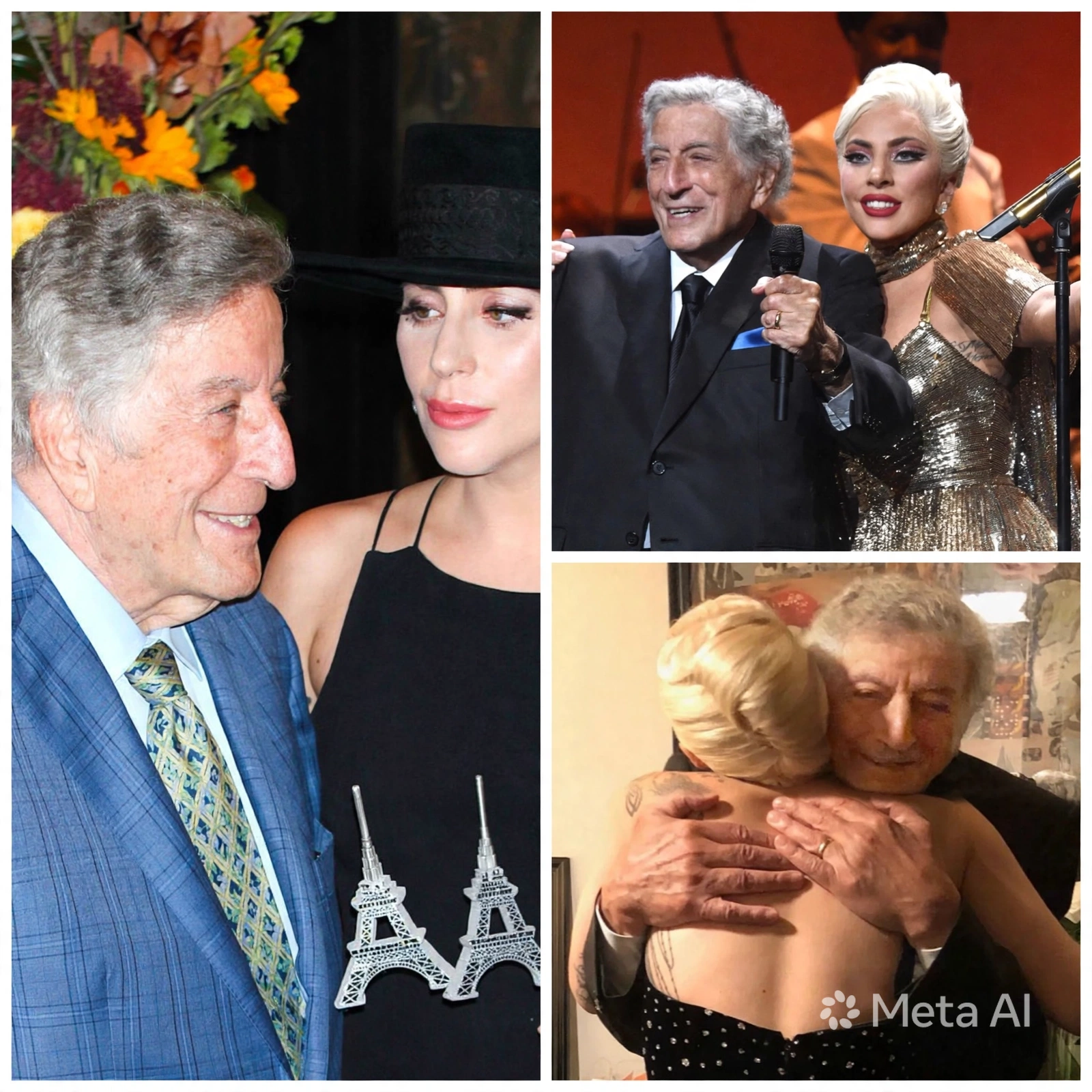
Behind the fame, an artist was losing her direction
To the outside world, Lady Gaga appeared unstoppable.
She had become one of the most recognizable performers of her generation, filling arenas, dominating music charts and turning nearly every appearance into a cultural event. Her elaborate costumes, theatrical performances and fearless public image made her seem larger than life.
Behind that image, however, Gaga was struggling.
Years of relentless attention, creative pressure and professional upheaval had left her physically and emotionally exhausted. A serious hip injury forced her to end the Born This Way Ball tour early in 2013 and undergo surgery. Around the same period, the intense reaction surrounding ARTPOP and her separation from longtime manager Troy Carter added further uncertainty to her career.
Gaga later revealed that she had reached a point where she questioned whether she wanted to continue being a pop star. When her stylist asked whether she still wanted that life, she described feeling as though she were trapped on a train moving too quickly to escape.
The woman who had built her career around music was beginning to lose her desire to sing.
Then Tony Bennett entered her life.
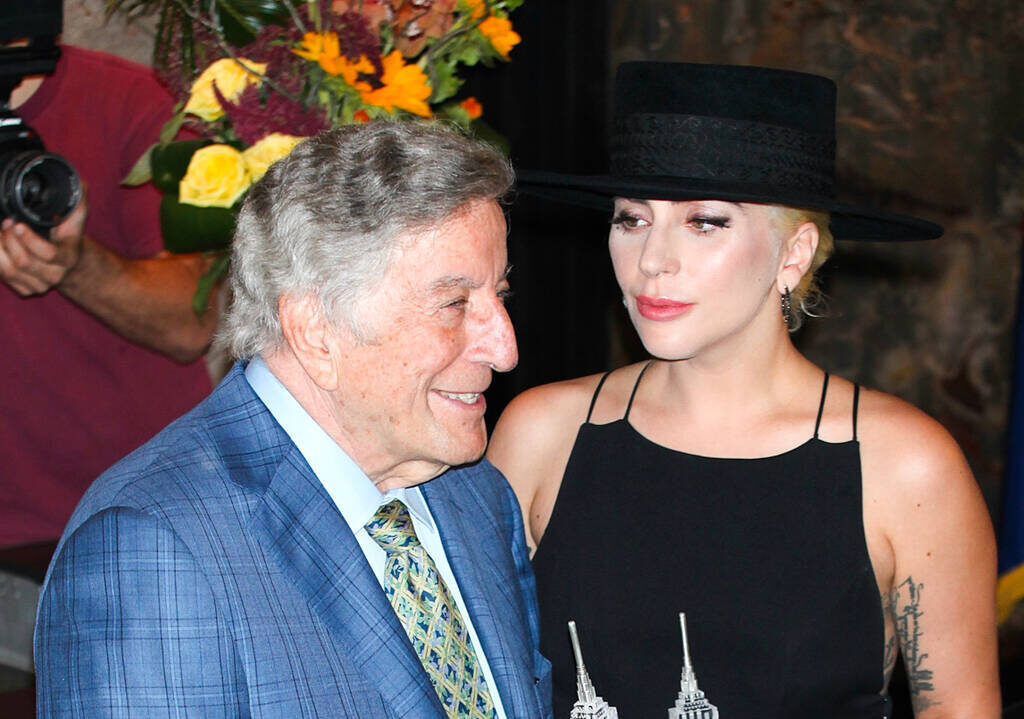
An unlikely meeting between two generations
Lady Gaga and Tony Bennett seemed, at first, to belong to completely different musical worlds.
Bennett was an American music legend whose career stretched back more than six decades. He was celebrated for interpreting jazz standards and songs from the Great American Songbook with elegance and emotional restraint.
Gaga represented modern pop at its most theatrical. She performed beneath flashing lights, wore daring costumes and constantly reinvented her public identity.
Yet beneath those differences, both were Italian American singers from New York who shared a deep respect for melody, storytelling and live musicianship.
They first connected after performing at the Robin Hood Foundation gala in New York in 2011. Bennett heard Gaga sing the jazz standard “Orange Colored Sky” and was impressed by the voice behind the famous image. He later invited her to record “The Lady Is a Tramp” for his album Duets II.
For Gaga, Bennett’s interest meant something more than another celebrity collaboration.
He did not appear fascinated by the controversy, fashion or fame surrounding her. He recognized her as a serious singer.
That recognition arrived at a moment when she desperately needed it.
“I didn’t even want to sing anymore”
By 2014, Gaga’s crisis of confidence had become severe.
While promoting her first collaborative album with Bennett, she admitted that only six months earlier, she had not wanted to sing anymore. She then made a striking statement about her new friend:
“I tell Tony every day that he saved my life.”
Bennett responded with advice attributed to Duke Ellington: never quit—and remember that instruction above everything else.
Gaga’s words were not simply praise for a successful collaborator. They reflected how deeply Bennett’s support had affected her during a vulnerable period.
He did not attempt to redesign her career or tell her how to become more commercially successful. Instead, he encouraged her to focus on the foundation beneath everything else: her voice and her love of music.
In the jazz studio, there were fewer distractions.
The songs did not depend on elaborate choreography, electronic production or visual spectacle. Gaga had to stand before a microphone, listen to the musicians and communicate the emotional meaning of the lyrics.
For an artist accustomed to carrying enormous productions, that simplicity became liberating.
The freedom of Cheek to Cheek
The pair’s album Cheek to Cheek featured standards associated with composers including Cole Porter, Irving Berlin and Duke Ellington.
The project allowed Gaga to reveal a side of her artistry that many casual listeners had never fully heard. Rather than hiding behind a character or performance concept, she relied on phrasing, timing, tone and emotional interpretation.
Bennett gave her the space to sing without asking her to abandon the creativity that made her Lady Gaga.
He understood that the costumes and theatricality were authentic parts of her artistic identity. At the same time, he reminded her that she did not need those elements to prove her talent.
Her voice could stand on its own.
That realization helped Gaga separate her love of music from the exhausting machinery surrounding fame. The problem had not been singing itself. It was the pressure, expectations and noise that had become attached to it.
Working with Bennett brought her back to the experience she had loved before international fame: entering a room, connecting with musicians and telling a story through a song.
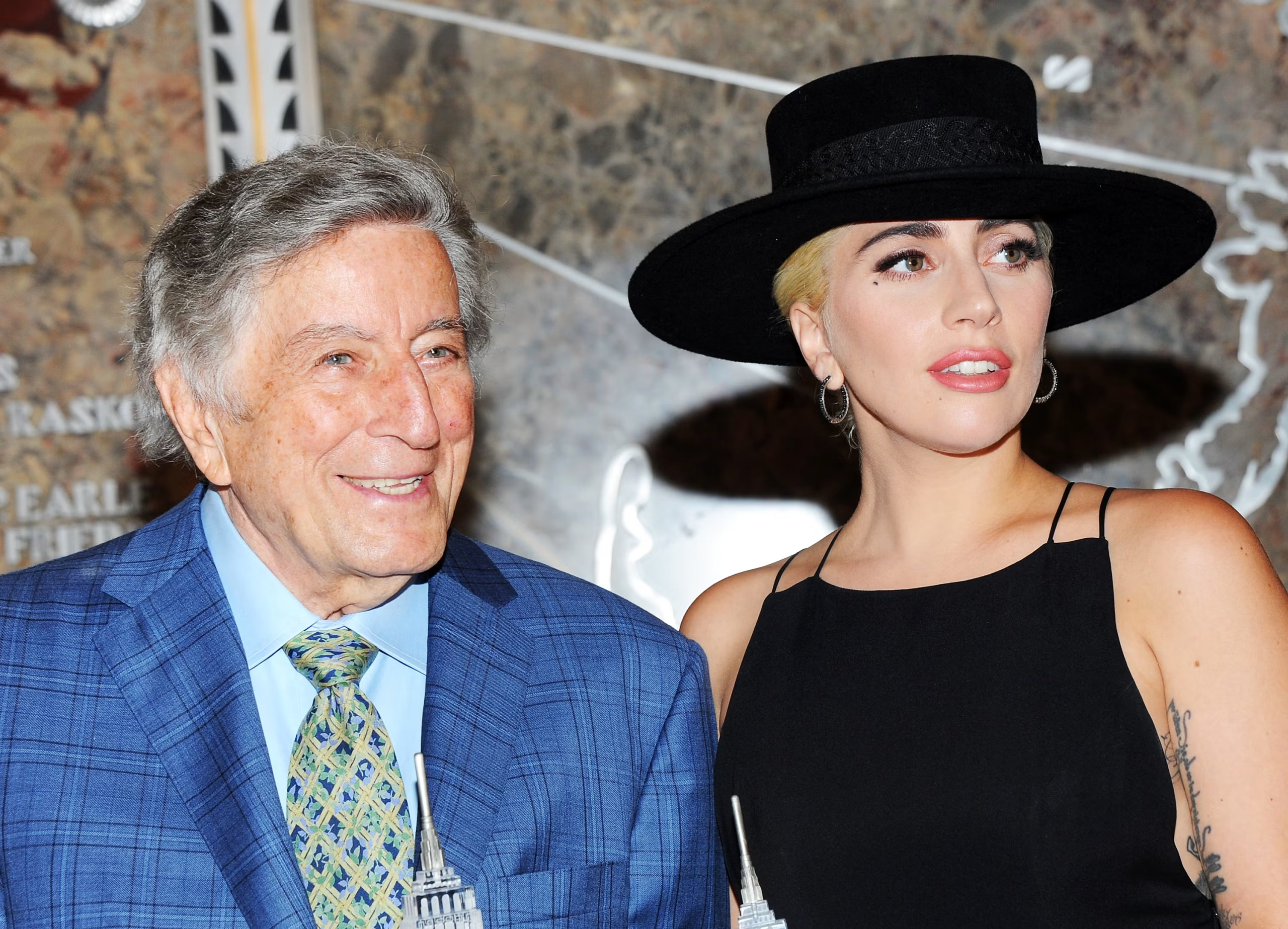
The recording that brought her to tears
One of the project’s most emotional moments came when Gaga recorded Billy Strayhorn’s “Lush Life.”
She had first encountered the song when she was young, but its themes of heartbreak, disappointment and loneliness carried much greater meaning after her experiences in the music industry.
During the recording process, the emotions became overwhelming.
Gaga later recalled crying in Bennett’s arms and worrying that she appeared unstable or broken. Bennett reassured her with a simple response:
“You’re not a mess. You’re a sophisticated lady.”
His reaction captured the character of their friendship. Where Gaga saw vulnerability as evidence that she was falling apart, Bennett recognized it as emotional honesty—the very quality that gave the performance its power.
He did not ask her to hide what she was feeling.
He helped her transform it into music.
More than a career comeback
Released in September 2014, Cheek to Cheek debuted at number one on the Billboard 200.
The achievement made Bennett, then 88, the oldest living artist at that time to reach number one on the chart with a newly recorded album. The project also demonstrated that Gaga could move convincingly between contemporary pop and traditional jazz without losing her identity.
The album later won the Grammy Award for Best Traditional Pop Vocal Album in 2015.
Commercial success, however, was not the most important outcome for Gaga.
The project restored something that chart positions and awards could not measure. It helped rebuild her confidence as a vocalist and reminded her why she had entered music in the first place.
Bennett did not rescue a career that lacked talent or opportunity. Gaga was already an internationally successful artist.
What he helped repair was her relationship with her own gift.
A friendship without judgment
Their connection worked because Bennett never treated Gaga as a novelty.
He did not ask her to become a traditional jazz singer permanently, nor did he dismiss the experimental pop music, dramatic fashion and visual art that had made her famous.
He accepted the entire artist.
Gaga could arrive in an extravagant outfit and still be taken seriously as a musician. She did not have to choose between the theatrical performer and the classically trained vocalist.
With Bennett, those identities could exist together.
Their age difference—nearly six decades—became largely irrelevant when they performed. Onstage, they communicated through timing, humor and mutual trust. Bennett’s relaxed delivery balanced Gaga’s powerful voice, creating a partnership that felt less like a calculated industry pairing and more like a genuine conversation between musicians.
That trust continued long after the release of Cheek to Cheek.
Returning to the studio one more time
Soon after their first album was released, Bennett proposed recording another project with Gaga—this time centered on the songs of Cole Porter.
The resulting album, Love for Sale, was recorded between 2018 and 2020 and released in 2021. It became Bennett’s final studio recording.
By then, Bennett had been living with Alzheimer’s disease, a diagnosis he received in 2016. Although his condition affected many areas of his life, music often remained a powerful point of connection.
Their second album represented a reversal of roles in some ways.
Years earlier, Bennett had supported Gaga when she doubted herself. During their later work, Gaga approached him with patience, affection and close attention, helping guide their performances while honoring his dignity as an artist.
Love for Sale won the 2022 Grammy for Best Traditional Pop Vocal Album, giving the pair another major recognition for their work together.
Yet once again, the award told only part of the story.
Their final recordings documented a friendship that had endured beyond promotion, charts and career strategy.
The final performances
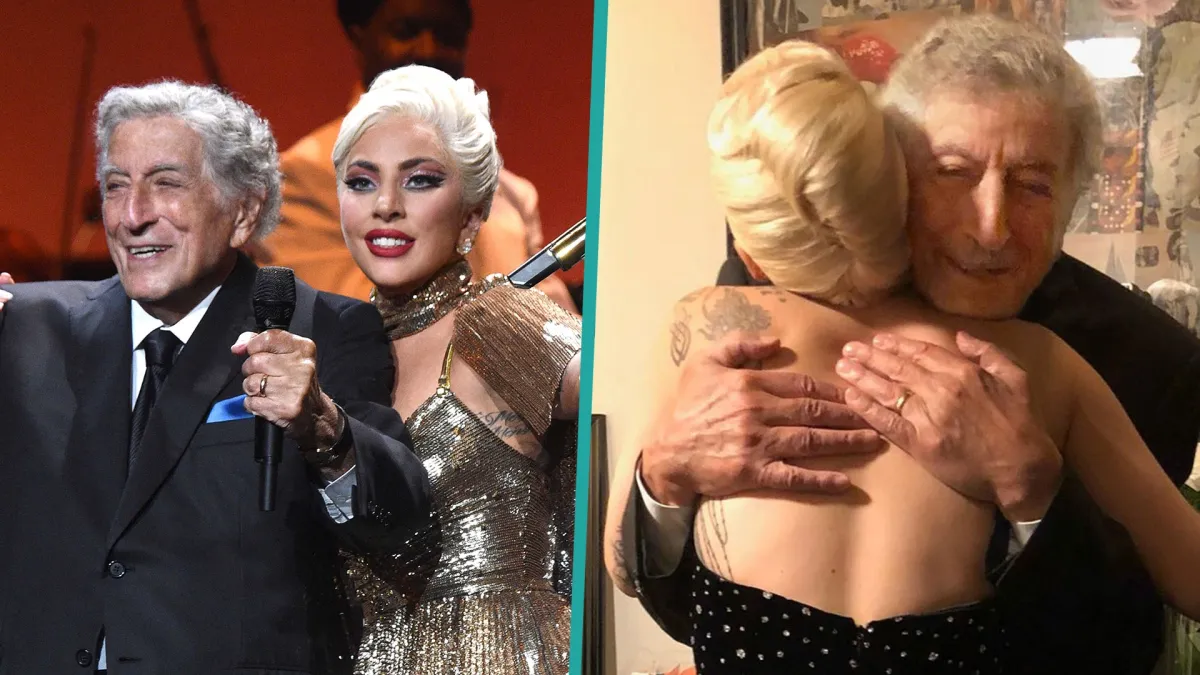
Bennett and Gaga reunited onstage in 2021 for concerts celebrating Bennett’s 95th birthday.
The performances became especially emotional because they marked the final live appearances of his career. Gaga watched closely as the familiar music appeared to awaken Bennett’s instincts as a performer.
When he called her name onstage, her reaction revealed how much the moment meant to her.
The man who had once helped her remember who she was had, through music, found his way back to a familiar place of his own.
Their bond had become reciprocal.
It was no longer simply the story of an older legend mentoring a younger star. It was the story of two artists protecting and encouraging one another during very different periods of vulnerability.
A goodbye filled with gratitude
Tony Bennett died on July 21, 2023, at the age of 96.
In her tribute, Gaga described him as a real and deeply valued friend. She reflected not only on what they had created together, but also on everything she had learned from his approach to music, life and human connection. Bennett’s career ultimately spanned more than seven decades, bridging generations without surrendering his musical identity.
His influence on Gaga can be heard far beyond their jazz albums.
After Cheek to Cheek, she continued demonstrating greater confidence in performances that placed her voice at the center. Jazz did not replace pop, and Bennett did not turn her into a different person.
Instead, he helped her recognize that she had never needed to choose.
She could be experimental and traditional.
She could be theatrical and emotionally exposed.
She could be Lady Gaga and still allow the world to hear Stefani Germanotta.
The person who saw the artist beneath the image
The friendship between Tony Bennett and Lady Gaga remains powerful because it was built on recognition.
At a time when much of the world saw Gaga as a product, controversy or spectacle, Bennett saw a musician.
When she doubted her value, he listened.
When she became emotional, he did not judge her.
When she considered leaving music, he reminded her not to quit.
Bennett did not give Gaga a new voice. He helped her trust the voice she already possessed.
Their story is a reminder that even the most successful people can lose their sense of direction. Fame does not protect an artist from exhaustion, loneliness or self-doubt. Sometimes recovery begins not with a dramatic solution, but with one person offering respect at exactly the right moment.
Tony Bennett saw Lady Gaga clearly when she was struggling to see herself.
And through that friendship, she found her way back to music.