JULIA MORGAN: The Woman Who Was Told She Couldn’t Build — So She Built a Legacy That Would Last Forever
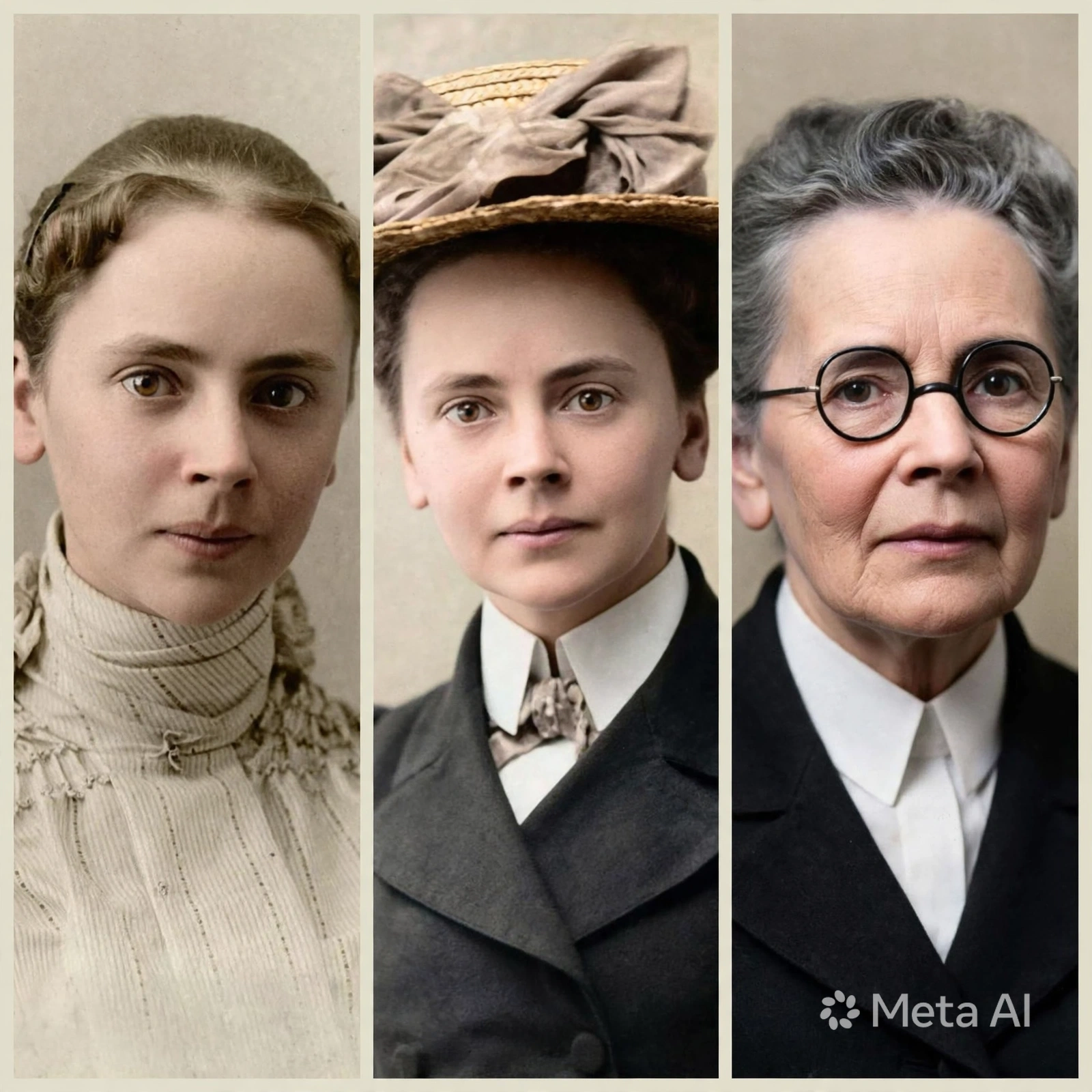
In 1872, in San Francisco, a little girl named Julia Morgan was born into a world that had already decided what women could and could not do. The 19th century was a time when ambition was only encouraged within strict limits. Women were allowed to learn, but they were rarely expected to lead. They were allowed to create, but they were kept out of fields dominated by men. They could dream, but society usually decided how big those dreams were allowed to be.
Architecture was not considered a place for women.
The profession belonged almost entirely to men. Designing buildings, managing construction sites, mastering engineering, and shaping the skyline of cities were seen as jobs that women simply could not handle. For a woman to become a successful architect was not just rare — to most people at the time, it was unthinkable.
But Julia Morgan never had any interest in living by other people’s rules.
From a very young age, she was obsessed with how things were made. She saw buildings differently than everyone else. While other people saw just walls, doors, and windows, Julia saw structure, balance, and potential. She was fascinated by the hidden systems that keep a building standing and the artistic decisions that make it beautiful. That rare combination of artistic creativity and technical brilliance would later define her entire legendary career.
Long before the world knew her name, Julia had already developed the one quality that would carry her through every challenge: sheer determination.
She was not the kind of person who waited for permission.
She was the kind of person who built her own way forward.
Breaking Into a Man’s World
At just 18 years old, Julia Morgan enrolled at the University of California, Berkeley to study civil engineering. It was an incredibly bold choice at a time when women were still fighting just to be accepted into higher education, let alone in technical fields.
In the classroom, she was almost always the only woman surrounded by men. She wasn’t just competing academically — she was fighting every single day to prove she even belonged there.
Every calculation she solved, every project she completed, every top grade she earned was her answer to those who doubted her.
She studied the same grueling subjects as her male classmates: advanced mathematics, construction methods, structural design, and engineering theory. She never asked for special treatment or easier standards. She wanted to prove she could meet the same bar — and exceed it.
In 1894, Julia Morgan graduated from Berkeley as the only woman in her entire engineering class.
For most people, that would have been the ultimate achievement.
For Julia, it was just the first step.
She had proven she could enter a male-dominated field.
Now she wanted to change it forever.
The Impossible Dream in Paris
After graduation, Julia’s exceptional talent caught the attention of mentors who saw that she was truly special. One of them encouraged her to take the next impossible step: apply to the École des Beaux-Arts in Paris, the most prestigious architecture school in the world.
The challenge was staggering.
At that time, the school had never admitted a single woman into its architecture program. Ever.
For most people, that fact alone would have killed the dream instantly.
But Julia Morgan had already learned that “impossible” usually just meant no one had been stubborn enough to try.
She traveled to Paris and prepared for the hardest academic battle of her life. She entered a world where tradition was everything and women were still fighting for basic professional recognition.
When the school finally agreed to let women take the entrance exam in 1897, Julia applied immediately.
Her first attempt ended in disappointment.
She ranked 42nd out of 376 applicants, while only the top 30 were accepted.
It would have been easy to take that as a final rejection.
Julia took it as feedback.
She studied harder.
She prepared again.
Six months later, she tried a second time.
She failed again.
For most people, two failures would have been enough to quit.
But Julia Morgan never measured her future by how many times she was told no.
She measured it by how badly she wanted to succeed.
So she tried a third time.
The Third Time That Changed History
The third exam changed everything.
This time, Julia ranked 13th out of 392 applicants.
The result was undeniable.
Her talent was too great to be ignored.
The École des Beaux-Arts finally admitted her, making Julia Morgan the first woman in history to be accepted into its architecture program.
But even that historic victory came with another obstacle.
Students were required to finish their degree before they turned 30. Julia was already 25, meaning she had less than five years to complete a program that many students spent much longer on.
Instead of seeing the deadline as a limit, she used it as fuel.
She worked relentlessly.
She studied late into the night.
She refined every drawing, every design.
She pushed herself far beyond what was expected.
In February 1902, just one month before her 30th birthday, Julia Morgan did what many thought was impossible.
She became the first woman to ever graduate with a degree in architecture from the École des Beaux-Arts.
A school that had never welcomed women into its architecture program now had one of the most determined graduates it had ever produced.
Building Her Own Future
When Julia returned to California, she learned that earning a degree was only one battle. The professional world was still full of prejudice.
She went to work for a prominent architect who recognized her incredible skill but refused to treat her as an equal. He praised her work while openly saying her salary should stay low — simply because she was a woman.
Julia heard those words.
And she never forgot them.
Instead of accepting a future where other people decided her worth, she started planning something bigger.
She saved every penny.
She gained more experience.
She prepared to stand on her own.
In 1904, Julia Morgan made history again. She became the first woman licensed as an architect in the state of California.
She opened her own architectural office in San Francisco.
At a time when most people believed women could not lead major projects, Julia Morgan began building a body of work that would transform California forever.
The Earthquake That Proved Her Genius
Then came the morning of April 18, 1906.
At 5:12 AM, a catastrophic earthquake struck San Francisco. The destruction was absolute. Buildings crumbled, fires raged across the city, and thousands of lives were lost. Nearly 80 percent of San Francisco was damaged or destroyed.
It was one of the worst disasters in American history.
But amid the ruins, one of Julia Morgan’s early projects stood tall and revealed the power of her vision.
At Mills College in Oakland, the bell tower she had designed was still standing.
The 72-foot structure had survived because of Julia’s innovative use of reinforced concrete. While countless surrounding buildings were reduced to rubble, her creation endured.
That moment was a turning point.
People stopped seeing her as just a talented woman who had overcome obstacles.
They started seeing her for what she truly was: an exceptional architect.
Her designs didn’t succeed because she was a woman breaking barriers.
They succeeded because she was a master of architecture at the highest level.
A Legacy of 700 Buildings
From that moment on, Julia Morgan’s career exploded.
Over the course of her life, she designed more than 700 buildings — an astonishing number that few architects in history have ever matched.
Her portfolio included private homes, hospitals, schools, churches, commercial buildings, and community centers across California and beyond.
She rebuilt the iconic Fairmont Hotel in San Francisco after the earthquake, completing the enormous project in less than a year.
She designed over thirty YWCA buildings, creating warm, welcoming spaces that served women and communities in multiple states.
She created buildings that were not only stunningly beautiful but also deeply functional, thoughtful, and centered on the people who would use them.
But her most famous masterpiece was Hearst Castle.
The sprawling estate in San Simeon became a monument to architecture and imagination. Julia Morgan dedicated 28 years of her life to the project, personally overseeing every single detail. She blended European artistic grandeur with the natural beauty of the California coast, creating something America had never seen before.
Hearst Castle was more than just a building.
It was a symbol of imagination, patience, and unmatched craftsmanship.
The Quiet Legend
Despite her incredible success, Julia Morgan never chased fame.
She rarely sought publicity.
She let her buildings speak for her.
That humility may be one of the reasons her name faded after she retired in 1951.
When Julia Morgan died in 1957 at the age of 85, many people had forgotten the sheer scale of what she had accomplished.
But true greatness never disappears forever.
Eventually, historians began to rediscover her work. A biography published in 1988 introduced her story to a new generation. Preservationists fought to protect her architectural treasures.
Then, in 2014, more than half a century after her death, Julia Morgan finally received the highest honor in American architecture: the AIA Gold Medal from the American Institute of Architects.
She became the first woman in history to receive it.
The recognition came late.
But history had finally caught up with her.
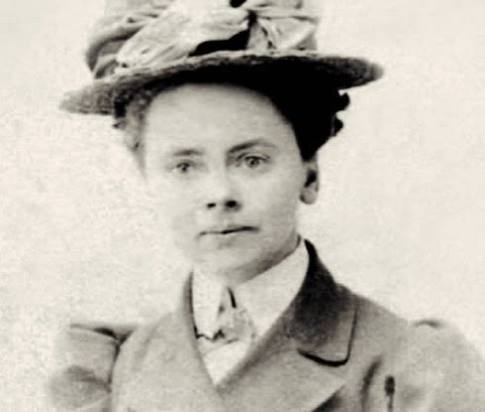
She Didn’t Wait for Opportunities. She Built Them.
Julia Morgan’s story is powerful because it’s about so much more than buildings.
It’s about persistence.
She was told engineering was not for women.
She became an engineer.
She was told architecture was not for women.
She became one of the greatest architects of her generation.
She failed entrance exams.
She came back and tried again.
She faced discrimination.
She created her own success.
Every obstacle placed in front of Julia Morgan became another reason to keep going.
She understood a truth that is still just as relevant today: talent does not need permission to exist.
Today, the buildings Julia Morgan designed still stand as living proof of what one determined person can achieve.
They are not just structures of stone, wood, and concrete.
They are monuments to courage.
They represent every single moment when Julia could have given up but refused to.
Every staircase, every doorway, every carefully crafted space tells the story of a woman who refused to accept the limits placed on her.
Julia Morgan was born into a world that told her what she could not do.
She answered by showing the world everything she could create.
She didn’t wait for opportunities.
She built them.
She didn’t ask history to remember her.
She created something history could never forget.
Because Julia Morgan understood the greatest truth of all: People may forget words.
They may forget promises.
They may forget names.
But what is built with passion, courage, and purpose can stand for generations.
And Julia Morgan’s legacy is still standing.