Babi Yar: The Ravine That Became One of the Holocaust’s Darkest Killing Fields
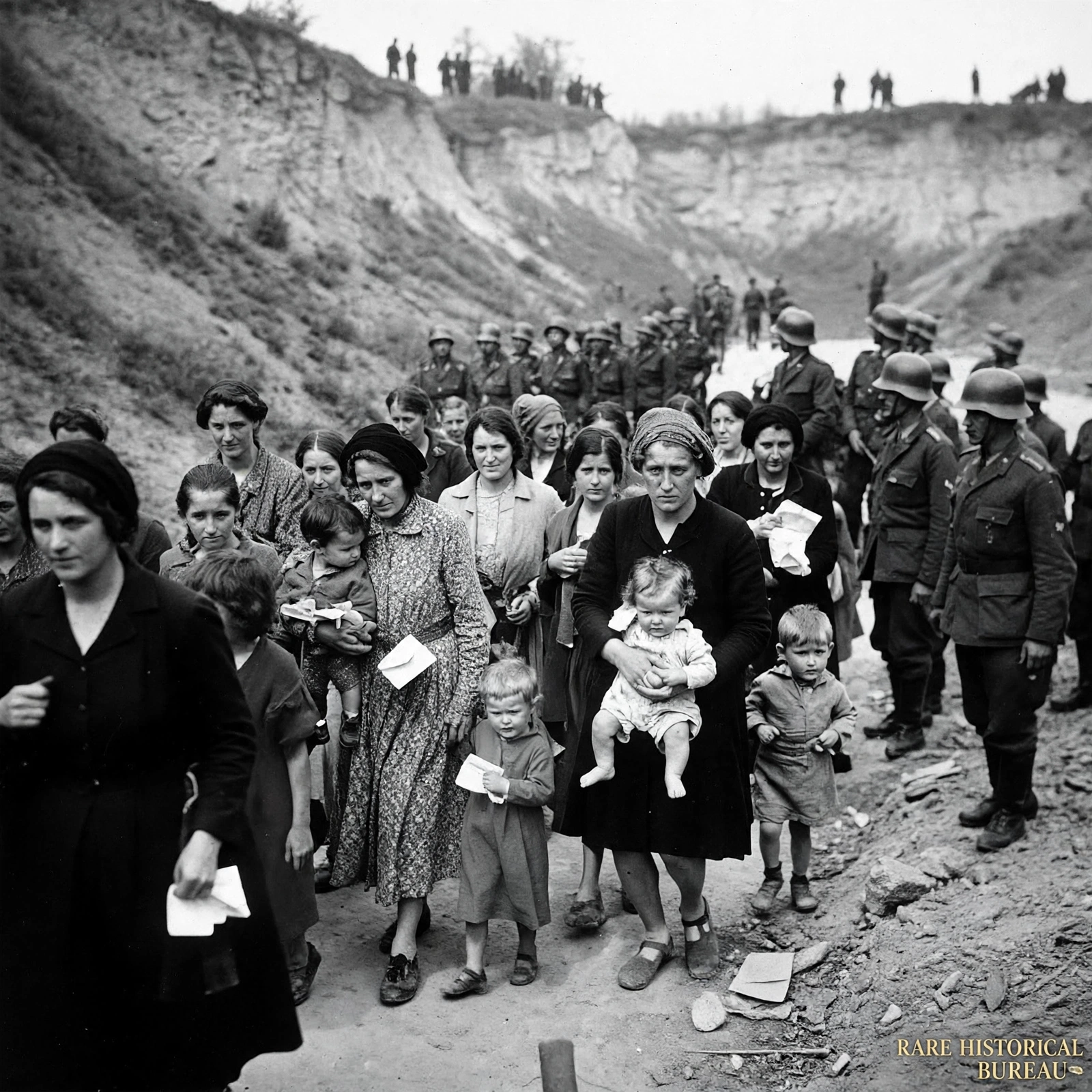
On the outskirts of Kyiv, Ukraine, lies a quiet ravine that appears almost ordinary to visitors today. Trees sway in the wind, pathways wind through the landscape, and memorials stand in solemn silence. Yet beneath this peaceful setting rests one of the darkest chapters in human history—a place where tens of thousands of innocent people were murdered during World War II.
Known as Babi Yar (also spelled Babyn Yar), the ravine became the site of one of the largest mass executions of the Holocaust. What unfolded there in late September 1941 remains one of history’s most horrifying examples of systematic genocide, while the decades that followed revealed another tragedy: the struggle to preserve the truth.
The German Occupation of Kyiv
In September 1941, Nazi Germany captured Kyiv during its invasion of the Soviet Union. The occupation brought immediate fear and uncertainty to the city’s residents, particularly its Jewish population.
Soon after the Germans entered the city, a series of explosions destroyed buildings being used by occupying forces. Although Soviet agents had planted the explosives before retreating, Nazi authorities blamed Kyiv’s Jewish community. The accusation became the justification for a carefully planned act of mass murder rather than a spontaneous retaliation.
A Deadly Order
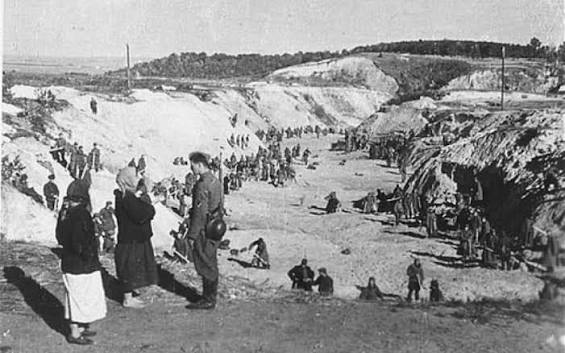
On September 28, notices appeared throughout Kyiv ordering all Jewish residents to gather the following morning with identification papers, money, valuables, warm clothing, and personal belongings.
Many believed they were being relocated to another area. Others feared deportation but had little choice. Refusing the order could mean immediate execution.
Entire families—including elderly people, women, and children—arrived at the designated meeting point carrying suitcases and bundles, unaware they were walking toward a carefully organized massacre.
The Massacre at Babi Yar
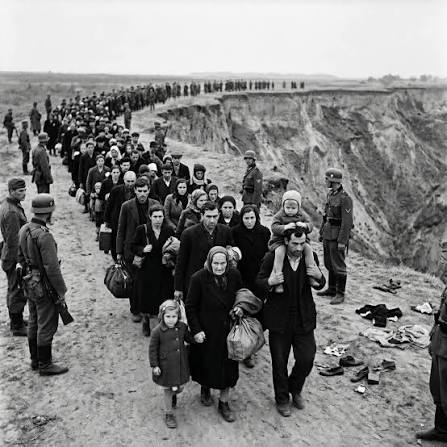
Over the course of September 29 and 30, 1941, victims were marched to the Babi Yar ravine on the edge of Kyiv.
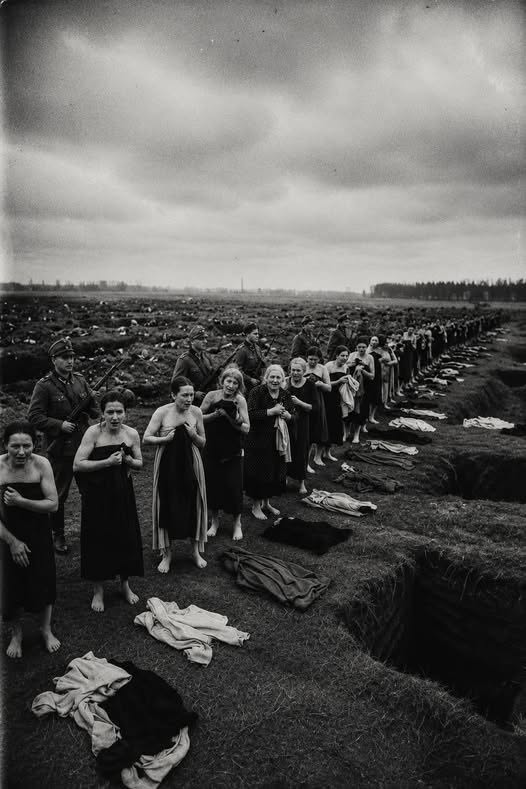
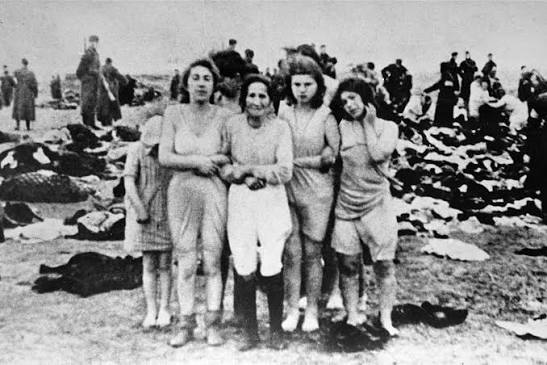
Upon arrival, they were forced to surrender their possessions, remove their clothing, and proceed toward the edge of the ravine under armed guard. Small groups were then led forward and shot by German SS units, police forces, and collaborators.
Official German reports later recorded that 33,771 Jewish men, women, and children were murdered in just two days—making Babi Yar one of the largest single mass shootings of the Holocaust.
Unlike extermination camps equipped with gas chambers, Babi Yar represented what historians often describe as the “Holocaust by bullets,” where victims were executed directly at the place of burial.
The Killing Did Not End There
The massacre of September 1941 was only the beginning.
For nearly two years, the ravine continued to serve as an execution site. Jews who had escaped earlier killings were brought there alongside Roma families, Soviet prisoners of war, psychiatric hospital patients, resistance fighters, and Ukrainian civilians accused of opposing the occupation.
Historians estimate that around 100,000 people may have been murdered at Babi Yar between 1941 and 1943, although the exact number will likely never be known.
Attempts to Erase the Crime
As Soviet forces advanced toward Kyiv in 1943, Nazi authorities attempted to destroy evidence of their crimes.
Prisoners from a nearby labor camp were forced to exhume thousands of decomposing bodies and burn them on massive funeral pyres. The prisoners themselves were later marked for execution in an effort to eliminate witnesses, although several managed to escape and later testified about what they had seen.
Despite these efforts, photographs, documents, eyewitness accounts, and German military reports ensured that the truth survived.
Memory Under Soviet Rule
One of the lesser-known chapters of Babi Yar’s history occurred after the war.
For decades, Soviet authorities generally commemorated the victims as “Soviet citizens” rather than acknowledging that the overwhelming majority of those killed during the September 1941 massacre were Jews. The site received limited recognition as a symbol of the Holocaust, and discussions emphasizing the specifically Jewish tragedy were often discouraged.
The ravine itself changed dramatically over time as parts of it were filled in and developed, leading many to fear that the memory of the massacre might gradually disappear.
A Symbol of Holocaust Remembrance
Following Ukraine’s independence, greater efforts were made to recognize Babi Yar as one of the Holocaust’s most significant sites.
Today, multiple memorials stand near the ravine, honoring Jewish victims as well as the many other civilians who lost their lives there. Educational initiatives and historical research continue to uncover personal stories that had long remained untold.
For survivors’ families and historians alike, preserving these memories serves as a warning against hatred, racism, and the consequences of dehumanization.
Why Babi Yar Still Matters
More than eight decades have passed since the massacre, yet Babi Yar remains one of the clearest reminders of how quickly prejudice, propaganda, and authoritarian power can lead to unimaginable violence.
The victims were not soldiers on a battlefield. They were neighbors, teachers, children, grandparents, and workers whose lives ended simply because of who they were.
Remembering Babi Yar is about more than honoring the dead. It is about recognizing the warning signs of intolerance, defending historical truth, and ensuring that future generations understand the human cost of hatred.
Conclusion
The ravine at Babi Yar has become far more than a geographical location. It stands as a symbol of both immense human suffering and enduring remembrance.
Although the perpetrators attempted to erase the evidence of their crimes, history refused to forget. Today, Babi Yar continues to remind the world that preserving memory is essential—not only to honor those who were lost, but also to help prevent such atrocities from ever happening again.