Chinese and Philippine Vessels Clash Near Scarborough Shoal as Water Cannon Incident Escalates South China Sea Tensions
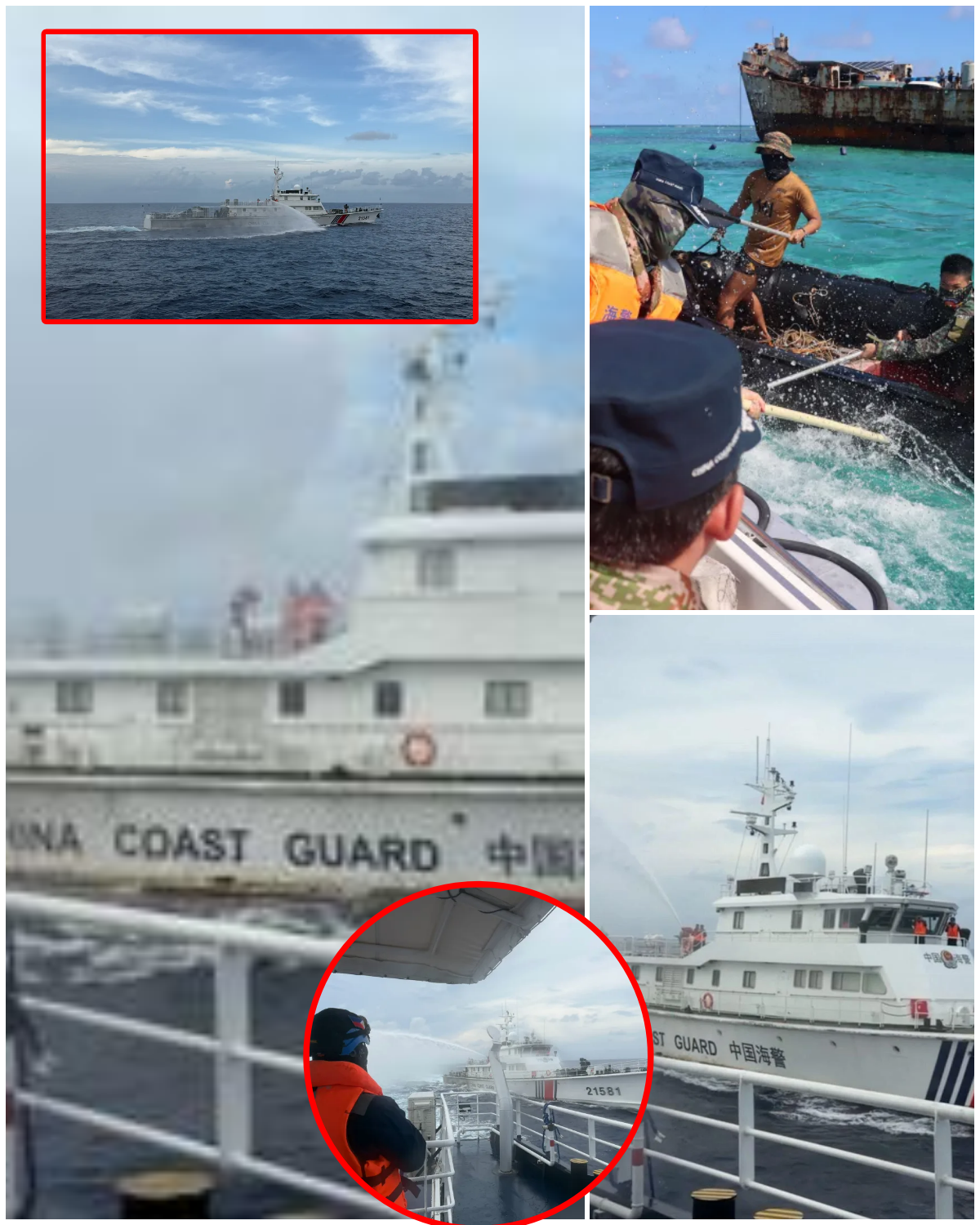
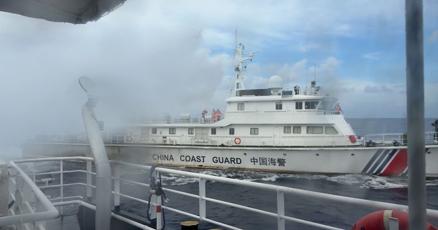
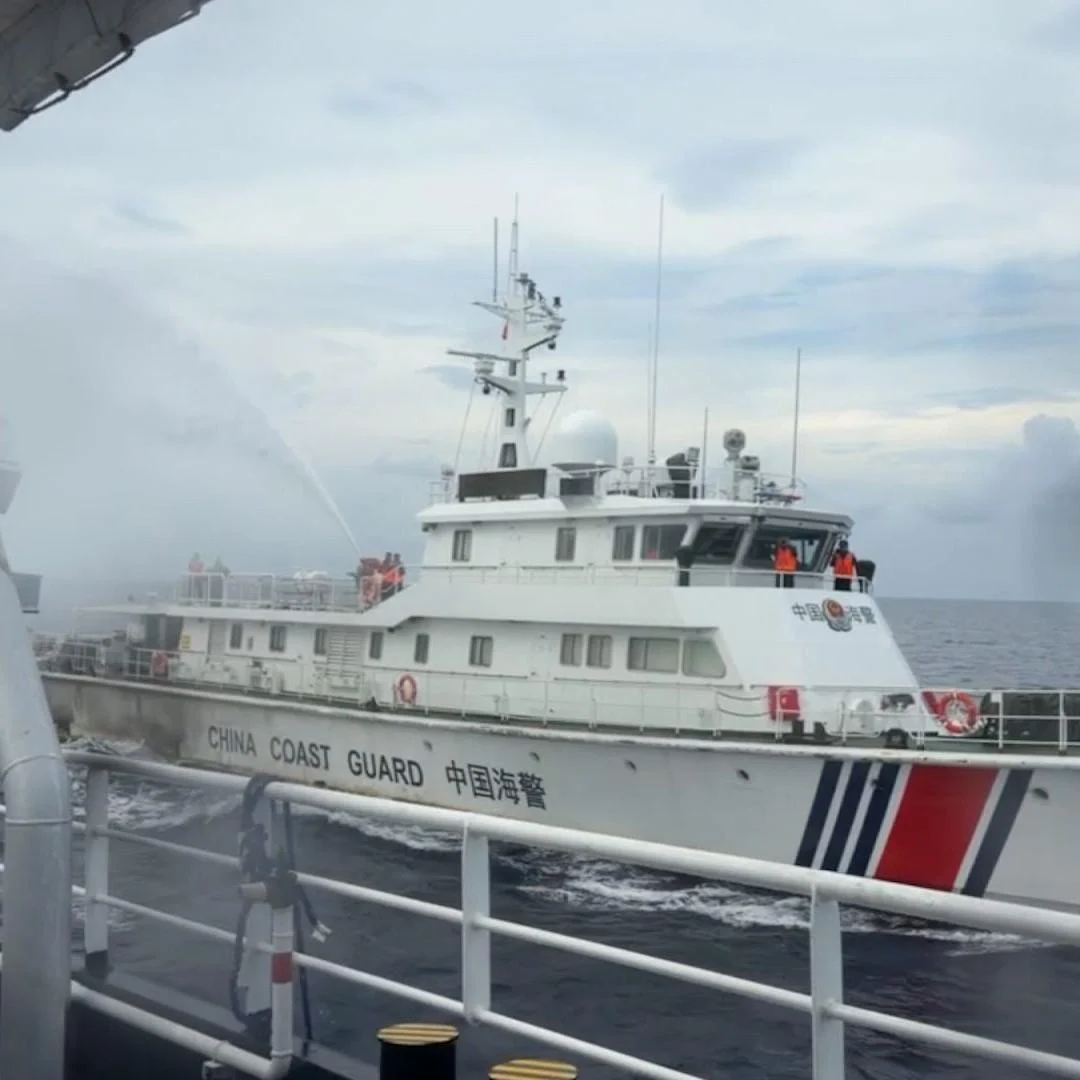
Tensions in the South China Sea intensified once again after Chinese Coast Guard vessels fired water cannons at Philippine government ships near the disputed Scarborough Shoal, including one carrying a CNN news crew.
The confrontation marked the third major maritime incident of the week between the two countries, highlighting the growing volatility in one of the world’s most strategically important waterways.
Although no injuries were reported during Friday’s encounter, officials from both sides offered sharply different accounts of what happened.
Mission Interrupted Near a Disputed Shoal
CNN journalists were on board a vessel operated by the Philippine Bureau of Fisheries and Aquatic Resources, which had been tasked with delivering fuel to Filipino fishermen working near Scarborough Shoal.
As the convoy approached the disputed waters, several larger China Coast Guard vessels moved in to intercept the Philippine ships.
According to those aboard the mission, Chinese personnel repeatedly broadcast warnings over loudspeakers ordering the Philippine vessels to leave the area immediately.
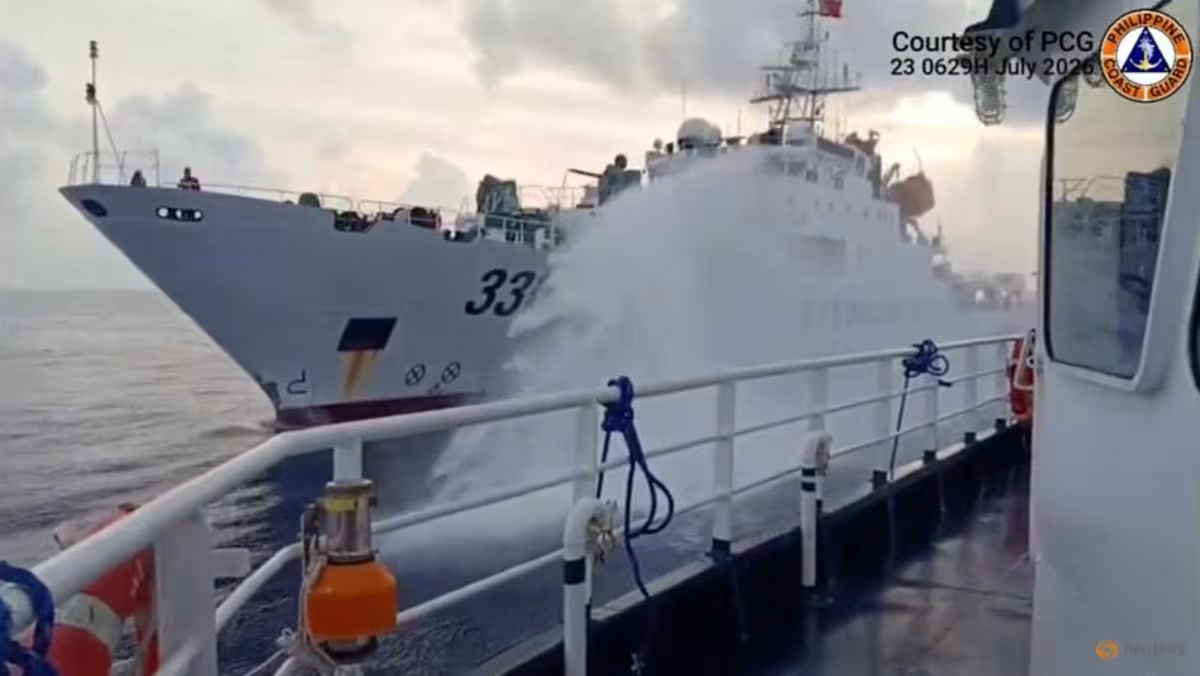
One of the Chinese ships then maneuvered alongside the Philippine vessel carrying the CNN crew before directing powerful water cannon blasts toward it.
Crew members reported that the Chinese ships remained at extremely close range throughout the encounter.
Close Encounters Raise Safety Concerns
Philippine authorities later stated that approximately 15 Chinese vessels, including Coast Guard ships and members of China’s so-called maritime militia, participated in the operation.
The Philippine side deployed 10 vessels, including three Coast Guard ships, while a government aircraft monitored the mission from above.
According to the Philippine Coast Guard, one Chinese vessel approached to within seven meters (approximately 23 feet) of the Philippine ship carrying CNN journalists, creating what officials described as a serious risk of collision.
The Philippine Coast Guard also accused Chinese vessels of carrying out dangerous maneuvers while repeatedly using water cannons against Philippine government ships.
Mission Ends Early
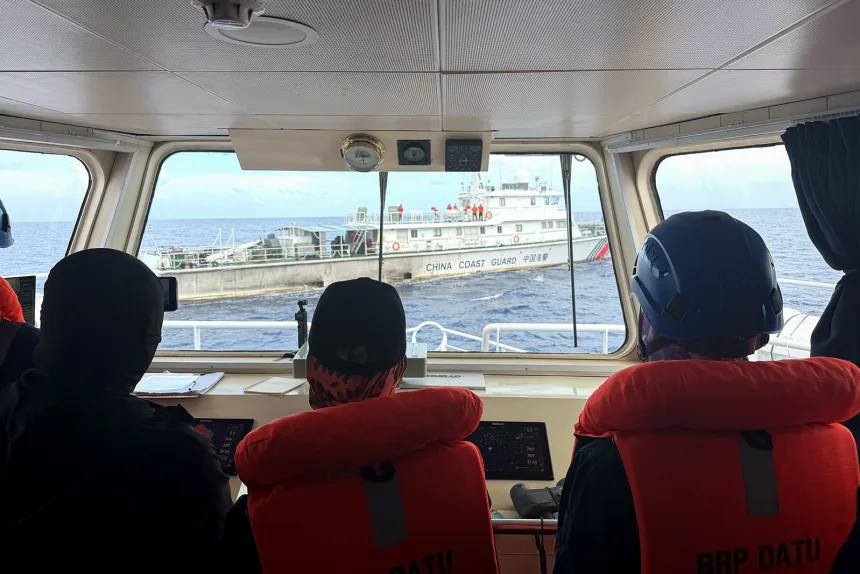
Despite the confrontation, the Philippine vessels initially remained on course.
However, authorities later decided to end the resupply mission because a developing typhoon posed an additional safety risk.
Once the convoy turned away from Scarborough Shoal and began returning to port, tensions eased considerably.
Even so, Chinese Coast Guard ships continued following the Philippine vessels from a distance during their departure.
Beijing Defends Its Actions
Chinese authorities offered a different version of events.
State media reported that the China Coast Guard had taken law enforcement measures against Philippine vessels that it claimed were conducting illegal activities within waters under China’s jurisdiction around Huangyan Island, China’s name for Scarborough Shoal.
Responding to questions about the incident, Chinese Foreign Ministry spokesperson Lin Jian said China’s actions were lawful and necessary to protect the country’s sovereignty and security interests.
A Strategic Flashpoint
Scarborough Shoal, known in the Philippines as Bajo de Masinloc, is an uninhabited reef located about 220 kilometers (140 miles) west of the Philippine island of Luzon and roughly 530 miles from China’s Hainan Island.
Although China, the Philippines, and Taiwan all claim sovereignty over the area, China has maintained an almost continuous Coast Guard presence around the shoal since taking effective control of it in 2012.
Beyond its fishing grounds, the shoal sits within one of the world’s busiest maritime trade routes, where roughly one-third of global shipping traffic passes each year.
Its location has made the area one of Asia’s most sensitive geopolitical flashpoints.
Third Confrontation in One Week
Friday’s incident followed two other confrontations earlier in the week.
On Monday, Philippine and Chinese personnel clashed near Second Thomas Shoal, another disputed feature in the Spratly Islands.
According to the Philippine military, Chinese Coast Guard personnel approached the BRP Sierra Madre, a grounded Philippine naval vessel stationed on the shoal.
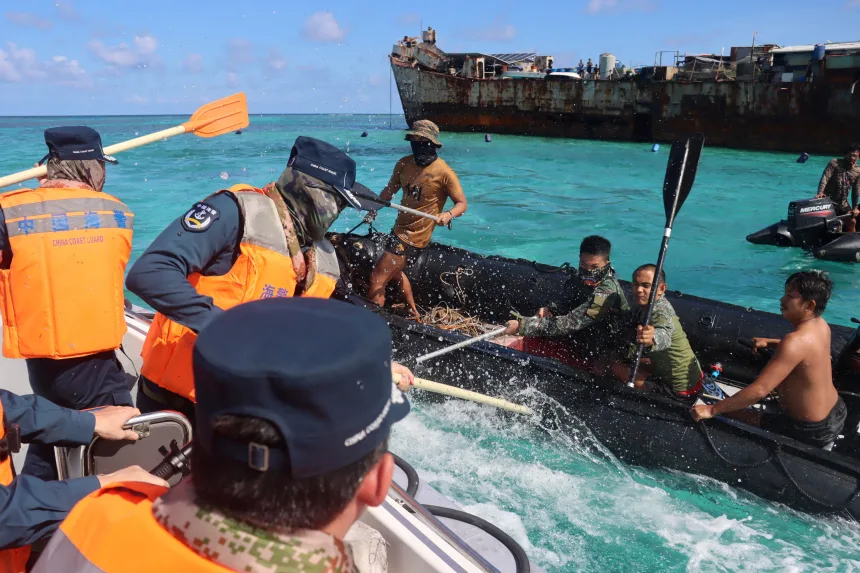
Philippine forces deployed inflatable boats to intercept the Chinese craft.
Video released by the Philippines appeared to show personnel from both sides colliding at sea and exchanging blows using wooden poles and oars.
The Philippine military reported that two of its service members were injured.
China rejected the Philippine account, accusing Manila of misrepresenting the incident and alleging that Philippine vessels had initiated the confrontation.
A second encounter occurred on Thursday near Scarborough Shoal, where Philippine officials said Chinese vessels again used water cannons and aggressive navigation to interfere with another mission supplying local fishermen.
Despite those actions, Philippine authorities said Thursday’s operation was completed successfully.
United States Reaffirms Support
The United States has closely monitored the recent incidents.
Following Monday’s confrontation, the U.S. State Department condemned what it described as dangerous and aggressive actions by China.
During a visit to Manila later in the week, U.S. Secretary of State Marco Rubio reiterated Washington’s commitment to its longstanding alliance with the Philippines.
The two countries are bound by a Mutual Defense Treaty, under which the United States may be obligated to assist the Philippines if Philippine territory or certain government forces come under armed attack.
Longstanding Territorial Disputes
The South China Sea remains one of the world’s most contested maritime regions.
In addition to China and the Philippines, Vietnam, Malaysia, Brunei, and Taiwan all maintain overlapping territorial claims involving islands, reefs, and surrounding waters.
In 2016, an international arbitral tribunal ruled that China’s sweeping historical claims across much of the South China Sea had no legal basis under international law.
Beijing rejected the ruling and has continued expanding its presence throughout the region, including constructing artificial islands, military facilities, and airstrips on several disputed features.
Rising Stakes for Global Security
Analysts warn that repeated confrontations in the South China Sea increase the risk of miscalculation between rival forces.
Beyond regional security concerns, any major disruption in these waters could have significant consequences for global trade, as one of the world’s most important commercial shipping corridors passes through the area.
While Friday’s incident ended without casualties, it serves as another reminder of how quickly routine maritime operations can escalate in one of the world’s most strategically sensitive regions.
With competing territorial claims unresolved and military activity continuing to increase, the South China Sea remains a focal point of international attention and a potential source of broader geopolitical tension.
Source: edition.cnn