He Refused to Let Hollywood Take Rocky Away—And Bet His Future on Playing the Fighter Himself
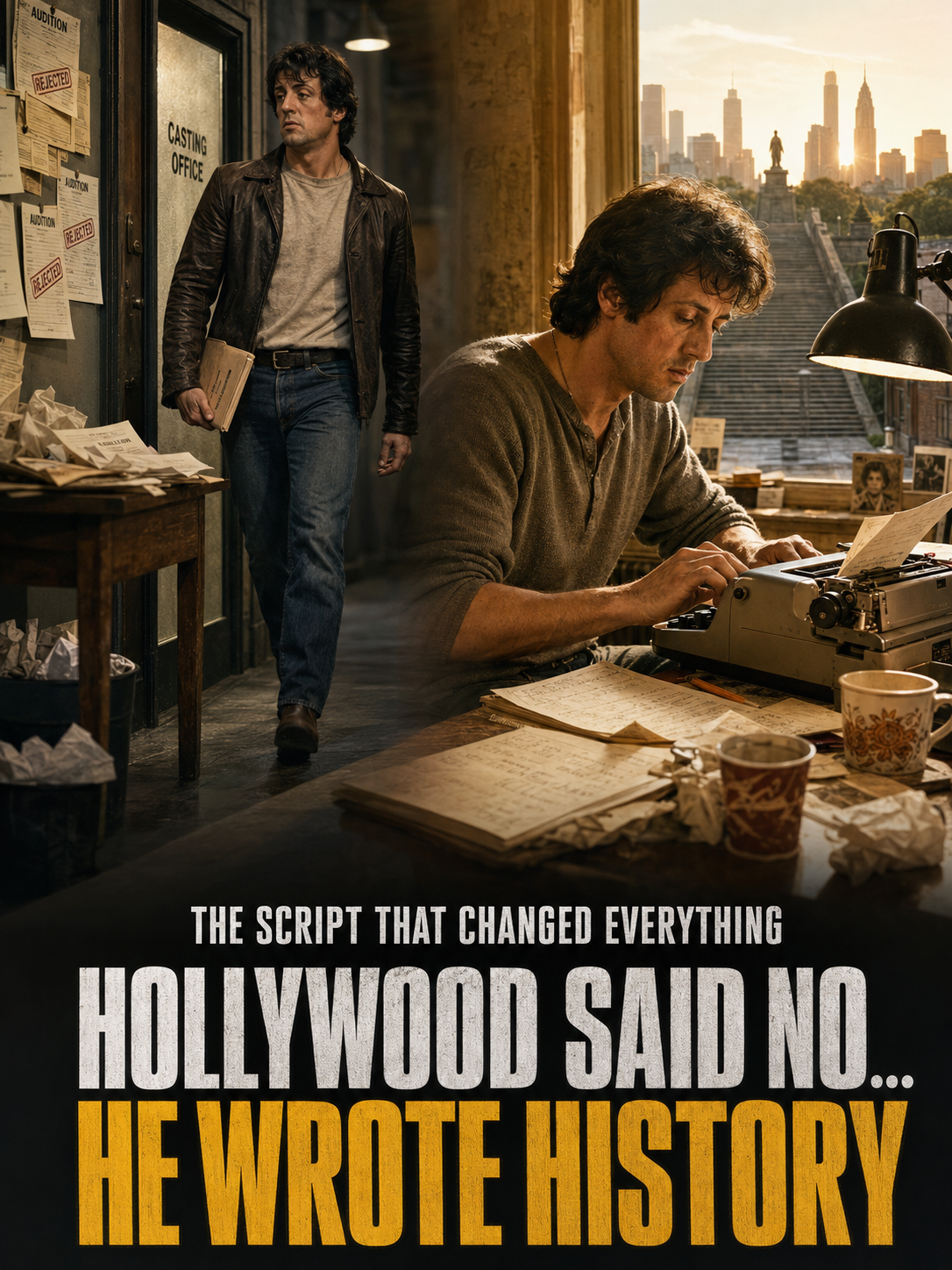
Sylvester Stallone had finally written the screenplay Hollywood wanted. There was only one problem: Hollywood did not necessarily want him.
Producers saw promise in Rocky, his story about an aging Philadelphia club fighter offered an improbable shot at the heavyweight championship. They could imagine the movie with an established star at its center—someone familiar, bankable, and easier to sell.
Stallone saw something different.
He saw himself.
At the time, that confidence was difficult for the industry to understand. Stallone was not a major leading man. His acting career consisted largely of small roles, low-budget productions, and repeated rejection. Yet when buyers showed interest in his screenplay, he insisted on a condition that threatened to destroy the deal: he would sell only if he could play Rocky Balboa.
That decision turned a desperate actor into one of Hollywood’s most recognizable stars. It also gave cinema one of its defining stories about dignity, endurance, and the need to prove that a person’s life has meaning.
A Career Going Nowhere
Before Rocky, Stallone had spent years trying to find a place in the entertainment business.
Born in New York City in 1946, he developed partial facial paralysis after complications during his birth, contributing to the distinctive speech and expression that later became central to his screen presence. Early in his career, however, those same characteristics made him an unconventional choice for leading roles.
He studied drama and pursued acting, but substantial opportunities were scarce. He appeared in minor film and television parts and gained some attention through The Lords of Flatbush, released in 1974. It was not enough to make him a star.
Casting offices continued to turn him away. He was frequently judged as unsuitable for conventional heroic roles, and the future he imagined remained frustratingly distant.
Writing gave him another route into the business.
Rather than wait indefinitely for someone else to create the right role, Stallone began developing his own material. The turning point came after he watched the March 1975 heavyweight championship fight between Muhammad Ali and Chuck Wepner. Wepner entered as a heavy underdog but lasted until the final round before Ali stopped him.
Stallone later described the fight as the spark that sent him home to write. The resulting screenplay was not a biography of Wepner, but the spectacle of an overlooked challenger surviving against a champion helped inspire its emotional foundation.
Writing the Role He Could Not Get
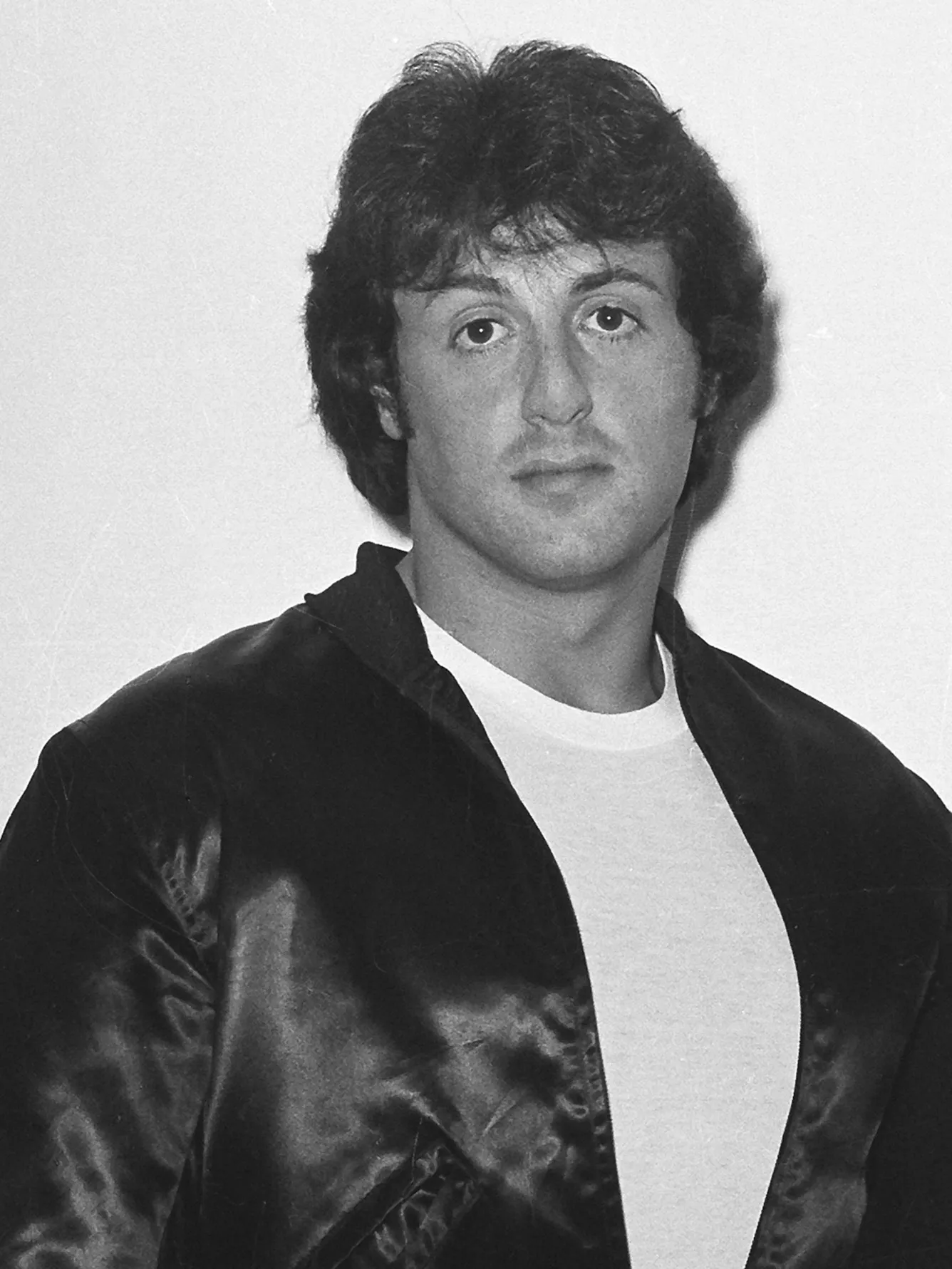
Stallone wrote the early draft of Rocky at extraordinary speed, completing it in roughly three and a half days.
The screenplay centered on Rocky Balboa, a working-class Philadelphia boxer whose career had settled into obscurity. Rocky collects debts for a loan shark and fights in small clubs, carrying a sense that whatever potential he once had is slipping away.
Then heavyweight champion Apollo Creed needs a replacement opponent for a title fight. Seeing publicity value in giving an unknown local fighter a chance, Creed selects Rocky.
The opportunity is almost absurd. Rocky is not expected to win. He is there to make the champion look good.
But the real struggle is never simply about victory. Rocky wants to remain standing through the final bell. Going the distance would prove that he is not merely another forgotten fighter drifting through life.
That emotional goal was closely connected to Stallone’s own position. He, too, was trying to convince an industry that had already judged him. He did not need Hollywood to declare him the greatest actor alive. He needed one opportunity to show that he belonged in the ring.
The screenplay began attracting serious interest. According to Stallone, the offers eventually rose to hundreds of thousands of dollars—an enormous amount for a struggling actor with little financial security.
But the buyers wanted control over casting.
Stallone refused to surrender the title role, even when an agreement without him would have immediately changed his financial circumstances. In a later interview, he said he was offered as much as $360,000 for the script but would not accept unless he starred in the film.
It was a reckless position on paper. He was protecting an acting career that barely existed by risking the largest writing opportunity he had ever received.
Yet Stallone believed that allowing someone else to play Rocky would defeat the reason he had written the screenplay in the first place. If the movie succeeded without him, he feared he would spend the rest of his life knowing that he had sold away his defining chance.
Hollywood Finally Agrees
Producers Irwin Winkler and Robert Chartoff ultimately supported a version of the project that kept Stallone in the lead.
The compromise depended heavily on controlling costs. Instead of building the film around an expensive star and a large production, Rocky would be made on a modest budget. John G. Avildsen was hired to direct, and production moved quickly.
The limitations shaped the film’s visual identity.
Philadelphia was not presented as a polished backdrop. Its cold streets, modest homes, neighborhood businesses, boxing gyms, and industrial spaces became part of Rocky’s world. The city looked lived-in because the production could not afford to make it look artificial.
Stallone’s relatives also contributed to the movie. His father appeared briefly, while his brother Frank performed music and took a small role. Stallone’s dog, Butkus, appeared as Rocky’s companion.
The main cast completed the emotional world Stallone had imagined. Talia Shire played Adrian, the shy pet-shop employee whose relationship with Rocky gives the film its tenderness. Burt Young portrayed her volatile brother Paulie. Burgess Meredith became Mickey, the aging trainer who recognizes that Rocky may finally have a chance to use his ability. Carl Weathers brought confidence, humor, intelligence, and physical authority to Apollo Creed.
Filming began in early 1976. The production’s restricted finances required improvisation and efficiency, but those pressures contributed to the movie’s intimacy. Even a planned scene at a crowded skating rink was reduced to Rocky and Adrian sharing an almost empty space because the larger setup was too expensive.
Instead of making the moment feel small, the emptiness made it personal.
The Underdog Becomes a Phenomenon
Rocky opened in late 1976 and connected with audiences far beyond the boxing world.
Viewers responded to the training scenes, the romance, the humor, and the climactic fight. But its deeper appeal came from the fact that Rocky’s success was not defined by defeating Apollo Creed. He proved himself by enduring.
The ending preserved that idea. When the decision is announced, Rocky is less interested in the judges than in finding Adrian. The championship belongs to Apollo, but Rocky has achieved the thing that mattered to him: he has shown that he is more than the world assumed.
The movie became a major commercial success and emerged as one of the most celebrated films of the year.
At the 49th Academy Awards, Rocky won Best Picture, Best Director for Avildsen, and Best Film Editing. Stallone received nominations for both Best Actor and Best Original Screenplay, placing him in rare company as a performer recognized in both categories for the same film.
The struggling actor whom studios had hesitated to place at the center of the movie was suddenly standing at the center of Hollywood.
More Than One Breakthrough Film
The success of Rocky launched a franchise that continued across decades. Stallone returned to the role in sequels that followed Rocky through triumph, loss, aging, retirement, and mentorship. The character later became a key figure in the Creed films, connecting the original story to a new generation.
Rocky Balboa also became inseparable from Stallone’s public identity. The film opened the way for other major roles, particularly John Rambo, and helped establish him as one of the most commercially successful action stars of his era.
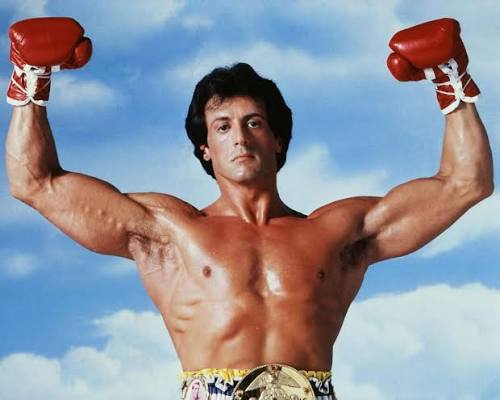
Yet Rocky retained a cultural status beyond the career it created. Its music, training montage, Philadelphia Museum of Art steps, gray sweats, and raised arms became instantly recognizable symbols of perseverance.
In 2006, the Library of Congress selected the film for preservation in the National Film Registry, recognizing its cultural, historical, or aesthetic importance.
Its endurance comes partly from the truth hidden inside its fiction. Stallone did not merely write about an underestimated man receiving an unlikely opportunity. He was living a version of that struggle while trying to get the movie made.
Both men were being invited into a contest they were expected to lose.
Rocky’s test was surviving against Apollo Creed. Stallone’s was refusing to disappear when Hollywood offered to purchase his idea but not his presence.
By insisting on playing the character, he risked the money, the production, and perhaps his final serious chance. The choice could easily have left him with nothing.
Instead, the actor Hollywood doubted wrote himself the only role no one else could take away—and carried it all the way to the final bell.