Danny Trejo Walked Out of Prison With Nothing—Then an Act of Service Led Him to Hollywood
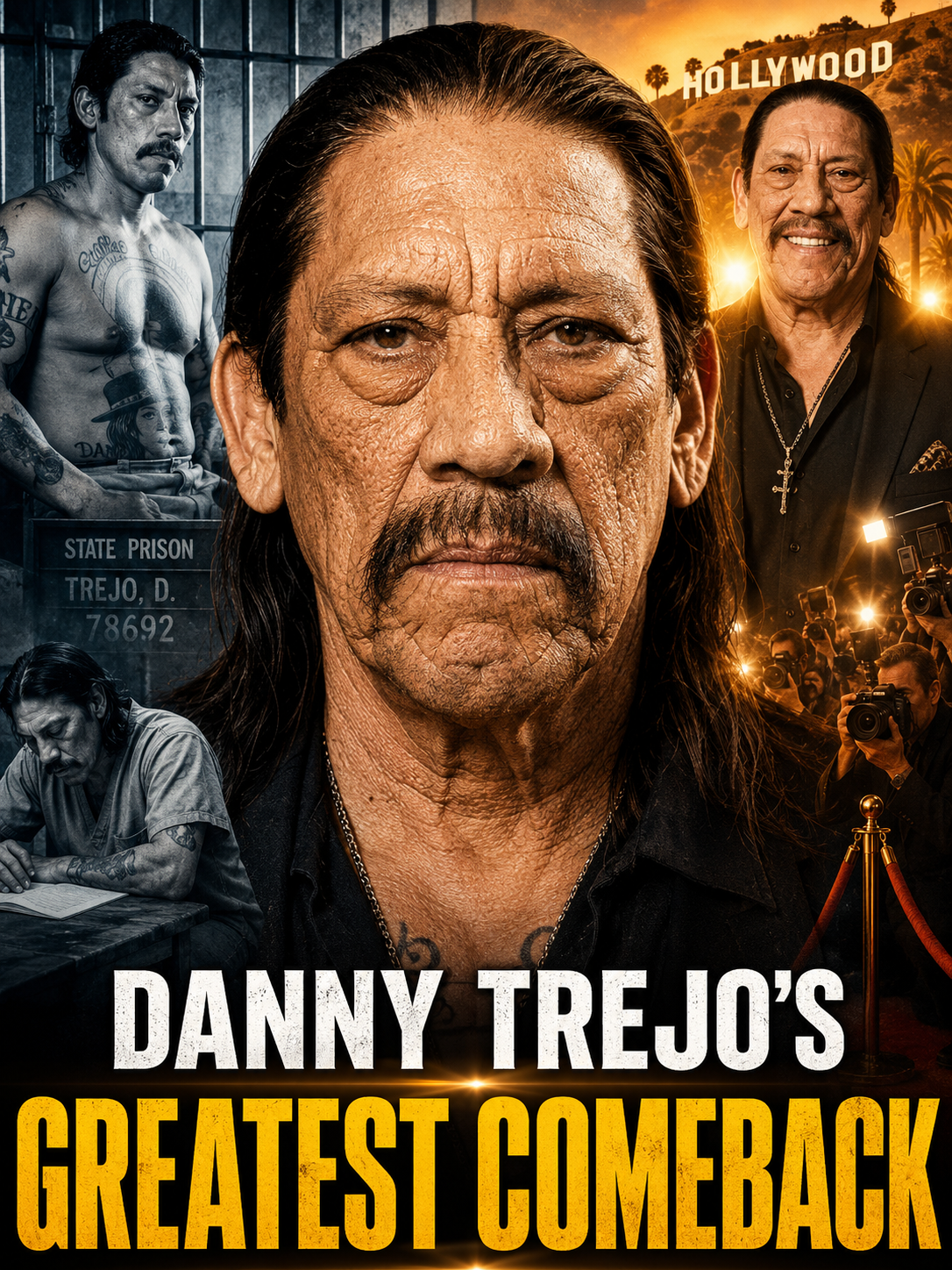
Danny Trejo did not arrive on a movie set looking for fame.
He went there to help someone stay sober.
By the time that unexpected visit changed his life in 1985, Trejo had already survived years of addiction, crime, violence, and incarceration. He had served time in some of California’s most notorious prisons and once believed he might never leave the system alive.
Hollywood was not part of his plan. Acting seemed to belong to a world far removed from prison yards, recovery meetings, construction jobs, and the difficult work of rebuilding a damaged life.
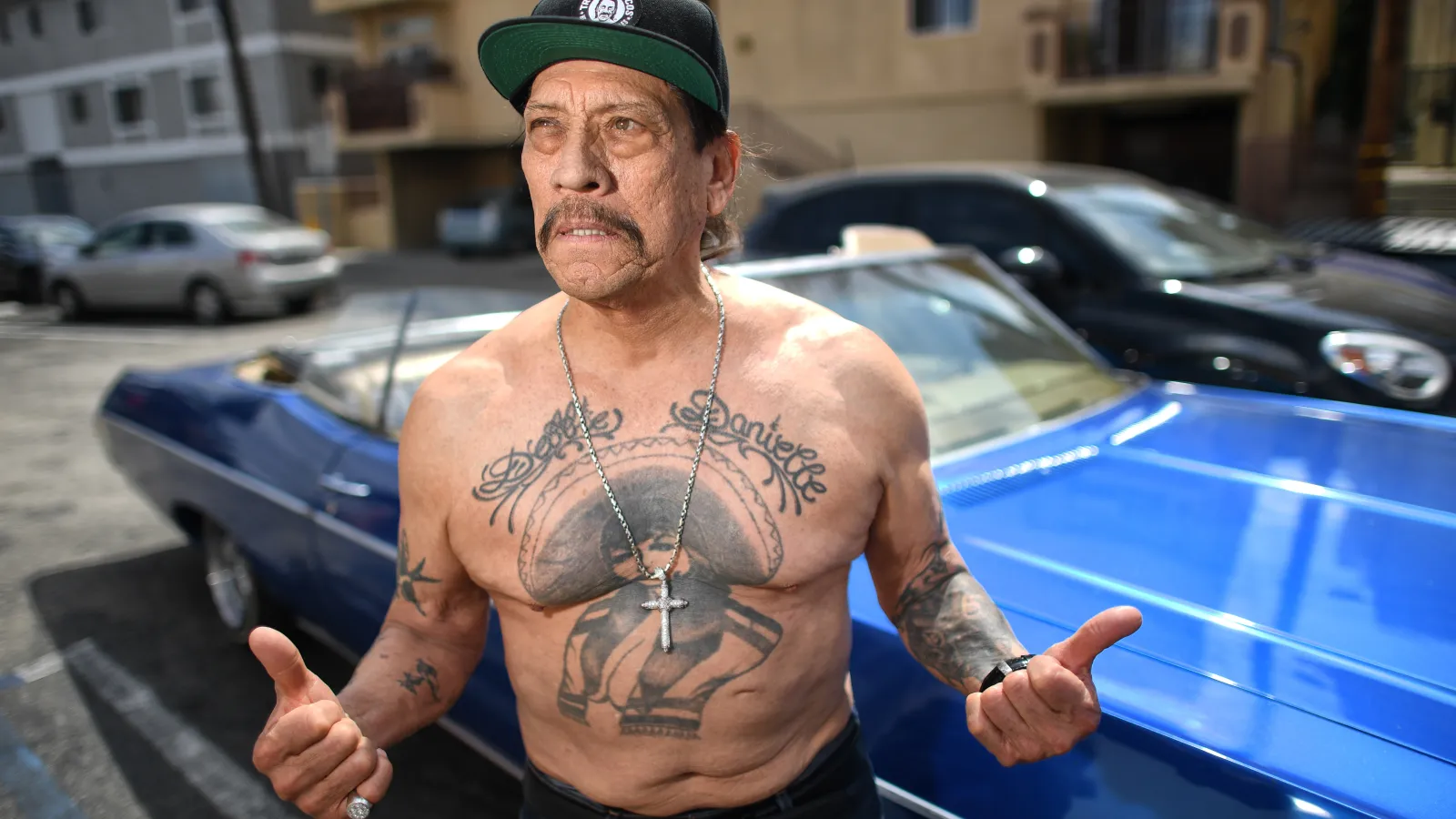
Yet the experiences that could have permanently destroyed Trejo eventually became the source of his unmistakable screen presence. His scarred face, tattoos, physical confidence, and knowledge of prison culture made him instantly convincing on camera.
What began as a day helping a struggling addict became a career spanning hundreds of film and television appearances—and transformed a former inmate into one of Hollywood’s most recognizable figures.
A Childhood Pulled Toward Danger
Born in California in 1944, Trejo grew up in the Los Angeles area. His early life was shaped by instability, crime, and the influence of relatives already connected to drugs and violence.
Trejo has spoken openly about using marijuana as a child and later becoming addicted to heroin. By his teenage years, drugs and crime had become central to his life.
The behavior repeatedly brought him into contact with the juvenile justice system and, eventually, adult prisons. Armed robbery and drug-related offenses were among the crimes that led to his incarceration.
Trejo later described himself during those years as angry, reckless, and prepared for violence. He developed the hard exterior required to survive in institutions where vulnerability could be dangerous.
Prison became familiar territory.
He served time at facilities including San Quentin, Folsom, and Soledad. Inside, he built a reputation as a boxer, competing successfully in the lightweight and welterweight divisions.
The victories gave him status, but they could not offer a future beyond the prison walls.
His drug use continued, and violence remained close. During a riot at Soledad State Prison in 1968, Trejo threw a rock that struck a correctional officer. He later recalled being placed in solitary confinement while facing the possibility of severe charges.
He feared the incident could send him to the gas chamber.
Alone with the consequences of the life he had built, Trejo reached a turning point. He prayed for survival and made a promise that, if given another chance, he would dedicate himself to helping other people.
The most serious charges connected to the riot were ultimately not pursued. Trejo survived the crisis, but his promise would matter only if his behavior changed.
Recovery Before Fame
Trejo became involved with a 12-step recovery program while incarcerated. After his release from prison in 1969, he remained committed to sobriety.
Leaving prison did not instantly make life easy.
He worked ordinary jobs, including construction and landscaping, while trying to establish a stable existence outside the criminal world. More importantly, he began helping people struggling with addiction.
Trejo eventually became a substance-abuse counselor. Recovery work was not a temporary step toward another career. It became one of the central commitments of his life.
He understood the language of addiction because he had lived it. He knew the excuses, fear, desperation, and shame that often accompanied relapse. When people called him for help, he answered.
That commitment led to the event that redirected his future.
In 1985, a young man contacted Trejo from the set of the prison drama Runaway Train. The man was struggling with cocaine and feared he might relapse. Trejo went to the set to support him.
He had no intention of becoming an actor.
While there, however, Trejo was offered work as an extra in the movie’s prison scenes. His appearance and background made him immediately believable among the actors portraying inmates.
Then he encountered screenwriter Edward Bunker.
Bunker was a former prisoner who recognized Trejo from San Quentin and remembered his reputation as a boxer. When the production needed someone to train actor Eric Roberts for a boxing sequence, Bunker recommended him.
Trejo suddenly found himself earning far more per day than he had expected, teaching Roberts how to move like a fighter. Director Andrei Konchalovsky later gave him a small role in the film.
A trip made in service to another recovering addict had quietly become Trejo’s entrance into Hollywood.
Hollywood Discovers a Face It Cannot Forget
After Runaway Train, more opportunities followed.
Trejo was frequently cast as an inmate, gang member, enforcer, or criminal. His roles were often small and sometimes identified by little more than a threatening description.
The typecasting might have frustrated another actor. Trejo treated it as work.
He did not pretend to be offended that filmmakers saw danger in his face. The image was partly a product of the life he had survived. Instead of rejecting those roles, he used them to build a reputation for professionalism.
Directors discovered that the intimidating man on screen was dependable, prepared, and easy to work with. Trejo understood film sets as workplaces rather than monuments to celebrity. He arrived on time, followed direction, and completed the job.
His screen presence was difficult to imitate.
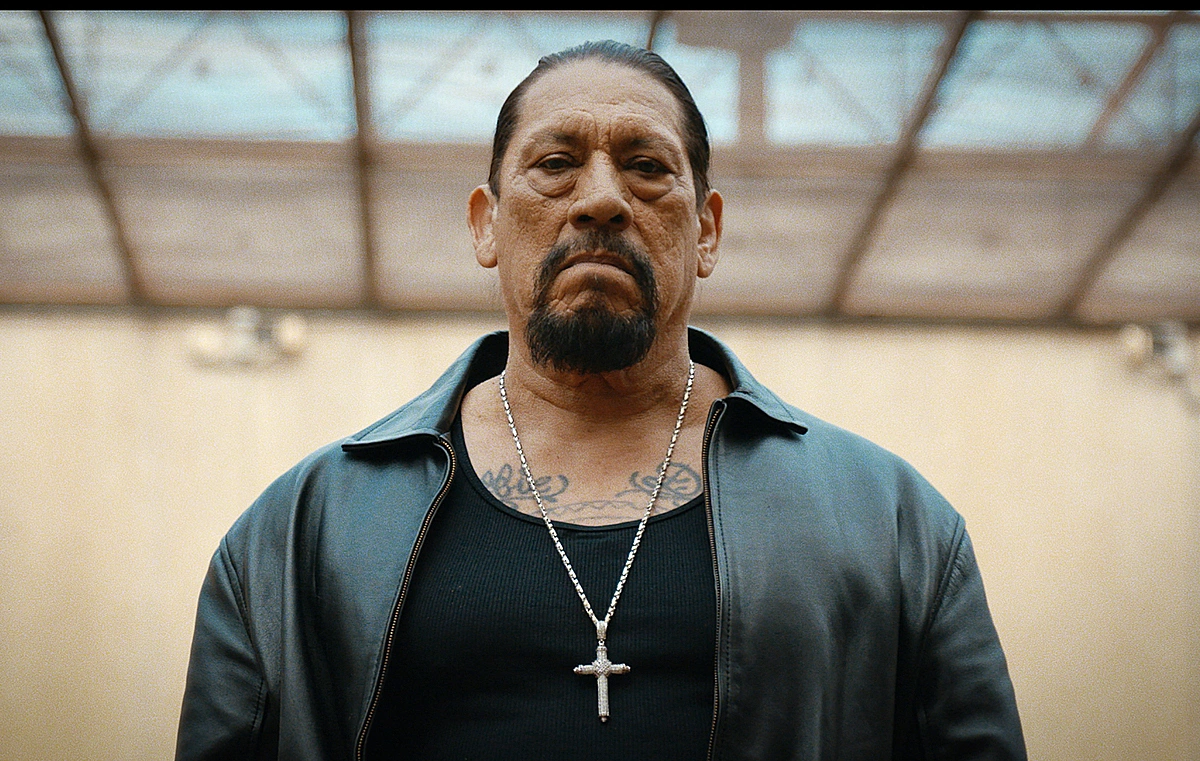
He did not need elaborate dialogue to suggest that a character had lived through violence. His face carried history before he spoke. Even when appearing for only a few minutes, he could make a role memorable.
During the 1990s, Trejo appeared in increasingly prominent productions. His credits included Blood In Blood Out, Desperado, Heat, From Dusk Till Dawn, and Con Air.
In Michael Mann’s Heat, Trejo worked alongside Robert De Niro and Al Pacino. In Robert Rodriguez’s films, he became part of a heightened world of Western imagery, crime, action, and dark humor that suited his presence perfectly.
Rodriguez would ultimately help transform Trejo from a familiar character actor into an unlikely leading man.
The Birth of Machete
Trejo first appeared as Isador “Machete” Cortez in Rodriguez’s family film Spy Kids in 2001.
The casting revealed something broader about his appeal. Trejo could play menacing criminals, but he could also be funny, protective, self-aware, and unexpectedly warm. Younger audiences came to recognize him through a film far removed from the brutal prison dramas and action movies that had defined much of his career.
The character later inspired a mock trailer created for the 2007 double feature Grindhouse. Audience enthusiasm helped turn the joke into a full-length movie.
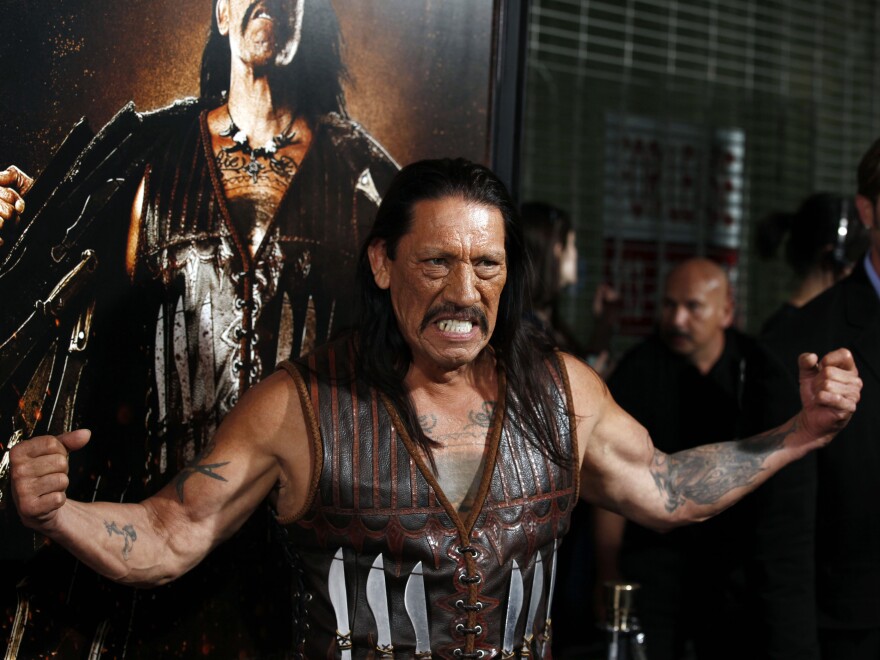
Released in 2010, Machete placed Trejo at the center of an action film after decades spent playing supporting villains and anonymous tough men.
He was in his sixties when he became a major theatrical leading actor.
The film exaggerated the qualities Hollywood had long associated with him—his tattoos, physical toughness, severe expression, and ability to remain calm amid chaos. But it also allowed him to control the image.
Trejo was no longer simply the dangerous man standing behind a more famous star. He was the hero whose name appeared in the title.
He returned in the sequel Machete Kills and continued working constantly across movies, television, animation, and video games. His credits eventually included projects as different as Breaking Bad, Sons of Anarchy, The Flash, Brooklyn Nine-Nine, and children’s entertainment.
The very face that once marked him as an outsider became his most valuable professional signature.
Success Without Forgetting the Past
Trejo’s transformation did not end with acting.
He became an entrepreneur, launching businesses including Trejo’s Tacos and Trejo’s Coffee & Donuts. His restaurants also created opportunities for people who needed stable work and another chance.
Despite decades of fame, he continued discussing recovery and helping people affected by addiction. He did not present his past as glamorous. The violence, prison time, and heroin addiction were not adventures that made him interesting; they were dangers he was fortunate to survive.
By his 80th birthday in 2024, Trejo had remained sober for approximately 55 years. He described each day as a blessing and continued acting, attending fan events, supporting community efforts, and spending time with his family.
His story is sometimes reduced to a dramatic contrast: prisoner becomes movie star.
The deeper meaning lies in what happened between those two identities.
Trejo’s life changed before Hollywood noticed him. It changed when he committed to sobriety, accepted responsibility, worked ordinary jobs, and made himself available to people who needed help. The movie career arrived later—and only because he was honoring that commitment when the phone rang.
Hollywood did not rescue Danny Trejo from prison.
By the time he reached the Runaway Train set, he had already begun rescuing himself. The industry simply discovered that the life written across his face could command a screen—and that the man behind it had become someone audiences would never forget.