A 10-Year-Old Vanished Beneath the Surf—Then a Teenage Lifeguard Dove Into the Breaking Waves
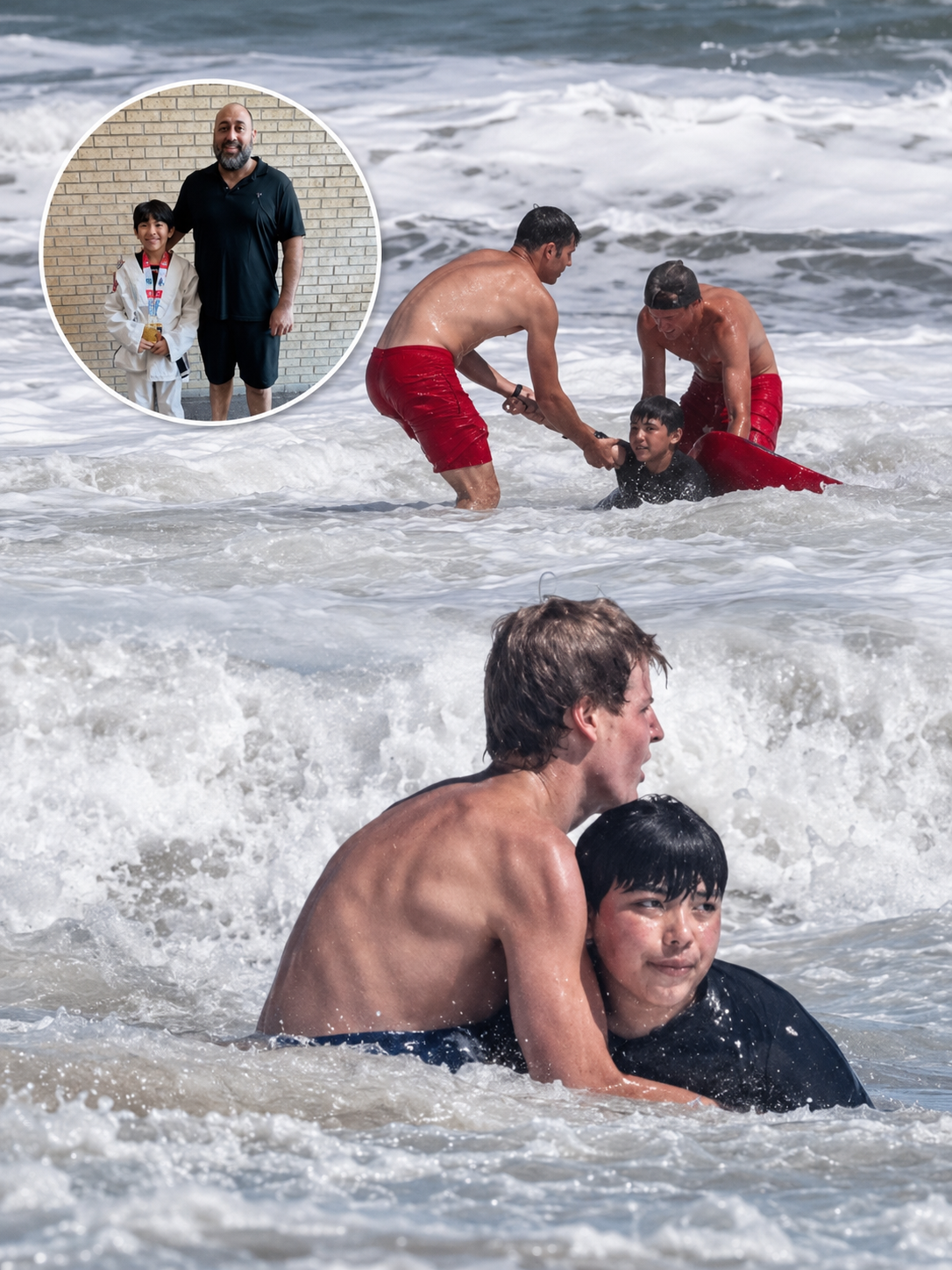
One moment, 10-year-old Nathaniel Rai was standing in water that barely reached his ankles.
The next, a powerful surge knocked him from his feet and dragged him away from the California shoreline.
Within seconds, the shallow edge of Seabright Beach had become a life-threatening trap. Nathaniel was pulled roughly 15 yards into the ocean as heavy waves crashed around him. By the time help reached him, the boy was limp and unresponsive.
Watching from shore, people could see the danger unfolding. But it was 16-year-old lifeguard Ryder Williams who ran directly into it.
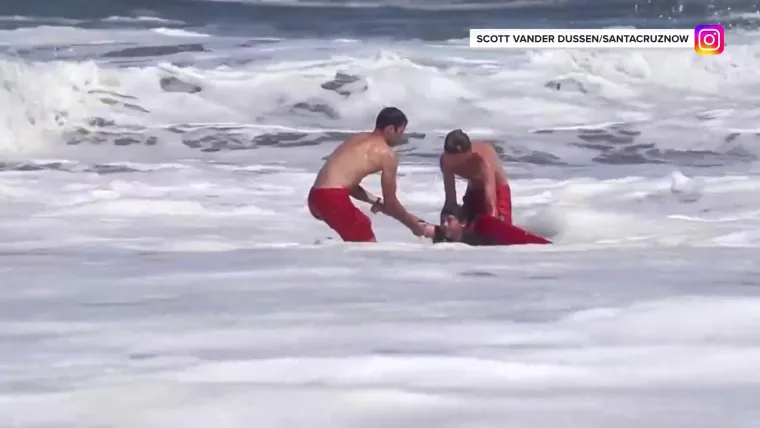
The dramatic rescue happened Saturday, July 25, 2026, at Seabright Beach in Santa Cruz, about 60 miles south of San Francisco. The moment was captured on video, showing Williams battling through the pounding surf while refusing to release his grip on the child.
Nathaniel survived without serious physical injuries.
For his father, Sumit Rai, the outcome is almost impossible to comprehend without thinking about the teenager who risked his own safety to bring the boy home.
Rai was in Dallas, his home city, when the incident occurred. He did not witness the rescue in person and initially learned about it while speaking with his children by phone later that evening.
Nathaniel’s description was brief but terrifying.
The boy told his father that he had drowned and lost consciousness. His voice was subdued, and Rai could tell that he was still trying to process what had happened.
Only the following morning did the father see the rescue video.
The footage revealed how quickly an ordinary trip to the beach had turned into a desperate fight for survival. It also showed the extreme conditions Williams entered to reach Nathaniel.
According to Rai, waves were rising as high as 10 feet, while rip currents and powerful ocean forces made the water dangerous even for a trained rescuer.
Williams had been watching the shoreline when he saw Nathaniel lose his footing in ankle-deep water. Recognizing the danger immediately, he radioed for assistance and began running toward the boy.
There was no time to hesitate.
Nathaniel had been caught by powerful swells that suddenly reached the beach and carried him farther offshore. Williams entered the water and made contact with him, but getting the child back to land proved far more difficult than reaching him.
After the first major wave struck, Williams was unable to pull Nathaniel from the ocean. The boy’s body had gone limp, and the force of the surf kept pushing against them.
The lifeguard held on.
Video of the rescue shows Williams diving into the face of an approaching wave while keeping a firm grip on Nathaniel. Each surge threatened to separate them or drive them farther into the water.
Another lifeguard soon entered the ocean to assist. Several bystanders also attempted to help, but Williams told them to return to shore rather than expose themselves to the same dangerous conditions.
The rescue required both courage and control. Williams had to protect Nathaniel while also preventing additional people from becoming victims.
Eventually, the lifeguards and others involved managed to bring the boy back to safety.
Nathaniel received a medical evaluation after reaching land. Despite being pulled into violent surf, losing consciousness and emerging from the water coughing, he suffered no serious injuries and was released to his family.
His father said the boy reported having sand in his lungs and coughing it out after the rescue.
Physically, Nathaniel was expected to recover. Emotionally, however, the experience had not ended when he left the beach.
Rai said his son continued to think frequently about what happened. The memory disturbed his sleep and remained heavily on his mind.
The boy was expected to return from California to Dallas within several days, where his family would continue helping him deal with the psychological effects of the ordeal.
For Rai, the fear of what might have happened has been accompanied by overwhelming gratitude.
He understood that Williams was trained to respond to emergencies, but he also recognized the personal danger the teenager accepted when he entered the surf.
The lifeguard did not know Nathaniel. He had only seconds to assess the situation before choosing to run toward waves strong enough to overpower a child standing near the shoreline.
Rai said Williams entered conditions that were unsafe even for the rescuer himself. The teenager’s decision meant placing his own body between Nathaniel and a relentless ocean.
That knowledge has left the father struggling to find words large enough to express what the rescue means to his family.
Williams, however, spoke about the incident with the calm perspective of someone focused on his responsibility rather than the attention surrounding it.
He said he was grateful that he had been able to return the child safely to his family. He also emphasized that rescues are part of his work and credited the other lifeguards who respond to emergencies every day.
The teenager’s modest response stood in sharp contrast to the intensity of the footage.
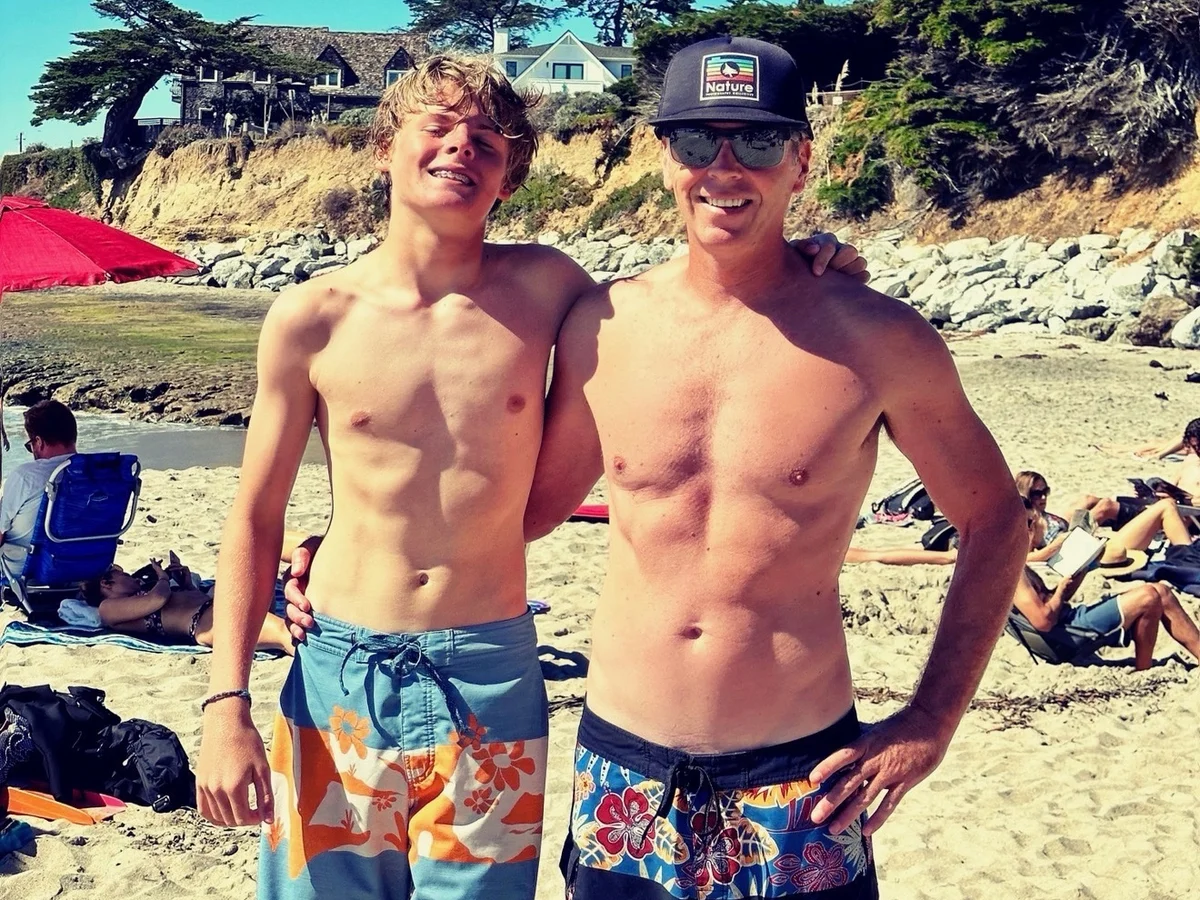
To viewers, the video showed a young lifeguard facing enormous waves and refusing to let go of an unconscious child. To Williams, it was the job he had trained to perform—and one he said he loves.
The rescue later drew widespread attention, reaching viewers far beyond Santa Cruz and even attracting notice from President Donald Trump.
But for Nathaniel’s family, its importance is deeply personal rather than public.
The video is not simply a dramatic scene from a California beach. It records the moment their son nearly disappeared beneath the waves—and the moment someone reached him before it was too late.
Rai has contacted Williams and hopes to thank him directly.
He knows that no conversation, gift or gesture could ever equal what the 16-year-old gave his family that day. Nathaniel returned to shore alive because Williams saw the danger, reacted immediately and kept holding on even when the waves made escape nearly impossible.
The physical rescue lasted only minutes.
Its emotional impact will remain with both families far longer.
Nathaniel now faces the difficult process of moving beyond the fear that follows him into his sleep. His father is waiting for him to return home, carrying gratitude that he says can never be repaid.
And at the center of that gratitude is a teenage lifeguard who saw a child vanish into pounding surf and ran forward when every wave seemed to push him back.