Cheesecake Factory Dining Dispute Turns Hostile as Fleeing Friend Intercepted and Card Declines Lead to Arrest

A protracted dining disturbance at a Cheesecake Factory establishment descended into outright chaos after an attempted escape, mutual recriminations among acquaintances, and repeated electronic payment failures culminated in handcuffs and criminal charges. Law enforcement body-worn camera footage captures the unraveling scene as patrons attempted to evade responsibility for an outstanding dining tab, leading to a tense confrontation that shuttered all avenues of escape.
The escalating turmoil followed an initial dispute where a woman’s newly met companion refused to finance an unpaid $350 tab amassed by her party. With police officers actively managing the standoff inside the establishment, the situation took an abrupt turn when an alert officer caught sight of an accomplice attempting to quietly slip past the exit doors. The woman, identified as one of the dining companions who had participated in the table’s festivities, was in the process of leaving her acquaintance behind to face the escalating fallout alone.
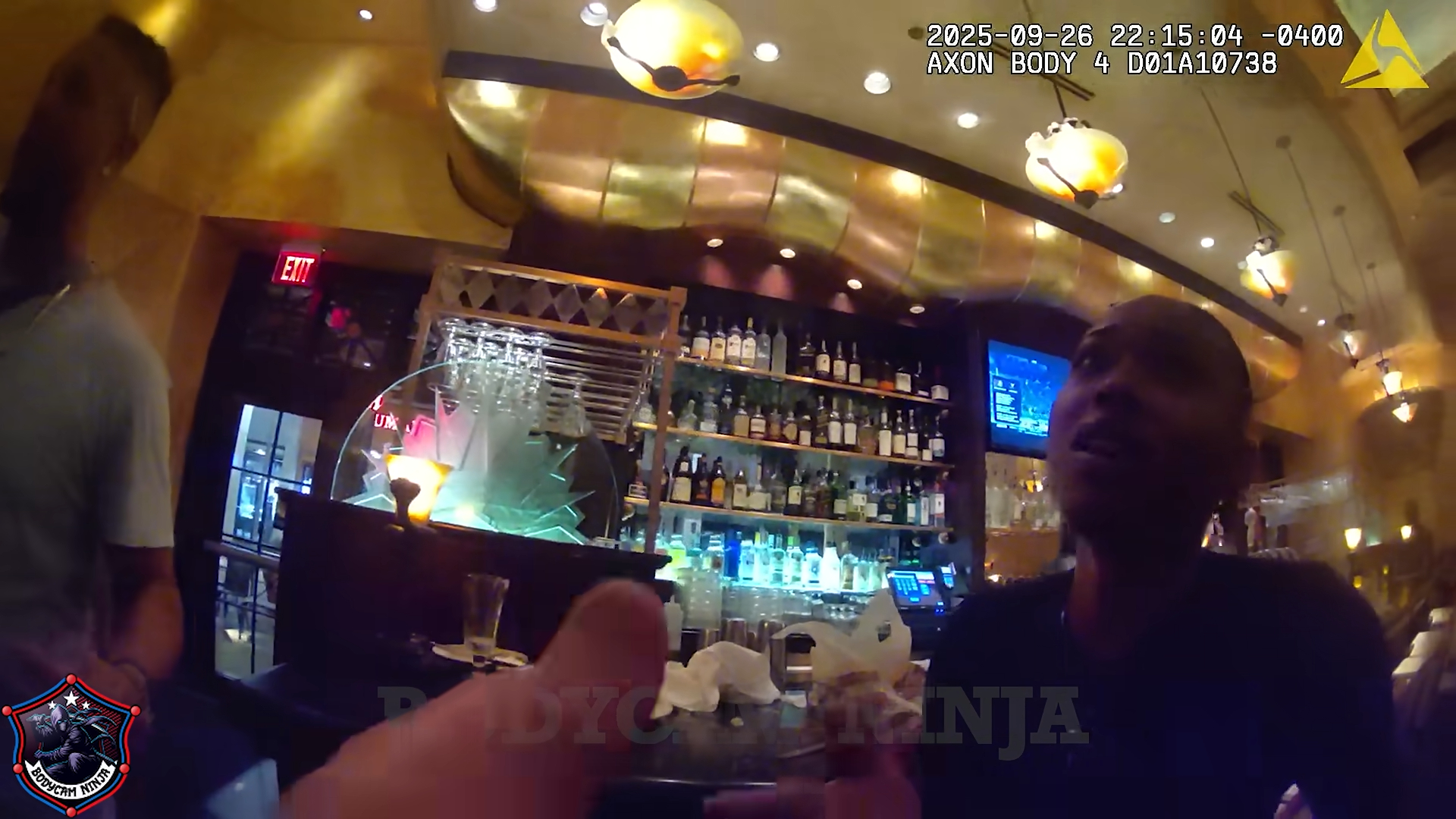
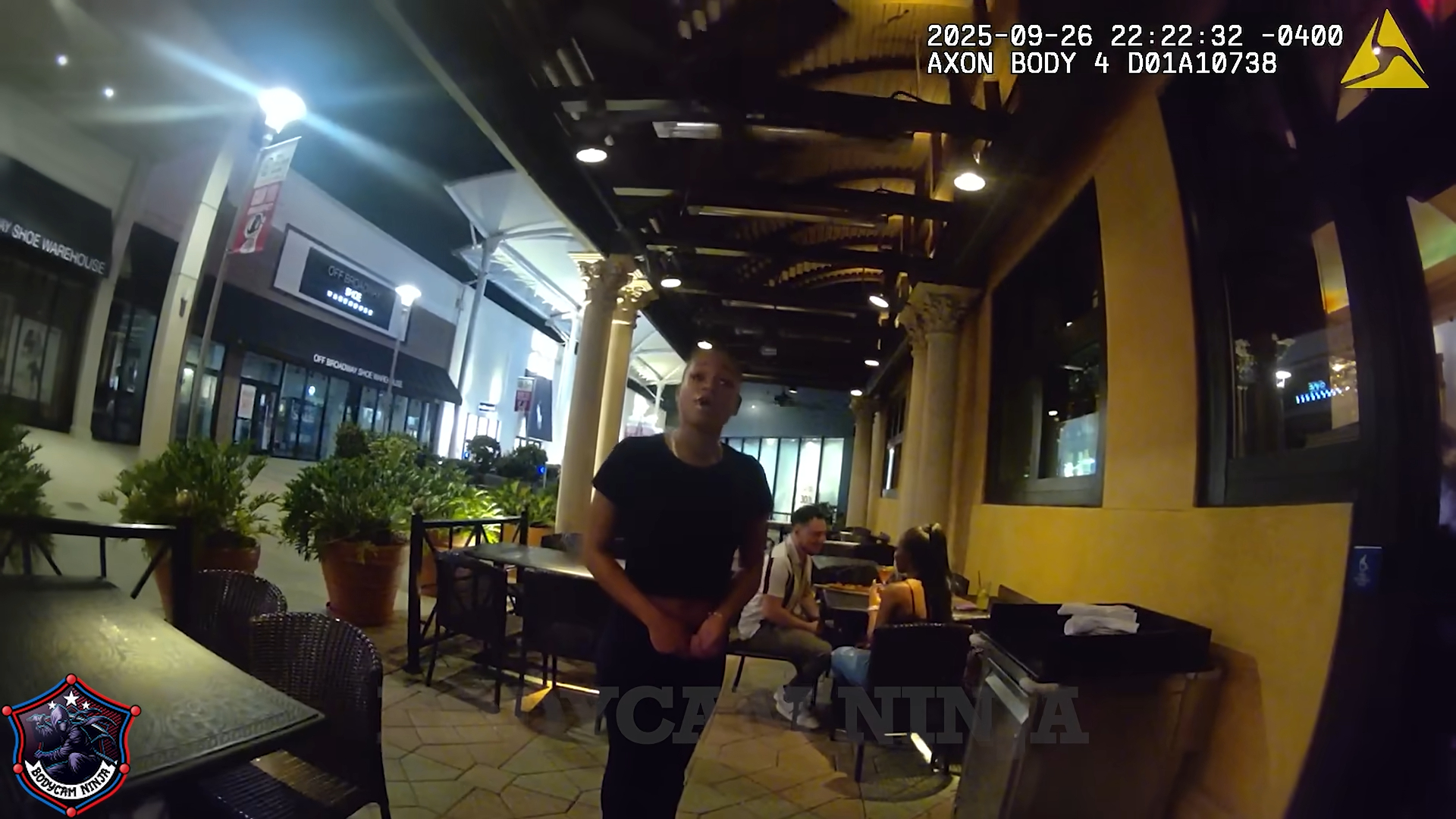
An officer immediately intercepted the patron near the doorway, demanding that she halt her exit and return inside the premises. Rather than complying with standard law enforcement instructions, the woman engaged in an aggressive verbal confrontation. Refusing to step back into the dining room, she challenged the officer’s jurisdiction, claimed she bore no unpaid obligations, and loudly demanded the presence of a senior supervisor.
Unmoved by the deflection, the supervising officer pointed to the rank insignia displayed on his uniform, clarifying that he was the officer in charge of the scene. With patrons and staff observing the escalating hostility at the threshold, the officer issued a firm ultimatum: she had roughly two seconds to step back inside to address the unresolved bill or face immediate physical restraint and custodial arrest. Confronted with the immediate threat of handcuffs on the sidewalk, the patron begrudgingly re-entered the restaurant under protest.
Once back inside the main dining room, the dispute rapidly devolved into public discord as friendship gave way to mutual finger-pointing and legal posturing. Confronted by officers and restaurant management over her portion of the bill, the intercepted companion adopted a defensive stance, asserting her legal knowledge and claiming constitutional immunity from financial liability. She loudly insisted that she knew her legal rights and flatly declared that she had no intention of settling any portion of the tab because, according to her account, she had not purchased anything herself.
That defense collapsed immediately under scrutiny from the restaurant’s managerial staff. The manager directly confronted her claims on the dining floor, confirming to responding officers that the woman had spent significant time seated at the counter and had actively consumed both food items and a succession of alcoholic specialty beverages alongside the group. As management attempted to break down the shared costs, the patron grew increasingly loud, disrupting other diners while repeating that the restaurant was unfairly attempting to hold her accountable for a collective group outing. The solidarity between the former high school classmates dissolved completely, replaced by desperate attempts to avoid legal accountability for the bill.
Attention subsequently shifted back to the primary party, who had spent previous minutes attempting to revive her mobile device in hopes of executing an electronic payment. With her phone finally powered on, the resolution appeared within reach. However, the transactional attempts quickly devolved into further complications when the point-of-sale terminal repeatedly flashed transaction decline notices.
The woman attempted to negotiate alternative settlement mechanisms, proposing to transfer the balance through mobile person-to-person transfer applications such as Zelle. Restaurant management clarified that the commercial establishment did not support personal transfer services and required standard merchant payment methods, including valid credit cards or authorized point-of-sale mobile wallets like Apple Pay. Subsequent attempts to process her digital banking cards through the terminal produced identical results: the bank repeatedly declined the charges.
As the realization settled that her electronic funds were unreachable or insufficient to satisfy the debt, the woman’s composure deteriorated into frantic pleas. Despite earlier assertions that she possessed ample funds in her accounts, she began begging officers and restaurant personnel to allow her to contact third parties outside the premises. In a bid to avoid custodial transport, she frantically urged officers to allow her to place a telephone call to an ex-boyfriend, pleading for someone to contact him so he could remotely cover the balance on her behalf.
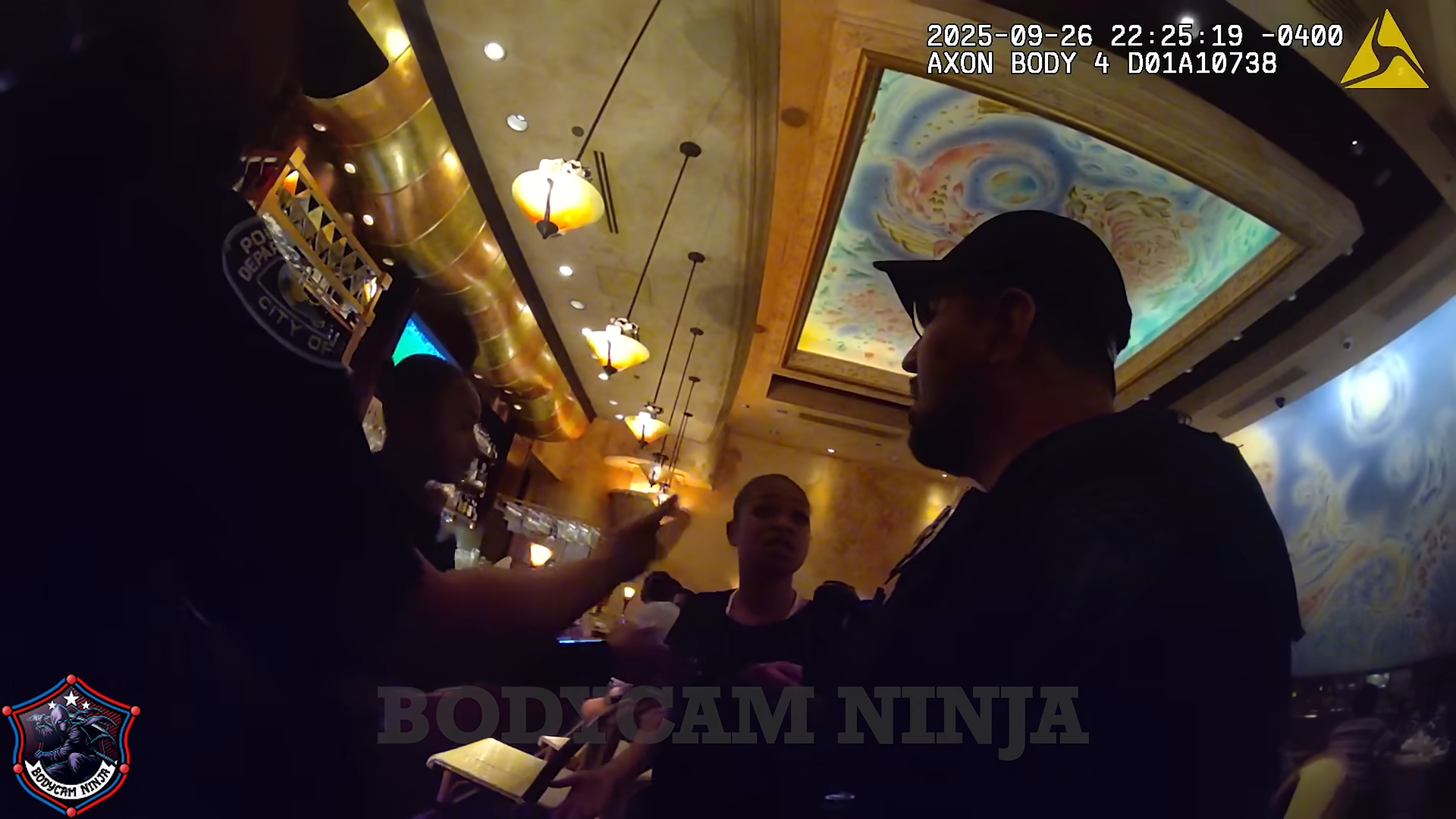
Officers denied the request to negotiate third-party bailouts or prolong the disruption. Having exhausted all reasonable opportunities for the patrons to settle the lawful business transaction, law enforcement moved to enforce statutory penalties for theft of services and public disruption. An officer instructed the woman to rise from her seat, put her hands behind her back, and submit to physical restraint.
What began as an opportunistic attempt to enjoy high-end hospitality without assuming personal financial responsibility concluded in a severe display of legal consequences. With the unpaid balance unresolved, the confrontation ended not with a negotiated departure, but with criminal bookings, formal misdemeanor charges, and a permanent public record of an evening driven by evasion and broken loyalty.