Cillian Murphy’s 10 Best Movies Ranked: The Quiet Irish Drama That Nearly Challenged Oppenheimer
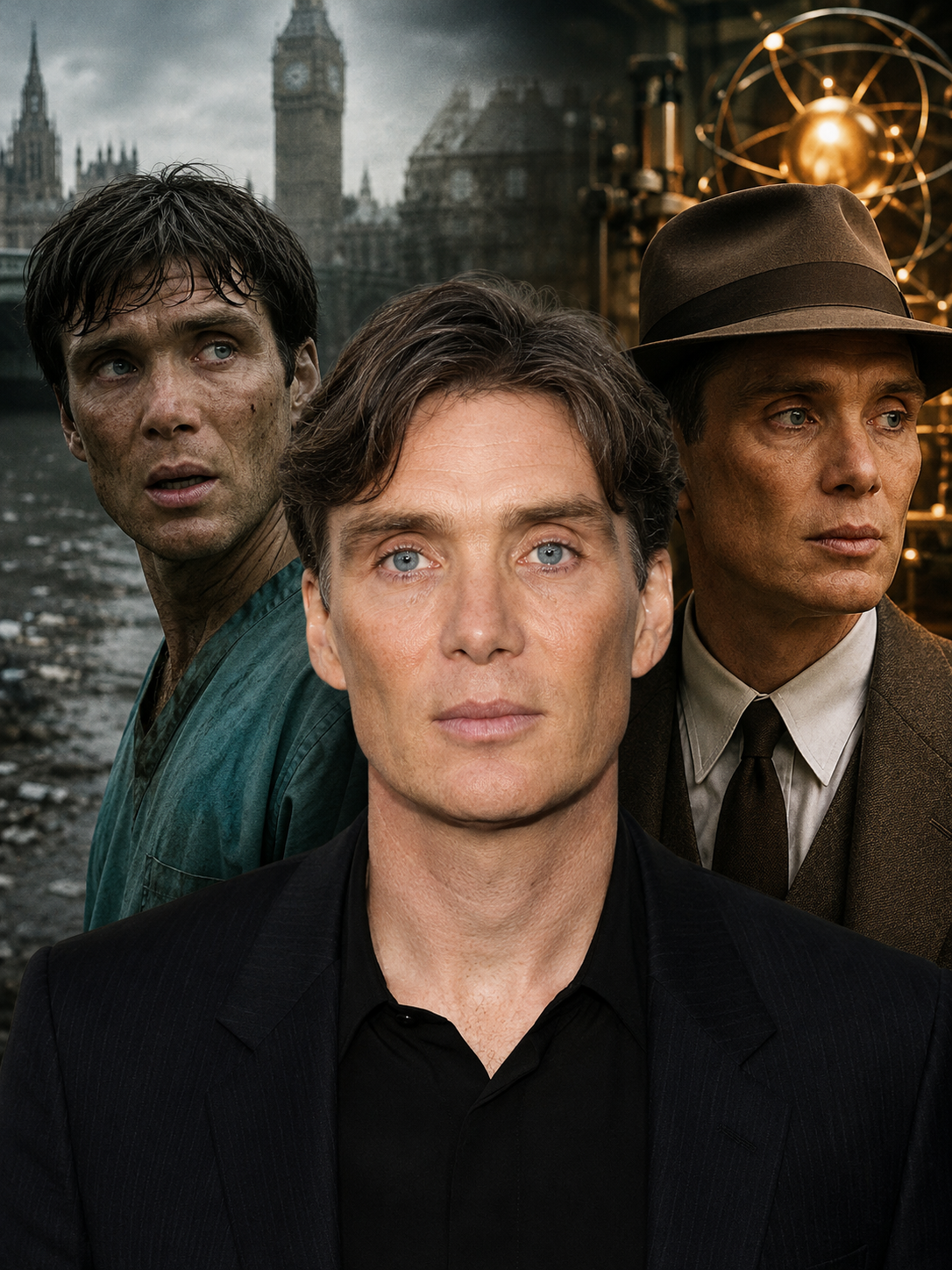
Cillian Murphy spent years standing near the center of Christopher Nolan’s movies without being allowed to occupy it completely.
He terrorized Gotham as the Scarecrow, became one of Inception’s most important targets and carried the haunted expression of a traumatized soldier through Dunkirk. Then Nolan finally placed an entire film on Murphy’s narrow shoulders.
The result was Oppenheimer, the performance that earned him the Academy Award for Best Actor and transformed a respected actor into an undeniable global leading man.
Yet Murphy’s career cannot be reduced to one atomic-age epic.
Long before the Oscar, he had already portrayed a survivor waking inside an abandoned London, an Irish doctor pulled into revolution, a transgender foundling searching for love and a desperate father confronting institutional cruelty.
His finest work often depends on restraint. Murphy can communicate fear, guilt or moral collapse through a slight movement of his eyes before the script gives him anything to say.
Here are Cillian Murphy’s 10 best movies, ranked by overall quality, performance, cultural influence and importance to his career.
10. Red Eye (2005)
Wes Craven turned an ordinary overnight flight into a compact psychological battle between Murphy and Rachel McAdams.
Murphy plays Jackson Rippner, a seemingly charming passenger who sits beside hotel manager Lisa Reisert. Once the plane leaves the ground, Jackson reveals that he is part of a plot to assassinate a government official and intends to use Lisa’s family as leverage.
The role weaponizes Murphy’s appearance.
His calm voice and blue eyes initially suggest safety, then become increasingly threatening as Jackson’s control slips. Murphy avoids playing him as an oversized action villain. His menace comes from intimacy, patience and the knowledge that Lisa cannot simply leave her seat.
McAdams ultimately owns the film’s emotional journey, but Murphy gives her a villain worth defeating.
9. Disco Pigs (2001)
Murphy’s early breakthrough began onstage before director Kirsten Sheridan adapted Enda Walsh’s play for film.
He plays Pig, a volatile young man whose bond with Runt, played by Elaine Cassidy, began at birth and developed into an isolated private world. As they approach adulthood, Runt begins imagining a life beyond him. Pig responds with jealousy and violence.
Murphy makes the character frightening without erasing the abandoned child beneath his aggression.
The performance is rawer than his later work, filled with physical energy and emotional instability. It established his willingness to enter difficult characters without trying to make them conventionally likable.
Disco Pigs is not as polished as the films that followed, but it contains the intensity that filmmakers would continue drawing from for decades.
8. Breakfast on Pluto (2005)
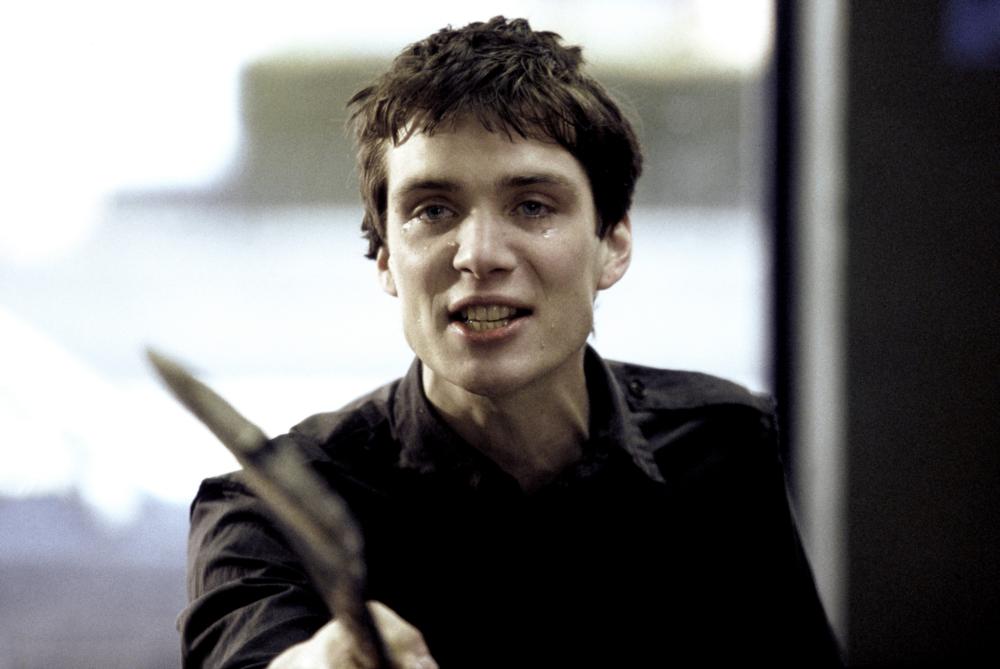
Murphy received a Golden Globe nomination for playing Patrick “Kitten” Braden, a transgender foundling who leaves an oppressive Irish town and searches for her mother in 1970s London.
Directed by Neil Jordan, the film moves between political violence, fantasy, romance and dark comedy.
Kitten survives by protecting her inner life with charm. She refuses to let other people’s cruelty determine how she sees herself, even when her optimism places her in danger.
Murphy could have turned the role into an exaggerated collection of gestures. Instead, he finds the sadness beneath Kitten’s theatricality. Her humor becomes a defense against abandonment and a world determined to misread her.
The film’s shifting tone is sometimes uneven, but Murphy’s tenderness holds it together.
7. Dunkirk (2017)
Murphy’s character does not have a name.
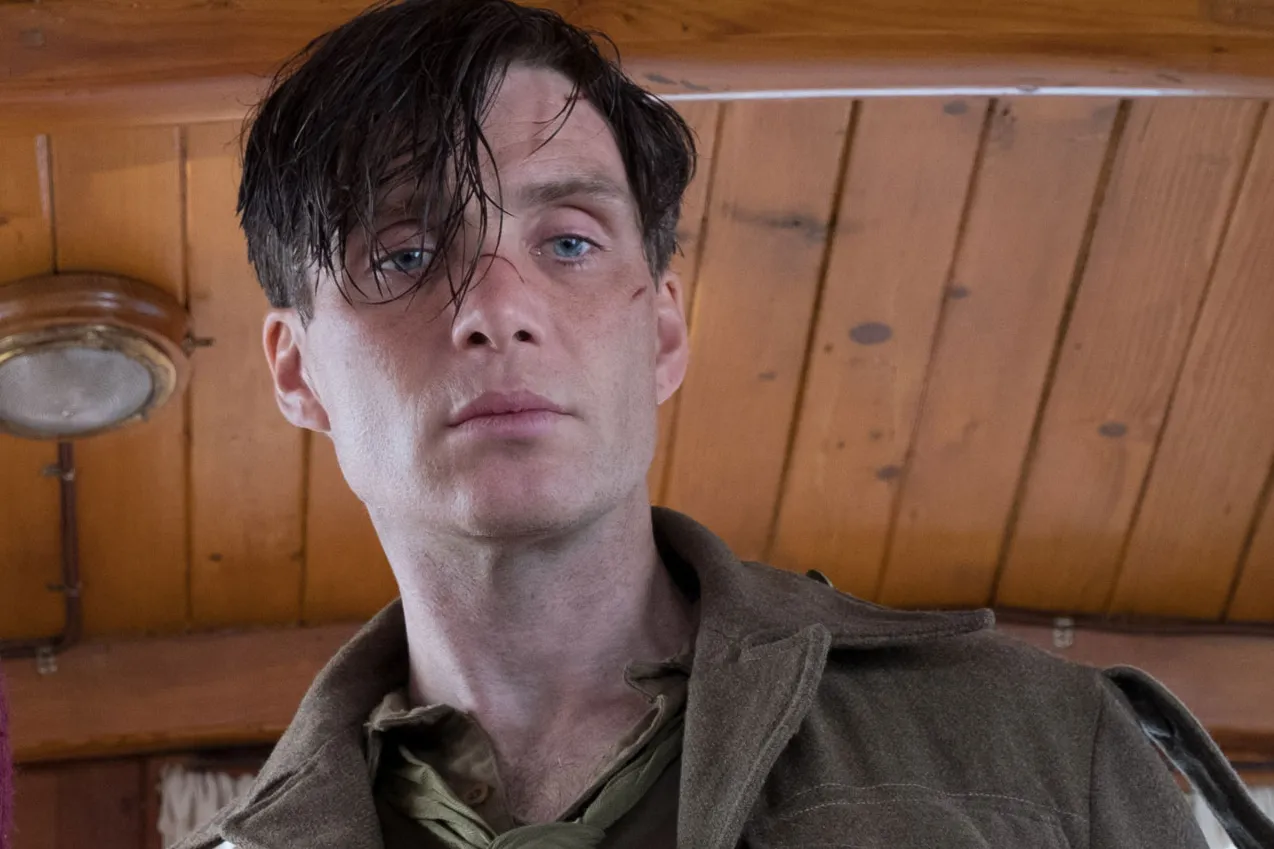
Credited only as the Shivering Soldier, he is rescued from a sinking ship during the evacuation of Allied troops from Dunkirk. When he learns that the civilian boat carrying him is heading back toward the danger, panic overwhelms him.
Murphy has relatively little screen time, yet his performance gives Christopher Nolan’s war film one of its most human perspectives.
The soldier is not presented as cowardly. He has endured something the people around him cannot fully understand, and his body reacts before reason can regain control.
His fear contributes to one of the story’s most painful accidents. Murphy then portrays the shame afterward with almost no dialogue.
Among a film filled with large-scale images, his trembling face reminds viewers that survival itself can leave damage.
6. Inception (2010)
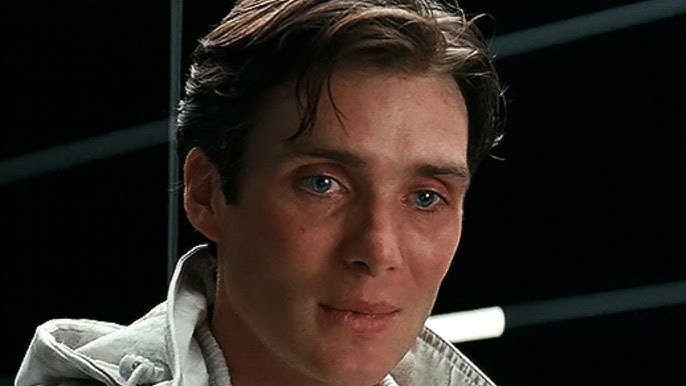
Murphy plays Robert Fischer, the heir targeted by Leonardo DiCaprio’s team of dream infiltrators.
Their assignment is not to steal a secret from him but to plant an idea: that he should dismantle his father’s business empire.
Fischer could have functioned merely as the object of the mission. Murphy gives him an emotional life strong enough to make the deception matter.
The team exploits his grief and his belief that his dying father was disappointed in him. The film’s famous final emotional revelation works because Murphy makes Fischer’s longing for approval painfully sincere.
He is surrounded by characters manipulating every detail of his subconscious, but his vulnerability becomes the film’s emotional anchor.
Inception is one of Nolan’s most inventive blockbusters. Murphy’s quiet work prevents its complicated machinery from becoming emotionally empty.
5. Sunshine (2007)
In Danny Boyle’s science-fiction thriller, Murphy plays physicist Robert Capa, a crew member aboard a spacecraft carrying a device intended to restart the dying sun.
The mission places Capa among scientists who must make impossible decisions while isolation and pressure slowly destroy the group.
Murphy brings stillness to a film built around enormous cosmic danger. Capa is not a traditional action hero. He survives through focus, technical knowledge and a growing willingness to sacrifice himself.
The movie’s final act shifts toward horror, a decision that divided viewers. Yet its imagery, atmosphere and sense of human smallness have helped it develop a strong following.
Murphy’s performance holds together the scientific awe and existential dread. In the final moments, reaching toward the sun, Capa becomes a man touching the thing that has defined his entire mission.
4. Small Things Like These (2024)
Murphy followed the largest film of his career with one of his quietest.
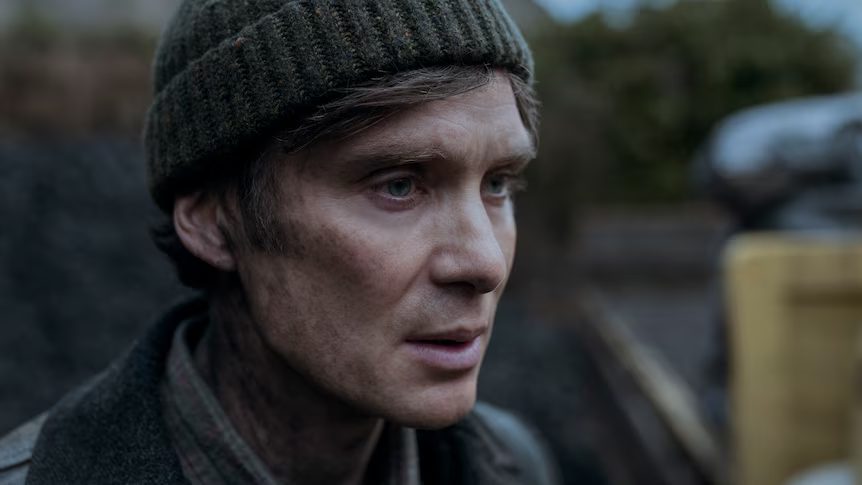
He plays Bill Furlong, a coal merchant and father living in a small Irish town in 1985. While making a delivery to a convent, Bill discovers evidence of the cruelty inflicted on vulnerable women inside a Magdalene laundry.
The film, adapted from Claire Keegan’s novel, is built around a moral decision rather than a conventional plot.
Bill understands that speaking or acting could place his family and livelihood at risk. Remaining silent would allow him to continue living comfortably inside a community that has chosen not to see what is happening.
Murphy barely raises his voice. His face carries memories of his own childhood, fear of the Church’s power and growing disgust with his passivity.
As both star and producer, he helped create a film in which courage arrives not as a grand speech but as one ordinary man deciding that looking away has become impossible.
3. 28 Days Later (2002)
Murphy wakes naked in an empty hospital and walks into a London that appears to have lost its population.
That opening helped redefine modern horror.
As bicycle courier Jim, Murphy guides the audience into a country devastated by a virus that turns infected people violently aggressive. He begins confused and vulnerable, then gradually discovers that uninfected humans may be as dangerous as the outbreak.
Danny Boyle’s digital photography gives the film an immediate, almost documentary-like terror. Murphy’s unfamiliar face was crucial to its effect. He did not yet carry a star’s protection, so Jim seemed capable of dying at any moment.
The film revived interest in fast-moving infected creatures and influenced years of apocalyptic storytelling.
Murphy also makes Jim’s transformation unsettling. By the climax, the gentle survivor has become frighteningly capable of violence, leaving the audience to question how much of him the new world has changed.
2. The Wind That Shakes the Barley (2006)
Ken Loach’s Palme d’Or-winning drama turns the Irish struggle for independence and subsequent civil war into a tragedy between brothers.
Murphy plays Damien O’Donovan, a young doctor preparing to leave Ireland when violence by British forces convinces him to join the Irish Republican Army.
At first, Damien’s purpose seems clear. He fights occupation beside his brother Teddy and accepts terrible sacrifices for independence.
The Anglo-Irish Treaty then divides the movement. Teddy accepts the compromise, while Damien views it as a betrayal of the republic they fought to establish.
Murphy charts the destruction of an idealist with extraordinary control. Damien’s political commitment grows stronger as his personal world becomes smaller, until history places him against the brother who once stood beside him.
The film’s power comes from refusing to treat national conflict as an abstraction. Every political division enters a kitchen, friendship or family.
Murphy would later become internationally associated with an English gangster in Peaky Blinders. Here, speaking in his native Cork accent, he delivers one of the most deeply Irish performances of his career.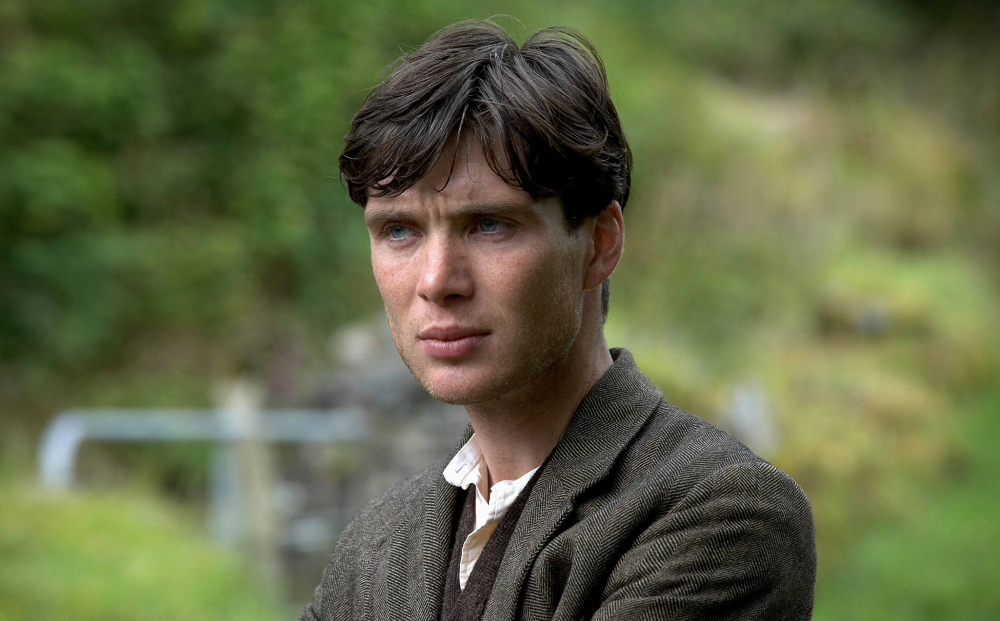
1. Oppenheimer (2023)
Christopher Nolan finally gave Murphy the central role after five previous collaborations.
He responded with the defining performance of his career.
As theoretical physicist J. Robert Oppenheimer, Murphy must carry a three-hour film that moves through scientific discovery, government hearings, political betrayal and the moral consequences of creating the atomic bomb.
His Oppenheimer is brilliant, ambitious and capable of persuading others to follow him. He is also vain enough to believe he can manage forces—scientific and political—that soon move beyond his control.
Murphy lost weight for the role, but the performance is not built on physical imitation. Its power lies in the conflict visible behind his eyes.
The successful Trinity test brings triumph and horror together. During Oppenheimer’s speech to the Los Alamos scientists, applause becomes distorted as he imagines burned bodies and understands that celebration cannot be separated from what the weapon will do.
The film earned seven Academy Awards, including Best Picture, Best Director and Best Actor for Murphy. He also won the BAFTA, Golden Globe and Screen Actors Guild Award.
The honors confirmed what his earlier films had already demonstrated: Murphy could hold an audience through silence as powerfully as other actors do through speeches.
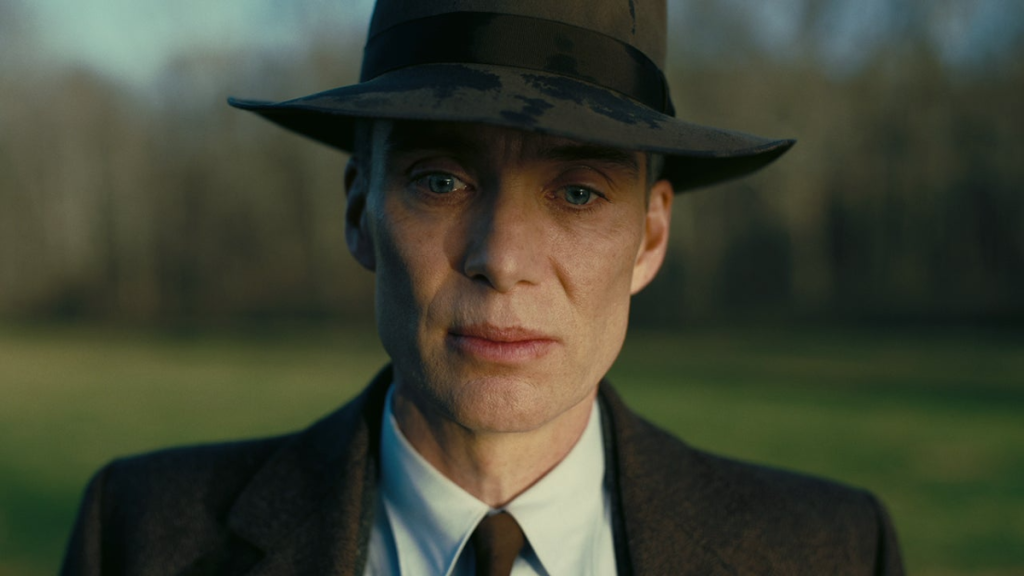
The Face Before the Explosion
Cillian Murphy’s film career has repeatedly placed him inside moments when private conscience collides with forces larger than one person.
Jim confronts the collapse of society. Damien watches a liberation movement divide his family. Bill Furlong recognizes the cost of challenging a powerful institution. Oppenheimer discovers that scientific achievement does not grant control over how an invention is used.
Murphy rarely explains these conflicts more than necessary.
He allows the audience to watch thought become fear, guilt or resolve before the character acts.
Oppenheimer remains his greatest achievement because it gathers every quality he developed across the previous two decades: the intensity of Disco Pigs, the vulnerability of 28 Days Later, the moral anguish of The Wind That Shakes the Barley and the restraint of Small Things Like These.
The explosion made history.
Murphy made the face watching it impossible to forget.