Henry Fonda Left Hollywood at the Height of His Fame to Serve in a Real War
- NgoPhong
- July 27, 2026
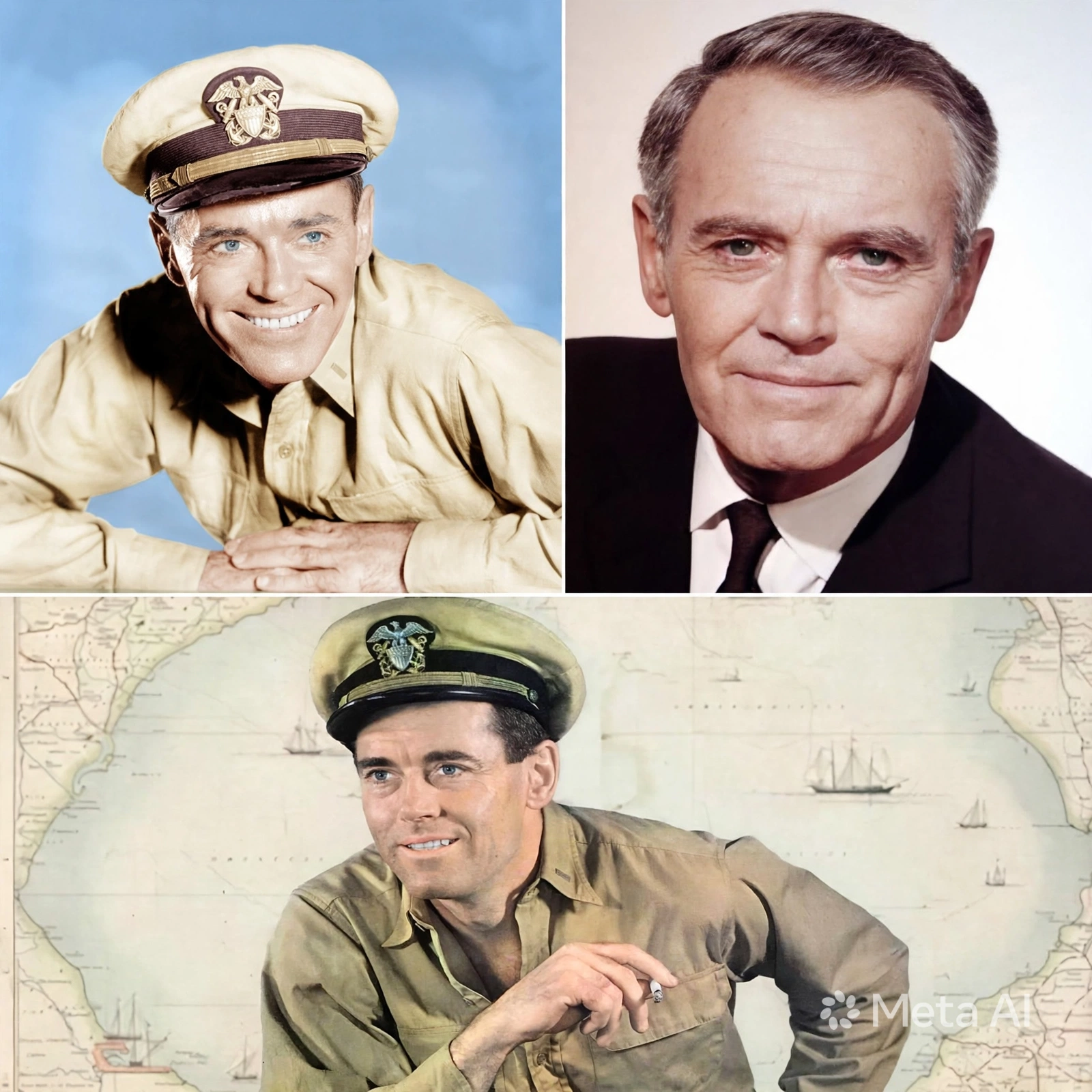
When success was no longer enough
By 1942, Henry Fonda had already achieved what countless aspiring actors could only dream of.
He was one of Hollywood’s most respected leading men, admired for performances that combined quiet strength, moral conviction and emotional honesty. His portrayal of Tom Joad in The Grapes of Wrath had earned him an Academy Award nomination and established him as one of the most important dramatic actors of his generation.
At a time when a successful actor could expect lucrative contracts, prestigious roles and years of career security, Fonda seemed positioned to remain safely beneath the studio lights.
Instead, he walked away.
As the United States fought World War II, Fonda decided that portraying courage on screen was no longer enough. He wanted to serve alongside the ordinary Americans who had left their homes, careers and families to join the military.
His decision would take him from film sets to naval training, from celebrity status to enlisted service, and eventually into intelligence operations supporting some of the most consequential campaigns of the Pacific War.
A star who refused to remain a spectator
Following the attack on Pearl Harbor, Hollywood became deeply involved in the American war effort.
Studios produced patriotic films. Actors appeared at rallies, promoted war bonds and performed for military personnel. Some stars joined specialized entertainment or filmmaking units, using their fame and professional skills to support the country.
Those contributions were valuable, but Fonda wanted something different.
He reportedly explained his decision by saying that he did not want to participate in a “fake war in a studio.” He also expressed frustration at remaining a spectator while other Americans faced the dangers of military service.
On August 24, 1942, Fonda enlisted in the United States Navy in Los Angeles. He was 37 years old—an age that placed him close to the limit for acceptance—but he was determined to serve.
The choice was striking not only because of the risks involved, but because of what he voluntarily left behind.
Fonda was reportedly earning approximately $150,000 a year as an actor, an enormous salary at the time. As an enlisted, married sailor, his annual military pay would have been only a small fraction of that amount.
Yet money, prestige and professional security did not change his decision.
He chose to begin as an enlisted sailor
Fonda’s education and public standing could have helped him pursue an officer’s commission immediately.
He chose not to.
Records described by the National WWII Museum indicate that Fonda preferred to enter the Navy as an enlisted man and allow his performance to demonstrate whether he deserved greater responsibility. An immediate commission would have brought higher pay, status and comfort, but he wanted to earn his position through service.
That decision revealed something important about his motivation.
Fonda was not looking for a ceremonial uniform, a publicity photograph or a carefully managed wartime role. He wanted to experience military life under the same standards applied to other recruits.
Once he entered training, his fame no longer determined his daily routine.
He followed orders, completed drills and learned the practical skills expected of a sailor. There were no directors to arrange the scene, no assistants to protect him from discomfort and no audience waiting to applaud.
In the Navy, his reputation could not navigate a ship or interpret an intelligence report.
He had to prove himself.
From basic training to Quartermaster School
After completing basic training in San Diego, Fonda attended Quartermaster School.
In the Navy, quartermasters performed essential navigational work. Their duties could include maintaining charts, calculating positions, using navigational instruments and helping guide a vessel safely through uncertain waters.
The work demanded concentration and accuracy. A mistake at sea could have consequences far more serious than a missed line or a failed scene.
Fonda reportedly graduated among the top 10 students in a class of 200. His performance led to a meritorious advancement to quartermaster third class.
In May 1943, he was assigned to the newly constructed destroyer USS Satterlee.
The assignment placed one of America’s most recognizable actors aboard a warship, serving not as a celebrity guest but as a member of its crew.
Accounts from the period indicate that Fonda enjoyed shipboard life and was eager to go to sea. When orders arrived that could lead to officer training, they were not something he had aggressively sought. His superiors reportedly encouraged the transition because they believed his abilities could be used more effectively in a position of greater responsibility.
A commission—and an assignment he did not want
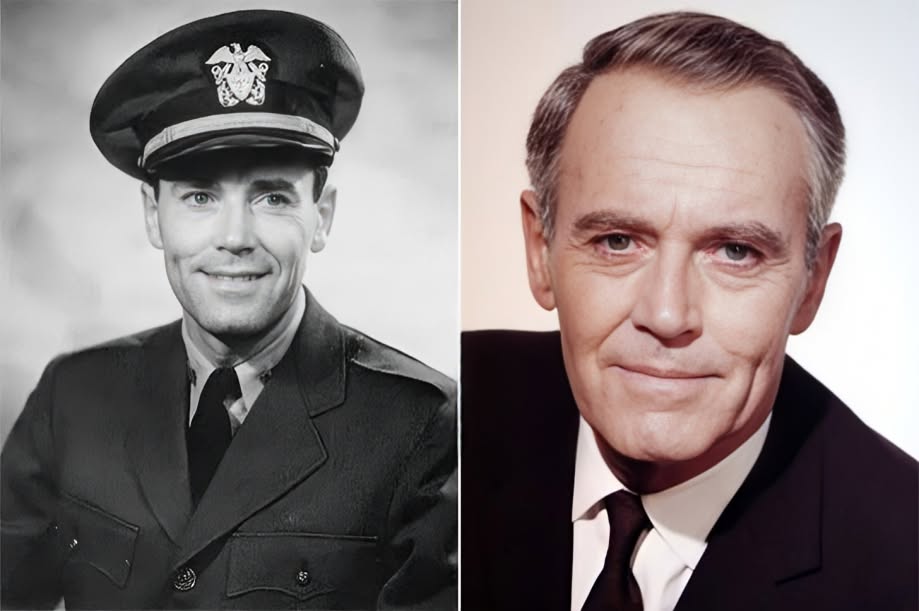
Fonda was eventually transferred to New York and commissioned as a lieutenant junior grade.
His first commissioned assignment, however, was not the active wartime service he had imagined.
He was sent to Washington and assigned to work connected with Navy training films. For a professional actor, the position made practical sense. The Navy could use his experience and public appeal without exposing him to the dangers of a combat zone.
But Fonda had not left Hollywood merely to continue acting in uniform.
After roughly a month, he requested a more active assignment. He was then sent to Naval Air Station Quonset Point in Rhode Island, where he trained as an air combat intelligence officer. His studies included areas such as coding and photographic interpretation, and he finished in the upper portion of his class.
In the spring of 1944, his request was finally granted.
Henry Fonda was going to the Pacific.
Serving aboard the USS Curtiss
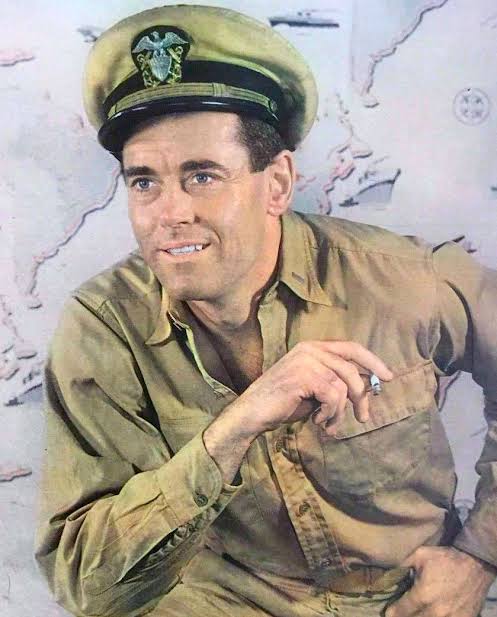
Fonda joined the seaplane tender USS Curtiss as an assistant air operations officer.
A seaplane tender supported naval aircraft operating far from permanent bases. Such vessels could provide fuel, maintenance, supplies and operational assistance, allowing aviation units to function across the enormous distances of the Pacific.
Fonda’s responsibilities focused on air operations and intelligence.
He reviewed photographic and other intelligence material, helped evaluate enemy activity, and briefed pilots and aircrews. His work contributed to planning operations associated with the Marianas, Western Carolines and Iwo Jima campaigns.
This was not the kind of military service that created glamorous photographs.
Intelligence work required patience, discipline and careful judgment. Reports had to be compared, interpreted and turned into information that commanders and aircrews could use.
A poor conclusion might send aircraft toward the wrong target or leave forces unprepared for an enemy response.
Fonda’s ability to study people and situations—skills that had helped make him a powerful actor—now served a far more urgent purpose.
He earned the respect of the sailors around him
The most revealing accounts of Fonda’s wartime service did not come from studio publicity departments.
They came from the people who served with him.
Former shipmates remembered him as hardworking, direct and genuinely interested in those around him. One account described an incident in which Fonda received a report that an aircraft had spotted a Japanese submarine. While rushing to alert nearby units, he fell on a ladder and suffered a serious cut.
Rather than immediately seeking treatment, he reportedly continued until he had completed his duty. Only afterward did he go to sick bay.
Later that day, despite the injury, Fonda appeared as master of ceremonies for scheduled entertainment aboard the ship. The crew gave him an enthusiastic response—not merely because he was a movie star, but because he had already earned their respect as an officer.
The difference mattered.
Celebrity could attract attention, but it could not force sailors to trust someone responsible for wartime operations.
That trust had to be earned through competence and conduct.
Danger in the Pacific
Fonda’s service brought him close to the realities he had once feared experiencing only through a studio recreation.
While the USS Curtiss operated in the Pacific, Japanese aircraft threatened American positions and vessels. During one attack, an enemy plane was shot down near the ship.
According to an account preserved by the U.S. Naval Institute, Fonda and two sailors entered the water to examine the wreckage. Fonda recovered materials, including a chart board from the dead Japanese aviator, and used the information to help determine where further enemy attacks might originate.
The intelligence contributed to a recommendation for an American strike against Pagan Island. The ship reportedly experienced a period without additional attacks afterward.
Whether working over photographs, briefing crews or investigating wreckage, Fonda approached his responsibilities with the seriousness of a professional officer.
There was no script and no guarantee that the story would end safely.
The Bronze Star
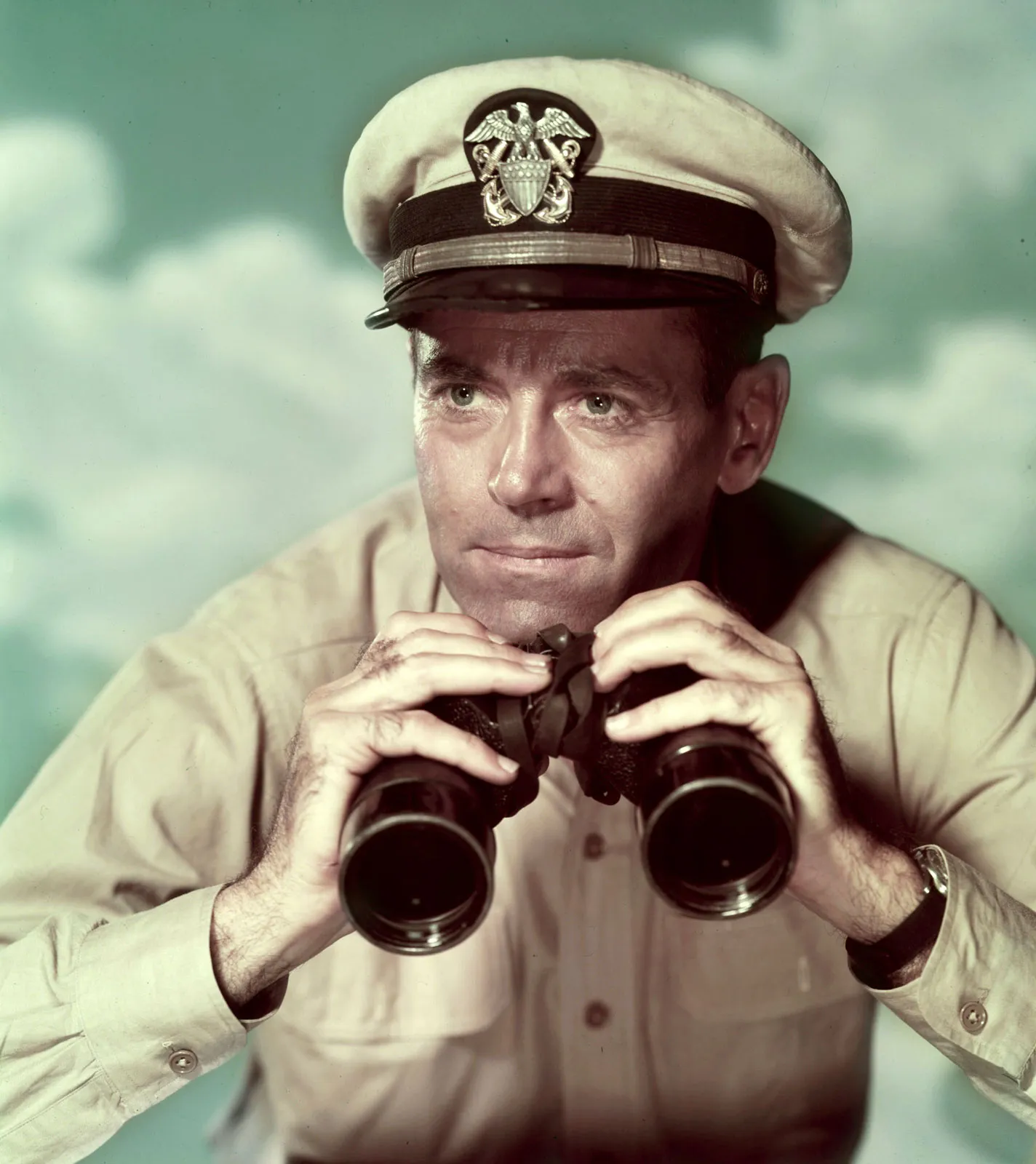
In August 1945, Henry Fonda was awarded the Bronze Star Medal.
The official citation recognized his contribution to planning and carrying out air operations supporting campaigns in the Marianas, Western Carolines and Iwo Jima. It praised his intelligence, energy and dedication to duty.
The decoration confirmed that Fonda’s service had been more than symbolic.
He had entered the Navy as a seaman recruit, trained as a quartermaster, served aboard a destroyer, earned a commission and completed intelligence work in an active theater of war.
He had not been awarded the Bronze Star because audiences knew his face.
He received it because of what he contributed while wearing a Navy uniform.
Accounts from his shipmates also suggest that officials repeatedly sought to bring him back for public-relations duties. Fonda reportedly refused, insisting that he would not return until the work was finished and the others could also go home.
That stance reflected the same principle that had led him to enlist.
He did not want fame to separate him from the people with whom he served.
Returning to a changed Hollywood
Fonda left active duty in late 1945 and returned to civilian life.
Hollywood had changed during his absence, and Fonda had changed with it.
He had spent years in an environment where responsibility was real, danger could not be reshot and leadership carried consequences beyond professional reputation.
Rather than immediately returning to a comfortable series of familiar screen roles, Fonda went back to the stage. In 1948, he began appearing on Broadway as Lieutenant Douglas Roberts in Mister Roberts, a production about officers and sailors aboard a Navy cargo ship in the Pacific. The play ran for approximately three years and later became a film, with Fonda again playing the title character.
His performance carried an authenticity that could not have come entirely from rehearsal.
Fonda knew the routines of naval life. He understood the relationships between officers and enlisted sailors, the frustrations of shipboard service and the emotional strain of men waiting for their chance to contribute to the war.
The role allowed him to transform experience into art—but this time, the experience had come first.
The actor behind America’s quiet heroes
Throughout his career, Henry Fonda became known for portraying principled men who displayed courage without seeking admiration.
Tom Joad in The Grapes of Wrath stood beside struggling families. Juror 8 in 12 Angry Men challenged a room ready to condemn a defendant without sufficient examination. Lieutenant Roberts defended his crew against a controlling commander.
These characters shared qualities audiences often associated with Fonda himself: restraint, fairness and moral determination.
His wartime service strengthened that connection between the man and his screen image.
He had not simply played an American everyman who answered a call to responsibility.
When confronted with that choice in his own life, he answered it.
Fame returned, but service remained part of his legacy
Fonda continued acting for decades after the war, building one of the most distinguished careers in American cinema.
In 1982, he won the Academy Award for Best Actor for his performance in On Golden Pond. The honor arrived more than 40 years after his nomination for The Grapes of Wrath.
Yet his military record remains an essential part of his story.
It reveals what happened when a man already admired for portraying integrity was asked to demonstrate it away from the cameras.
Fonda could have remained in California making films that supported the war effort. He could have requested a commission based on his education and standing. He could have accepted safer publicity assignments after entering the Navy.
Instead, he repeatedly sought work that placed him closer to active operations.
His choice did not make the contributions of other entertainers less meaningful. It simply reflected his personal conviction that he could not continue pretending to fight while others faced a real war.
More than a Hollywood story
It is tempting to describe Henry Fonda’s enlistment as the dramatic act of a movie star walking away from fame.
But his service became important precisely because he stopped behaving like a movie star.
He entered as an ordinary recruit.
He studied.
He followed orders.
He earned promotion.
He accepted responsibility.
And he worked beside people whose names would never appear on theater marquees.
When the war ended, Fonda returned to acting, but the uniform had revealed a part of him that no performance alone could prove.
The courage audiences had seen on screen was not merely an illusion created by scripts, lighting and direction.
When history demanded something real, Henry Fonda stepped away from Hollywood and answered in person.