Hidden ‘ghost net’ crisis revealed in Mangrove Photography Awards
For years, Gaurav Patil has seen abandoned fishing nets snag and tangle in India’s mangroves. They’re known as “ghost nets” and can break down into microplastics, choke the coastal trees and disrupt the ecosystem.
Motivated to expose this “overlooked” crisis, he took his camera to a tide-swept shore of Nandgaon village, Maharashtra, south of Mumbai, and captured an image of a tree at night, using a 13-second UV exposure that gave an eerie glow to the net caught in its canopy. The resulting image is the overall winner of the 2026 Mangrove Photography Awards.
“I came across this particular patch where discarded fishing nets were getting trapped,” explained the marine-biologist-turned-photographer, in his photo submission. “It is not an uncommon sight, but it has been overlooked by most of us and the issue remains unresolved. (So) I wanted to document it in an artistic manner to grab the attention of the viewers.”
scroll to continue with content
Titled “Tangled glow: When life meets the ruins,” the captivating photograph puts a spotlight on a crisis that has been quietly unfolding for years.
India is home to nearly 5,000 square kilometers (1,931 square miles) of mangrove cover spread across its coastline, including 40% of the largest mangrove forest in the world, The Sundarbans, with the remainder in neighboring Bangladesh. The trees are vital coastal barriers that shelter endangered species, prevent shoreline erosion, store up to four times more carbon per acre than tropical rainforests, and sustain millions of livelihoods through fisheries and tourism. But this precious ecosystem is facing mounting threats.
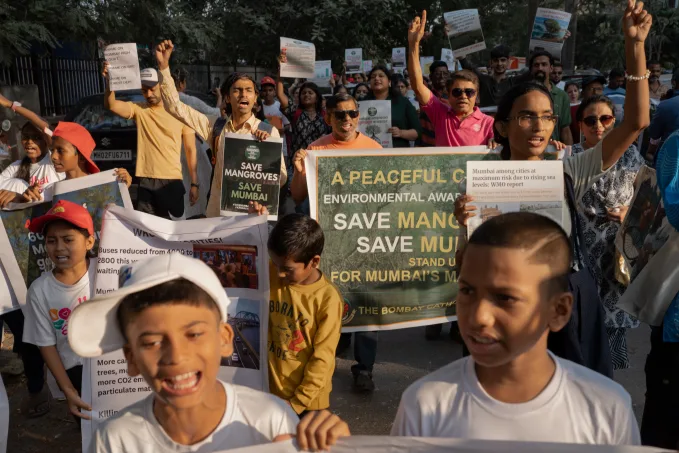
As well as “ghost nets,” rising sea levels, aquaculture — such as shrimp farms — and coastal development are taking their toll. In December 2025, the Bombay High Court approved a road-building project that could affect more than 45,000 mangrove trees along Mumbai’s western coast. Yet conservation of these forests could be part of the solution to urban flooding.
“Mangroves are increasingly at risk worldwide, but Gaurav Patil managed to capture an urgent threat that echoed all around the world, and has been going under the radar,” Leo Thom, creative director and founder of the Mangrove Photography Awards, told CNN. “Abandoned fishing gear is quiet and destructive, slowly choking the plant, releasing microplastics into the ecosystem, and persisting for decades.”
The problem extends far beyond India’s shores. The WWF estimated that 500,000 to 1 million tons of fishing equipment are abandoned in the ocean every year. An IUCN Red List of Ecosystems assessment found that more than half of global mangroves are at risk of collapse by 2050.
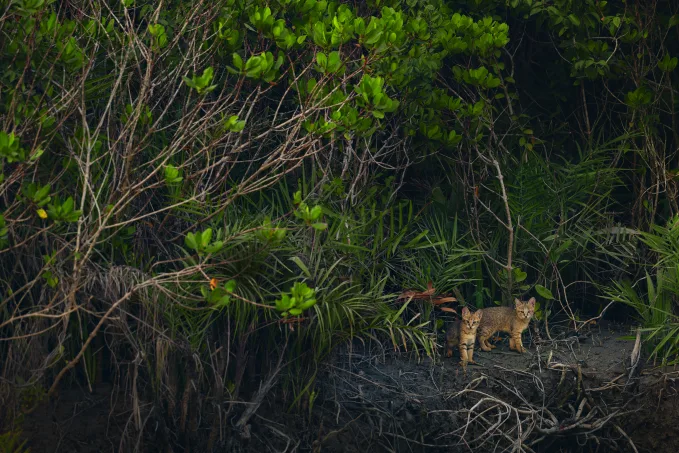
The diversity at stake is vast: other commended images in the awards show wildlife seeking refuge in mangroves across the world, from jungle cat kittens and royal Bengal tigers in India, to bottlenose dolphins in the US and Nile monitors in Gambia, West Africa.
“Storytelling is such a big part of the protection of these ecosystems, and we’re also hoping that the awards will contribute to raising awareness on how to restore their habitats properly,” Thom added. “Money is just being poured on mass planting projects that aren’t successful,” he continued, adding that research has found hydrology — re-establishing the natural flow of water into degraded mangrove ecosystems — to be beneficial, “as it’ll allow the mangrove to spread naturally without human intervention.”
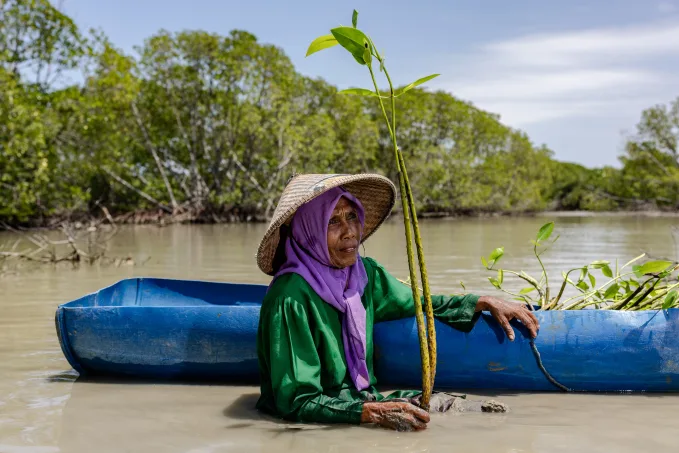
One of the award categories is dedicated to conservation and restoration. The winning image, taken by Garry Lotulung, shows Pasijah, a 56-year-old resident of Bedono in Central Java, Indonesia, planting mangrove seedlings after yet another flood submerged her village. In 2021, she and her son planted 15,000 seedlings in a single day; by the next morning, the waves had washed them all away.
“It’s precisely this kind of story that will help us spread awareness,” Thom said. “When we started, we had less than 100 submissions. This year, which marks our 12th edition, we received more than 5,000 of them — and it shows that more and more people are realizing how crucial mangroves are for climate resilience and coastal protection.”
Sources: https://edition.cnn.com/world/mangrove-photography-awards-2026-c2e-spc