Lindsay Clancy Juror Says Lone Holdout Reenacted Children’s Strangling with Exercise Band During Deliberations
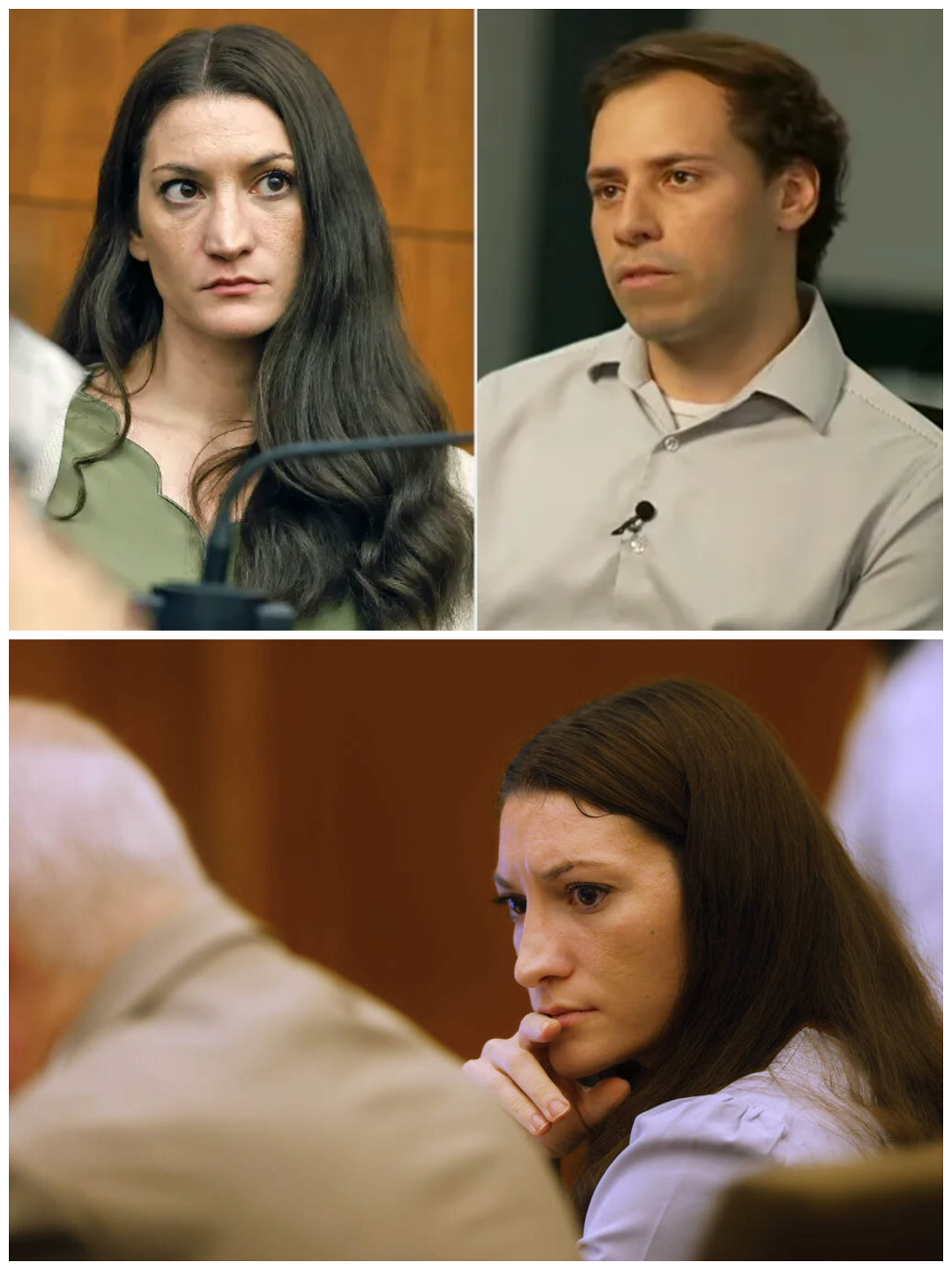
For more than a week, 12 jurors tried to answer the question at the center of Lindsay Clancy’s closely watched murder trial.
Eleven of them eventually appeared ready to reach one conclusion.
One man was not.
Now, after the trial ended without a verdict, a juror is describing a disturbing moment inside the deliberation room that he says left him stunned: the lone holdout allegedly picked up an exercise band, wrapped it around a water bottle and used it to reenact how Clancy had killed her children.
Juror Nick Dargie told Good Morning America that the demonstration shocked him.
To Dargie, jurors were supposed to evaluate the evidence and testimony they had heard during the weeks-long trial — not conduct their own experiments.
“We’re not in here to play detective,” he said.
The revelation provides a new glimpse inside the extraordinarily tense deliberations that ended Sept. 4 with a mistrial in the case against Clancy, the Massachusetts mother charged in the January 2023 deaths of her three young children.
A Deliberation That Became 11 Against 1
Clancy, 36, did not dispute that she killed her children — Cora, 5, Dawson, 3, and Callan, 8 months.
The central question was whether she was criminally responsible when she did it.
Her lawyers argued that Clancy was suffering from severe postpartum psychosis and was not legally responsible for her actions. Prosecutors acknowledged her mental-health struggles but argued that she understood what she was doing and knew it was wrong.
After a trial lasting more than a month, the jury deliberated for seven days.
The panel repeatedly told Judge William Sullivan that it could not reach a unanimous verdict.
Accounts from jurors afterward indicated the division had become 11–1, with 11 jurors leaning toward a verdict of not guilty by reason of lack of criminal responsibility and a single male juror refusing to join them.
It was during those deliberations, Dargie says, that the unusual reenactment occurred.
According to his account, the holdout juror took an exercise band and tied it around a water bottle before pulling on it.
Dargie called the act inappropriate and “disgusting.”
The symbolism was impossible to miss. Exercise bands had been a central piece of physical evidence in the case.
But for Dargie, the bigger problem was what he believed the reenactment represented: a juror moving beyond the evidence presented in court and attempting to test a theory himself.

“Not a Single Piece of Evidence”
Dargie’s criticism of the holdout went beyond the exercise-band demonstration.
He told GMA that the man repeatedly failed, in his view, to explain his position using testimony or evidence that had actually been introduced during the trial.
“There wasn’t a single piece of evidence or witness testimony that he used to prove why he was thinking the way he was,” Dargie said.
That frustration eventually spilled out of the deliberation room.
The jury sent Judge Sullivan a note raising concerns about one juror’s approach to reasonable doubt.
According to statements made in court, the note indicated that the juror had acknowledged having doubt but was refusing to apply that doubt when considering a verdict.
Clancy’s attorney, Kevin Reddington, seized on that message.
He asked Sullivan to remove the holdout juror, arguing that the man was refusing to follow the court’s legal instructions.
But Sullivan declined.
The judge said the note did not establish that the juror was refusing to follow the law, even if other members of the panel strongly disagreed with his reasoning.
Reddington later sought emergency intervention from Massachusetts’ highest court.
That effort also failed.
With no juror removed and no unanimous verdict possible, Sullivan eventually declared a mistrial.
Why the Case Was So Difficult
From the beginning, the Clancy case was never primarily about identifying who was responsible for the children’s deaths.
It was about Clancy’s mental state.
Prosecutors argued there was evidence of planning.
They pointed to the fact that Clancy sent her husband, Patrick, out to pick up food and medication shortly before the killings. Evidence presented at trial showed she had checked travel times on her phone, which prosecutors argued suggested she knew how long he would be away.
The defense presented a dramatically different interpretation.
Clancy had struggled with her mental health following the birth of her youngest child and had repeatedly sought medical treatment. Her lawyers argued that she was experiencing postpartum psychosis, a severe psychiatric condition that can involve delusions and hallucinations.
Witnesses testified that Clancy later described hearing a male voice directing her to act.
Her former husband also testified about the changes he had seen in her mental health in the months before the deaths.
The defense’s task was not to prove that the killings had not happened.
It was to convince jurors that Clancy lacked criminal responsibility when they did.
For 11 jurors, according to accounts that emerged after the mistrial, the defense appears to have succeeded.
For one, it did not.
Jurors Are Now Describing What Happened Behind Closed Doors
Dargie is not the only juror to speak publicly since the trial ended.
Several members of the panel have described frustration with the holdout and have questioned whether his reasoning was grounded in the evidence.
Foreperson Roni Carlson has said the holdout acknowledged reasonable doubt but still could not be persuaded to vote for an acquittal based on lack of criminal responsibility.
Another juror, however, has offered a somewhat different perspective, suggesting the disagreement inside the room was more complicated and that jurors on both sides sometimes struggled to move beyond deeply held personal views.
That distinction matters.
A hung jury does not mean that one side legally “won.”
Nor does an 11–1 split establish what a future jury would decide.
The mistrial simply means the panel could not reach the unanimous verdict required to resolve the criminal charges.
The Case May Not Be Over
Clancy remains in custody at a state psychiatric hospital.
She was left paralyzed after attempting to take her own life immediately after the deaths of her children.
Prosecutors have not yet announced whether they will try her again.
Plymouth County District Attorney Timothy Cruz said after the mistrial that his office still had decisions to make, while emphasizing the prosecution’s responsibility to seek justice for the children.
A status hearing is scheduled for Sept. 29, when the next direction of the case may become clearer.
A retrial would force a new group of jurors to confront the same extraordinarily difficult question: not whether Clancy caused her children’s deaths, but what her mental condition meant under Massachusetts criminal law at the time.
For now, however, much of the public attention has shifted away from the witness stand and into the jury room.
After weeks of testimony, expert opinions and emotional evidence, the case ultimately came down to a single juror who would not agree with the other 11.
And according to one of the men who sat beside him, one of the most unforgettable moments of the entire trial happened after the courtroom doors had closed — when an exercise band and a water bottle suddenly became part of the jury’s debate.